
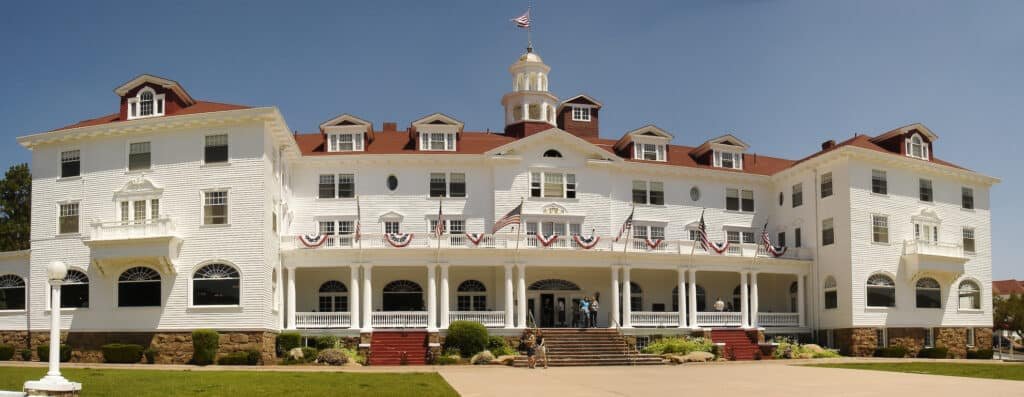
Haunted Hotels and Historic Inns for Halloween
A handful of the same famous haunted hotels — The Stanley, the Myrtles Plantation, Hotel Monteleone — show up on nearly every “haunted hotel” list published online, and they’ve earned the attention. But most of that coverage repeats the same surface-level ghost stories without digging into the actual documented history behind each property’s reputation, or into the lesser-known historic inns with equally genuine, if less famous, stories of their own. This guide covers both: the essentials, with real historical context, and a few additions worth knowing about.
A note on approach before diving into the specific properties: some of the history behind these hotels, particularly the Myrtles Plantation, involves genuine, difficult chapters of American history, including slavery. This guide treats that history honestly rather than folding it purely into ghost-story entertainment, and separates documented fact from popular legend wherever the two have diverged over the decades of retelling that any famous haunted-hotel story inevitably accumulates.
The Stanley Hotel, Colorado
The Myrtles Plantation, Louisiana
Hotel Monteleone, New Orleans
Omni Mount Washington Resort, New Hampshire
How These Reputations Actually Originate
Booking Tips for a Halloween-Season Stay
FAQ
The Stanley Hotel, Estes Park, Colorado
The single most famous haunted hotel in America, and for a documented reason beyond just legend. Built in 1909 by inventor F.O. Stanley, the hotel’s own founding story predates any ghost legend by more than half a century, giving it a foundation of genuine architectural and local history the Shining connection later built on top of rather than replaced.
The Shining Connection
Stephen King and his wife stayed at The Stanley in 1974, on the hotel’s last night before closing for the season, and the near-empty, cavernous property directly inspired the setting of his novel The Shining. This is genuine, well-documented literary history rather than a marketing invention after the fact, which is part of why The Stanley’s reputation has such staying power compared to hotels whose “haunted” branding came first and any actual story came later. King has spoken publicly about the specific experience of walking the hotel’s empty halls that night, and the hotel itself now displays this history prominently rather than downplaying its literary origins in favor of pure ghost-story marketing.
Estes Park, Colorado. Standard hotel rates apply; dedicated ghost tours priced separately and open to non-guests. Best combined with a Rocky Mountain National Park visit given the hotel’s location at the park’s edge.
Room 217 and Ongoing Ghost Tours
Room 217 in particular has built its own specific reputation, tied to a reported incident involving a hotel employee decades ago, and remains one of the most requested (and hardest to book) rooms in the hotel specifically because of it. The hotel now runs extensive nightly ghost tours covering the property’s full history, drawing a genuinely large paranormal-tourism audience well beyond guests staying overnight. The tours themselves are led by staff trained specifically in the hotel’s documented history rather than relying purely on generic ghost-tour scripts, giving visitors a more substantive experience than the format sometimes suggests.
Estes Park, Colorado. Ghost tour tickets priced separately; book well in advance for October dates. Best for travelers wanting the most extensively developed ghost-tour program of any hotel on this list.
The Myrtles Plantation, St. Francisville, Louisiana
A pre-Civil War plantation home whose full history deserves to be told honestly, not folded purely into entertainment. Located along the Mississippi River corridor between Baton Rouge and Natchez, an area dense with surviving antebellum architecture, the Myrtles stands out from its neighbors specifically because of the ghost-tourism industry that grew up around it starting in the mid-20th century.
A Documented, Difficult History
Built in 1796, the Myrtles Plantation was worked by enslaved people during the era of American slavery, a fact central to the property’s actual history and one that shouldn’t be minimized in favor of ghost-story framing alone. The property’s most famous ghost legend, involving an enslaved woman named Chloe, has been investigated by historians and found to lack solid documentary support in its most commonly repeated form, a point worth knowing before treating the story as settled fact. Independent research by skeptical investigators has traced much of the story’s popular version to embellishment over the decades rather than a documented historical record, which is worth keeping in mind for any visitor genuinely interested in separating fact from folklore. The house’s genuine, verifiable history as a National Register of Historic Places property, including its distinctive 125-foot veranda and hand-painted stained glass, stands entirely on its own without needing an unverified legend attached to it.
St. Francisville, Louisiana. Standard bed-and-breakfast rates apply; daytime historical tours and evening “mystery tours” priced separately. Best for travelers genuinely interested in pre-Civil War Southern architecture and history alongside the property’s ghost-tourism reputation.

Hotel Monteleone, New Orleans
A literary landmark first, with a ghost-tourism reputation that developed alongside its more substantial history. As one of the few remaining family-owned hotels of its size and age in the French Quarter, the Monteleone occupies a genuinely distinct position among New Orleans hotels, most of which have long since passed into large chain ownership.
A Favorite of Southern Authors
Hotel Monteleone, family-owned since 1886, holds the distinction of hosting a genuinely notable roster of Southern American authors over its history, including figures connected to the broader New Orleans literary tradition, a fact worth knowing before the hotel’s ghost-tourism reputation overshadows its literary one entirely. The hotel’s connection to Southern literature runs deep enough that it has become a recurring stop on New Orleans literary walking tours entirely separate from the paranormal-tourism circuit, giving it a genuinely dual identity most single-focus haunted-hotel content misses. The hotel’s Carousel Piano Bar, a rotating bar built directly into the lobby, remains one of the most distinctive hotel bars in the country regardless of any ghost story attached to the building.
French Quarter, New Orleans. Standard hotel rates apply. Best paired with a stop at the Carousel Piano Bar even for guests uninterested in the hotel’s paranormal reputation.

Reported Elevator and Sighting Incidents
The hotel’s paranormal reputation centers on recurring stories of unexplained elevator activity and reported sightings of children, passed down through staff and guest accounts over decades rather than tied to a single documented historical tragedy the way Sleepy Hollow or the Myrtles Plantation are. That distinction is worth knowing: Hotel Monteleone’s reputation rests more on accumulated anecdote than on a specific historical event, which doesn’t make the stories less fun, just differently sourced than some of the other hotels on this list. The hotel has been formally recognized by the International Society of Paranormal Research, giving its overall reputation a somewhat more organized documentation trail than purely word-of-mouth guest stories alone would otherwise provide.
French Quarter, New Orleans. Standard hotel rates apply; no dedicated in-house ghost tour, though several French Quarter tour operators include the hotel as a stop. Best combined with a broader French Quarter ghost-tour itinerary.
Omni Mount Washington Resort, New Hampshire
A genuinely significant historic landmark whose ghost story is a minor footnote next to its documented history. Set against the backdrop of Mount Washington itself, the highest peak in the northeastern United States, the resort’s dramatic White Mountains location has drawn wealthy vacationers since the turn of the 20th century, long before any ghost story attached itself to the property.
A National Historic Landmark
Built between 1900 and 1902 and designated a National Historic Landmark, the Mount Washington Hotel hosted the 1944 Bretton Woods Conference, where representatives from 44 Allied nations established the postwar international monetary system, a genuinely significant piece of 20th-century economic history that most visitors focused on the hotel’s ghost story never learn about. The hotel’s Gold Room, where the conference’s key negotiations took place, remains preserved much as it appeared in 1944, giving history-minded visitors a genuinely tangible connection to a pivotal moment in the founding of the modern global financial system.
Bretton Woods, New Hampshire. Standard resort rates apply. Best combined with a White Mountains fall foliage trip given the hotel’s location in the heart of the range.

The Legend of Carolyn Stickney
The hotel’s ghost story centers on Carolyn Stickney, wife of the hotel’s original builder, who reportedly loved the property so much she asked to be laid to rest facing it and is said to still occupy room 314. Unlike some of the more elaborate legends on this list, the Stickney story stays relatively modest in scope and is treated by the hotel itself with a light, understated touch rather than heavy paranormal marketing, reflecting the hotel’s broader identity as a genuine historic landmark first and a ghost-tourism destination only secondarily. Staff who have worked at the property for years often describe the story more as a piece of institutional folklore passed down affectionately than as a headline attraction the hotel actively promotes.
Bretton Woods, New Hampshire. Standard resort rates apply; no dedicated ghost tour program, though staff can share the property’s history on request. Best for travelers who want genuine historic New England grandeur with a mild ghost story attached, rather than a full paranormal-tourism experience.
How These Reputations Actually Originate
Looking across all four properties, a haunted-hotel reputation tends to form through one of a few distinct paths: a documented historical event or tragedy tied directly to the building (a death, an accident, a specific incident), a well-known creative work inspired by the place (as with The Stanley and The Shining), or an accumulation of staff and guest anecdotes over many years without a single clear origin point (as with Hotel Monteleone). None of these paths is inherently more or less “real” than the others, but understanding which kind of story you’re getting helps calibrate expectations: a documented historical tragedy carries a different weight than a decades-accumulated collection of guest anecdotes, even if both make for an equally fun overnight stay.
It’s also worth recognizing that a property’s willingness to lean into a ghost story commercially says nothing about whether the underlying history is genuine. The Stanley embraces its reputation fully and has real literary history behind it; the Omni Mount Washington Resort undersells its own story despite equally real, if more modest, historical grounding. The marketing intensity and the historical substance are two entirely separate variables, and conflating them is one of the more common mistakes casual haunted-hotel content makes.
A useful habit for any traveler genuinely curious about the difference: before booking a ghost tour or reading a hotel’s own promotional materials, look for at least one independent, non-hotel-affiliated source on the property’s history, whether that’s a local historical society, a National Register of Historic Places nomination form, or a skeptical investigation like the one that examined the Myrtles’ most famous legend. That single extra step tends to separate the properties with genuine documented history from those relying purely on repeated, unverified anecdote.
If this guide helped you plan a Halloween-season trip, subscribe to Worldly Traveler on YouTube for more hidden gems guides from around the world.
Booking Tips for a Halloween-Season Stay
All four hotels in this guide see their heaviest demand, and highest prices, in the weeks immediately surrounding Halloween, meaning rooms at The Stanley and the Myrtles Plantation specifically can book out months in advance for the exact weekend closest to October 31. Booking well ahead of the season, and being flexible about which specific room you’re assigned rather than insisting on a famous one like Room 217, both meaningfully improve the odds of securing a stay without paying a significant premium.
Requesting a specific historically significant room, where a hotel allows it, is worth doing directly through the reservations desk rather than the general booking website, since these requests are often handled manually and may not be reflected in standard online room categories. Travelers specifically chasing the paranormal-tourism angle should also confirm current ghost tour schedules and any age restrictions well before arrival, since evening programming at some properties fills up separately from standard room availability and can sell out even when rooms remain open. A final practical note: several of these properties, particularly the Myrtles Plantation, operate as smaller bed-and-breakfast-style inns rather than large hotels, meaning total room inventory is genuinely limited compared to a standard chain property of similar fame, and last-minute availability should never be assumed regardless of how far in advance you’re checking.
Frequently Asked Questions
Are these hotels genuinely believed to be haunted or is it marketing?
It’s a mix — each hotel in this guide has a genuine, documented history and specific reported incidents that predate any modern marketing effort, but the hotels have also, understandably, leaned into their reputations commercially once they became well known. The historical basis and the marketing aren’t mutually exclusive; both are simply true at once, and the degree to which each property emphasizes one over the other varies considerably from hotel to hotel.
Is it safe or appropriate to bring kids to these hotels?
The hotels themselves are ordinary, fully operating properties suitable for families, though dedicated ghost tours and evening paranormal programming are generally geared toward adults and older children rather than young kids. Booking a standard stay without the specialty tours works well for a family visit, and staff at most of these properties can advise on which parts of the standard experience are genuinely family-friendly.
Best time of year to book: October specifically, or year-round?
October brings the most extensive Halloween-specific programming and the highest prices and demand at every hotel in this guide, but each also offers its historical tours and standard accommodations year-round, often at considerably lower rates outside the peak season, making an off-season visit a genuinely good value for travelers less focused on the Halloween atmosphere itself.
Do these hotels offer ghost tours for non-guests?
Several do — The Stanley Hotel in particular runs public ghost tours open to non-guests, and the Myrtles Plantation offers tours during the day and specific evening paranormal tours, both bookable without an overnight stay. Checking each property’s current tour schedule directly is worth doing before planning a day trip, since availability and specific tour formats can change seasonally, and October dates in particular often require booking further ahead than other times of year.
Which of these hotels is the most historically documented?
The Myrtles Plantation and the Omni Mount Washington Resort both have the deepest documented non-ghost history, given their National Register of Historic Places and National Historic Landmark status respectively, though the specific paranormal claims at any of these properties vary widely in how well they hold up to historical scrutiny. The Stanley Hotel occupies a middle ground: its Shining connection is thoroughly documented literary history, even though the hotel’s own ghost stories predate and extend well beyond that specific connection.