
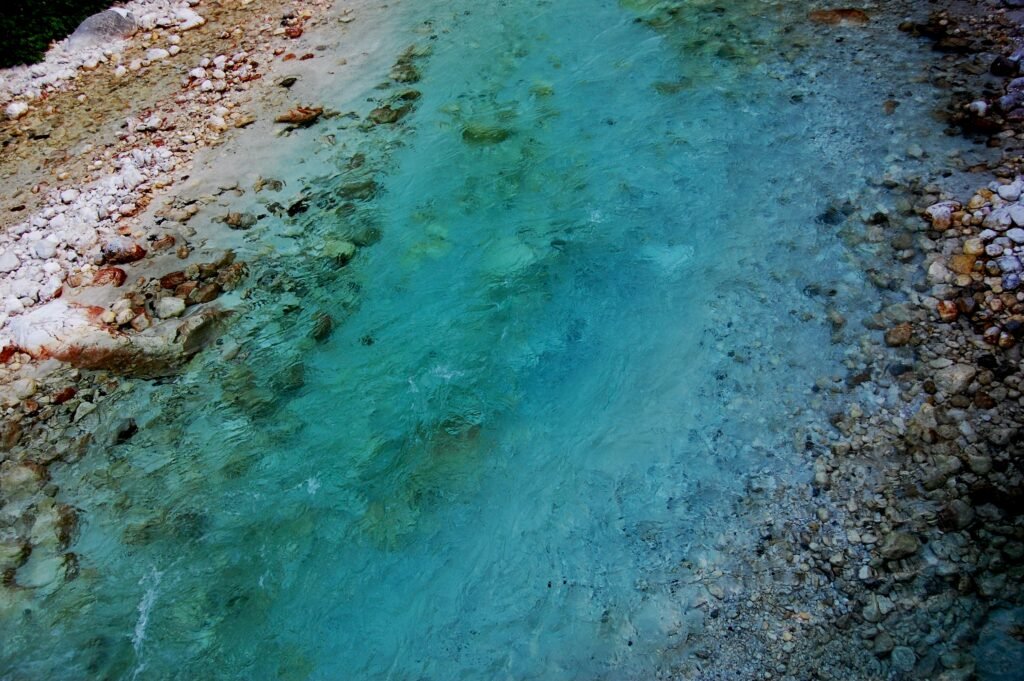
Lake Bled’s island church and clifftop castle have become genuinely inescapable on travel social media, and the lake earns every bit of that attention. But Bled is really just the front door to the Julian Alps, a mountain range covering a far larger stretch of northwestern Slovenia, holding a river so vividly colored it looks digitally enhanced in photos, gorges you can walk directly through, and one of the highest paved roads in Europe. This guide, checked against a real video tour, covers 25 hidden gems across the range, organized by area.
Lake Bled: The island church, the clifftop castle, and Bled’s famous cream cake remain worth a dedicated first stop, this site covers Bled itself in a separate, more detailed guide.
What makes the Julian Alps genuinely rewarding to explore beyond Bled is the sheer range of landscape packed into a relatively compact area. Triglav National Park, covering nearly 4 percent of Slovenia’s entire land area, holds the country’s only truly high mountain wilderness, its glacial valleys and alpine lakes feeling worlds away from the gentler, more rolling terrain found across most of the rest of the country. The Soča Valley on the range’s western edge carries a genuinely different character again, its color and history shaped by both a dramatic river and a brutal First World War front line that ran directly through it.
Triglav National Park
The Soča Valley
Lake Bohinj
The Vršič Pass
Hiking & Outdoor Basics
Comparing the Julian Alps’ Sub-Regions
Slovenian Food Worth Seeking Out
Best Time to Visit the Julian Alps
FAQ
Triglav National Park
Named for Slovenia’s highest peak, this park holds the range’s most dramatic gorges, waterfalls, and alpine valleys.
Vintgar Gorge
A 1.6-kilometer gorge carved by the Radovna River, its walls rising 50 to 100 meters overhead, crossed by a wooden walkway first built in 1893 and rebuilt several times since, weaving across the water four times before ending at the 13-meter Šum Waterfall, the largest river waterfall in Slovenia.
Near Bled, Triglav National Park edge. Entry fee. Best in the early morning to avoid the gorge’s significant midday crowds, given its proximity to Bled.

Peričnik Waterfall
A genuinely striking two-tiered waterfall, its upper drop of 52 meters notable for a walkway that passes directly behind the falling water, letting visitors stand in the natural alcove carved out behind the cascade, looking out through the curtain of falling water toward the valley.
Vrata Valley, Triglav National Park. Free. Best in late spring, when snowmelt keeps the waterfall running at full volume.
Martuljek Waterfalls
A genuinely dramatic set of twin cascades tumbling down a steep, forested slope, reached via a moderately demanding trail that rewards the climb with some of the most photogenic falling water in the entire range.
Near Gozd Martuljek. Free. Best in early summer for peak water volume from snowmelt.
Pokljuka Plateau
A genuinely peaceful high-elevation plateau covered in pine forest and alpine pasture, home to Slovenia’s premier biathlon and cross-country skiing venue in winter, and a network of gentle hiking and cycling trails through open meadows in summer.
Between Bled and Bohinj. Free. Best in summer for wildflower meadows, or winter for the biathlon center’s cross-country trails.
Zelenci Nature Reserve
A genuinely small but striking nature reserve built around a series of emerald springs, the actual source of the Sava Dolinka River, its shallow, impossibly clear pools ringed by a short boardwalk trail.
Near Kranjska Gora. Free. Best in the morning, when the springs are calmest and clearest.
Vrata Valley
Genuinely considered the gateway to Mount Triglav itself, this glacial valley’s dramatic north face views make it one of the most photographed approaches to Slovenia’s highest peak, popular with serious hikers beginning multi-day summit attempts.
Near Mojstrana. Free. Best for experienced hikers, given the valley’s role as a genuine mountaineering access point.
Slemenova Špica
A genuinely rewarding panoramic viewpoint reached via a well-marked trail from the Vršič Pass road, its summit offering sweeping views across the Julian Alps’ jagged peaks without requiring truly technical mountaineering skill.
Near the Vršič Pass. Free. Best in clear summer weather for the fullest panoramic visibility.
The Soča Valley
Following the Soča River from its mountain source toward the Italian border, this valley holds Slovenia’s most vividly colored water and a significant layer of First World War history.
Soča River Source
The literal beginning of the river, emerging from a cave at the base of a cliff in the Trenta Valley, already showing the vivid turquoise color that will define the river’s entire length downstream.
Trenta Valley. Free, reached via a short trail from the parking area. Best combined with a broader Trenta Valley drive, since the source sits along the main road.
Tolmin Gorges
The lowest point in Triglav National Park, these dramatic gorges combine narrow canyon walls with a genuinely unusual natural hot spring, a rare geothermal feature within an otherwise cold alpine river system.
Near Tolmin. Entry fee. Best in early summer, when the gorge’s water levels and hot spring are both at their most inviting.
Kozjak Waterfall
Genuinely nicknamed the “Emerald Cave” waterfall, this cascade drops into a hidden, cave-like amphitheater carved from rock, reached via an easy trail from Kobarid that makes it one of the more accessible dramatic waterfalls in the valley.
Near Kobarid. Free. Best in spring for peak water volume.
Javorca Memorial Church
A genuinely moving First World War memorial church, built by Austro-Hungarian soldiers to honor comrades who died fighting along the brutal Isonzo Front, which ran directly through this valley during some of the war’s most devastating mountain combat.
Above the Tolmin area. Free. Best combined with a broader First World War heritage trail through the Soča Valley.
Mangart Saddle
Slovenia’s highest paved road, climbing to over 2,000 meters through a series of dramatic switchbacks, its summit offering views across three countries, Slovenia, Italy, and Austria, on a genuinely clear day.
Near Bovec, Slovenia-Italy border area. Free to drive; seasonal closure due to snow. Best in summer, since the road typically closes outside the warmer months.
Predil Pass
A genuinely scenic mountain pass connecting Slovenia and Italy, its winding road tracing a route with real historical significance as both a trade corridor and a wartime front line.
Slovenia-Italy border. Free to drive. Best combined with a broader Soča Valley border-region drive.
Bovec Secret Caves
A genuinely underexplored cave system near this adventure-sports hub town, offering a quieter, more subterranean counterpoint to the valley’s better-known river-based activities.
Near Bovec. Guided tour recommended. Best combined with a broader Bovec adventure-sports day, given the town’s outdoor activity infrastructure.
Krn Lake
A genuinely remote glacial lake reached only by a serious hike, its isolation rewarding determined visitors with one of the quietest, most untouched alpine settings in the entire range.
Above Krn Valley. Free; strenuous hike required. Best for experienced hikers with a full day to dedicate to the round trip.
Lake Bohinj
Slovenia’s largest permanent lake sits within Triglav National Park, offering a genuinely quieter, less crowded alternative to Bled just a short drive away.
Lake Bohinj
Considerably larger and, by most accounts, less crowded than Bled, Bohinj’s clear glacial water and surrounding mountain backdrop offer a genuinely more untouched alpine lake experience, its small lakeside church at Ribčev Laz among the most photographed spots on its shore.
Bohinj, Triglav National Park. Free lake access. Best in early morning or evening for the calmest water and fewest crowds.

Savica Waterfall
A genuinely legendary waterfall, tied to a well-known Slovenian folk poem, its dramatic split cascade dropping roughly 78 meters into a rocky pool, reached via a scenic hike from the lake’s western end.
West end of Lake Bohinj. Entry fee. Best in late spring for peak water volume.
Mostnica Gorge
A genuinely striking, narrow gorge near Bohinj, its smooth, sculpted rock walls carved over centuries by the Mostnica stream, crossed by a picturesque stone bridge that’s become one of the area’s most photographed spots.
Near Stara Fužina, Bohinj. Small entry fee. Best combined with a broader Bohinj valley walk.
Lake Fusine
Technically just across the border in Italy but genuinely worth including for its proximity, this pair of alpine lakes offers a still, mirror-like reflection of the surrounding Julian Alps peaks, a popular short detour for travelers exploring the Slovenian side of the range.
Fusine, Italy, near the Slovenian border. Free. Best in calm morning conditions for the clearest mountain reflection.
Planica Nordic Centre
Home to one of the world’s most significant ski jumping venues, Planica’s massive jump towers remain visible year-round, and the surrounding valley offers genuinely dramatic hiking even outside the winter competition season.
Near Rateče. Free to view from outside; event tickets separate. Best during a winter World Cup ski jumping event, if timing allows.
The Vršič Pass
Slovenia’s highest mountain pass connects the Soča Valley to Kranjska Gora via a genuinely dramatic series of hairpin switchbacks.
Kranjska Gora
A genuinely charming alpine village at the base of the Vršič Pass, its traditional architecture and ski-resort infrastructure making it a natural base for exploring both the pass itself and the surrounding Triglav National Park trails.
Northwestern Slovenia. Free to explore village. Best combined with a Vršič Pass drive given the village’s position at the route’s starting point.
Lake Jasna
A genuinely picturesque artificial lake at the entrance to the Vršič Pass, its turquoise water and mountain backdrop making it a popular, easily accessible stop for photographs before the more demanding drive up the pass itself.
Near Kranjska Gora. Free. Best in the late afternoon for the most favorable light on the water.
Hiking & Outdoor Basics
The Julian Alps’ trail network ranges genuinely widely in difficulty, from Vintgar Gorge’s flat, family-friendly boardwalk to serious multi-day mountaineering routes up Triglav itself, and matching the trail to your actual fitness and experience level matters more here than in gentler hiking destinations. Mountain weather shifts quickly at altitude, and checking conditions before setting out on any higher route, particularly toward Krn Lake or the Vrata Valley approach to Triglav, is worth taking seriously rather than treating as optional. The Soča River’s rafting, kayaking, and canyoning scene is genuinely world-class, centered around the town of Bovec, and booking a guided outing is the standard, safest way to experience the river’s rapids rather than attempting them independently. Slovenia’s mountain hut (planinski dom) system offers overnight lodging along many of the higher routes, worth booking ahead during peak summer season if a multi-day trek is part of the plan.
Comparing the Julian Alps’ Sub-Regions
| Sub-Region | Best For | Crowd Level | Key Base Town |
|---|---|---|---|
| Triglav National Park core | Gorges, waterfalls, serious hiking | Moderate, busiest near Bled | Bled or Mojstrana |
| Soča Valley | River sports, WWI history, turquoise water | Growing but still uncrowded | Bovec or Kobarid |
| Lake Bohinj | Quieter lake scenery, easier hikes | Genuinely less crowded than Bled | Ribčev Laz |
| Vršič Pass area | Scenic driving, high-altitude viewpoints | Busy on weekends in summer | Kranjska Gora |
Slovenian Food Worth Seeking Out
Slovenian mountain cuisine leans genuinely hearty, and Kranjska klobasa, a traditional smoked sausage protected by EU designation, remains a genuine national point of pride worth seeking out at a proper local restaurant rather than a supermarket version. Štruklji, rolled dumplings filled with either sweet or savory ingredients, appear across the region in countless regional variations, worth trying more than once given how much a single dish can differ from valley to valley. Bohinj’s cheese-making tradition, tied to alpine dairy farming in the surrounding mountains, is worth seeking out directly from a local producer, particularly a genuinely aged mountain cheese distinct from the milder versions found in supermarkets. And trout, particularly the marble trout native to the Soča River itself, is a genuine local specialty worth ordering specifically in the Soča Valley, where it’s typically caught and served within the same day.
Best Time to Visit the Julian Alps
June through September offers the best hiking conditions and full access to mountain trails, high passes, and gorge walkways, with the Vršič Pass and Mangart Saddle both typically closed by snow outside this window. The Soča River is warm enough for swimming and comfortable enough for rafting and kayaking from around July through early September, though the river’s rapids remain runnable, with proper guiding, across a longer season. Spring brings peak waterfall volume from snowmelt, genuinely rewarding for waterfall-focused visits like Peričnik and Savica, though some higher trails may still carry lingering snow into June. Winter transforms the region into a genuine ski destination, particularly around Kranjska Gora and the Planica Nordic Centre, though most of this guide’s hiking-focused destinations become considerably less accessible during the colder months.
I cover all of these hidden gems in the video above. If this guide helped you plan your Julian Alps trip, subscribe to Worldly Traveler on YouTube for more travel guides from around the world.
Frequently Asked Questions
What are the best hidden gems in the Julian Alps?
Some of the best hidden gems in the Julian Alps include the Soča River’s turquoise water, Peričnik Waterfall (which you can walk behind), Vintgar Gorge’s wooden walkways, Lake Bohinj, and the dramatic Mangart Saddle, Slovenia’s highest road.
Why is the Soča River so turquoise?
The Soča’s vivid color comes from a combination of glacial and limestone mineral deposits, extreme water clarity, and the way sunlight refracts through the shallow riverbed, producing shades that shift from emerald to aquamarine along its length.
How many days do you need to explore the Julian Alps?
7-10 days allows a well-paced trip covering Triglav National Park, the Soča Valley, and Lake Bohinj. A shorter 4-5 day trip works well focused on just the Bohinj and Bled area.
What is the best time of year to visit the Julian Alps?
June through September offers the best hiking conditions and full access to mountain trails and passes, while the Soča River is warm enough for swimming from around July through early September.
Do you need a car to explore the Julian Alps?
Yes, genuinely. Public transport reaches Bled and Bohinj, but most of the Soča Valley, the mountain passes, and the individual trailheads covered in this guide are realistically only accessible by car.