
Montenegro Hidden Gems: Beyond the Coast
Montenegro’s dramatic Adriatic coastline genuinely earns the country its growing international reputation as a rising Balkan destination, but the small nation’s real depth, a mountain landscape holding eighteen glacial lakes and a bay steep enough to be mistaken for a Norwegian fjord, extends well beyond the beach resorts most visitors see first. This guide walks through Montenegro’s best hidden gems, checked against real research into each, along with the specific history and geology that makes each destination genuinely worth understanding beyond a simple photo stop.
What makes Montenegro genuinely remarkable given its modest size, the entire country covers barely 13,800 square kilometers, is just how much dramatically varied terrain it packs into that compact footprint, a traveler can genuinely move from Mediterranean coastline to high alpine wilderness within the space of a few hours’ drive, a range of landscape considerably more common in countries many times Montenegro’s size. That density of natural variety, combined with a genuinely layered history spanning Venetian, Ottoman, Austro-Hungarian, and Yugoslav influence, gives even a short Montenegro trip a surprising amount of ground to cover.
Montenegro is one of five countries in our guide to underrated European countries worth visiting, which compares it with Poland, Slovakia, Latvia, and Bosnia and Herzegovina so you can plan a longer off-the-beaten-path trip.
The Bay of Kotor
Durmitor National Park
Sveti Stefan
Montenegro’s Independence Story
Montenegro’s Name & National Symbols
Comparing the Destinations
Planning Your Visit
Montenegrin Food Worth Seeking Out
FAQ
The Bay of Kotor
Genuinely one of the most dramatic coastal landscapes in Europe, a winding inlet bordered by mountains rising almost directly from the water’s edge.
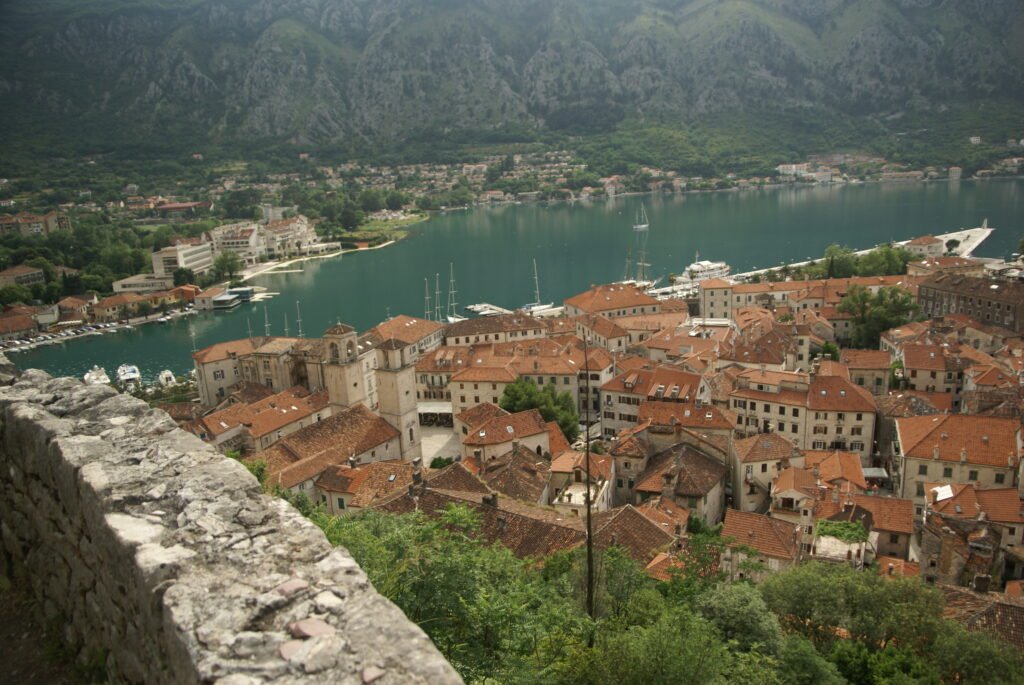
Kotor’s Old Town & the Bay
Stretching roughly 28 kilometers inland and bordered by peaks reaching nearly 1,900 meters, the Bay of Kotor is often nicknamed the “southernmost fjord of Europe,” though geologists classify it more precisely as a ria, a river valley flooded by rising sea levels rather than a glacially carved fjord, a technical distinction that does little to diminish the bay’s genuinely striking visual drama. The bay narrows at the Verige Strait to just 330 meters wide, and its four interconnected basins, together with the historic towns of Kotor, Perast, and Dobrota along its shores, were collectively inscribed on UNESCO’s World Heritage List in 1979, recognized for the exceptional combination of natural scenery and well-preserved medieval architecture found nowhere else in quite this configuration. The bay’s narrow entrance and naturally sheltered waters genuinely made it a strategically valuable naval anchorage for centuries, a factor that genuinely shaped much of the fortification and military architecture still clearly visible throughout the wider region today.
Kotor’s Old Town, protected by a system of fortified walls climbing dramatically up the mountainside behind it, holds a genuinely dense concentration of Romanesque churches, Venetian-era palaces, and narrow medieval streets, and the roughly 1,350-step climb to the Castle of St. John above the town rewards hikers with sweeping views back over the entire bay, a genuinely worthwhile, if strenuous, way to appreciate the landscape’s full scale. The town’s specific, genuinely intricate street layout, a genuinely confusing maze to first-time visitors, developed organically over centuries rather than following any planned grid, and getting pleasantly lost among Kotor’s narrow lanes remains one of the more genuinely enjoyable ways to spend an unhurried afternoon exploring the Old Town’s numerous small squares and hidden courtyards.

Perast, a smaller, quieter town further along the bay, offers boat access to Our Lady of the Rocks, a genuinely unique artificial islet built up over centuries by local sailors depositing stones and sunken ships at the site of an original rock outcropping, now home to a small church and museum. Local tradition holds that the islet’s construction began in 1452, after two fishermen discovered an icon of the Virgin Mary on a rock protruding from the sea, and sailors returning from successful voyages continued adding stones to the growing islet for centuries afterward, a genuinely unusual maritime tradition that’s produced one of the bay’s most distinctive and photographed landmarks.
Kotor and the surrounding bay, southwestern Montenegro. Free to explore Old Town streets; Castle of St. John and boat tours charge separate fees. Best spring or fall for comfortable walking and hiking weather.

Durmitor National Park
Genuinely home to eighteen glacial lakes locals poetically call the “Mountain Eyes,” set within a dramatic limestone massif in the country’s north.
Durmitor & the Mountain Eyes
Durmitor National Park, a UNESCO World Heritage Site since 1980, protects a rugged limestone massif in northwestern Montenegro home to Bobotov Kuk, the country’s highest peak at 2,523 meters, along with deep canyons, dense pine forests, and eighteen glacial lakes collectively nicknamed the Gorske Oči, or “Mountain Eyes.” Black Lake (Crno Jezero), the park’s most visited and photographed lake, genuinely consists of two interconnected basins formed roughly 10,000 years ago as glaciers retreated at the end of the last Ice Age, the larger Veliko Jezero reaching depths of about 25 meters and the smaller Malo Jezero considerably deeper at nearly 49 meters. Beyond Black Lake, smaller, more remote lakes including Barno and Jablan sit at genuinely higher elevations within the park, each offering a quieter, less-visited alternative for hikers willing to venture beyond the park’s most accessible and popular single attraction.
The park’s dramatic Tara River Canyon, the deepest canyon in Europe and second-deepest in the world after the Grand Canyon, cuts through the massif’s northern edge, and rafting trips down the Tara offer visitors a genuinely thrilling way to experience the canyon’s scale from river level rather than simply viewing it from an overlook above. The Đurđevića Tara Bridge, a genuinely impressive concrete arch structure completed in 1940 spanning the canyon at a height of 172 meters, offers a further dramatic vantage point, and the bridge itself carries a genuinely tragic wartime history worth knowing, its designer was reportedly executed by occupying forces during the Second World War after being falsely accused of sabotaging the very structure he’d built, a genuinely dark historical footnote to what remains today one of the region’s most photographed and admired engineering landmarks.

Žabljak, Montenegro’s highest town and the park’s main gateway, serves as a genuinely practical base for exploring Durmitor’s hiking trails, which range from gentle lakeside walks around Black Lake to considerably more demanding multi-day treks connecting several of the park’s more remote glacial lakes. Winter transforms the area into a genuinely significant, if modest by international standards, ski destination, and the park’s harsh alpine climate means snow can persist at higher elevations well into late spring, a detail worth factoring into any early-season visit specifically planned around hiking rather than skiing.
Durmitor National Park, near Žabljak, northern Montenegro. Park entry fee applies. Best summer for hiking and the Tara River rafting season, winter for skiing at the park’s modest ski facilities.

Sveti Stefan
Genuinely one of the most photographed single landmarks in all of Montenegro, a fortified island village transformed into an exclusive private resort.
Sveti Stefan
Originally established in the 15th century as a fortified fishing village, Sveti Stefan sits on a small island connected to the mainland by a narrow, naturally formed sandy tombolo, its distinctive silhouette of terracotta rooftops rising directly from the Adriatic making it one of the most recognizable images associated with the entire country. The original settlement, home to local clans engaged in both fishing and, according to some historical accounts, piracy against passing Venetian shipping, developed its fortified character specifically as protection against retaliation from the very ships its residents sometimes targeted, a genuinely colorful, well-documented piece of the island’s rich pre-tourism maritime history.
In the early 1950s, the Yugoslav government relocated the island’s remaining residents to the nearby mainland and converted the entire settlement into a state-run luxury hotel, a transformation that drew a genuinely significant, well-documented roster of international celebrities and even visiting royalty throughout the following decades, cementing the island’s reputation as a symbol of exclusive Adriatic glamour. Sophia Loren, Elizabeth Taylor, and numerous other genuinely prominent 20th-century figures reportedly stayed at the resort during its original Yugoslav-era heyday, and the island’s carefully preserved medieval stone architecture, now genuinely housing luxury guest rooms rather than working fishing families, genuinely retains much of its original, authentic historic character despite the considerable change in function over the decades.
Today operated as part of the Aman Resorts luxury hotel group following a major, extensive renovation completed in 2010, Sveti Stefan remains genuinely restricted to hotel guests for the most part, though the adjacent mainland beaches, including the historically significant Queen’s Beach, once used by Yugoslav royalty, offer excellent public vantage points for photographing the island without requiring a stay at the resort itself. The nearby Miločer Park and former royal residence add a further layer of historical context to the area, a genuinely worthwhile stop for visitors interested in the region’s royal and Yugoslav-era history beyond simply photographing the island from a distance.
Near Budva, central Montenegrin coast. Free to view from public mainland beaches; resort access restricted to guests. Best late spring or early fall for comfortable coastal weather without peak summer crowds.

Montenegro’s Independence Story
Montenegro’s modern independence, achieved through a 2006 referendum that peacefully dissolved its union with Serbia, genuinely represents one of the more recent state formations in Europe, though the region’s own distinct identity and periods of self-governance trace back considerably further, medieval Montenegrin principalities maintained genuine autonomy even during centuries of surrounding Ottoman control, largely thanks to the country’s genuinely difficult, rugged, mountainous terrain that made full conquest and lasting occupation impractical for successive regional powers attempting to control the territory. That mountainous geography, the same terrain that produces Durmitor’s dramatic peaks and the Bay of Kotor’s steep shores, genuinely shaped Montenegro’s political history as much as its natural scenery, difficult access helped preserve a measure of local autonomy that many of the region’s more accessible neighboring territories didn’t maintain to the same degree.

The country’s 20th-century history, folded into the Kingdom of Yugoslavia and later socialist Yugoslavia under Tito, before the difficult 1990s breakup of Yugoslavia and eventual peaceful separation from Serbia, means modern Montenegro carries a genuinely distinct, layered political identity within the broader former Yugoslav region. Understanding that Sveti Stefan’s transformation into a luxury resort happened specifically under Yugoslav socialist governance, rather than under any earlier Montenegrin monarchy, genuinely adds useful context to the island’s particular history, a state-directed tourism project reflecting a specific mid-20th-century political and economic system rather than a continuous royal or aristocratic tradition.
Montenegro’s Name & National Symbols
The country’s very own name genuinely reflects its dramatic mountainous terrain in a directly literal way, “Montenegro” derives from Venetian Italian meaning “black mountain,” a reference to the dark, densely forested appearance of Mount Lovćen as seen from the sea, while the country’s own Montenegrin name, Crna Gora, translates to precisely the same meaning in the local Slavic language. Mount Lovćen itself, rising above the Bay of Kotor, holds genuine national significance well beyond its role in the country’s name, its summit houses the mausoleum of Petar II Petrović-Njegoš, a 19th-century Montenegrin prince-bishop, poet, and philosopher whose epic poem “The Mountain Wreath” remains genuinely central to Montenegrin and broader South Slavic literary and national identity even today.

Montenegro’s double-headed eagle, appearing on the national flag and coat of arms, reflects a Byzantine heraldic tradition shared with several other Orthodox Christian nations in the region, a symbol tracing back to medieval Serbian and Byzantine influence that predates the modern Montenegrin state by many centuries. The country’s Orthodox Christian majority, alongside significant Muslim and Catholic minority populations concentrated in specific regions, reflects Montenegro’s genuinely layered religious history, shaped by centuries of Ottoman rule alongside persistent Venetian Catholic influence along the coast, a religious diversity that remains visible today in the mix of mosques, Orthodox churches, and Catholic cathedrals found across different parts of the country.
Understanding these national symbols and their genuine historical weight adds a further layer of context to a Montenegro visit, Mount Lovćen’s mausoleum specifically offers a worthwhile, if physically demanding, side trip from the Bay of Kotor for travelers interested in the literary and political figures who shaped Montenegrin national identity well before the country’s eventual 2006 independence, and the mausoleum’s dramatic summit setting, reached via 461 steps carved into the mountainside, offers genuinely sweeping views extending across much of the surrounding coastal and mountain landscape on a clear day.
Comparing the Destinations
| Destination | Character | Best For |
|---|---|---|
| Bay of Kotor | Dramatic fjord-like coastline, medieval towns | Architecture, hiking, boat trips |
| Durmitor National Park | Glacial lakes, deep canyons | Hiking, rafting, mountain scenery |
| Sveti Stefan | Iconic island resort | Photography, coastal glamour |
Each destination genuinely reflects a different facet of Montenegro’s compact but remarkably varied geography. The Bay of Kotor combines dramatic natural scenery with genuinely well-preserved medieval architecture, Durmitor delivers serious high-mountain wilderness within a country most visitors associate purely with coastline, and Sveti Stefan offers a genuinely iconic, if largely photograph-only, glimpse into the country’s more recent history of Yugoslav-era luxury tourism. A traveler with limited time might reasonably prioritize the coast, combining Kotor and Sveti Stefan within a single trip, while a longer visit genuinely allows for the considerably more remote but rewarding detour inland to Durmitor’s glacial lakes.
Planning Your Visit
The Bay of Kotor and Sveti Stefan sit close enough together along the coast, roughly an hour’s drive apart, to combine easily within a single coastal-focused trip. Durmitor National Park, by contrast, sits considerably further inland and requires a genuinely dedicated detour, roughly three hours by car from the coast, meaning visitors specifically prioritizing the mountain lakes should plan for at least an overnight stay in or near Žabljak rather than a rushed day trip from the coast.
Montenegro’s mountainous terrain means road travel between regions genuinely takes longer than map distances might suggest, and a rental car offers considerably more flexibility than the country’s more limited public bus network, particularly for reaching Durmitor’s more remote trailheads. The euro serves as Montenegro’s currency despite the country not being part of the European Union, a detail that genuinely simplifies budgeting for visitors arriving from other eurozone countries. Podgorica, Montenegro’s capital and main international airport, sits roughly equidistant between the coast and Durmitor, making it a genuinely practical entry point for a trip planning to cover both the coastal and mountain destinations described throughout this guide, rather than flying into a coastal airport and adding significant extra driving time to reach the northern mountains.
Montenegrin Food Worth Seeking Out
Njeguški pršut, a distinctively smoked, air-dried ham produced specifically in the mountain village of Njeguši near Kotor, genuinely represents one of Montenegro’s most significant culinary exports, its production method, smoking over beech wood in the specific cool, dry mountain air of the Njeguši region, considered essential to achieving the product’s distinctive flavor and impossible to fully replicate elsewhere. Kačamak, a hearty cornmeal-based dish typically mixed with cheese and sour cream, remains a genuinely traditional mountain staple particularly popular in the country’s northern, more rural regions around Durmitor, reflecting the historically limited agricultural options available in Montenegro’s harsher mountain terrain compared to its more fertile coastal areas.
Along the coast, genuinely fresh Adriatic seafood dominates menus in towns like Kotor and Budva, black risotto, made with cuttlefish ink, and grilled fish caught that same day both reflect the coastal region’s deep Mediterranean culinary influences, considerably closer in character to Italian and broader Adriatic cuisine than the country’s heartier, more meat-focused mountain cooking. Montenegrin wine, particularly from the Vranac grape variety genuinely native to the region and considered the country’s signature red wine grape, offers a worthwhile pairing for either style of cooking, and the country’s small but growing wine industry has begun earning increased international recognition in recent years for the distinctive, full-bodied character this local grape variety consistently produces.
If this guide helped you plan a Montenegro trip, check out more travel videos from Worldly Traveler, including our full 25 Montenegro hidden gems video below.
Whichever destination ends up on your itinerary, Montenegro genuinely rewards travelers willing to look past the coast’s resort towns toward the country’s considerably more varied natural and historical character. The Bay of Kotor’s dramatic, fjord-like scenery, Durmitor’s eighteen glacial Mountain Eyes, and Sveti Stefan’s genuinely iconic silhouette each tell a distinct chapter of a small country that offers considerably more depth than its compact size and modest international profile might initially suggest. From climbing Kotor’s ancient fortress walls for a sweeping view over the bay, to standing beside a glacial lake formed at the end of the last Ice Age, to photographing one of the Adriatic’s most recognizable islands from a public beach, Montenegro rewards exactly the kind of deeper, beyond-the-resort exploration this guide has tried to encourage throughout every section above, proof that even a genuinely small country can hold a remarkably wide range of landscapes and stories within its modest borders.
Frequently Asked Questions
Is the Bay of Kotor a real fjord?
Not technically. The Bay of Kotor is often called the “southernmost fjord of Europe,” but geologists classify it as a ria, a flooded river canyon, rather than a true glacially carved fjord, though its steep, mountain-lined shores create a visually similar, equally dramatic landscape.
What are the Mountain Eyes of Durmitor?
The Mountain Eyes (Gorske Oči) refer to Durmitor National Park’s eighteen glacial lakes, the most famous being Black Lake (Crno Jezero), formed roughly 10,000 years ago as glaciers receded at the end of the last Ice Age across the surrounding limestone massif.
Is Sveti Stefan open to the public?
No, not fully. Sveti Stefan operates as a private luxury Aman resort, and public access to the island itself is generally restricted to hotel guests, though visitors can view and photograph the island freely from the adjacent mainland beaches.
When was Kotor’s Old Town added to UNESCO’s World Heritage List?
The Bay of Kotor, including the town of Kotor and its fortifications, was inscribed on UNESCO’s World Heritage List in 1979, recognized for its combination of exceptional natural beauty and well-preserved medieval architecture along the bay’s shores.