
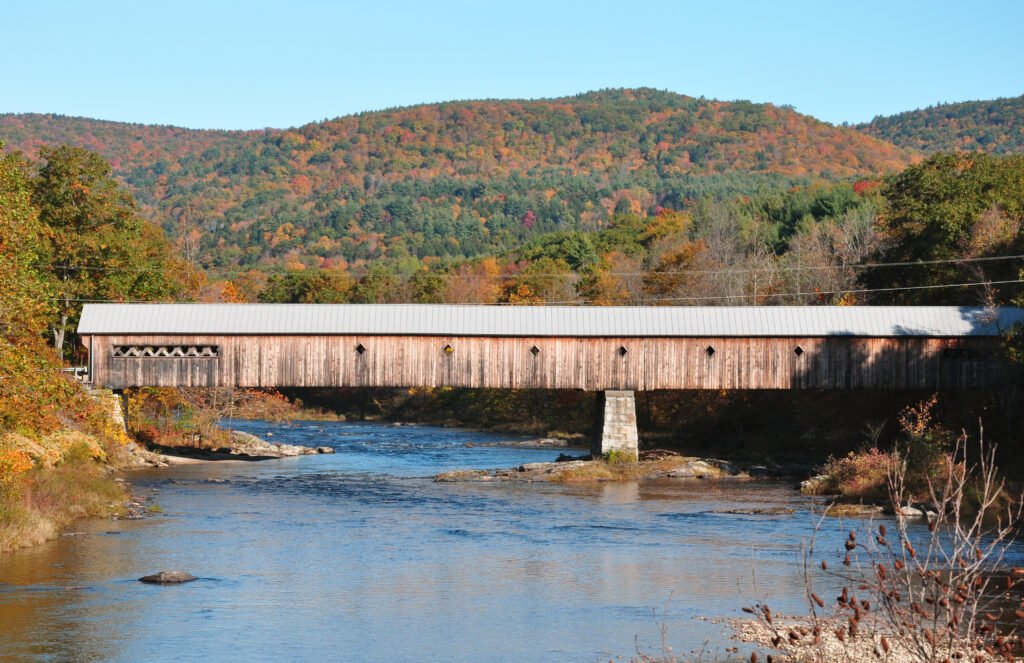
Few road trips reward planning as much as a fall foliage trip. Peak color lasts only a few weeks in any given spot, moves geographically as the season progresses, and depends heavily on weather that shifts year to year — which means the difference between a spectacular trip and a disappointing one often comes down to timing and route more than destination alone. This fall foliage road trip guide is organized primarily around New England, the country’s most iconic foliage region and home to some of the most scenic drives in America, with additional sections covering the Great Lakes and the Appalachian Mountains for travelers looking to expand beyond the Northeast.
New England earns its reputation honestly. The region’s dense mix of sugar maples, birches, and oaks produces some of the most vivid color transitions anywhere in the world, and centuries of settlement have left behind covered bridges, stone-walled farms, and white-steepled towns that frame the scenery perfectly. But New England isn’t the only place worth a foliage-focused trip — Michigan’s Upper Peninsula, Wisconsin’s Door County, and the Blue Ridge Parkway all deliver comparable drama with a fraction of the crowds that descend on Vermont and New Hampshire every October. The science behind the color itself is worth understanding, since it explains why timing matters so much: as daylight hours shorten and temperatures cool, deciduous trees stop producing chlorophyll, the pigment responsible for their green summer color. Once chlorophyll production halts, the other pigments that were present in the leaf all along — carotenoids (yellows and oranges) and anthocyanins (reds and purples, which develop more strongly with cold, sunny days) — become visible for the first time each year. That’s also why the most vivid foliage years tend to follow a specific weather pattern: a warm, wet growing season followed by a sunny, crisp autumn with cool nights but no hard frost, since frost can cause leaves to drop before hitting full color.Vermont
Vermont is the state most people picture when they imagine New England fall foliage, and its dense hardwood forests, working dairy farms, and near-total absence of billboards or large-scale development make the scenery feel almost curated.Quechee Gorge
Vermont’s deepest gorge, spanned by a highway bridge offering an easy, dramatic overlook of the Ottauquechee River far below, framed by fall color on both canyon walls.Near Woodstock. Free. Best combined with a Woodstock village stop.
Stowe
A classic Vermont mountain town at the base of Mount Mansfield, the state’s highest peak, with a gondola offering elevated foliage views and a historic white-steepled main street.Central Vermont. Free to explore town; gondola fee. Best combined with a drive up Smugglers’ Notch.
Smugglers Notch
A dramatic, narrow mountain pass with hairpin turns and steep rock walls, historically used to smuggle goods during the War of 1812 and Prohibition, now one of Vermont’s most scenic (and twisting) fall drives.Near Stowe. Free. Best on a weekday given the narrow road’s limited capacity for traffic.
Woodstock
Frequently cited as one of the prettiest towns in America, Woodstock’s village green, covered bridge, and surrounding hillsides create a genuinely picture-perfect New England foliage scene.East-central Vermont. Free to explore. Best on a weekday morning.
Lake Willoughby
A dramatic, glacially carved lake in Vermont’s Northeast Kingdom, flanked by steep cliffs that create a fjord-like appearance rare in New England, with excellent foliage reflections on calm days.Northeast Kingdom. Free. Best in early morning for reflection photography.
App Gap (Appalachian Gap)
A winding mountain pass road connecting the Mad River Valley to Lake Champlain’s shore, offering one of the state’s best combinations of elevation change and forest color.Central Vermont. Free. Best as a scenic drive rather than a destination stop.
Camel’s Hump
One of Vermont’s most recognizable peaks and among its best hikes, offering panoramic views over a vast stretch of the Green Mountains’ fall color from its summit.North-central Vermont. Free. Best for experienced hikers with a full day to spare.
New Hampshire
New Hampshire’s White Mountains hold what many consider the single best fall foliage drive in the country, and the state’s mix of granite peaks and hardwood forest creates dramatic elevation-driven color variation.Kancamagus Highway
A 34.5-mile scenic byway cutting through the White Mountain National Forest between Lincoln and Conway, widely considered one of the best fall foliage drives in the United States, with numerous overlooks, waterfalls, and picnic spots along the route.Central New Hampshire. Free. Best on a weekday; weekends see heavy traffic during peak color.

Franconia Notch State Park
The heart of the White Mountains, with dramatic granite cliffs, alpine lakes, and access to Cannon Mountain’s aerial tramway for elevated foliage views over the notch.Franconia. Free; tramway fee. Best combined with a Flume Gorge visit.
Flume Gorge
A narrow natural gorge with granite walls rising up to 90 feet, crossed by boardwalks that follow a cascading brook, offering an intimate, close-up foliage walk distinct from the sweeping mountain views elsewhere in the region.Franconia Notch State Park. Entry fee. Best in the morning to avoid afternoon crowds.
Mount Monadnock
Reputed to be among the most-climbed mountains in the world, this solitary peak in southern New Hampshire offers expansive views across the region’s forests without requiring a trip all the way to the White Mountains.Southern New Hampshire. Small park entry fee. Best on a clear weekday for the summit views.
Castle in the Clouds
A striking early-20th-century mansion set on a mountainside overlooking Lake Winnipesaukee, with extensive grounds and trails offering foliage views over both the lake and surrounding hills.Moultonborough. Entry fee. Best combined with a Lake Winnipesaukee scenic drive.
The Basin, Franconia Notch
A glacially carved granite pothole at the base of a waterfall, a short and easy walk from the road, making it one of the most accessible dramatic foliage photo stops in the White Mountains.Franconia Notch State Park. Free. Best combined with a broader Franconia Notch visit.
Maine
Maine offers a genuinely different kind of fall foliage experience than inland New England — coastal color meeting the Atlantic, with Acadia National Park as the crown jewel.Acadia National Park
One of the best fall foliage destinations on the East Coast, combining granite peaks, forested trails, and rocky Atlantic coastline — the contrast between fiery hardwood color and dark evergreens against the blue ocean is genuinely unlike anywhere else in New England. Cadillac Mountain, the highest point on the Eastern Seaboard, offers a sweeping panoramic view that takes in much of the park’s color in one sitting, and the historic carriage roads built by John D. Rockefeller Jr. offer car-free walking and biking routes through some of the park’s densest foliage.Mount Desert Island. Park entry fee; vehicle reservation required for Cadillac Mountain sunrise. Best mid-October for peak color.

Camden Hills & Mount Battie
A short but rewarding climb overlooking Camden’s harbor and Penobscot Bay, offering one of the best combinations of coastal and forest foliage views in the state.Camden. Small park entry fee. Best at sunset for the harbor light.
Rangeley Lakes Region
A quieter, mountainous inland region known among Mainers for exceptional foliage without Acadia’s crowds, with numerous lakes reflecting the surrounding hills’ color.Western Maine. Free. Best for travelers seeking a less crowded alternative to the coast.
Monhegan Island
A remote, artist-favored island reached by boat, offering dramatic cliffside foliage views and a genuinely isolated experience for travelers willing to make the ferry crossing.Ferry from Port Clyde, Boothbay Harbor, or New Harbor. Ferry fare. Best as a day trip in good weather.
Baxter State Park
Home to Mount Katahdin, Maine’s highest peak and the northern terminus of the Appalachian Trail, offering some of the state’s most rugged and remote fall scenery.Northern Maine, near Millinocket. Park entry fee. Best for experienced hikers with a full day.
Kennebunkport
A classic New England coastal town combining historic sea captains’ homes, a working harbor, and easy access to nearby beaches, all framed by autumn color inland.Southern Maine coast. Free to explore. Best combined with a Marginal Way coastal walk in nearby Ogunquit.
Massachusetts
Beyond Boston, Massachusetts holds genuine foliage scenery in both its western Berkshires and its distinctive Cape Cod coastline.Bash Bish Falls
Massachusetts’s tallest single-drop waterfall, tucked into the far western Berkshires near the New York border, framed by dense hardwood forest that turns vivid color each fall.Mount Washington, Berkshires. Free. Best after rainfall for a fuller falls.
Race Point Dunes
A remote stretch of Cape Cod National Seashore, where beach grass and dune scrub turn golden in fall, offering a genuinely different “foliage” experience than the inland maple forests further west.Provincetown, Cape Cod. Free. Best at sunset.
Singing Beach
A quiet North Shore beach town beach offering a coastal fall walk, with nearby Manchester-by-the-Sea’s historic homes adding New England architectural charm to the scenery.Manchester-by-the-Sea. Parking fee for non-residents. Best on a crisp, clear fall day.
Thatcher Island Twin Lights
A pair of historic 19th-century lighthouses on a small island off Cape Ann, reachable by boat, offering a genuinely unique coastal foliage-season landmark.Off Rockport, Cape Ann. Boat access required. Best combined with a Rockport visit.
Monomoy Island
A remote, undeveloped barrier island off Cape Cod’s elbow, protected as a wildlife refuge, offering solitude and birdwatching alongside its autumn coastal scenery.Off Chatham, Cape Cod. Boat tour required for access. Best for wildlife-focused travelers.
Connecticut
Connecticut’s rolling hills and historic villages offer a quieter, more understated foliage experience than its northern New England neighbors, with genuinely worthwhile stops for travelers not rushing straight to Vermont.Steep Rock Preserve
A nature preserve along the Shepaug River in Litchfield County, with hiking trails that offer some of the best inland fall foliage views in the state, including a dramatic river oxbow overlook.Washington, Litchfield County. Free. Best on the Pinnacle Trail for the oxbow overlook.
Sleeping Giant State Park
A distinctively shaped ridge resembling a reclining figure, offering hiking trails with panoramic views over central Connecticut’s fall color.Hamden, near New Haven. Free. Best on a clear weekday.
The Thimble Islands
A cluster of small, privately-owned islands off the Connecticut coast, explored by narrated boat tour, offering a coastal counterpart to the state’s inland foliage scenery.Off Stony Creek, Branford. Boat tour fee. Best combined with a Stony Creek village stop.
A Storybook Village: Litchfield
A pristine 18th-century town green surrounded by historic homes, considered one of the best-preserved colonial villages in New England, especially striking framed by fall color.Litchfield County. Free to explore. Best on a weekday morning.
Rhode Island
New England’s smallest state packs a genuinely worthwhile coastal foliage experience into a compact area, easy to add onto a Massachusetts or Connecticut leg of a larger trip.Cliff Walk, Newport
A 3.5-mile public walking path along Newport’s dramatic coastal cliffs, passing beneath the lawns of the city’s famous Gilded Age mansions, with ocean views paired with autumn color from the estates’ landscaped grounds.Newport. Free. Best on a clear, crisp fall morning.
Beavertail State Park
A rocky, exposed coastal park at the southern tip of Jamestown Island, with one of Rhode Island’s oldest lighthouses and sweeping views over Narragansett Bay.Jamestown. Free. Best at sunset.
Colt State Park
A waterfront park along Narragansett Bay with rolling lawns and tree-lined drives, offering an easy, scenic combination of bay views and autumn color.Bristol. Free. Best for a relaxed bike ride or walk.
Block Island
A ferry-accessible island off Rhode Island’s coast, with dramatic bluffs (including Mohegan Bluffs) and a genuinely quieter, more rural feel than the mainland’s Newport area, especially once summer crowds thin out by fall.Ferry from Point Judith or Newport. Ferry fare. Best on a clear day for the bluff views.
The Great Lakes
Michigan and Wisconsin’s Great Lakes shorelines offer foliage scenery that rivals New England’s, paired with dramatic lakeshore cliffs and far fewer crowds during peak season.Pictured Rocks National Lakeshore (Michigan)
Sandstone cliffs streaked with mineral staining rise directly from Lake Superior, and the contrast between the colorful cliff faces, deep blue water, and surrounding autumn forest makes this one of the most photogenic fall destinations in the Midwest.Michigan’s Upper Peninsula, near Munising. Free to view from shore; boat tours priced separately. Best late September to early October for peak color.

Porcupine Mountains Wilderness State Park (Michigan)
Home to Lake of the Clouds, one of the most photographed overlooks in the Midwest, with an old-growth forest that turns vivid color across a dramatic valley view.Western Upper Peninsula. Park entry fee. Best at the Lake of the Clouds overlook, an easy walk from the parking area.
Tunnel of Trees (Michigan)
A narrow, winding 20-mile stretch of M-119 along Lake Michigan’s shore, canopied by overhanging trees that create a genuine tunnel effect, especially striking in full fall color.Northern Lower Peninsula, near Harbor Springs. Free. Best as a scenic drive, ideally with the windows down.
Door County (Wisconsin)
A peninsula jutting into Lake Michigan, ringed by historic lighthouses and small harbor towns, with orchards and forests turning color against the water on both sides of the narrow landmass.Northeastern Wisconsin. Free to explore. Best for a multi-day drive covering both the bay side and lake side.
Devil’s Lake State Park (Wisconsin)
Wisconsin’s most-visited state park, with dramatic 500-foot quartzite bluffs surrounding a glacial lake, offering some of the best fall hiking in the state.Near Baraboo. Park entry fee. Best on the East Bluff trail for panoramic lake and color views.
Minneopa State Park (Minnesota)
Home to Minnesota’s second-largest waterfall, dropping through a limestone gorge surrounded by prairie and woodland that shifts to gold and rust tones each autumn.Near Mankato. Park entry fee. Best after fall rains for a fuller waterfall.
The Appalachians
The Blue Ridge Parkway and its surrounding national forests offer some of the longest and most varied fall foliage seasons in the country, thanks to the region’s dramatic elevation range.Blue Ridge Parkway (Virginia & North Carolina)
Stretching 469 miles through the Appalachian highlands, elevation here ranges from around 650 feet to over 6,000 feet, which means peak color moves through different sections of the parkway over a period of weeks rather than all at once — giving visitors an unusually wide window to catch it somewhere along the route. The parkway has no commercial development along most of its length, a deliberate design choice from its construction during the Depression era, which means the driving experience itself stays uninterrupted by billboards or roadside businesses for long stretches, a genuinely rare quality for a scenic route of this length in the eastern United States.Virginia and North Carolina. Free. Best late September (highest elevations) through late October (lowest elevations).

Shenandoah National Park & Skyline Drive (Virginia)
A 105-mile ridgeline drive through Shenandoah National Park, with more than 75 overlooks offering sweeping views across the Shenandoah Valley’s patchwork of forest and farmland in full autumn color.Northern Virginia. Park entry fee. Best mid-October for the valley-wide color peak.
New River Gorge National Park (West Virginia)
One of the newest national parks in the country, centered on a dramatic gorge spanned by the New River Gorge Bridge — one of the longest steel single-span arch bridges in the world — with the surrounding forest turning brilliant color each fall against the steel structure.Southern West Virginia, near Fayetteville. Free. Best late October to early November for peak color in the gorge.

Grandfather Mountain (North Carolina)
Home to the famous Mile High Swinging Bridge, this peak offers some of the most dramatic panoramic fall views in the southern Appalachians, with color typically peaking slightly later than the higher sections of the nearby Blue Ridge Parkway.Near Linville, NC. Entry fee. Best mid-October.
Dolly Sods Wilderness (West Virginia)
A high-elevation plateau with a landscape genuinely unlike the rest of Appalachia — closer to Canadian tundra in character — where wind-swept meadows and scattered red spruce turn a distinctive, muted color palette in fall.Eastern West Virginia. Free. Best for experienced hikers comfortable with exposed, high-elevation terrain.
Craggy Gardens (North Carolina)
A high-elevation section of the Blue Ridge Parkway known for early-turning foliage and rhododendron thickets, offering some of the first color of the season anywhere in the southern Appalachians.Blue Ridge Parkway, near Asheville. Free. Best mid-to-late September for the earliest color.