
Slovakia Hidden Gems: Beyond Bratislava
Bratislava’s compact, walkable Old Town genuinely makes for one of Europe’s most underrated capital city visits, but Slovakia’s real depth, one of the largest castle complexes on the continent, glacial peaks rising above 2,600 meters, and an extensive network of dramatic underground cave systems, lies well beyond the capital’s city limits. This guide walks through Slovakia’s best hidden gems, checked against real research into each, along with the historical context that makes each site genuinely worth understanding beyond a simple photo stop.
What makes Slovakia genuinely worth exploring beyond its capital is how much dramatic historical and natural variety the country packs into a genuinely compact geographic footprint, a visitor can move from a riverside medieval ruin to one of Central Europe’s largest fortified castle complexes to genuinely serious high-alpine terrain all within a single, relatively short country, a range of experience considerably wider than Slovakia’s modest international profile typically suggests.
Slovakia is one of five countries featured in our guide to underrated countries in Europe, where you can compare it with Poland, Latvia, Montenegro, and Bosnia and Herzegovina before deciding where to go first.
Bratislava & Devín Castle
Spiš Castle
The High Tatras
Understanding Slovakia’s History
Slovakia’s Remarkable Cave Systems
Comparing the Destinations
Planning Your Visit
Slovak Food Worth Seeking Out
FAQ
Bratislava & Devín Castle
Genuinely one of Europe’s smallest and most historically layered capital cities, with a genuinely significant ancient fortress just a short trip away.
Bratislava’s Old Town
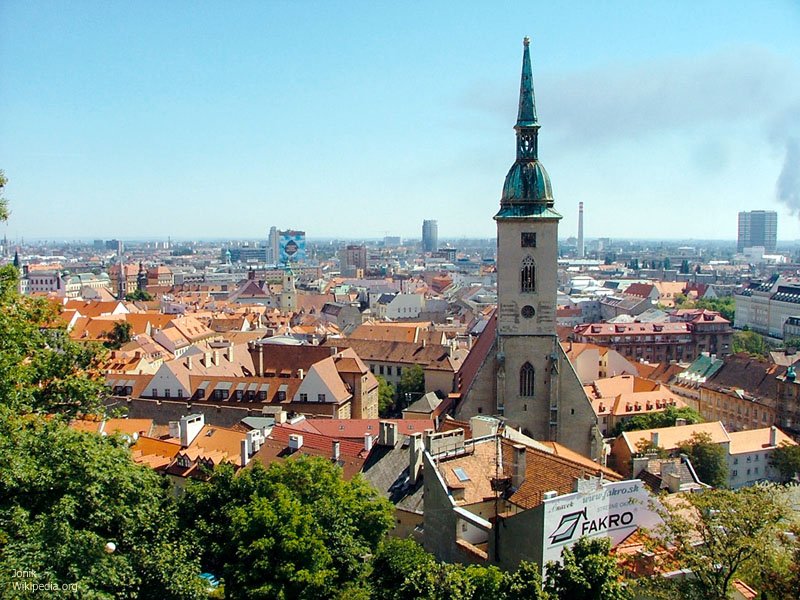
Bratislava’s compact historic center, its Old Town coextensive with the smallest administrative district in the entire country by area, holds a genuinely dense concentration of churches, palaces, and government buildings within an area easily walkable in a single day, including the Grassalkovich Palace, seat of the Slovak president, and the Summer Archbishop’s Palace, seat of the national government. Bratislava Castle, perched above the Old Town on a hill overlooking the Danube, offers genuinely sweeping views across the river into neighboring Austria and Hungary, a reminder of the city’s unusual geographic position at the meeting point of three modern national borders, making Bratislava genuinely the only national capital in the world bordering two other countries simultaneously.
Devín Castle, a genuinely striking ruin perched on a limestone cliff roughly 9 kilometers northwest of central Bratislava at the confluence of the Danube and Morava Rivers, has drawn settlers to this strategically significant location for millennia, its position guarded naturally by the Small Carpathian mountains on one side and converging rivers on the other. The site’s archaeological finds, including neolithic grave goods and Bronze Age sculptures displayed in the castle’s on-site museum, genuinely predate the medieval fortress ruins visible today by thousands of years, and the castle’s position directly on the modern Slovak-Austrian border adds a further layer of geopolitical significance to what remains, at its heart, a genuinely scenic riverside ruin. During the Cold War, Devín’s location directly on the Iron Curtain border made it a genuinely significant, heavily monitored site, and a memorial near the castle today commemorates those who died attempting to cross the nearby border into Austria during that period.
Bratislava Old Town and Devín Castle, Bratislava Region. Free to explore Old Town; castle admission fees apply. Best spring or fall for comfortable walking weather without peak summer crowds.

Spiš Castle
Genuinely one of the largest castle complexes in all of Central Europe, and one with a genuinely unusual explanation for its eventual ruin.
Spiš Castle
Construction of Spiš Castle began in the 12th century on a travertine hill in eastern Slovakia, and the complex grew considerably over subsequent centuries under a long succession of owners, Hungarian kings, the Zápolya family, the Thurzó family, and finally the Csáky family, who held the castle until 1945, expanding it into a sprawling fortress covering more than 41,000 square meters, genuinely one of the largest castle sites anywhere on the continent. The castle’s earliest surviving structures, a circular tower, a stone cistern, and portions of the original perimeter wall, have been dated through more than a decade of careful archaeological excavation, work that’s genuinely helped historians piece together the fortress’s complex, centuries-long construction sequence one section at a time.
The castle’s genuinely dramatic downfall came in 1780, when soldiers stationed at the site reportedly attempted to distill brandy in the castle’s cellar, an improvised operation that went badly wrong and sparked a fire severe enough to leave the once-grand fortress largely abandoned and gradually decaying for nearly two centuries afterward. That genuinely almost absurd origin story for the ruin of one of Europe’s largest castles has become something of a local legend in its own right, a reminder that even the most formidable medieval fortifications ultimately proved vulnerable to considerably more mundane 18th-century mishaps than any siege or invading army.
Spiš Castle was inscribed on the UNESCO World Heritage List in 1993, together with the nearby town of Levoča and the associated cultural monuments of Spišská Kapitula, sometimes nicknamed the “Vatican of Slovakia” for its concentration of significant religious architecture, and the small village of Žehra, home to a 13th-century church featuring genuinely remarkable, well-preserved medieval wall paintings depicting the coronation of a medieval Hungarian king. Levoča itself, a walled medieval town at the foot of the castle hill, holds one of the largest Gothic altars in the world inside its town church, a masterwork attributed to the medieval woodcarver known simply as Master Paul of Levoča, whose genuinely intricate craftsmanship remains a significant draw for visitors touring the wider UNESCO site beyond the castle ruins alone.
Restoration work, beginning in earnest in 1970 to stabilize the castle’s unstable rocky foundation and prevent further deterioration, has gradually opened more of the sprawling complex to visitors, and today’s on-site museum displays historic weapons and artifacts documenting the castle’s centuries of continuous, and occasionally explosive, habitation. The castle’s three distinct courtyards, upper, middle, and lower, each added and modified during different centuries of the site’s long occupation, genuinely allow visitors to trace the fortress’s architectural evolution simply by walking from one section to the next.
Near Spišské Podhradie, eastern Slovakia. Entry fee applies. Best late spring through early fall, when the castle’s full grounds and hiking approach paths remain most accessible.

The High Tatras
Genuinely the highest mountain range in the entire Carpathian system, and home to some of Central Europe’s most pristine glacial lakes.
The High Tatras
Gerlachovský štít, standing at 2,655 meters, is genuinely the highest peak not just in Slovakia but across the entire Carpathian mountain range, located within Tatra National Park alongside a UNESCO-recognized transboundary biosphere reserve shared with neighboring Poland. Štrbské Pleso, a glacial lake sitting at 1,346 meters elevation and the second-largest of its kind on the Slovak side of the range, remains one of the High Tatras’ most popular destinations, its resort town offering genuinely convenient access to hiking trails, and its still waters providing some of the range’s most reliably photographed mountain reflections. The lake’s name, derived from the nearby village of Štrba, replaced an older, more informal local nickname simply meaning “the puddle” or “pond,” a genuinely humble original name for what’s since become one of Slovakia’s most internationally recognized natural landmarks.
Popradské pleso, another significant glacial lake sitting directly along the Tatranská magistrála, the High Tatras’ major long-distance hiking trail, serves as a genuinely popular starting point for more demanding routes, including the ascent of Rysy, a peak straddling the Slovak-Polish border and notably once climbed by a young Karol Wojtyła, the future Pope John Paul II, well before his rise to the papacy. The park’s harsh alpine climate and genuinely significant elevation changes within a relatively compact area mean weather can shift with little warning even during summer months, and the Symbolic Cemetery near Popradské pleso, built to commemorate mountaineers who’ve lost their lives in the range over the decades, offers a sobering reminder of the terrain’s genuine, ever-present risks alongside its considerable natural beauty.

The High Tatras’ relatively small overall footprint, the entire range spans barely 26 kilometers in length, genuinely concentrates dramatic alpine scenery into a considerably more compact area than most major mountain ranges worldwide, meaning even a relatively short visit can realistically take in multiple glacial lakes, exposed ridgelines, and significant peaks without the extensive travel distances required in larger ranges elsewhere in Europe. Winter transforms the region into a genuinely significant ski destination as well, several resorts around Štrbské Pleso and the nearby town of Tatranská Lomnica offering downhill skiing alongside the area’s more famous summer hiking appeal.
Tatra National Park, northern Slovakia, along the Polish border. Park entry generally free; some facilities and cable cars charge separately. Best summer for hiking, winter for skiing, given the range’s genuinely significant seasonal character shift.

Understanding Slovakia’s History
Slovakia’s modern borders and identity emerged from a genuinely complex tangle of medieval Hungarian rule, centuries as part of the Austro-Hungarian Empire, a shared 20th-century state with the Czech lands, and finally full independence following the peaceful 1993 dissolution of Czechoslovakia, an amicable split genuinely unusual among post-communist European territorial changes for how little conflict it involved. That layered history explains much of what makes the country’s historic sites so genuinely varied, medieval Hungarian nobility built castles like Spiš during centuries when Slovak territory formed the northern frontier of the Kingdom of Hungary, and the country’s more recent, comparatively brief history as an independent state means many of its most significant landmarks predate modern Slovak nationhood by many centuries.

That context genuinely matters for understanding why so much of Slovakia’s most significant architecture reflects Hungarian, German, and broader Central European influences rather than a distinctly separate Slovak tradition, the country’s identity as an independent nation is considerably more recent than the castles, churches, and towns visitors encounter throughout a typical trip. Recognizing that layered, shared regional history, rather than expecting a single unbroken national narrative, genuinely enriches a visit to sites like Spiš Castle and Levoča, both shaped as much by the broader Kingdom of Hungary’s history as by anything specifically and exclusively Slovak in the strictest modern national sense.
Slovakia’s Remarkable Cave Systems
Beyond its castles and mountains, Slovakia genuinely holds one of the densest concentrations of significant limestone cave systems found anywhere in Europe, a UNESCO-recognized collection of caves in the Slovak and Aggtelek Karst regions spanning the border with Hungary, protected specifically for their exceptional geological formations and considerable scientific value. The Domica Cave, part of that broader UNESCO-listed karst system, connects underground to Hungary’s Baradla Cave, forming one continuous cave system that happens to cross an international border, and visitors can genuinely take an underground boat tour through sections of its dramatic stalactite and stalagmite formations.
The Demänovská Cave system, located in the Low Tatras rather than the higher range covered elsewhere in this guide, includes the Demänovská Cave of Liberty and the Demänovská Ice Cave, the latter genuinely notable for containing permanent ice formations that persist even through Slovakia’s warmer summer months, a genuinely striking natural phenomenon that draws visitors specifically curious about underground ice formation processes. These cave systems collectively represent a genuinely significant, if often overlooked, dimension of Slovak natural heritage that complements the country’s better-known castles and mountain peaks, offering visitors an entirely different kind of dramatic geological scenery hidden beneath the same landscape that produces the country’s famous surface attractions.

Slovakia’s karst regions developed over millions of years as slightly acidic groundwater gradually dissolved the area’s soft limestone bedrock, a genuinely slow geological process that’s produced not only extensive cave networks but also distinctive surface features including sinkholes and disappearing streams that vanish underground only to reemerge, sometimes miles away, through a completely different cave opening. Understanding this underlying karst geology genuinely adds a layer of scientific interest to what might otherwise seem like simply another scenic cave tour, connecting Slovakia’s celebrated surface landscapes to the equally significant, if considerably less visible, world existing directly beneath visitors’ feet throughout much of the country’s mountainous regions and rural countryside alike.
Comparing the Destinations
| Destination | Character | Best For |
|---|---|---|
| Bratislava & Devín | Compact capital, riverside ruin | Walkable history, easy day trips |
| Spiš Castle | Massive medieval fortress complex | Scale, dramatic history |
| The High Tatras | Alpine peaks, glacial lakes | Hiking, mountain scenery |
Each destination genuinely reflects a different facet of Slovakia’s compact but varied geography and history. Bratislava and Devín offer an accessible, easily combined introduction to the country’s urban and medieval past, Spiš Castle showcases the sheer scale of Central European medieval fortification at its most ambitious, and the High Tatras deliver genuinely serious alpine scenery within a country many visitors don’t associate with significant mountain terrain. A traveler with limited time might reasonably prioritize Bratislava and Devín given their easy proximity and combined half-day accessibility, while a longer trip genuinely allows for the fuller range of historical and natural experiences all three destinations, plus the country’s remarkable cave systems, together provide.
Planning Your Visit
Bratislava and Devín Castle pair naturally together, connected by a short bus ride, making them genuinely easy to combine within a single day for visitors based in the capital. Spiš Castle and the High Tatras both sit considerably further east, roughly four to five hours from Bratislava by car or train, meaning a comprehensive Slovakia itinerary covering all three destinations genuinely benefits from either a longer trip or a decision to fly into a more easterly airport, Košice specifically offers a genuinely practical alternative arrival point for visitors prioritizing Spiš Castle and the Tatras over the capital.
Slovakia’s rail network connects its major cities efficiently, though reaching more remote sections of Tatra National Park and some rural approaches to Spiš Castle genuinely benefits from a rental car, particularly for travelers hoping to visit multiple sites in a single day without relying entirely on regional bus schedules. The country adopted the euro in 2009, and English proficiency, while genuinely strong in Bratislava and major tourist areas, becomes noticeably less consistent in smaller towns near the Tatras, making a few basic Slovak phrases genuinely worthwhile for more rural stretches of a trip. Combining a Spiš Castle visit with an overnight stay in nearby Levoča genuinely allows for a more relaxed, unhurried exploration of the wider UNESCO site rather than a rushed single-day visit squeezed in around a longer journey elsewhere.
Slovak Food Worth Seeking Out
Bryndzové halušky, small potato dumplings topped with a distinctive soft sheep’s cheese called bryndza and often finished off with crispy bacon, genuinely functions as Slovakia’s national dish, appearing on menus across the entire country and reflecting the significant role sheep farming has genuinely and historically played in the mountainous Slovak countryside, particularly around the shepherding traditions still practiced in regions near the Tatras today. The dish’s specific cheese, bryndza, carries its own genuinely protected geographical status within the European Union, meaning genuine Slovak bryndza must be produced according to traditional methods within specific designated regions, a legal protection reflecting just how genuinely central this particular cheese remains to national culinary identity today.

Kapustnica, a hearty, warming sauerkraut soup typically containing sausage and dried mushrooms, remains a genuinely beloved Christmas tradition, though many restaurants across the country genuinely serve it year-round given its broad popularity well beyond just the holiday season alone. Slovak wine production, genuinely less internationally recognized than that of neighboring countries but considerably significant regionally nonetheless, centers on the Small Carpathians wine region near Bratislava, offering visitors an easy day-trip pairing of vineyard tours with the capital’s own historic sights.
Borovička, a distinctly juniper-flavored spirit similar to gin but with its own unique Slovak character and production tradition, remains a genuinely popular local digestif worth sampling alongside a proper Slovak meal, particularly in the country’s more rural regions where traditional distilling practices remain genuinely widespread. Traditional Slovak folk costumes, varying considerably by region and local tradition, remain actively worn during major festivals and celebrations throughout the country, a colorful, still-living cultural tradition worth seeking out for visitors whose trip happens to align with a regional folk festival calendar.
If this guide helped you plan a Slovakia trip, check out more travel videos from Worldly Traveler, including our full 25 Slovakia hidden gems video below.
Whichever destination ends up on your itinerary, Slovakia genuinely rewards travelers willing to look past Bratislava toward the country’s considerably more varied historical and natural character. Devín Castle’s riverside ruins, Spiš Castle’s sprawling, dramatically fire-scarred fortifications, and the High Tatras’ genuinely serious alpine scenery each tell a distinct chapter of a small, often overlooked country that offers considerably more depth than its modest international profile might initially suggest. From standing atop a castle hill overlooking three separate countries, to walking the halls of a fortress ruined by a botched batch of homemade brandy, to gazing across a glacial lake once crossed by a future pope on his way up the region’s highest peaks, Slovakia genuinely rewards the kind of deeper, beyond-the-capital exploration this guide has tried to encourage throughout every section above.
Frequently Asked Questions
What caused Spiš Castle to fall into ruin?
Spiš Castle was severely damaged by a fire in 1780, reportedly caused by soldiers stationed there attempting to distill homemade brandy in the cellar, an accident that led to the castle’s gradual abandonment and decay until careful restoration efforts finally began in 1970.
Where is Devín Castle located?
Devín Castle sits on a limestone cliff at the confluence of the Danube and Morava Rivers, roughly 9 kilometers northwest of central Bratislava, marking the modern border between Slovakia and Austria along a historically significant strategic river junction that’s drawn settlers for many thousands of years.
What is the highest peak in Slovakia?
Gerlachovský štít, standing at 2,655 meters, is the highest peak in Slovakia and the entire Carpathian mountain range, located within the High Tatras in Tatra National Park along the shared border with neighboring Poland.
How large is Spiš Castle?
Spiš Castle covers more than 41,000 square meters, making it one of the largest castle complexes in Central Europe, and it was inscribed on the UNESCO World Heritage List in 1993 alongside several nearby historic sites, including the medieval walled town of Levoča.