
Most “NYC hidden gems” content stays firmly within Manhattan, and often within a fairly small slice of it at that. This guide deliberately does something different: it covers all five boroughs, on the theory that a genuinely comprehensive New York hidden gems guide can’t stop at the East River. Brooklyn, Queens, the Bronx, and Staten Island each hold spots that see a fraction of Manhattan’s tourist traffic despite offering experiences you simply can’t get on the more famous island.
None of this is an argument against Times Square or Central Park — both are worth seeing at least once. It’s an argument for treating Manhattan as one of five boroughs worth exploring rather than the entire city, especially for repeat visitors who’ve already covered the standard first-timer list.
Manhattan Beyond the Obvious
Brooklyn Beyond Williamsburg
Queens
The Bronx
Staten Island
Getting Around: Subway and Ferry Logistics
Best Time of Year to Visit NYC
NYC Food Worth Seeking Out
Where to Base Yourself
FAQ
Manhattan Beyond the Obvious
Even on the most-covered island in the country, a few spots stay genuinely quiet.
1. The Cloisters
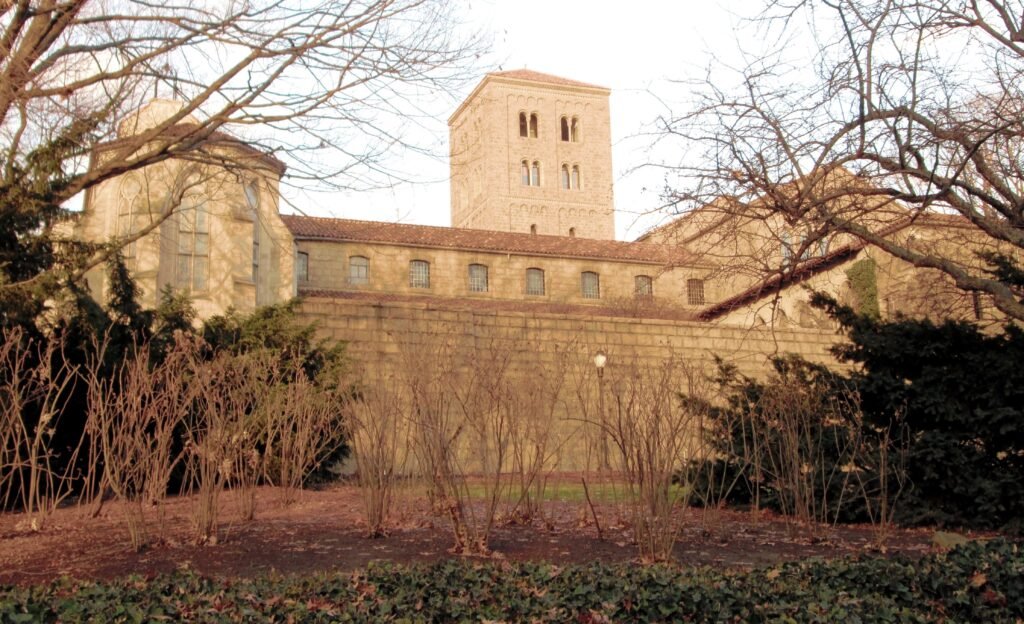
A branch of the Metropolitan Museum of Art built specifically to house its medieval European collection, the Cloisters sits inside Fort Tryon Park in Upper Manhattan, incorporating genuine architectural elements from French monasteries into a building that feels transported from another century entirely. Its gardens, wrapped in cloistered walkways facing the Hudson River, offer some of the most peaceful outdoor space anywhere on the island, and the museum’s collection of tapestries and illuminated manuscripts rivals anything in the main Met building on Fifth Avenue.
Fort Tryon Park, Upper Manhattan. Suggested admission (included with Met ticket, valid the same day). Best combined with a walk through the surrounding park, one of the city’s most scenic.

2. Roosevelt Island’s Tram and Lighthouse
A narrow island in the East River reachable by an aerial tram offering genuinely striking views of both Manhattan and Queens along the way, Roosevelt Island also holds a 19th-century lighthouse at its northern tip and the ruins of a former smallpox hospital, a genuinely unusual combination for a strip of land most tourists never realize is accessible at all. Four Freedoms Park, a memorial designed by architect Louis Kahn at the island’s southern tip, adds a striking, minimalist counterpoint to the older ruins at the opposite end.
East River, between Manhattan and Queens. Tram fare covered by standard MetroCard. Best combined with a walk the length of the island for the lighthouse and hospital ruins.
3. The Elevated Acre
A genuinely secluded public plaza tucked above street level in the Financial District, the Elevated Acre offers a wooden amphitheater, a small lawn, and sweeping harbor views, all just steps from Wall Street yet almost entirely unknown to the thousands of workers and tourists passing beneath it daily.
55 Water Street, Financial District. Free. Best on a weekday lunch hour when the plaza is at its liveliest but still uncrowded.
Brooklyn Beyond Williamsburg
Williamsburg gets the search volume, but Brooklyn’s other neighborhoods hold plenty worth exploring.
4. Green-Wood Cemetery
A 478-acre Victorian-era cemetery predating and directly inspiring the design of Central Park and Prospect Park, Green-Wood offers rolling hills, ornate mausoleums, and sweeping views over New York Harbor from its highest point, all while serving as the final resting place for a genuinely notable roster of historical figures, from Leonard Bernstein to Samuel Morse. In its 19th-century heyday, the cemetery was itself a major tourist attraction in its own right, drawing more annual visitors than Niagara Falls at one point, a genuinely surprising fact most modern visitors never learn.
Brooklyn, near Park Slope and Sunset Park. Free to enter. Best combined with a guided tour for the fullest historical context.

5. Red Hook’s Waterfront
A former shipping neighborhood with a genuinely industrial character that’s resisted much of the gentrification seen elsewhere in Brooklyn, Red Hook offers waterfront views of the Statue of Liberty, a scenic and cheap ferry connection, and a distinctly quieter pace than its more heavily trafficked neighbors. The neighborhood’s lack of direct subway access has historically kept it more insulated from the rapid change seen elsewhere in Brooklyn, giving it a genuinely different feel from areas just a few subway stops away.
Red Hook, Brooklyn. Free to explore; ferry fare covered by standard MetroCard. Best combined with a stop at one of the neighborhood’s small, independent bars or restaurants.
6. City Reliquary Museum
A small, genuinely eccentric museum dedicated entirely to New York City ephemera and history, the City Reliquary displays everything from vintage seltzer bottles to subway tokens in a storefront space that feels more like a passionate collector’s personal archive than a formal institution.
Williamsburg, Brooklyn. Small entry fee. Best for travelers with a genuine curiosity about the small, overlooked details of NYC history.
Queens
7. Socrates Sculpture Park
A waterfront sculpture park built on a former illegal dumping site and landfill, Socrates Sculpture Park now hosts large-scale outdoor art installations with genuinely striking Manhattan skyline views across the East River, all completely free and considerably less crowded than the city’s indoor museums.
Long Island City, Queens. Free. Best at sunset for the skyline views across the river.
8. Flushing’s Food Scene Beyond the Well-Known Spots
Flushing’s reputation as a food destination is well established, but the neighborhood’s genuine diversity extends well beyond its most-reviewed restaurants, with specific regional Chinese cuisines, Korean bakeries, and South Asian markets all worth seeking out on a slower, more exploratory visit rather than a single pre-planned meal. The neighborhood’s indoor food halls, often tucked into unmarked basement spaces beneath ordinary-looking storefronts, hold some of the most genuinely authentic regional Chinese cooking anywhere in the country, a detail that rarely makes it into standard NYC food guides.
Flushing, Queens. Free to explore; meal prices vary. Best on a weekend when the neighborhood’s markets and food halls are busiest.
The Bronx
9. New York Botanical Garden’s Lesser-Visited Sections
Beyond its famous conservatory and rose garden, the New York Botanical Garden protects 50 acres of genuinely old-growth forest, the largest remaining tract of the original forest that once covered New York City, offering a walk through terrain that predates the city itself.
Bronx Park, the Bronx. Entry fee; some garden-only sections free on certain days. Best in autumn for the forest’s fall color.
10. Wave Hill
A public garden and cultural center set on a former private estate overlooking the Hudson River and the Palisades cliffs beyond, Wave Hill offers some of the most striking river views in the entire city, alongside a genuinely well-curated garden that draws a fraction of the crowds seen at the more famous Botanical Garden nearby. The estate has hosted a genuinely notable roster of former residents and visitors over the decades, including Mark Twain and Theodore Roosevelt, adding a layer of history to what’s already one of the most scenic spots in the borough.
Riverdale, the Bronx. Entry fee; free on select weekday mornings. Best at sunset for the view over the Hudson and Palisades.
11. City Island
A small, genuinely nautical community connected to the mainland Bronx by a single bridge, City Island feels almost entirely disconnected from the rest of New York City, with seafood shacks, a small-town Main Street, and a boat-building history that gives it a character closer to a New England fishing village than anything else in the five boroughs. The island’s yacht clubs and marine supply shops still reflect a working maritime economy rather than a purely nostalgic theme, since boat building and repair genuinely remain part of the local economy today.
City Island, the Bronx. Free to explore. Best for a seafood lunch at one of the island’s waterfront restaurants.
Staten Island
12. The Staten Island Ferry
Most tourists rush past the free Staten Island Ferry, missing one of the best skyline views in the entire city, framing the Statue of Liberty, Ellis Island, and Lower Manhattan’s skyscrapers from the open deck of a boat that costs nothing to ride and requires no advance planning whatsoever. The round trip takes roughly an hour total and runs 24 hours a day, making it one of the few genuinely world-class tourist experiences in New York available at any hour without a ticket or a reservation.
Whitehall Terminal, Lower Manhattan, to St. George, Staten Island. Free. Best sitting on the right side of the boat heading to Staten Island for the best Statue of Liberty views.

13. Snug Harbor Cultural Center
A former retirement home for sailors converted into a sprawling arts and cultural campus, Snug Harbor holds botanical gardens, art galleries, and a collection of well-preserved 19th-century Greek Revival buildings, all set on 83 acres that see remarkably few visitors relative to their scale and quality. The complex’s Chinese Scholar’s Garden, one of only a handful of authentic examples outside China itself, adds a genuinely unexpected cultural layer to a campus most visitors associate purely with its maritime history.
Staten Island, a short bus ride from the ferry terminal. Free to walk the grounds; some galleries and gardens charge admission. Best paired with the ferry ride itself for a genuinely full Staten Island day.
Getting Around: Subway and Ferry Logistics for a Multi-Borough Day
NYC Ferry, a citywide ferry network separate from the free Staten Island Ferry, connects Manhattan to waterfront neighborhoods in Brooklyn, Queens, and the Bronx at a flat fare matching the subway, and offers a genuinely scenic, underused alternative to underground transit for reaching spots like Red Hook and Astoria near Socrates Sculpture Park. Realistic time estimates matter for a multi-borough day: subway trips between distant boroughs can easily take 45-60 minutes each way, so pairing one or two boroughs per day, rather than trying to cover several in a single itinerary, tends to work out better in practice.
A standard MetroCard or the newer OMNY contactless payment system covers subway, bus, and NYC Ferry fares uniformly, making multi-borough days logistically simple even if they require some genuine patience with transit time. For City Island and Wave Hill specifically, a combination of subway and connecting local bus is usually necessary, since neither sits directly on a subway line, so building in extra transfer time for these two stops is worth doing.
Best Time of Year to Visit NYC
Late spring (May-June) and fall (September-October) offer comfortable walking weather and good conditions for outdoor spots like Green-Wood Cemetery, Wave Hill, and Socrates Sculpture Park, both of which are considerably more pleasant to explore without summer’s intense heat and humidity. Winter offers a genuinely different, quieter version of the city, particularly appealing for indoor spots like the Cloisters and City Reliquary, though outdoor exploration becomes less comfortable given the cold.
Fall specifically rewards a trip built around this guide’s outdoor spots more than any other season, since Green-Wood Cemetery’s mature trees, Wave Hill’s gardens, and the Bronx’s stretch of old-growth forest at the New York Botanical Garden all take on genuinely striking color that summer’s greenery simply doesn’t offer.
NYC Food Worth Seeking Out
Rather than defaulting to a “best pizza in NYC” search, which returns largely the same handful of already-famous spots regardless of borough, seeking out a specific ethnic-neighborhood specialty in each borough tends to produce a more memorable, less saturated food experience: Flushing’s regional Chinese cuisine in Queens, City Island’s seafood shacks in the Bronx, and Red Hook’s small-scale, independent food vendors in Brooklyn each reflect something genuinely specific to that borough rather than a generalized “NYC food” experience.
Staten Island’s own food scene, often overlooked entirely by visitors who treat the ferry ride as the whole destination, includes a genuinely strong Sri Lankan food scene concentrated around Tompkinsville, a detail most citywide “best restaurants” lists never mention simply because they rarely extend research past the other four boroughs.
If this guide helped you plan your New York City trip, subscribe to Worldly Traveler on YouTube for more hidden gems guides from around the world.
Where to Base Yourself
Manhattan remains the most practical single base for a first-time visitor given its central subway connections to all four other boroughs, though it’s also the most expensive. Long Island City in Queens, just one stop from Manhattan on several subway lines, offers meaningfully lower prices and easy access to both Manhattan and Socrates Sculpture Park without sacrificing much in the way of convenience. For travelers building a trip specifically around this guide’s borough-spanning approach, splitting a longer stay between a Manhattan or Queens base and a night or two in Brooklyn near Green-Wood Cemetery or Red Hook can cut down on daily transit time considerably, especially for anyone planning a full day in each of those neighborhoods rather than a quick pass-through.
Frequently Asked Questions
What are the best hidden gems in NYC?
The Cloisters and Roosevelt Island in Manhattan, Green-Wood Cemetery and Red Hook in Brooklyn, Socrates Sculpture Park in Queens, Wave Hill and City Island in the Bronx, and the Staten Island Ferry’s free skyline view and Snug Harbor Cultural Center all offer a genuinely different side of New York than the standard Manhattan-only sightseeing list.
Is it worth leaving Manhattan when visiting NYC?
Yes — each of the other four boroughs has its own distinct character and genuine attractions, and several, like Green-Wood Cemetery and Socrates Sculpture Park, offer experiences that simply don’t exist in Manhattan, making a borough-spanning trip a meaningfully different and often less crowded way to see the city.
What is the best time of year to visit NYC?
Late spring (May-June) and fall (September-October) offer comfortable walking weather and good conditions for outdoor spots like Green-Wood Cemetery, Wave Hill, and Socrates Sculpture Park, while summer brings intense heat and humidity and winter offers a genuinely different, quieter version of the city at the cost of cold temperatures.
Is the subway safe and easy for tourists?
The subway is generally safe and, once you understand the express/local distinction, straightforward to use, though ordinary city-travel awareness (mind your belongings, stay alert on quieter platforms late at night) applies here as in any major transit system.
How many days do you need to see all five boroughs?
7-8 days allows a meaningful visit to each borough alongside Manhattan’s essential sights. A shorter 4-5 day trip can still incorporate this guide by picking one or two boroughs beyond Manhattan, such as Brooklyn and Queens, rather than attempting all five.
What are the best free things to do in NYC?
The Staten Island Ferry’s skyline views, Green-Wood Cemetery, Socrates Sculpture Park, Wave Hill’s suggested-donation weekday admission, and a walk through Roosevelt Island are all free or nearly free, offering genuine New York experiences without the cost of paid attractions.