
The Gateway Arch and Kansas City’s barbecue scene anchor most first-time Missouri itineraries, and both genuinely earn their reputation — but the Show-Me State holds a remarkably deep bench of Ozark caves, castle ruins, and spring-fed rivers for travelers willing to look beyond its two big cities. This guide covers more than 25 Missouri hidden gems, verified against a real video guide, organized by region so you can build a route through whichever part of the state you’re exploring.
St. Louis & the East
Kansas City & the West
The Ozarks
Central Missouri & the Missouri River Valley
The Ozarks Road Trip
Missouri Food Worth Seeking Out
Best Time to Visit Missouri
FAQ
St. Louis & the East
Beyond the Gateway Arch, the St. Louis region and eastern Missouri hold genuinely unusual attractions and dramatic geology.
City Museum (St. Louis)
A genuinely one-of-a-kind indoor and outdoor playground built from repurposed architectural salvage and industrial materials, featuring multi-story slides, a school bus suspended off the roof edge, and a genuinely disorienting maze of tunnels and climbing structures unlike any conventional museum.
Downtown St. Louis. Entry fee. Best allotting several hours given the sheer scale of the structure to explore.
Elephant Rocks State Park
A genuinely striking outcrop of massive pink granite boulders, formed from 1.5-billion-year-old rock and weathered into rounded shapes resembling a train of circus elephants — the largest, nicknamed “Dumbo,” weighs an estimated 680 tons. The park’s one-mile Braille Trail was specifically designed to accommodate visitors with visual or physical disabilities.
Iron County, southeastern Missouri. Free. Best combined with a Johnson’s Shut-Ins visit given regional proximity.

Johnson’s Shut-Ins State Park
A genuinely unique natural water park where the Black River has carved narrow channels and pools through ancient volcanic rock (“shut-ins” refers to the river being narrowly confined), offering some of the best natural swimming in the entire Ozark region.
Reynolds County, southeastern Missouri. Park entry fee. Best in summer for swimming; water levels and safety conditions should be checked before visiting.
Taum Sauk Mountain State Park
Home to Missouri’s highest point at 1,772 feet, along with Mina Sauk Falls, the state’s tallest waterfall, cascading down a series of ancient volcanic rock formations within a genuinely rugged section of the St. Francois Mountains.
Iron County, southeastern Missouri. Free. Best after rainfall for maximum waterfall flow.
Meramec Caverns
One of Missouri’s most famous show caves, with a colorful (if partly disputed) legend claiming it once served as a hideout for outlaw Jesse James, offering guided tours through dramatically lit formations including one of the largest cave formations in the world, the “Stage Curtain.”
Near Stanton, eastern Missouri. Tour fee. Best combined with a broader Route 66 road trip stop, given the cave’s historic roadside attraction status.
Onondaga Cave State Park
Considered one of the most beautiful show caves in the country, its formations remarkably well preserved thanks to decades of protective ownership before the site became a state park, offering both a standard walking tour and a more adventurous lantern tour route.
Near Leasburg, eastern Missouri. Tour fee. Best booking the lantern tour for a more atmospheric, less crowded cave experience.
Grand Gulf State Park
Nicknamed “Missouri’s Little Grand Canyon,” this dramatic collapsed cave system has created a canyon roughly 130 feet deep, with a natural bridge and disappearing stream that flows underground for miles before resurfacing in Arkansas.
Near Thayer, southern Missouri. Free. Best combined with a broader southern Missouri Ozarks road trip.
Ste. Genevieve Historic District
Missouri’s oldest permanent European settlement, founded by French colonists in the 1730s, preserving the largest collection of French colonial vertical-log architecture remaining in North America — a genuinely rare architectural heritage found almost nowhere else in the country.
Ste. Genevieve, eastern Missouri. Free to explore; individual house museum fees vary. Best combined with a Hermann Wine Trail day given the shared Missouri River region.
Wilson’s Creek National Battlefield
The site of the first major Civil War battle west of the Mississippi River, fought in 1861, preserving the battlefield largely as it appeared at the time, offering genuine historical context for the war’s often-overlooked western theater.
Near Springfield, southwestern Missouri. Entry fee. Best with the auto tour route for covering the battlefield’s full scope efficiently.
Weston Bend State Park
A scenic park overlooking the Missouri River near the historic town of Weston, offering hiking and biking trails through bluff-top terrain with genuinely sweeping river valley views.
Near Weston, northwestern Missouri. Park entry fee. Best combined with a Weston historic downtown visit given the short distance.
Kansas City & the West
Western Missouri holds fewer entries in this particular guide but pairs naturally with the state’s central and Ozark regions for a broader loop.
Katy Trail State Park
The longest developed rail-trail in the United States, stretching roughly 240 miles across Missouri along a former rail corridor, offering a genuinely epic multi-day biking or hiking route through small river towns and wine country.
Statewide, spanning much of central Missouri. Free. Best in spring or fall for comfortable multi-day riding temperatures.
The Ozarks
Southern Missouri’s Ozark Highlands hold the state’s most concentrated collection of caves, springs, and family-friendly recreation areas.
Alley Spring & Mill
A genuinely picturesque red gristmill built in 1894, set directly beside one of Missouri’s largest springs, its vivid turquoise-blue pool created by the sheer volume and clarity of spring water flowing from the underlying karst aquifer.
Near Eminence, southern Missouri, part of Ozark National Scenic Riverways. Free. Best in the morning for the clearest light on the spring’s blue-green water.
Big Cedar Lodge
A large, genuinely impressive Ozark Mountain resort near Branson, blending rustic wilderness lodging with an on-site golf course designed by Tiger Woods and Payne Stewart Golf Club, alongside extensive outdoor recreation facilities.
Near Branson, southwestern Missouri. Resort and activity fees vary. Best combined with a broader Branson-area trip given proximity.
Dogwood Canyon Nature Park
A genuinely well-managed private nature preserve offering trolley tours, horseback riding, and mountain biking through Ozark canyon terrain, home to a managed bison and elk herd within a carefully restored ecosystem.
Near Branson/Lampe, southwestern Missouri. Entry fee. Best in fall for foliage color throughout the canyon.
Butterfly Palace (Branson)
A large indoor tropical conservatory housing hundreds of free-flying butterflies from around the world, offering a genuinely immersive nature experience regardless of outside weather conditions.
Branson, southwestern Missouri. Entry fee. Best combined with a broader Branson entertainment district visit.
Lake of the Ozarks State Park
Missouri’s largest state park, offering extensive shoreline access to the massive Lake of the Ozarks reservoir, alongside genuinely underrated hiking trails through Ozark forest terrain away from the lake’s more developed resort areas.
Near Osage Beach, central Missouri. Park entry fee. Best in summer for full lake recreation access.
Ha Ha Tonka State Park
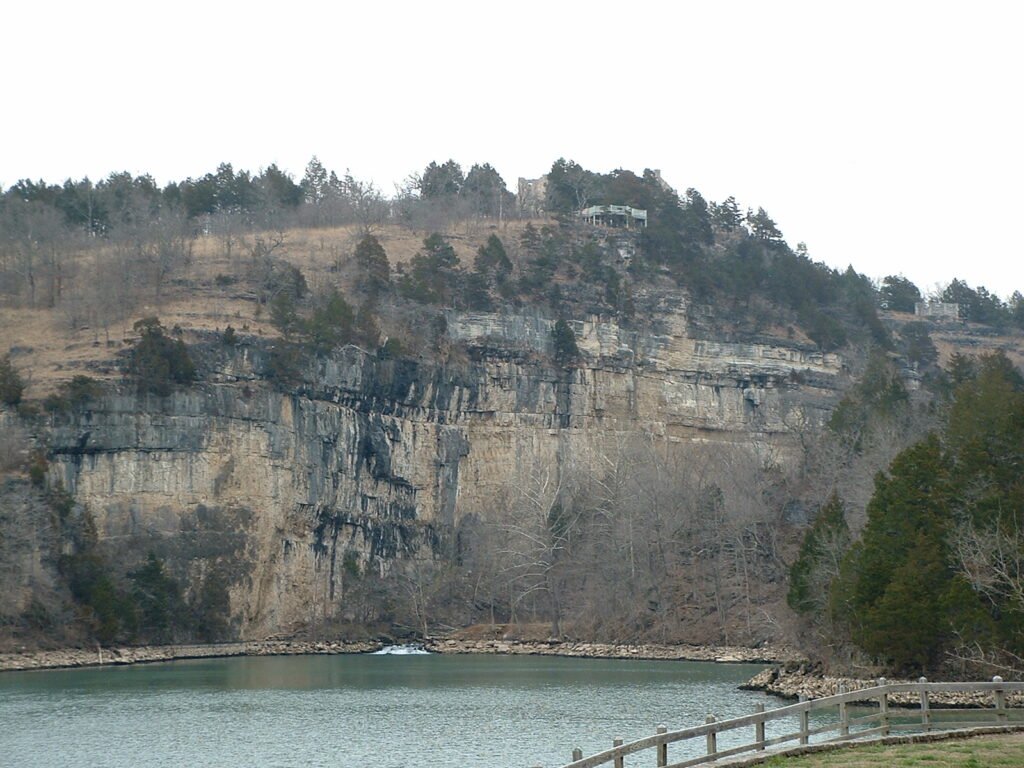
Missouri’s most photographed state park landmark — the haunting stone ruins of an early 1900s European-style castle, built by Kansas City businessman Robert Snyder and destroyed by fire in 1942, perched dramatically on a bluff above the Lake of the Ozarks and a 12th-largest natural spring in the state.
Near Camdenton, central Missouri. Free. Best at sunset for the castle ruins’ silhouette against the lake below.
Mark Twain Cave (Hannibal)
The genuine cave that inspired scenes in Mark Twain’s “The Adventures of Tom Sawyer,” located in the author’s hometown of Hannibal, offering guided tours through the same passages Twain himself explored as a boy.
Hannibal, northeastern Missouri. Tour fee. Best combined with a broader Hannibal Mark Twain historic sites visit.
Laura Ingalls Wilder Historic Home & Museum
The final home of the “Little House on the Prairie” author, where she wrote most of her famous book series later in life, preserving genuine manuscripts and personal items alongside the farmhouse itself.
Mansfield, southern Missouri. Entry fee. Best for fans of the book series specifically, given the site’s literary focus.
Central Missouri & the Missouri River Valley
The Missouri River corridor through central Missouri holds the state’s wine country and its capital-area attractions.
Hermann Wine Trail
A cluster of historic wineries along the Missouri River in the German-settled town of Hermann, tracing roots back to 19th-century German immigrants who established the state’s original wine industry — genuinely significant enough that Missouri wine once rivaled France’s before Prohibition and phylloxera devastated the industry.
Hermann, central Missouri. Tasting fees vary by winery. Best in fall during harvest festival season.
Powell Gardens
Kansas City’s official botanical garden, spread across 970 acres of restored native landscape and formal display gardens, including a genuinely striking modern chapel with floor-to-ceiling glass overlooking a private garden setting.
Near Kingsville, western Missouri. Entry fee. Best in spring for peak flowering displays.
Missouri Botanical Garden
One of the oldest botanical gardens in the United States, founded in 1859, holding a genuinely significant Japanese garden considered among the best in North America, alongside an extensive orchid collection and ongoing plant science research programs.
St. Louis. Entry fee. Best in spring or early summer for peak garden bloom.
Rock Bridge Memorial State Park
Home to a genuinely rare natural rock bridge formed by a collapsed cave system, along with an extensive network of hiking trails through the karst-heavy terrain surrounding Columbia.
Near Columbia, central Missouri. Free. Best combined with a University of Missouri campus visit given the shared Columbia location.
Castlewood State Park
A genuinely popular St. Louis-area park along the Meramec River, its bluff-top trails offering panoramic river valley views within a short drive of the city, historically a popular resort destination during the early 20th century.
Near St. Louis. Free. Best on a weekday to avoid the park’s significant weekend crowds given its proximity to the city.
Glore Psychiatric Museum
A genuinely unusual and thought-provoking museum documenting the history of mental health treatment through recreated historical exhibits, including some genuinely unsettling depictions of outdated and now-discredited treatment methods.
St. Joseph, northwestern Missouri. Entry fee. Best for travelers with a genuine interest in medical history.
The Ozarks Road Trip
The Ozark Highlands hold this guide’s densest concentration of hidden gems, and a loop connecting Elephant Rocks, Johnson’s Shut-Ins, Taum Sauk Mountain, and Meramec Caverns in the eastern Ozarks works well as a focused 2-3 day trip from St. Louis. A separate southern loop through Alley Spring, Grand Gulf, Ha Ha Tonka, and the Branson-area attractions (Big Cedar Lodge, Dogwood Canyon, the Butterfly Palace) suits travelers approaching from the southwest or looking to combine natural scenery with Branson’s entertainment district. Given the Ozarks’ winding, hilly roads, actual drive times often run longer than straight-line distances suggest — building in buffer time between stops is genuinely worthwhile.
Missouri Food Worth Seeking Out
Kansas City barbecue, centered on slow-smoked meats and a thick, sweet, tomato-and-molasses-based sauce, remains genuinely distinct from St. Louis barbecue, which leans more toward pork steaks and St. Louis-cut spare ribs with its own tangier sauce tradition — a friendly regional rivalry worth sampling both sides of. St. Louis-style pizza, cut into squares rather than triangular slices and topped with Provel cheese (a processed cheese blend rarely found outside the region), remains a genuinely polarizing but essential local specialty. Toasted ravioli, breaded and fried rather than boiled, originated in St. Louis’s Italian community and remains a beloved regional appetizer. Missouri’s wine country, centered around Hermann and the broader Missouri River Valley, produces genuinely distinctive wines from cold-hardy hybrid grape varieties suited to the state’s climate, worth exploring beyond more familiar wine regions’ typical grape varieties.
Best Time to Visit Missouri
April through May and September through October offer the most comfortable temperatures statewide, avoiding both summer’s heat and humidity and any winter cold. Spring brings Missouri’s peak severe weather season, including tornado risk, particularly across the state’s central and southern regions — worth monitoring forecasts closely during a spring visit. Summer remains genuinely popular for the Ozarks’ lake and river recreation despite the heat, given how central water-based activities are to the region’s tourism economy. Fall brings excellent foliage across the Ozark Highlands, making September-October a particularly rewarding window for the region’s caves, waterfalls, and scenic drives.
I cover all 25 hidden gems from this guide in the video above. If this guide helped you plan your Missouri trip, subscribe to Worldly Traveler on YouTube for more travel guides from around the world.
Frequently Asked Questions
What are the best hidden gems in Missouri?
Some of the best hidden gems in Missouri include Ha Ha Tonka State Park’s castle ruins, Elephant Rocks State Park, Johnson’s Shut-Ins State Park, Meramec Caverns, and the historic Ste. Genevieve District, all offering a side of the state beyond St. Louis and Kansas City.
Is the Ozarks region worth visiting in Missouri?
Yes — the Ozark Highlands hold some of Missouri’s most dramatic natural scenery, including caves, spring-fed rivers, and granite rock formations, alongside popular recreation areas like the Lake of the Ozarks and Branson.
How many days do you need to explore Missouri’s hidden gems?
7-10 days allows a well-paced loop covering St. Louis, the Ozarks, and either Kansas City or central Missouri. A shorter 4-5 day trip can focus on just one region.
What is the best time of year to visit Missouri?
April-May and September-October offer the most comfortable temperatures. Summer brings hot, humid conditions statewide, and severe weather (including tornadoes) is most common in spring.
Is St. Louis-style barbecue different from Kansas City barbecue?
Yes — Kansas City barbecue is known for slow-smoked meats with a thick, sweet, tomato-based sauce, while St. Louis barbecue centers more on pork steaks and St. Louis-cut spare ribs, with its own distinct sauce tradition.