
Baltimore’s Inner Harbor and Maryland’s proximity to Washington DC anchor most first-time visits to the state, and both genuinely reward a trip — but Maryland’s real character lives in its wild coastal islands, Chesapeake Bay watermen towns, and western Appalachian mountains, all packed into one of the most geographically compact and varied states in the country. This guide covers more than 25 Maryland hidden gems, verified against a real video guide, organized by region so you can build a route through whichever part of the state you’re exploring.
Baltimore & Central Maryland
The Eastern Shore & Chesapeake Bay
Western Maryland & the Appalachians
Southern Maryland
Chesapeake Bay Basics
Maryland Food Worth Seeking Out
Best Time to Visit Maryland
Video: Delaware Hidden Gems
FAQ
Baltimore & Central Maryland
Beyond the Inner Harbor, Baltimore and the surrounding central region hold genuinely significant history and free-admission culture.
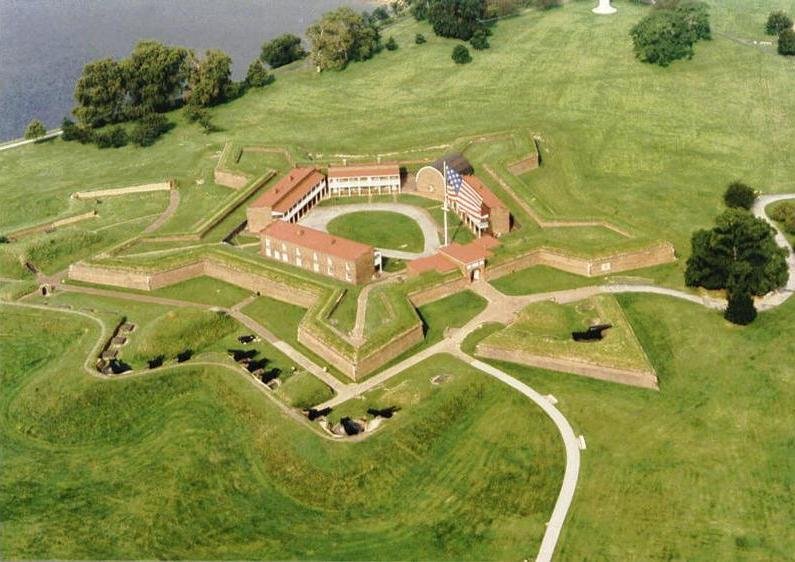
Fort McHenry (“The Birthplace of the Star-Spangled Banner”)
The site where Francis Scott Key witnessed the British bombardment of Baltimore Harbor in September 1814, an event that inspired him to write the poem that became “The Star-Spangled Banner” — the fort successfully defended the city and remained in continuous military use through World War I.
Locust Point, Baltimore. Entry fee. Best on September 13-14 if timing coincides with the fort’s annual Defenders’ Day commemoration.
The Walters Art Museum (“A World of Art, for Free!”)
A genuinely world-class art museum spanning 55 centuries of art history, from ancient Egyptian artifacts to European masterpieces, offering free general admission — a rarity among museums of this caliber anywhere in the country.
Mount Vernon, Baltimore. Free general admission. Best combined with a Mount Vernon neighborhood walk given the museum’s central location.
Patapsco Valley State Park (“A Forest in the Suburbs”)
A genuinely sprawling forested park stretching along the Patapsco River through the Baltimore-DC corridor, offering serious hiking, historic mill ruins, and swinging bridges within a short drive of dense suburban development.
Multiple access points, Central Maryland. Park entry fee. Best in fall for foliage along the river gorge.
Sugarloaf Mountain (“The Lone Mountain”)
A genuinely distinctive isolated peak (a “monadnock,” geologically separate from any connected mountain range) rising dramatically from the Frederick County countryside, offering panoramic views and hiking trails maintained by a private, non-profit conservation foundation rather than the state.
Dickerson, Frederick County. Free. Best in fall for foliage views from the summit overlooks.

Savage Mill (“Shopping in a 19th-Century Mill”)
A genuinely well-preserved 19th-century textile mill complex converted into a shopping and antiques destination, its original stone and timber architecture offering a tangible connection to Maryland’s early industrial history.
Savage, Central Maryland. Free to browse. Best combined with a broader Howard County day trip.
Quiet Waters Park (“Art and Nature in Annapolis”)
A genuinely well-designed Annapolis-area park blending walking and biking trails with a notable outdoor sculpture garden, offering waterfront views over the South River alongside its cultural programming.
Annapolis, Central Maryland. Park entry fee. Best combined with a broader Annapolis historic district visit.
The Eastern Shore & Chesapeake Bay
Maryland’s Eastern Shore holds the state’s wildest coastal landscapes and most distinctive watermen culture.
Assateague Island (“Wild Horses and Salty Air”)
A genuinely wild barrier island straddling the Maryland-Virginia border, home to feral horses believed descended from colonial-era livestock left to graze free of mainland fencing laws and taxation — the Maryland herd, managed by the National Park Service, roams freely across 37 miles of beach, dune, and salt marsh.
Worcester County, Maryland’s southeastern coast. Park entry fee. Best in shoulder season (spring or fall) to avoid both summer crowds and biting insects.

Blackwater National Wildlife Refuge (“The Eagle’s Domain”)
One of the highest concentrations of nesting bald eagles anywhere on the US East Coast, this vast tidal marsh refuge also serves as critical habitat for the endangered Delmarva fox squirrel, offering genuinely excellent wildlife viewing along a scenic driving loop.
Near Cambridge, Eastern Shore. Entry fee. Best in winter for peak eagle and migratory waterfowl activity.
Calvert Cliffs State Park (“Hunting for Prehistoric Treasure”)
Dramatic 30-million-year-old fossil-bearing cliffs along the Chesapeake Bay, genuinely famous among amateur paleontologists for the fossilized shark teeth and marine fossils that regularly wash up on the beach below, particularly after storms.
Calvert County, Chesapeake Bay. Park entry fee. Best after a storm, when fresh fossils are more likely to have washed ashore.

Smith Island (“Island Time on the Bay”)
Maryland’s only inhabited offshore island without a bridge connection, reachable only by boat, home to a genuine watermen community centered on blue crab harvesting — the island is also the birthplace of Smith Island Cake, Maryland’s official state dessert, a distinctive multi-layer cake with thin layers and rich frosting.
Chesapeake Bay, ferry access from Crisfield. Ferry fare. Best in summer when full ferry service and island restaurants are operating.
Havre de Grace (“The Lighthouse at the Top of the Bay”)
A historic town at the head of the Chesapeake Bay, home to the Concord Point Lighthouse, one of the oldest continuously operating lighthouses on the bay, offering a genuinely charming small-town waterfront experience.
Head of the Chesapeake Bay, near the Susquehanna River mouth. Free to view lighthouse; seasonal tower access. Best at sunset over the bay.
Berlin (“The Town That Charm Built”)
A genuinely well-preserved small town near Ocean City, voted “America’s Coolest Small Town” by Budget Travel readers, its historic downtown of Victorian architecture now home to independent shops and restaurants without the commercial development found closer to the beach.
Near Ocean City, Eastern Shore. Free to explore. Best combined with an Assateague Island visit given the short distance.
Ocean City Boardwalk (“A Classic American Boardwalk”)
A genuinely classic Atlantic Coast boardwalk stretching nearly three miles, lined with amusement rides, arcade games, and iconic Thrasher’s French fries stands — a beloved Mid-Atlantic summer institution since the early 20th century.
Ocean City, Maryland’s Atlantic coast. Free to walk. Best in the evening for the full boardwalk lights and atmosphere.
Western Maryland & the Appalachians
Maryland’s mountainous panhandle holds the state’s best waterfalls, lakes, and revitalized former industrial towns.
Swallow Falls State Park (“Chasing Waterfalls in Western Maryland”)
Home to Muddy Creek Falls, Maryland’s tallest waterfall at 53 feet, set within a genuinely dramatic hemlock and pine forest along the Youghiogheny River — the park holds four separate named waterfalls within a single relatively short loop trail.
Near Oakland, Garrett County. Park entry fee. Best in spring for maximum water flow.

Deep Creek Lake (“The Mountain Lake Getaway”)
Maryland’s largest freshwater lake, a genuinely popular four-season resort destination offering boating and swimming in summer, and skiing at the adjacent Wisp Resort in winter — the closest thing Maryland has to a true mountain lake resort town.
Garrett County, western Maryland. Free lake access; resort and activity fees vary. Best in summer for full lake recreation, or winter for skiing.
C&O Canal National Historical Park (“A Postcard from the Canal”)
A 184.5-mile historic canal towpath running from Washington DC to Cumberland, Maryland, built in the 19th century to transport coal and goods, now preserved as a genuinely popular hiking and biking corridor alongside the Potomac River.
Running the length of the Potomac River in Maryland. Free. Best combined with the Great Allegheny Passage for a longer multi-day biking route.
The Great Allegheny Passage (“The Great Ride”)
Connecting directly to the C&O Canal towpath at Cumberland, this rail-trail continues north into Pennsylvania, together forming a genuinely epic 335-mile continuous biking route between Washington DC and Pittsburgh.
Beginning at Cumberland, western Maryland. Free. Best in spring or fall for comfortable multi-day riding temperatures.
Cumberland (“The Comeback Town”)
A former industrial railroad and canal town that has undergone genuine downtown revitalization in recent decades, its historic Main Street pedestrian district and restored architecture reflecting the city’s renewed civic investment.
Western Maryland, at the head of the C&O Canal. Free to explore. Best combined with a Great Allegheny Passage or C&O Canal ride, both of which begin here.
Antietam National Battlefield (“Hallowed Ground”)
The site of the single bloodiest day in American military history, September 17, 1862, preserved largely as it appeared during the Civil War battle, offering a genuinely sobering and well-interpreted historical experience.
Near Sharpsburg, western Maryland. Entry fee. Best with the auto tour route and ranger programs for full historical context.
Catoctin Mountain Park (“The President’s Mountain Retreat”)
Home to Camp David, the sitting US president’s official mountain retreat (not open to the public, but genuinely significant), alongside extensive public hiking trails through the same Catoctin Mountain terrain.
Near Thurmont, Frederick County. Free. Best in fall for mountain foliage views.
Rocky Gap State Park (“Mountain Lake Paradise”)
A genuinely scenic mountain lake park surrounding Lake Habeeb, offering swimming, hiking, and a golf resort within a dramatic Appalachian gorge setting in far-western Maryland.
Near Cumberland, western Maryland. Park entry fee. Best in summer for full lake recreation access.
Southern Maryland
Southern Maryland holds significant Chesapeake Bay history alongside genuinely peaceful garden retreats.
Point Lookout State Park (“Ghosts and History at the Point”)
A historically significant site where the Potomac River meets the Chesapeake Bay, once home to a Civil War-era Union prison camp holding tens of thousands of Confederate soldiers under genuinely harsh conditions — the site’s difficult history has generated numerous ghost story traditions among visitors and staff.
St. Mary’s County, southern Maryland. Park entry fee. Best combined with the on-site Civil War museum for full historical context.

Brookside Gardens (“A Garden for All Seasons”)
A genuinely extensive 50-acre public garden in Montgomery County, offering seasonal highlights from spring bulbs through a beloved winter holiday light display, alongside a butterfly-friendly demonstration garden and conservatory.
Wheaton, Montgomery County. Free general admission; conservatory and special events priced separately. Best in December for the winter Garden of Lights display.
Chesapeake Bay Basics
The Chesapeake Bay, the largest estuary in the United States, genuinely shapes Maryland’s identity more than any other single geographic feature — its watermen culture, blue crab industry, and coastal towns all trace directly back to the bay’s historic role as both a food source and a transportation corridor. Crabbing remains a genuine, accessible activity for visitors, with public crabbing piers available in many bay towns and simple hand-line crabbing requiring minimal equipment. Sailing and boating culture runs deep in towns like Annapolis (self-styled “America’s Sailing Capital”) and St. Michaels, both offering charter options for visitors without their own boats. The bay’s health has been the subject of decades of restoration efforts, and several visitor centers, including Blackwater’s, offer genuine educational context on both the ecosystem’s challenges and ongoing conservation work.
Maryland Food Worth Seeking Out
Maryland blue crab, prepared simply with Old Bay seasoning and eaten by hand at a newspaper-covered table, remains the state’s single most defining culinary tradition, best sought from a genuine crab house along the bay rather than a tourist-oriented restaurant. Crab cakes, ideally made with minimal filler and maximum lump crab meat, vary meaningfully in quality across the state, and Eastern Shore versions are often considered the gold standard by longtime Marylanders. Smith Island Cake, the official state dessert, traditionally features eight to ten thin yellow cake layers with chocolate frosting, a genuinely labor-intensive dessert with real island-community roots. Old Bay seasoning itself, a Baltimore-born spice blend created in the 1940s, extends well beyond crab into Maryland’s broader food culture, showing up on everything from french fries to popcorn.
Best Time to Visit Maryland
April through May and September through October offer the most comfortable temperatures statewide, avoiding both summer’s heat and humidity (particularly intense along the Chesapeake Bay and Eastern Shore) and any winter cold. Summer remains genuinely popular for Eastern Shore beach towns and bay activities despite the heat, given how central water-based recreation is to the region’s appeal — the Bay Bridge connecting the Western and Eastern Shores sees significant summer weekend traffic worth planning around. Western Maryland’s mountains stay noticeably cooler year-round than the rest of the state, making them both a natural summer escape and a genuine fall foliage destination, with color typically peaking in mid-to-late October.
Watch: Delaware’s Top 25 Hidden Gems
The Eastern Shore’s watermen towns have a natural counterpart just up the coast: Delaware’s First State packs its own run of wildlife refuges, historic districts, and boardwalk towns into an easy add-on to a Maryland Eastern Shore trip.
I cover all 25 hidden gems from this guide in the video above. If this guide helped you plan your Maryland trip, subscribe to Worldly Traveler on YouTube for more travel guides from around the world.
Frequently Asked Questions
What are the best hidden gems in Maryland?
Some of the best hidden gems in Maryland include Assateague Island’s wild horses, Swallow Falls State Park, Fort McHenry, Deep Creek Lake, and Smith Island, all offering a side of the state beyond Baltimore and DC.
Is Assateague Island in Maryland or Virginia?
Assateague Island straddles both states, with the Maryland portion managed as a National Seashore and state park, and the Virginia portion managed as a National Wildlife Refuge near the town of Chincoteague.
How many days do you need to explore Maryland’s hidden gems?
7-10 days allows a well-paced loop covering Baltimore, the Eastern Shore, and Western Maryland’s mountains. A shorter 4-5 day trip can focus on just one region.
What is the best time of year to visit Maryland?
April-May and September-October offer the most comfortable temperatures. Summer suits Chesapeake Bay and Eastern Shore activities despite heat and humidity, while Western Maryland’s mountains stay noticeably cooler and see genuine fall foliage.
What is Smith Island known for?
Smith Island is Maryland’s only inhabited offshore island without a bridge connection, reachable only by boat, known for its watermen culture, blue crab harvesting, and Smith Island Cake, Maryland’s official state dessert.