
Dubrovnik’s city walls get most of the attention when people plan a Croatia trip, and it’s easy to see why. But Croatia stretches across more than a thousand islands, a mountainous interior, and a peninsula with its own distinct Italian-influenced culture, and the country holds a lot more than one walled city. This guide, checked against a real video tour, covers 25 of Croatia’s best hidden gems, organized by region so you can build a trip that goes well beyond the usual coastal itinerary.
Dubrovnik & Split: The Old Town walls, the Game of Thrones filming locations, and Diocletian’s Palace remain genuinely worth seeing on any first Croatia trip, this guide picks up from there.


What surprises a lot of first-time visitors is how different Croatia’s regions actually feel from each other. Istria, in the north, spent centuries under Venetian and later Italian rule, and its hill towns, truffle-heavy cuisine, and language still carry that influence. The Dalmatian coast further south is where most people picture Croatia at all, all limestone cliffs and turquoise water. And inland Croatia, away from the coast entirely, holds a genuinely different country again, one of waterfalls, castles, and rolling hills that most beach-focused visitors never see.
Istria
The Kvarner Gulf
Dalmatia & the Islands
Inland Croatia
Croatia’s Islands
Croatian Food & Wine Worth Seeking Out
Best Time to Visit Croatia
FAQ
Istria
Croatia’s heart-shaped northern peninsula holds hill towns that feel more like Tuscany than the rest of the country, along with the world’s smallest town.
Motovun
One of Istria’s most beautiful and best-preserved hilltop towns, its stone walls and narrow streets sitting high above the Mirna Valley, with vineyards and truffle-rich forests spreading out below. The town hosts a well-known film festival each summer, but it’s worth visiting any time of year for the view alone.
Central Istria. Free to explore. Best at sunset, when the valley below fills with a golden haze.

Hum
Officially recognized as the smallest town in the world, Hum has kept a population hovering around 20 to 30 people for years now, and it’s still a fully functioning town, complete with its own mayor. You can walk the entire thing in about ten minutes, which is part of the charm rather than a downside.
Central Istria. Free to explore. Best combined with a drive along the “Glagolitic Alley,” a road lined with monuments to Croatia’s ancient Glagolitic script.
Grožnjan
The only town in Croatia with an Italian-majority population, Grožnjan is home to barely 200 permanent residents but somehow supports around 20 art galleries within its tiny historic core. Its narrow lanes and hilltop views over the Mirna Valley make it a genuinely easy detour from Motovun.
Northwest Istria. Free to explore. Best on a summer weekend, when the galleries and small cafés are liveliest.
The Kvarner Gulf
Between Istria and Dalmatia, this stretch of coast and its islands hold sea caves, dramatic bays, and Croatia’s best mountain hiking.
Zavratnica Bay
A narrow, fjord-like inlet on the Kvarner coast, its calm, clear water framed by pine forest on both sides. It’s a genuinely peaceful alternative to the busier beaches further south, and the short hike in from the parking area keeps the crowds manageable.
Near Jablanac, Kvarner coast. Free. Best in the morning, before the bay’s small parking area fills up.
Velebit Mountain
Croatia’s longest mountain range, stretching for more than 90 miles along the coast, with two national parks (Paklenica and Northern Velebit) protecting some of the most dramatic terrain in the entire country. It’s a genuinely serious hiking destination, not just a scenic backdrop for the coast below.
Along the Kvarner and northern Dalmatian coast. Free; national park entry fees apply within protected areas. Best in late spring or early fall for comfortable hiking temperatures.
Paklenica National Park
Home to two dramatic limestone canyons carved by the Velika and Mala Paklenica rivers, this park draws serious rock climbers from across Europe, alongside hikers working their way up toward Velebit’s higher peaks.
Northern Dalmatia, Velebit range. Park entry fee. Best in spring or fall, since summer heat makes the canyon trails considerably more demanding.
Osor
A tiny town split between two islands, Cres and Lošinj, connected by a small drawbridge that still opens on a schedule to let boats pass through the narrow channel between them. Once a significant bishopric, Osor’s outsized history is genuinely hard to square with how small and quiet it feels today.
Between Cres and Lošinj islands, Kvarner Gulf. Free to explore. Best timing a visit around the bridge opening, a small but genuinely charming local ritual.
Dalmatia & the Islands
South of Kvarner, the Dalmatian coast holds Croatia’s most famous scenery, and a fair number of spots that still fly under the radar.
Stiniva Cove
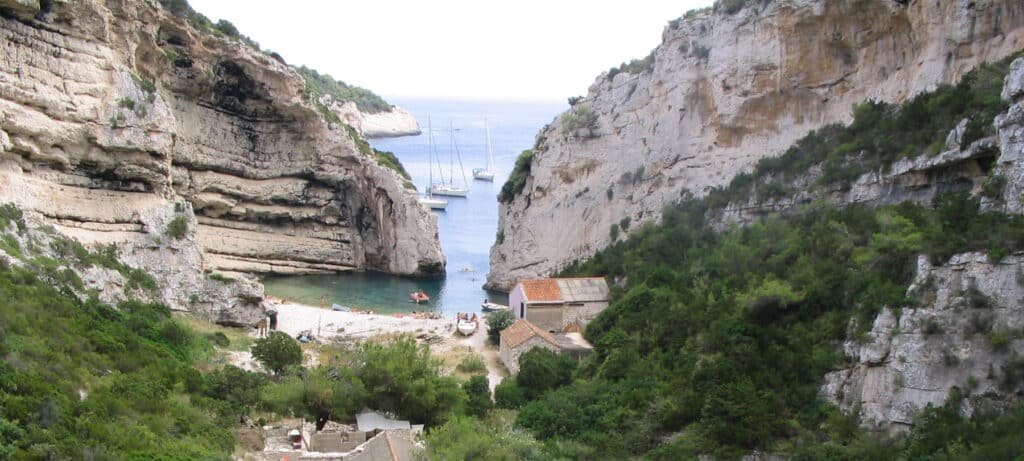
Regularly ranked among the best beaches in Europe, Stiniva sits on the island of Vis, tucked behind cliffs so narrow that the beach is barely visible from the water until you’re right on top of it. Reaching it means either a boat trip or a genuinely steep climb down a rocky path, which keeps the crowds smaller than the scenery alone would suggest.
Island of Vis, Dalmatia. Free. Best by boat, since the climb down (and back up) is a serious undertaking in the midday heat.
Blue Cave, Biševo
A sea cave on the small island of Biševo, near Vis, where sunlight entering through an underwater opening bounces off the white seabed and fills the cavern with an eerie, glowing blue light. It’s only visible for a short window each day, and boat tours time their visits accordingly.
Island of Biševo, near Vis. Boat tour fee, includes cave entry. Best around midday, when the sun’s angle produces the most vivid blue glow.
Lubenice
A nearly abandoned hilltop village on the island of Cres, perched dramatically above the sea with barely a handful of year-round residents left. The empty stone houses and sweeping coastal views make it feel like a place time simply passed by.
Island of Cres, Kvarner. Free to explore. Best at sunset for views down over the water from the village’s cliffside edge.
Lastovo Island
One of the most remote and least developed islands along the Dalmatian coast, Lastovo is protected as a nature park, and its distinctive chimney architecture, tall, conical stone chimneys found nowhere else in Croatia, gives its villages a genuinely unusual silhouette.
Southern Dalmatia, ferry access. Ferry fare. Best for travelers seeking genuine island quiet, away from the busier tourist islands closer to the mainland.
Kamenjak Peninsula
A protected nature park at the southern tip of Istria, its rocky coastline hiding dozens of small coves and beaches, most accessible only by bike or on foot. It’s a genuinely good antidote to the more developed resort beaches further up the coast.
Southern Istria, near Premantura. Small entry fee. Best explored by rented bike, given the park’s size and lack of vehicle access to most coves.
Sakarun Beach
A wide, sandy beach on the island of Dugi Otok, its shallow, pale turquoise water genuinely unusual for a Croatian coastline defined mostly by pebbles and rocky shores. It draws comparisons to Caribbean beaches for good reason.
Dugi Otok island, northern Dalmatia. Free. Best in the early afternoon, when the sun is highest and the water’s color is at its most vivid.
Šibenik’s St. Nicholas Fortress
A 16th-century fortress guarding the entrance to Šibenik’s harbor, built on a small island specifically to defend against Ottoman naval attacks. It’s a genuinely underrated counterpart to the city’s better-known St. Michael’s Fortress up on the hill.
Šibenik, central Dalmatia. Entry fee, boat access required. Best combined with a broader Šibenik old town visit.

Krupa River Canyon
A quieter cousin to the famous Krka waterfalls nearby, the Krupa River winds through a genuinely peaceful canyon lined with travertine cascades, drawing a fraction of the crowds that descend on its more famous neighbor.
Near Krka National Park, northern Dalmatia. Free. Best combined with a Krka visit, given the short distance between the two.
Vrbnik
A clifftop town on the island of Krk, home to Žlahtina, a distinctive local white wine grown specifically in the vineyards surrounding the town. Its narrow, cliff-hugging streets are some of the tightest in all of Croatia.
Island of Krk, Kvarner. Free to explore town; wine tasting fees vary. Best combined with a Žlahtina wine tasting at one of the town’s small family cellars.
Nugal Beach
A secluded pebble beach reached by a genuinely demanding hike down a steep coastal trail, which keeps it far quieter than more accessible beaches nearby. The isolation is really the whole point.
Makarska Riviera, central Dalmatia. Free. Best for travelers comfortable with a real hike in and out, since there’s no easy shortcut.
Galešnjak Island
A tiny privately owned island near Zadar, shaped almost perfectly like a heart when viewed from above, which has made it a genuine social media sensation over the past decade. It’s not open for visits, but boat tours pass close enough for a good look and photo.
Near Zadar, northern Dalmatia. Viewable by boat tour. Best from a drone or an elevated boat vantage point, given the shape only reads clearly from above.
Gornja Podstrana
A quiet hillside settlement above the Split area, offering sweeping views over the city and the sea beyond, well away from the crowds that pack Split’s old town each summer.
Near Split, central Dalmatia. Free. Best at sunset for panoramic views back over Split and the surrounding bay.
Inland Croatia
Away from the coast entirely, Croatia holds waterfalls, fortresses, and a genuinely different pace of life.
Rastoke Village
Often nicknamed “Little Plitvice,” Rastoke sits at the confluence of the Korana and Slunjčica rivers, its old wooden watermills perched directly on top of a series of small waterfalls. It’s a genuinely fairy-tale-like stop on the way to the more famous Plitvice Lakes National Park nearby.
Near Slunj, central Croatia. Free to explore. Best combined with a Plitvice Lakes visit, given the short drive between the two.

Trakošćan Castle
A genuinely storybook 13th-century castle in northern Croatia, its current romantic, fairy-tale look largely the result of a 19th-century renovation, complete with a small lake and surrounding park that make it feel more like a countryside estate than a fortress.
Northern Croatia, near the Slovenian border. Entry fee. Best combined with a walk around the surrounding lake and park grounds.
Medvedgrad Fortress
A medieval fortress on the slopes of Medvednica mountain, overlooking Zagreb from above, largely restored in the 1990s and now home to the Shrine of Homeland, a monument honoring those who died in Croatia’s war for independence.
Medvednica mountain, above Zagreb. Free. Best at sunset for views over the entire city of Zagreb below.
Visovac Monastery
A small Franciscan monastery on its own island in the middle of Krka National Park’s river system, reachable only by boat. Its peaceful, isolated setting has drawn visitors for centuries, well before the surrounding waterfalls became a major tourist draw.
Krka National Park, central Dalmatia. Included with Krka park entry; boat access required. Best combined with a broader Krka waterfalls visit.
Samobor
A charming small town just outside Zagreb, genuinely beloved by locals for its old-fashioned bakeries and a distinctive layered cream cake, kremšnita, that draws day-trippers from the capital on weekends.
Near Zagreb, northern Croatia. Free to explore. Best on a weekend, when the town’s bakeries and cafés are at their liveliest.
Croatia’s Islands
With more than a thousand islands along its coast, Croatia rewards travelers willing to go beyond the handful most cruise itineraries stop at. Vis, once a closed military base off-limits to foreign visitors until the 1990s, has become one of the most talked-about islands in the country specifically because it stayed undeveloped for so long. Cres and Lošinj, connected by that small drawbridge at Osor, offer a genuinely quieter alternative to Hvar and Korčula’s busier resort towns. And Dugi Otok, home to Sakarun Beach, remains relatively undiscovered by international visitors despite holding some of the most striking beaches on the entire coast. Ferry schedules genuinely shape how much island-hopping is realistic on a single trip, so it’s worth checking routes and timing before committing to more than two or three islands in a shorter visit.
Croatian Food & Wine Worth Seeking Out
Istria’s food culture leans heavily on truffles, both black and white, foraged from the region’s oak forests and worked into everything from pasta to omelets. Dalmatian coastal cuisine centers on fresh seafood, olive oil, and simple preparations, black risotto made with cuttlefish ink is a genuine regional signature worth trying at least once. Inland Croatia cooks differently again, with heartier, more Central European influences showing up in dishes like štrukli, a rolled pastry filled with cottage cheese that’s especially associated with the Zagreb region. Croatian wine remains genuinely underrated internationally, Istria’s Malvazija whites and the Dalmatian coast’s Plavac Mali reds are both worth seeking out directly from small producers rather than assuming Croatia is only a beer-and-rakija country.
Best Time to Visit Croatia
May, June, and September offer warm, sunny weather with noticeably thinner crowds than July and August, which bring both the highest temperatures and the busiest, most expensive stretch of the tourist season along the coast. Spring is genuinely the best time for inland Croatia and its waterfalls, since rivers run fuller and hiking temperatures stay comfortable before the summer heat sets in. Summer remains the most popular season overall, especially for island-hopping and beach-focused trips, though booking ferries and accommodation well in advance becomes genuinely necessary during peak weeks. Winter stays quiet across the entire country, and while many coastal businesses close for the season, it’s a genuinely good time to see Zagreb and the inland regions without any crowds at all.
More Hidden Gems Guides
If you’re building out a longer Europe itinerary, these guides cover more hidden gems worth adding to the list:
I cover all of these hidden gems in the video above. If this guide helped you plan your Croatia trip, subscribe to Worldly Traveler on YouTube for more travel guides from around the world.
Frequently Asked Questions
What are the best hidden gems in Croatia?
Some of the best hidden gems in Croatia include Stiniva Cove on the island of Vis, the waterfall village of Rastoke, the hilltop town of Motovun in Istria, the tiny town of Hum, and the Blue Cave on the island of Biševo.
What is Hum, Croatia?
Hum is a small hilltop town in central Istria, officially recognized as the smallest town in the world, with a population that has hovered around 20 to 30 residents for years. It’s still a fully functioning town with its own mayor and town council.
How many days do you need to explore Croatia’s hidden gems?
10-14 days allows a well-paced trip covering Istria, the Kvarner Gulf, and a stretch of Dalmatia’s coast and islands. A shorter 5-7 day trip works well focused on just one region.
What is the best time of year to visit Croatia?
May, June, and September offer warm, sunny weather with noticeably thinner crowds than July and August, which are the busiest and most expensive months along the coast.
Do you need a boat to reach Croatia’s hidden gems?
For several of them, yes. Stiniva Cove, the Blue Cave, and many island destinations require a ferry or boat tour, since they sit on islands with no bridge connection to the mainland.