
Salem, Massachusetts earns its reputation as the Halloween capital of the country honestly. The 1692 witch trials are genuine, well-documented history, and the town’s museums, walking tours, and month-long Haunted Happenings festival give October visitors real substance behind the marketing. But Salem also absorbs the overwhelming majority of “Halloween towns” search traffic and October foot traffic alike, and it’s far from the only place in the country with a legitimate claim to the season. This guide covers towns that earn their own genuine Halloween reputation through real history, folklore, or atmosphere, rather than simply borrowing Salem’s.
None of this is an argument against visiting Salem. It’s an argument for treating it as one stop on a broader Halloween-season travel map, especially for anyone who has already made the trip once and wants somewhere genuinely different for a return visit. Each of the four towns covered here earns its place through a genuinely different kind of legitimacy — literary history, centuries of documented conflict, unresolved natural mystery, and a living cultural and religious tradition — rather than all following the same “haunted colonial town” template.
Sleepy Hollow, New York
St. Augustine, Florida
Marfa, Texas
New Orleans, Louisiana
What Makes a Town Genuinely Halloween-Worthy
Practical Trip Planning by Town
FAQ
Sleepy Hollow, New York
Named directly after Washington Irving’s 1820 short story “The Legend of Sleepy Hollow,” this Hudson Valley town leans into its literary fame with genuine historical sites rather than manufactured attractions. Unlike towns that adopt a Halloween identity purely for tourism, Sleepy Hollow’s name change from North Tarrytown in 1996 was a direct, deliberate embrace of a story that was already set in this exact location nearly two centuries earlier.
Washington Irving’s Grave and the Old Dutch Church
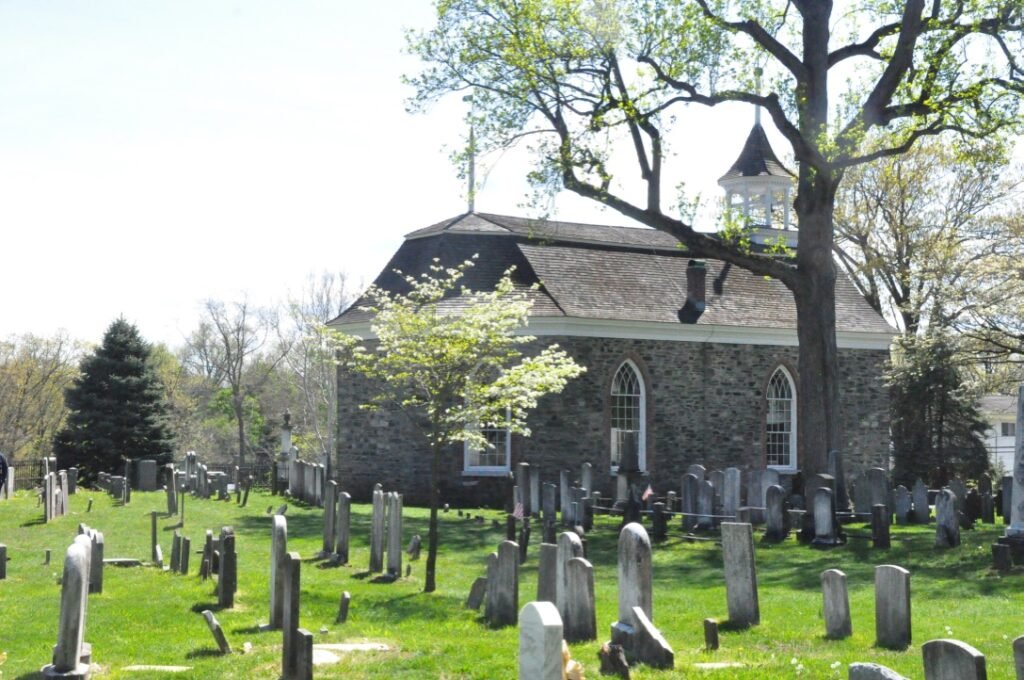
Irving himself is buried in Sleepy Hollow Cemetery, adjacent to the Old Dutch Church that appears directly in his original story, giving the town’s Halloween identity a documented literary foundation that few other Halloween-branded destinations can claim. The church, built in the late 17th century, remains one of the oldest surviving religious structures in New York State, and its adjoining burying ground contains headstones dating back to the Dutch colonial era, decades before the story that made the town famous was ever written.
Sleepy Hollow, New York. Cemetery free to visit during open hours; some guided tours priced separately. Best in mid-to-late October for the full seasonal atmosphere.
The Headless Horseman Bridge
The modern bridge on Route 9 stands near the site of the original bridge described in Irving’s story, where the Headless Horseman famously pursues Ichabod Crane, giving visitors a real, walkable connection to one of American literature’s most enduring Halloween tales. While the current structure isn’t the literal 18th-century bridge Irving would have known, its location within the same stretch of the Pocantico River valley keeps the connection to the story’s actual geography genuine rather than purely symbolic.
Route 9, Sleepy Hollow. Free to view. Best combined with a visit to the cemetery and church nearby.
Sunnyside and Philipsburg Manor
Irving’s own historic home, Sunnyside, and the nearby colonial-era Philipsburg Manor both run dedicated Halloween-season events, including lantern tours and historical reenactments, giving visitors a genuinely researched historical experience rather than a generic haunted-house attraction. Philipsburg Manor in particular preserves a working 18th-century farm and mill complex, and its interpretive programs address the enslaved labor that ran the estate directly and honestly, adding real historical depth to a visit beyond seasonal atmosphere alone, and giving families a genuine opportunity to discuss a difficult chapter of American history alongside the more lighthearted Halloween programming.
Sleepy Hollow/Tarrytown, New York. Seasonal event tickets required; check current pricing and dates. Best for families wanting historically grounded Halloween programming.
St. Augustine, Florida
As the oldest continuously occupied European-founded city in the continental United States, founded in 1565, St. Augustine’s centuries of layered and often difficult history give it a reputation as one of the most haunted cities in the country. That reputation is genuinely rooted in a documented history of colonial conflict, disease, and hardship stretching back further than almost anywhere else in the country, rather than a single dramatic event the way Salem’s witch trials or Sleepy Hollow’s ghost story define those towns.
Castillo de San Marcos
The oldest masonry fort in the continental United States, built by the Spanish beginning in 1672, the Castillo de San Marcos has witnessed centuries of conflict, imprisonment, and death, forming the historical backbone of the city’s extensive network of ghost tours and haunted-history walks. Constructed from coquina, a unique local shell-based stone, the fort’s walls proved famously resistant to cannon fire during multiple sieges, contributing to a long and eventful military history still visible in the structure today.
St. Augustine, Florida. National Park Service entry fee. Best combined with a guided historical tour for the fullest context.

Old Town Ghost Tours
St. Augustine’s compact, walkable old town supports a genuinely large number of competing ghost-tour operators, several of which draw on documented 16th-through-19th-century history rather than invented legend, covering everything from Spanish colonial conflict to 19th-century epidemics that shaped the city’s past. The Old Jail and the Lightner Museum, a former grand hotel, both feature regularly on these tours, each with a documented history that predates and informs the specific stories told about them today. The sheer density of historic buildings within a few walkable blocks means visitors can realistically sample two or three different tours across a single trip without much repetition in subject matter.
St. Augustine old town. Tour fares vary by operator. Best in the evening when the old town’s narrow streets take on their most atmospheric character.
Marfa, Texas
A genuinely different kind of eerie than the gothic Northeast towns on this list, Marfa’s reputation rests on an unexplained natural phenomenon rather than historical tragedy, giving it a desert-noir character that stands apart from everywhere else in this guide.
The Marfa Lights
Unexplained lights that appear on the horizon southeast of town after dark have been documented since at least the early 20th century, and remain scientifically unresolved despite decades of investigation, giving Marfa a genuinely mysterious, desert-noir identity distinct from anywhere else on this list. Various scientific explanations have been proposed over the decades, from atmospheric refraction of distant vehicle headlights to piezoelectric effects in the surrounding quartz-rich rock formations, but no single theory has definitively settled the question, which is precisely what keeps the phenomenon genuinely compelling rather than merely a solved curiosity. Sightings are reported year-round rather than seasonally, meaning the phenomenon carries none of the calendar-driven urgency of the other towns on this list. A dedicated public viewing area maintained by the Texas Department of Transportation makes watching for them a simple, low-key evening activity.
Marfa Lights Viewing Area, Highway 90 east of Marfa. Free. Best on a clear, moonless night for the best visibility.
Marfa itself, a small high-desert art town better known among some travelers for its minimalist art installations than for Halloween specifically, doesn’t run extensive dedicated seasonal programming the way Sleepy Hollow or St. Augustine do. It earns its place on this list through genuine, unresolved mystery rather than themed events, making it a better fit for travelers drawn to atmosphere over organized activities. The town’s remote location, hours from the nearest major commercial airport, also means the Marfa Lights experience stays genuinely uncommercialized compared to the more heavily marketed attractions elsewhere on this list, since the effort required to get there naturally filters out casual day-trip crowds.
New Orleans, Louisiana
New Orleans’ Halloween-season identity is inseparable from its genuine, centuries-old cultural and spiritual history, and this section aims to treat that history factually rather than as costume-shop novelty. Unlike towns whose Halloween association comes from a single story or event, New Orleans’ reputation is built from a genuinely deep, ongoing cultural tradition that predates the city’s modern tourism industry by well over a century.
Voodoo History and Marie Laveau
Vodou (often anglicized as voodoo) arrived in Louisiana through the transatlantic slave trade and blended with Catholic and other spiritual traditions to form a genuine, still-practiced religious tradition in the city today, distinct from its frequent sensationalized portrayal in popular media. Marie Laveau, a 19th-century practitioner widely known as New Orleans’ “Voodoo Queen,” remains a significant historical figure whose documented life and continued cultural influence are worth learning about from reputable local sources and museums rather than tourist-trap simplifications. Her descendants and the broader Vodou-practicing community in New Orleans continue this tradition today, which is worth keeping in mind: this is a living faith with real practitioners, not a historical curiosity frozen in the 19th century, and it deserves the same basic respect any active religious community would.
New Orleans, Louisiana. Museum and tour prices vary; seek out operators with a track record of historical accuracy. Best paired with a visit to the New Orleans Historic Voodoo Museum for grounded context.
St. Louis Cemetery No. 1
New Orleans’ oldest surviving cemetery, dating to 1789, is filled with above-ground vaults built to withstand the city’s high water table, including Marie Laveau’s own tomb, and remains one of the most historically significant cemeteries in the country. The above-ground burial tradition itself is a genuinely practical adaptation to New Orleans’ low elevation and water-saturated soil, rather than a purely aesthetic or spooky architectural choice, since underground burials historically had a tendency to resurface during flooding, a problem the city’s engineers spent generations working to address. Access is now restricted to guided tours to help preserve the site, a change worth knowing before planning a visit.
New Orleans French Quarter area. Guided tour required for entry. Best booked in advance given limited daily tour capacity.

Halloween in the French Quarter
New Orleans’ Halloween season overlaps naturally with the city’s existing culture of parades, costume traditions, and late-night French Quarter energy, giving it a genuinely festive, adults-oriented atmosphere distinct from the more history-museum-focused experience of Sleepy Hollow or St. Augustine. The city’s long tradition of elaborate Mardi Gras costuming translates directly into an equally serious approach to Halloween costumes, meaning visitors who show up without one may feel noticeably out of place compared to the rest of the crowd.
French Quarter, New Orleans. Free to walk; individual bar and event prices vary. Best for travelers specifically seeking a lively, nightlife-oriented Halloween trip.
What Makes a Town Genuinely Halloween-Worthy
The towns on this list earn their reputations through some combination of documented history, unresolved natural mystery, or a genuine, still-living cultural tradition, rather than purely through marketing built around the season. That distinction matters for setting expectations: a town with real historical grounding, like St. Augustine’s centuries of documented conflict or Sleepy Hollow’s direct literary connection, offers a different kind of experience than a town that has simply branded itself around Halloween without the same underlying substance. None of that makes the more marketing-driven experiences worthless — a well-run seasonal event can be genuinely fun regardless of its historical depth — but knowing the difference helps set the right expectations before booking a trip.
It’s also worth noting that these categories aren’t mutually exclusive within a single town. St. Augustine combines genuine centuries-old history with a thriving modern ghost-tour industry that ranges from carefully researched to purely entertainment-driven, and travelers who care about which is which should look specifically at how individual operators, rather than the town as a whole, present their material. The same nuance applies to New Orleans, where a genuine, still-practiced spiritual tradition sits alongside a much larger tourism industry that doesn’t always represent that tradition accurately or respectfully — another reason to seek out reputable, specifically recommended sources over whichever tour happens to be closest to your hotel.
If this guide helped you plan a Halloween-season trip, subscribe to Worldly Traveler on YouTube for more hidden gems guides from around the world.
Practical Trip Planning by Town
Sleepy Hollow pairs naturally with a base in nearby Tarrytown, which offers more lodging options while staying within easy walking or short driving distance of the cemetery, church, and bridge. St. Augustine’s compact old town is genuinely walkable from most downtown accommodation, making a car largely unnecessary once you’ve arrived. New Orleans’ French Quarter and Garden District both work as bases depending on whether nightlife or a quieter pace matters more, and Marfa, given its remote West Texas location, requires booking lodging well in advance given the town’s genuinely limited number of available rooms.
Weeknight visits generally offer a calmer experience than weekends at every town on this list except Marfa, where crowd size barely fluctuates given how few visitors come specifically for the lights in the first place. For any of the more heavily programmed towns — Sleepy Hollow, St. Augustine, and New Orleans in particular — booking specific seasonal tours and events several weeks ahead of an October visit is worth doing, since the most historically grounded and best-reviewed operators tend to sell out first, sometimes weeks before the actual holiday arrives.
Frequently Asked Questions
Is Salem worth visiting despite the crowds?
Yes — Salem’s connection to the 1692 witch trials is genuine, well-documented history, and its museums and walking tours offer real substance beyond the October crowds. Visiting on a weekday, or earlier or later in October rather than the final weekend before Halloween itself, both meaningfully reduce the crowding without sacrificing the history.
Which of these towns is best for families versus an adults-only trip?
Sleepy Hollow’s literary and historical sights work well for families, while St. Augustine’s ghost tours and New Orleans’ nightlife-adjacent French Quarter events lean more toward an adults-focused trip. Marfa is family-friendly but offers little dedicated Halloween programming, making it more of a scenic detour than a themed destination.
What is the best time in October to visit each town?
Sleepy Hollow and St. Augustine both run extended seasonal events through most of October, so any weekend works, though early-to-mid October avoids the final-weekend crush. New Orleans’ Halloween season builds toward the holiday itself, and Marfa’s lights are visible year-round, so timing there depends more on weather than the calendar.
Are ghost tours actually based on real history or entertainment?
It varies by tour and operator — some are grounded in documented local history and architecture, while others lean more heavily into entertainment and unverified legend. Reading reviews for a specific tour’s historical accuracy, rather than assuming all ghost tours in a given town are equally researched, is worth doing before booking.
Which town is least crowded during Halloween season?
Marfa sees by far the fewest Halloween-specific crowds of the towns in this guide, since it isn’t marketed as a Halloween destination at all. Among the more explicitly Halloween-themed towns, St. Augustine tends to be less crowded than Salem or New Orleans during the same October weekends.