
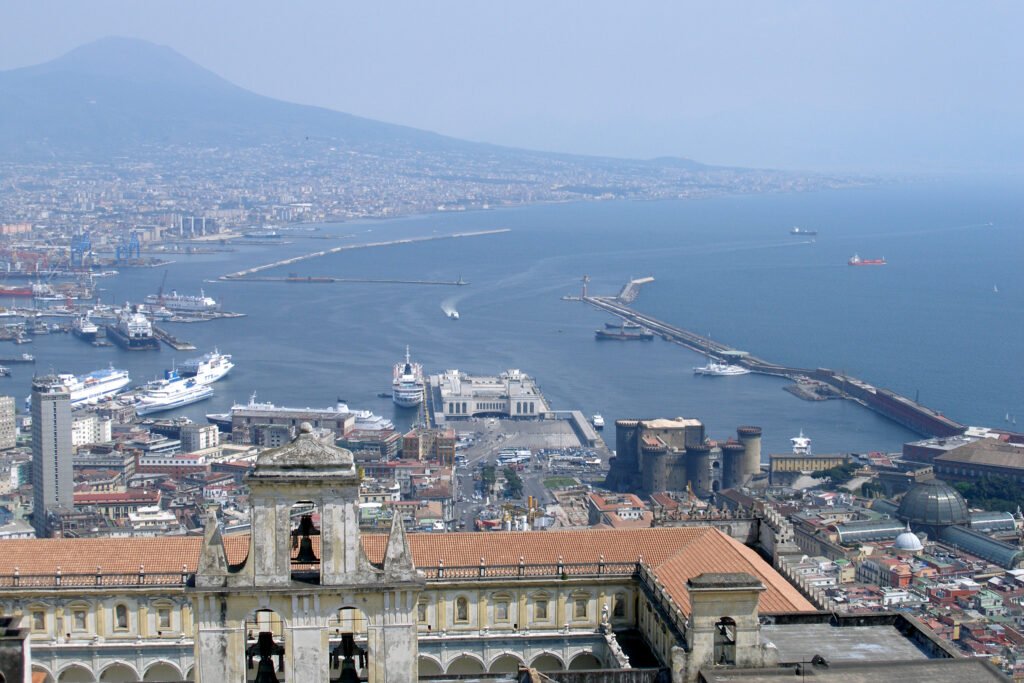
Naples is chaotic, loud, layered with history, and completely unlike the polished postcard version of Italy that Rome or Florence often present. This guide covers things to do in Naples Italy the way the city actually rewards a visit: slowly, with real food, real neighborhoods, and enough curiosity to look past the traffic and grit to what’s underneath — literally, in the case of the city’s ancient underground tunnels. I cover all of this in the video below, filmed as a slow-travel guide rather than a highlight-reel rush.
Naples doesn’t perform for tourists the way some Italian cities do, and that’s exactly what makes it worth a slower approach. Where Florence and Rome have largely built their historic centers around the flow of visitors, Naples keeps doing what it’s always done — the fish market still runs the same way it has for generations, apartment laundry still hangs across the same narrow alleys, and the pizzerias serving the “official” Neapolitan pizza are still, first and foremost, feeding the neighborhood around them. A rushed day trip from a cruise ship barely scratches this; a few unhurried days start to reveal it.
Historic Center & Underground Naples
Food & Pizza Culture
Neighborhoods Beyond the Center
Day Trips from Naples
Is Naples Safe?
How Many Days in Naples
FAQ
Historic Center & Underground Naples
Naples’ historic center is one of the largest and oldest in Europe, a UNESCO World Heritage Site since 1995, built on a street grid that traces back to the original Greek city of Neapolis.
Spaccanapoli
The straight, narrow street that “splits” the old city in two, Spaccanapoli is the best single walk for experiencing Naples’ historic center — churches, artisan workshops, and street life packed into one continuous corridor.
Historic center. Free to walk. Best in the morning before the busiest foot traffic.

Napoli Sotterranea (Underground Naples)
Beneath the modern city lies a network of Greek and Roman-era aqueducts, cisterns, and WWII air raid shelters, open to visitors on guided tours that reveal an entire second city hidden below street level.
Historic center. Entry fee, guided tour required. Best booked slightly in advance in peak season.
Cappella Sansevero
Home to the Veiled Christ, a marble sculpture so technically astonishing that legend claims the sculptor used alchemy to turn actual fabric to stone — one of the most quietly overwhelming small museums in Italy.
Historic center. Entry fee, timed tickets recommended. Best booked online in advance.
Naples Cathedral (Duomo)
Home to a vial of blood believed to belong to San Gennaro, Naples’ patron saint, which is said to liquefy on his feast days — a genuine piece of living local tradition rather than just an architectural stop.
Historic center. Free entry. Best combined with a Spaccanapoli walk.
Food & Pizza Culture
Naples didn’t just contribute to Italian food culture — it invented the pizza as the world knows it, and the city’s food scene still runs on decades- and centuries-old traditions.
Neapolitan Pizza
The birthplace of pizza Margherita and pizza marinara, Naples still enforces strict traditional standards (the “Verace Pizza Napoletana” designation) at its most historic pizzerias — soft, thin, high-edged dough cooked in a wood-fired oven.
Citywide, best in the historic center. Budget-friendly. Best eaten fresh, standing or seated, rather than as takeaway.

Neapolitan Espresso
Naples takes its coffee culture seriously enough to have its own distinct espresso style and ritual — often taken standing at the bar, sometimes with a “caffè sospeso” (a paid-forward coffee for the next person who can’t afford one).
Citywide. Inexpensive. Best experienced standing at a local bar rather than a tourist-facing café.
Sfogliatelle
A shell-shaped, crisp pastry filled with sweetened ricotta, one of Naples’ signature desserts, best eaten fresh and warm from a historic pasticceria.
Citywide, especially historic bakeries. Inexpensive. Best in the morning when freshly baked.
Street Food: Arancini & Pizza Fritta
Fried rice balls (arancini) and fried, folded pizza (pizza fritta) represent Naples’ working-class food tradition, sold from small stands throughout the historic center.
Historic center street stands. Inexpensive. Best eaten hot, on the spot.
Neighborhoods Beyond the Center
Naples’ character shifts dramatically neighborhood to neighborhood — worth exploring beyond the historic center’s main tourist corridor.
Quartieri Spagnoli
The Spanish Quarter’s narrow, laundry-strung streets are among the most visually distinctive in Naples, and increasingly known for street art alongside its traditional working-class character.
Central Naples. Free to explore. Best during daylight hours.
Vomero
A hillside district reached by funicular, Vomero offers a quieter, more residential Naples with sweeping views over the bay from Castel Sant’Elmo.
Vomero hill. Funicular fare applies. Best at sunset for the bay views.
Chiaia
Naples’ more upscale seafront district, with elegant shopping streets and a genuinely pleasant waterfront promenade along the Bay of Naples.
Chiaia district. Free to walk. Best for an evening stroll.
Day Trips from Naples
Pompeii
The remarkably preserved ruins of the Roman city buried by Vesuvius in 79 AD, easily reached from Naples and offering one of the most immersive ancient history experiences in Europe.
40 minutes by Circumvesuviana train. Entry fee. Best with a full day allotted.
The Amalfi Coast
A dramatic coastal drive of cliffside towns, reachable via Sorrento, though best attempted as an overnight rather than a rushed day trip given the scenic but slow roads.
Via Sorrento, roughly 1.5-2 hours from Naples. Best as an overnight or full day with an early start.
Capri & the Islands
A short ferry ride from Naples delivers you to Capri’s dramatic cliffs and the Blue Grotto, or to the quieter, less touristed island of Procida.
Ferry from Naples port, roughly 45-80 minutes depending on island. Ferry fare applies. Best as a full-day trip.
Is Naples Safe?
Naples has a reputation that outpaces the reality for most visitors. The main tourist areas — the historic center, Chiaia, Vomero — are generally safe to walk during the day and evening. Like any major city, petty crime such as pickpocketing occurs, particularly on crowded buses and in tourist-dense areas, so standard precautions apply: keep valuables secure, be aware on public transport, and avoid poorly lit, unfamiliar streets late at night. Most visitors experience Naples without incident when using the same common sense they’d apply in any large European city.
How Many Days in Naples
2 days: Covers the historic center, Napoli Sotterranea, and a taste of the food scene.
3-4 days: Adds time to explore Vomero and Chiaia at a relaxed pace, plus a full day trip to Pompeii.
5+ days: Allows an overnight extension to the Amalfi Coast or Capri without feeling rushed, matching the slow-travel approach the city rewards.
Culture and Local Traditions
Naples holds onto its traditions more visibly than most large Italian cities. Presepi — elaborate handmade nativity scenes — are crafted year-round on Via San Gregorio Armeno, a street entirely dedicated to nativity figurine workshops, and they’ve become collectible art pieces in their own right, sometimes depicting celebrities and current events alongside the traditional religious figures. The city’s relationship with San Gennaro, its patron saint, runs deep as well — the biannual liquefaction of his blood inside the Duomo draws crowds of locals, not just tourists, treating it as a genuine spiritual event rather than a curiosity.
Music and street life are woven into daily routine here too. It’s common to hear impromptu singing from balconies or cafés, particularly in the evenings, and the city’s football devotion — especially since Napoli’s Serie A championship runs — spills into murals, shrines, and conversation throughout the historic center. Spending time in Naples means accepting a slower, noisier, more improvised rhythm than the rest of Italy, and that’s precisely the appeal for travelers drawn to something less curated.
Getting Around Naples
On foot: The historic center is best explored entirely on foot — most major sights sit within a compact, walkable area, and Naples’ character reveals itself far better at street level than from a car or bus window.
Metro: Naples’ metro system is small but useful for reaching Vomero quickly, and several stations double as art installations in their own right, with some considered among the most beautiful metro stops in Europe.
Funicular: Four historic funicular lines connect the lower city to the hillside Vomero district, offering both a practical transport option and sweeping views along the way.
Circumvesuviana train: This regional line is the standard way to reach Pompeii, Herculaneum, and Sorrento, running frequently but often crowded — keep valuables secure and be mindful of your belongings, especially during peak commuting hours.
Taxis and rideshare: Official white taxis are metered and widely available; agree on or confirm the fare basis before longer trips, particularly to and from the airport.
Where to Stay in Naples
The historic center puts you within walking distance of Spaccanapoli, the Duomo, and the best pizza, though it can be noisy at night. Chiaia offers a quieter, more upscale base with easy access to the waterfront, while Vomero suits travelers who want hillside views and a more residential feel, with a quick funicular ride down into the action whenever needed.
I cover Naples’ historic sites, food scene, and day trips in the video above, filmed as a genuine slow-travel guide. If this helped you plan your trip, subscribe to Worldly Traveler on YouTube for more travel guides from around the world.
Frequently Asked Questions
What are the best things to do in Naples Italy?
Some of the best things to do in Naples include walking Spaccanapoli through the historic center, eating authentic Neapolitan pizza where it originated, visiting the underground tunnels of Napoli Sotterranea, and taking day trips to Pompeii or the Amalfi Coast.
Is Naples Italy safe to visit?
Naples is generally safe for tourists in the main visitor areas, though like any large city it has neighborhoods with higher petty crime rates, particularly pickpocketing on crowded public transport. Standard city precautions — watching your belongings, avoiding poorly lit areas late at night — apply.
How many days do you need in Naples?
3-4 days lets you explore the historic center at a slow pace and fit in at least one day trip, such as Pompeii or the islands. A shorter 2-day visit can cover the highlights of the city itself.
What food is Naples known for?
Naples is the birthplace of pizza, particularly the Margherita and marinara styles, along with espresso culture, sfogliatelle pastries, and fried street food like arancini and pizza fritta.
Can you day trip to Pompeii from Naples?
Yes, Pompeii is easily reached from Naples by the Circumvesuviana train line in about 40 minutes, making it a straightforward half-day or full-day trip.