
Introduction
A comfortable Christmas-market trip starts with the journey between your hotel, the station, and the market square. Nuremberg is a useful place to build a first German rail trip around because its main railway station sits opposite the medieval Old Town. Germany’s national tourism organization highlights that relationship in its rail-destination guide. You can use the city as a base, visit the market more than once, and leave room for a slower afternoon instead of changing hotels every night.
This guide explains how to plan that kind of visit for the 2026 Christmas season. It covers the market dates, rail-ticket decisions, luggage, specific access questions, and an illustrative three-night stay. The suggested pace is an editorial recommendation, not a claim that every route or building is accessible. Check your own train, hotel, and event information before booking, especially if stairs, long standing periods, or unfamiliar station layouts would affect your trip.
A first-trip plan at a glance
A single Nuremberg base gives you room to adjust the schedule after you arrive. Treat the outline below as a starting point rather than a package itinerary. Your arrival airport, rail connections, interests, and preferred walking distance should determine the final plan.
| Decision | Practical starting point |
|---|---|
| Length of stay | Consider three nights, with two full days and an unhurried arrival. |
| Hotel location | Compare the station side of the Old Town with accommodation closer to the market; check the actual entrance route. |
| Market visits | Plan one daytime visit and one shorter visit after dark. |
| Extra destinations | Keep any side trip optional until you know how the first day feels. |
| Access arrangements | Confirm the train, platform route, hotel entrance, room and bathroom separately. |
Confirm the 2026 market dates before arranging travel
The official Nuremberg Christkindlesmarkt website lists the 2026 market from November 27 through December 24. It also lists the opening ceremony for November 27 at 5:30 p.m. Those dates identify the season; they do not establish the opening hours of every surrounding attraction, shop, or smaller event. Recheck the official page before you pay for transport or accommodation, and again shortly before departure.
Choose your travel dates around the experience you want rather than assuming opening night is essential. If the ceremony is your priority, plan for that specific event. If you mainly want to browse stalls, photograph the setting, and enjoy a meal without rushing to the next train, another date within the published season may suit you better. Do not infer crowd levels or special hours from a date alone. Ask the tourist information service about the particular days you are considering.
Pick a hotel using the complete arrival route
A station-area hotel and a market-area hotel solve different problems. A room near the station may shorten the part of your arrival when you are carrying luggage. A room closer to the market may make it easier to return for a rest between visits. Compare both on a map, but examine the actual streets and entrance location rather than relying on a property’s straight-line distance from a landmark.
The most useful hotel questions describe the route to your specific room. Ask whether the entrance has steps, whether an elevator reaches the booked floor, and whether there are stairs between reception and the elevator. If bathroom layout matters, request the measurements or photographs relevant to your needs. A hotel’s general use of the word accessible does not answer every one of those questions. Keep the property’s written reply with your booking documents.
A clear arrival plan also reduces the work you have to do after a long journey. Save the hotel’s full address, reception contact, check-in instructions, and luggage-storage policy. Decide how you would reach it if walking from the station proved uncomfortable that day. Ask about a suitable taxi drop-off point rather than assuming a vehicle can stop immediately outside an Old Town entrance. These are planning questions to resolve with the property, not promises about a particular street.
Match the rail ticket to the trains you intend to use
The Deutschland-Ticket and a long-distance rail ticket serve different purposes. Deutsche Bahn says the Deutschland-Ticket covers regional and local trains and participating local transport under the applicable conditions. It generally does not cover the usual long-distance ICE, IC, and EC services, with specific exceptions identified by the operator. Check each connection’s actual train category before deciding that a pass covers your itinerary.
The Deutschland-Ticket is a subscription, so cancellation deserves attention before a short visit. Deutsche Bahn’s cancellation guidance says cancellation by the tenth of a month ends the subscription at the end of that calendar month. Review the seller’s current terms before purchasing, especially for a late-month arrival, and keep the cancellation confirmation. Do not assume that leaving Germany ends a subscription.
A journey with fewer changes may be worth considering even when another connection appears cheaper. Compare the entire travel day: departure time, transfer stations, walking between platforms, luggage handling, and your arrival time at the hotel. A low headline fare is less attractive if the itinerary adds changes you would prefer to avoid. Use the booking system for your exact date; this guide deliberately does not give fixed journey times or fares that could change before your trip.
Seat reservations deserve a separate check when booking a long-distance journey. Deutsche Bahn’s flexible-fare guidance says second-class tickets do not include a seat reservation, while first-class flexible-fare tickets include one. That is a rule for the named fare, not a promise about every product sold by every operator. Read the conditions for the fare you actually select, including its change, cancellation, and train-specific restrictions, before completing the purchase.

Compare two connections on the same checklist
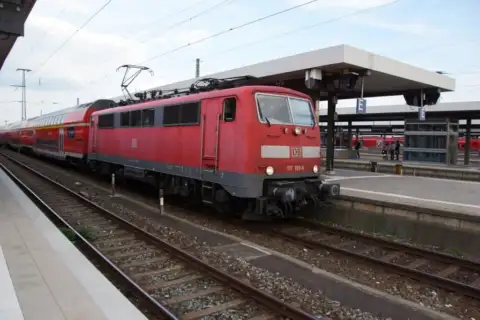
A side-by-side comparison can make a booking decision clearer than a list of departure times. Imagine that one search result offers a single train to Nuremberg and another offers a lower price with two changes. These are illustrative alternatives, not advertised services. Write down the complete cost and the tasks involved in each: reaching the departure platform, moving your bag, locating a new platform at each change, and reaching the hotel after arrival.
The right comparison depends on your priorities. If you want fewer unfamiliar decisions, the single-train option may deserve extra weight. If you are comfortable making changes, look carefully at the transfer time and the facilities at each interchange before choosing the other route. Ask the operator about the specific arrangements when assistance is needed. An itinerary that is technically bookable is not automatically the itinerary you will find most comfortable.
Your final check should use the same assumptions for both choices. Compare the same travel date, passenger details, class of travel, luggage plan, and any reservations you want. Note whether the price covers the whole journey or only one part of it, and read the relevant fare conditions. Keep a copy of the selected itinerary with the booking confirmation so you can distinguish what you intended to reserve from what you actually purchased.
Pack for the luggage you will manage yourself
A manageable suitcase can make a rail holiday easier to organize. Deutsche Bahn’s luggage guidance says passengers must be able to stow their own luggage and keep aisles, doors, and safety equipment clear. Think about lifting, maneuvering, and storing your bag, not simply whether it meets an airline allowance. If you need assistance, discuss the specific arrangements with the operator rather than expecting other passengers to solve the problem.
A useful packing trial happens before departure. Put your intended clothes and purchases allowance into the bag, move it through your home, and consider how you would handle it alongside a coat and day bag. Remove items that do not justify the effort of carrying them. Keep important travel documents and essentials in the small bag you can reach during the journey. Leave space for souvenirs rather than planning to manage an extra loose shopping bag at every transfer.
Check access at the station and on the train separately
Deutsche Bahn’s Mobility Service Centre can help plan connections and arrange assistance for boarding, alighting, or changing trains. Its information specifically includes wheelchair users and travelers with sight impairments. Contact the service about your own route and explain what assistance you need. A request about one train does not automatically describe the arrangements for the next connection or your journey from the station to the hotel.
Station information should be checked close to travel as well as during initial planning. Deutsche Bahn directs passengers to bahnhof.de for station facilities and information about elevators in operation. Confirm the platform route and available facilities for the station you will actually use. Keep the assistance confirmation and an operator contact available offline. For booking deadlines, use the current instructions for the applicable service; different official contact pages can describe different lead times.
Use the first market visit to learn the layout
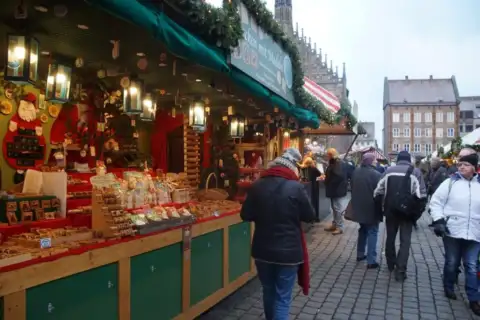
A daytime visit can be your orientation session rather than the day you try to buy everything. Identify the parts of the market you want to return to, choose a meeting place with your companion, and decide where you can take a proper break. The official market website offers self-guided themes covering traditional products, creative crafts, regional goods, charitable stalls, licensed products, and vegan offerings. Select the themes that interest you instead of treating every stall as a required stop.
A later visit can focus on atmosphere and a smaller shopping list. Decide what you want to do before heading out: revisit a particular stall, take photographs, or enjoy a drink and then leave. Separating those purposes makes it easier to stop when you have had enough. Neither a daytime visit nor a short evening visit guarantees light crowds, good weather, or seating. Keep an indoor break option and agree on a simple way to end the outing.

An illustrative three-night Nuremberg itinerary
Arrival day works best with a small task list. Reach the hotel, settle your luggage, and confirm the route you plan to use the following morning. If you still want to go out, make it a brief orientation walk or a simple meal. Leave the main market visit for the next day so a delayed train does not remove the experience you traveled to see. This is a pacing suggestion, not a rail connection or guided tour that can be booked as written.
The first full day can center on understanding the market. After breakfast, visit the area with your chosen self-guided theme in mind. Return to your accommodation or another preselected indoor place for a substantial break. Decide afterward whether you want a second short outing. Make one planned experience the priority; everything else is optional. That gives you a useful day even if rain, fatigue, or a change in your preferences alters the afternoon.
The second full day gives you a choice rather than another obligation. Revisit the market, choose a separately researched indoor attraction, or take an optional rail excursion only after checking its timetable and return arrangements. If you choose an excursion, compare its total travel time with the time you would actually spend there. There is no advantage in adding a town simply to increase the destination count. Staying in Nuremberg can be the better choice for your particular trip.
Departure morning should protect the journey home. Pack before leaving for any final purchase and allow time for the route from the hotel to the correct platform. Check the train information again and keep the booking and assistance details available. If you want another market visit before departure, make it genuinely optional. A trip with two satisfying full days does not need a rushed final excursion to feel complete.
Choose food and souvenirs without complicating the journey
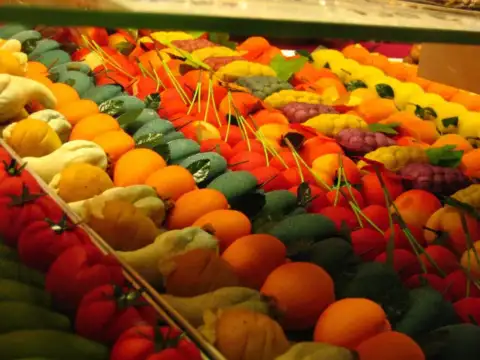
A market food plan can be simple: choose a few things you want to try and leave room for a seated meal elsewhere if that suits you. The official market site highlights gingerbread and Nuremberg bratwurst among the city’s Christmas associations. Use its current stall information to locate products of interest. Ask vendors directly about ingredients and your particular dietary requirements; a general description in a travel article cannot confirm how an individual item has been prepared.
Souvenir choices should include the journey after you leave the stall. Consider how an item will fit in your bag, whether it needs protective packaging, and whether carrying it will make transfers more awkward. Check the relevant official rules before buying food or other goods that you intend to take across a border. If an object is fragile or bulky, ask the seller about packaging and any shipping service before purchasing. Treat those as questions for the seller and relevant authorities, not assumptions.

Build a budget around the complete trip
A useful trip budget separates decisions you must make in advance from spending you can adjust on the day. List your accommodation, main rail journeys, seat reservations where applicable, local transport, meals, market purchases, and any optional attraction. Use current quoted prices for your actual dates. This guide does not provide a universal daily allowance because two travelers choosing different rooms and trains can face very different totals.
Compare choices that affect both cost and effort. An additional hotel change can involve another transfer, check-in, and luggage move; a slightly different room location can change how often you need transport. Decide which conveniences matter to you before cutting them from the plan. Keep optional shopping separate from the amount needed for the core itinerary, and review booking conditions alongside prices. The goal is a trip you understand, not a claim that one fare or neighborhood is always the cheapest.
Keep a weather alternative that you would actually enjoy
An indoor alternative is most useful when it is chosen before you need it. Identify an attraction or place for a longer break, confirm its current opening information, and check how you would reach it from your hotel. Do not assume every church, museum, café, or restaurant offers step-free access or the facilities you need. Save one or two suitable options rather than a long list of possibilities you will have to investigate while standing outside.
Your clothing plan should support a flexible day. Think in terms of layers you can adjust between the train, indoor stops, and outdoor browsing. Check the forecast shortly before packing and again during the stay. Conditions on the ground should determine whether you continue a walk or return indoors. A photograph of a snowy market is an illustration of a past scene, not a forecast or a guarantee that your visit will look the same.
A short checklist before you leave home
A final document check helps connect all the parts of the trip. Confirm that the train date, hotel nights, market season, and any assistance reservation agree. Save booking references, important addresses, and contact details where you can reach them without a working data connection. Let your travel companion know where those details are kept. Review the route to your first night’s accommodation so the first decision after arrival is already made.
- Recheck the official 2026 market dates and any event-specific hours.
- Verify the train category and the validity of each ticket or pass.
- Confirm any seat reservation and assistance arrangements separately.
- Ask the hotel about the actual entrance, elevator and booked room.
- Choose a daytime visit, a shorter return visit and an indoor alternative.
- Leave enough room in the schedule to change your mind.
Conclusion
Nuremberg’s Christmas market can anchor a rail trip without requiring a different hotel and market every day. Build the plan around one base, the trains you will actually use, and access arrangements that match your needs. Then give the market two different roles: a first visit to understand the setting and a shorter return for the parts you most enjoyed.
The next step is to compare a small number of dates within the official 2026 season and sketch your arrival-to-hotel route. Check those decisions against current operator and accommodation information before paying. If you want to extend the holiday afterward, use our Germany hidden-gems guide to identify ideas for separate research. Add a destination because it improves your trip, not because you feel obliged to fit another place into the schedule.
Sources and further reading
- Official Nuremberg Christmas Market: 2026 dates
- German National Tourist Board: cities by rail
- Deutsche Bahn: Deutschland-Ticket validity
- Deutsche Bahn: flexible fare and seat reservations
- Deutsche Bahn: luggage on trains
- Deutsche Bahn: Mobility Service Centre services
- Deutsche Bahn: accessible travel and station information
- Official Nuremberg Christmas Market: self-guided market themes
- Deutsche Bahn: Deutschland-Ticket subscription cancellation
Sources reviewed: 2026-10-19.
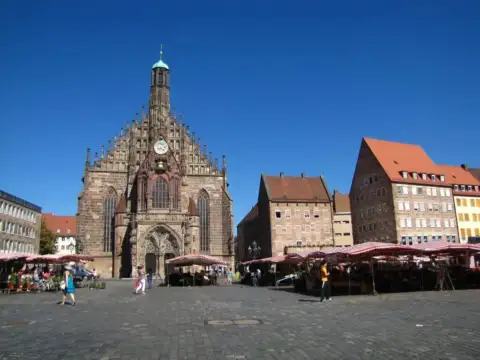
Featured photo: Frauenkirche and Hauptmarkt in daylight; regular market stalls, not the Christmas market — WolfgangP66 · Original photo · CC BY-SA. Resized by Wikimedia Commons for this download; no other edits.

Pingback: Erfurt Christmas Market Weekend: Domplatz and the…