
Venice Hidden Gems: Beyond St. Mark’s Square
St. Mark’s Square and the Rialto Bridge anchor most first-time Venice itineraries, and both genuinely deserve their fame — but Venice is a city of 118 islands and six distinct sestieri (districts), and the overwhelming majority of visitors never wander more than a few streets beyond the San Marco-Rialto corridor. This guide covers more than 20 Venice hidden gems, verified against a real video guide, organized by sestiere so you can build a route through whichever part of the city genuinely calls to you.
Venice’s genuine character lives less in its famous landmarks than in the texture of its residential neighborhoods — the quiet campi (squares) where locals still gather, the workshops where centuries-old crafts continue largely unchanged, and the lagoon islands that shaped the city’s original economy long before tourism did. Understanding Venice’s sestiere system — Cannaregio, Castello, Dorsoduro, San Polo, Santa Croce, and San Marco — genuinely helps organize a visit, since each district developed a distinct character shaped by its original trade, its distance from the tourist core, and its relationship to the surrounding lagoon.
That district-by-district variation matters more in Venice than in almost any other city, given how genuinely small and walkable the historic center actually is — the entire city covers roughly three square miles, yet the difference between St. Mark’s Square at midday and a quiet Cannaregio canal just fifteen minutes’ walk away can feel like visiting two entirely different places. Venice built its wealth over a thousand years as a maritime trading republic connecting Europe to the Byzantine and Islamic worlds, and that layered, cosmopolitan history is genuinely still visible in the architecture, art, and even the dialect spoken in different corners of the city, rewarding visitors willing to wander beyond the handful of landmarks most itineraries never leave.
Essential Venice
Cannaregio
Dorsoduro
Castello
San Polo & Santa Croce
The Lagoon Islands
Venice Without the Crowds
Venetian Food Worth Seeking Out
Best Time to Visit Venice
FAQ
Essential Venice
St. Mark’s Square, the Basilica & the Rialto Bridge: These landmarks remain genuinely essential for any first Venice trip — this guide picks up where that standard itinerary leaves off, focusing on the quieter neighborhoods most visitors never reach.
Cannaregio
Venice’s largest and most residential sestiere holds genuine local life alongside significant Jewish history.
The Jewish Ghetto
The world’s original “ghetto,” established by Venetian decree in 1516 as the mandatory, gated residential quarter for the city’s Jewish community — the term itself entered global vocabulary directly from this Venice neighborhood, named for the site’s earlier use as a foundry (geto in Venetian dialect). Today the district holds five historic synagogues and a genuinely significant Jewish Museum, alongside a community that continues living here after more than five centuries.
Cannaregio. Free to explore; synagogue and museum tours priced separately. Best with a guided synagogue tour, since most remain accessible only that way.
Madonna dell’Orto Church
A genuinely significant Gothic church holding several major works by Tintoretto, the Venetian Renaissance master who is buried here — the church served as his parish, and its collection offers a more intimate, less crowded way to appreciate his work than the busier Scuola Grande di San Rocco.
Cannaregio. Small entry fee. Best combined with a broader Cannaregio canal walk given the church’s residential setting.
Campo San Giacomo dell’Orio
A genuinely laid-back local square, its café tables filled largely with residents rather than tourists, offering a tangible sense of everyday Venetian life rarely found in the more heavily trafficked squares near San Marco.
Santa Croce/Cannaregio border. Free. Best in the early evening when local residents gather for aperitivo.
Calle Varisco
Venice’s narrowest street, measuring barely 53 centimeters wide at its tightest point — a genuinely startling architectural quirk that visitors regularly stop to photograph, since two people can barely pass each other within its walls.
Cannaregio. Free. Best combined with a broader Cannaregio wandering route, since it’s easy to miss without knowing exactly where to look.
Dorsoduro
Venice’s arts and university district holds genuine craft traditions alongside contemporary garden installations.
Squero di San Trovaso
One of the last remaining traditional gondola workshops (squeri) in Venice, its wooden boathouse structure genuinely unchanged in style for centuries, offering visitors a rare glimpse of artisans still hand-building and repairing gondolas using largely traditional methods — a craft that has declined dramatically as the number of working squeri in the city has shrunk to just a handful.
Dorsoduro, along the Rio di San Trovaso. Free to view from outside; interior access limited. Best in the morning when workshop activity is most visible from the canal-side viewing area.
Campo Santa Margherita
Widely considered the genuine heartbeat of local Venetian life, this large, lively square hosts a daily market and draws university students from the nearby Ca’ Foscari campus, offering a version of Venice that feels lived-in rather than staged for visitors.
Dorsoduro. Free. Best in the early evening for the square’s genuine local social scene.
Giardini della Biennale
The permanent garden grounds hosting the Venice Biennale, one of the most significant contemporary art and architecture exhibitions in the world, its national pavilions (each designed by a different country) offering genuinely striking architecture even outside the Biennale’s official exhibition years.
Castello/Dorsoduro border. Free to walk grounds; exhibition entry fees apply during active Biennale years. Best checking the current Biennale schedule, since major exhibitions run only in alternating years.
Ca’ Zenobio degli Armeni
A genuinely striking Baroque palace along the Grand Canal, its elaborately frescoed ballroom among the finest surviving examples of 18th-century Venetian interior decoration, now serving as an art academy while remaining periodically open for public visits.
Dorsoduro. Entry fee (limited opening hours). Best checking current visiting hours in advance given the palace’s limited public access schedule.
Castello
Venice’s largest sestiere by area holds the city’s original cathedral alongside genuinely significant hidden artistic treasures.
Libreria Acqua Alta
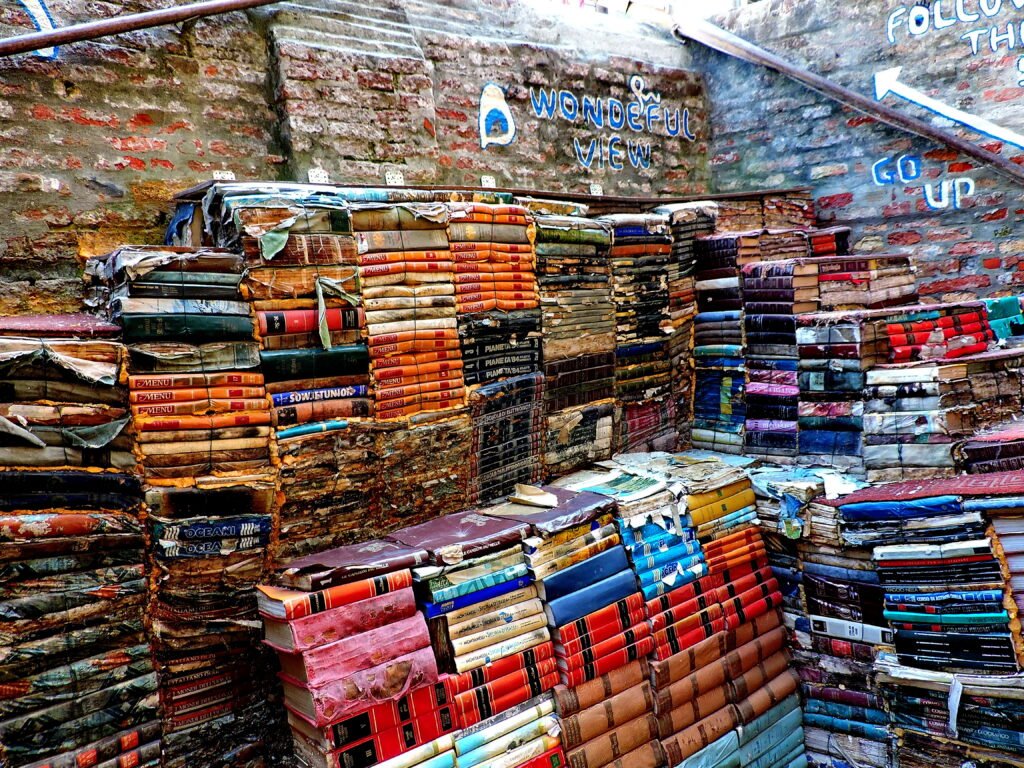
A genuinely one-of-a-kind bookshop, its stock of new and secondhand books stored inside gondolas, bathtubs, and even a full-sized canoe — a display strategy the owner, Luigi Frizzo, developed after opening the shop in 2002 specifically to protect the books from Venice’s periodic acqua alta flooding. Water-damaged books that couldn’t be saved have been repurposed into a staircase leading to a canal-view balcony at the rear of the shop, and the store’s resident cats have become nearly as famous as the books themselves, often found napping on stacks of paperbacks or perched at the register.
Castello, near Santa Maria Formosa. Free to browse. Best shortly after opening or in late afternoon, avoiding the shop’s significant midday crowds.
Scala Contarini del Bovolo
A genuinely striking spiral external staircase, its name derived from “bovolo,” Venetian dialect for snail shell, referencing the staircase’s distinctive coiled form — built in the late 15th century as an architectural showpiece for the Contarini family, the tower now offers a rooftop viewpoint over Venice’s terracotta roofline.
Castello, near Campo Manin. Entry fee. Best at sunset for the rooftop viewpoint’s warm light over the city.
San Francesco della Vigna
A genuinely peaceful Franciscan church, its design partly attributed to Renaissance architect Andrea Palladio, offering a quiet sanctuary and significant artworks with a fraction of the visitors found at Venice’s more famous churches.
Castello. Free. Best combined with a broader eastern Castello walk given the church’s quieter, more residential setting.
Fondaco dei Tedeschi Rooftop
A genuinely spectacular free rooftop terrace atop a former German merchants’ trading house turned luxury department store, offering panoramic 360-degree views over Venice’s rooftops and the Grand Canal — a view comparable to paid observation decks elsewhere in the city, available entirely free with advance reservation.
San Marco/Castello border, near the Rialto Bridge. Free (advance online reservation required). Best at sunset, though reservation slots for this popular window fill quickly.
Church of San Zaccaria
A genuinely significant church holding one of Giovanni Bellini’s finest altarpieces, alongside a flooded crypt where several early Doges (Venice’s historic elected leaders) are buried — a genuinely atmospheric, rarely visited space accessible for a small additional fee beyond the main church.
Castello, near St. Mark’s Square. Free for main church; small fee for chapel and crypt access. Best combined with a St. Mark’s Square visit given the short distance.
Ponte dei Pugni
The “Bridge of Fists,” a modest stone bridge once the site of organized, sanctioned fistfights between rival Venetian neighborhood factions, a violent tradition eventually banned in the 18th century after the fights grew too dangerous — marble footprints set into the bridge still mark where combatants once squared off.
Dorsoduro/Castello border, near Campo San Barnaba. Free. Best combined with a broader Campo Santa Margherita walk given the shared neighborhood.
Palazzo Grimani
A genuinely significant Renaissance palace, its lavish frescoed ceilings and classical sculpture collection reflecting the Grimani family’s status as one of Venice’s most powerful and culturally ambitious noble dynasties, now open as a state museum with far fewer visitors than comparable Venetian palaces.
Castello. Entry fee. Best for travelers with a genuine interest in Renaissance art and architecture, given the museum’s relatively specialized focus.
San Pietro di Castello
Venice’s original cathedral, serving as the city’s principal church for over a millennium before that status transferred to St. Mark’s Basilica in the 19th century — a genuinely significant but now largely overlooked historical site, sitting in a quiet residential corner of Castello rarely visited by tourists.
Eastern Castello. Free. Best combined with a broader eastern Castello exploration, given the church’s distance from the main tourist core.
Museo di Palazzo Mocenigo
A genuinely specialized museum dedicated to historic Venetian fashion, textiles, and perfume, housed within an authentic 17th-century noble palace complete with period furnishings — a genuinely unusual combination of costume history and scent-focused exhibits rarely found together elsewhere.
Santa Croce, near the Jewish Ghetto. Entry fee. Best for travelers with a genuine interest in fashion or perfume history.
San Polo & Santa Croce
Venice’s smallest sestieri hold the city’s principal marketplace district alongside a genuinely marble-clad architectural jewel.
Santa Maria dei Miracoli
A genuinely exquisite small Renaissance church, its exterior and interior entirely clad in polychrome marble panels, earning it the nickname “the marble jewel box” — the church was built specifically to house a miraculous image of the Virgin Mary, and its intimate scale and craftsmanship make it one of the most beloved architectural gems in the entire city.
Cannaregio, near the Rialto (border area, included here for its architectural relevance to the region). Small entry fee. Best in the morning for the clearest natural light on the marble interior.
The Lagoon Islands
Beyond central Venice, the surrounding lagoon holds genuinely distinct island communities, each with its own centuries-old craft tradition and character.
Torcello Island
Once the most populous and powerful settlement in the entire lagoon, predating Venice itself as a significant population center, Torcello’s fortunes reversed dramatically over the centuries due to malaria and silting canals — today the island holds fewer than a dozen permanent residents, its ancient cathedral and scattered ruins offering a genuinely haunting sense of a once-great city reduced to near-total quiet.
Venetian Lagoon, vaporetto access from Venice. Vaporetto fare; cathedral entry fee. Best allotting a half-day given the island’s tranquil, unhurried atmosphere.
Murano
The center of Venetian glassmaking since 1291, when the Venetian Republic relocated all glass furnaces here specifically to reduce fire risk in the main city — a genuinely significant piece of industrial history, since Murano’s glassmakers were once forbidden from leaving the republic under penalty of death, so tightly was their craft guarded as a state secret.
Venetian Lagoon, vaporetto access from Venice. Vaporetto fare; Glass Museum entry fee. Best with a glassblowing demonstration, offered at several working furnaces around the island.
Burano
A genuinely vivid fishing island famous for its brightly painted houses, each repainted every few years in colors distinct from its immediate neighbors — local legend holds that fishermen originally adopted the bold colors to spot their homes through the lagoon’s frequent fog, though the tradition likely also reflects the prosperity brought by Burano’s historic lace-making industry.
Venetian Lagoon, vaporetto access from Venice (via Murano). Vaporetto fare; Lace Museum entry fee. Best on a sunny day for the houses’ most vivid photographic impact.

San Giorgio Maggiore Bell Tower
A genuinely underrated alternative to the famously crowded St. Mark’s Campanile, this bell tower on its own small island directly across the water from St. Mark’s Square offers arguably better views — since from here, visitors can actually see St. Mark’s Square and its own campanile as part of the panorama, rather than looking down at the square itself.
Isola di San Giorgio Maggiore, short vaporetto ride from St. Mark’s Square. Entry fee (elevator access). Best at sunset for views back across the water toward St. Mark’s Square.
Lido Beach
Venice’s own barrier island beach, a genuinely popular local escape offering sand, sun, and sea breeze within a short vaporetto ride of the historic center — the island’s Belle Époque architecture and hosting of the Venice Film Festival each September give it a distinct character from the rest of the lagoon.
Lido di Venezia, vaporetto access from Venice. Free beach access (some sections require a fee). Best in summer for full beach-day conditions.
Venice Without the Crowds
Venice’s overtourism challenges are genuinely well-documented, and a few practical strategies meaningfully improve the experience for visitors willing to adjust their approach. Arriving before 9am or after 6pm at major sights like St. Mark’s Square and the Rialto Bridge avoids the bulk of day-tripper crowds, who tend to arrive via cruise ship or train excursion within a narrow midday window, often departing again by early evening. Staying overnight rather than day-tripping genuinely changes the character of a Venice visit — once the day-trip crowds depart each evening, the city’s quieter neighborhoods return to something much closer to their actual residential rhythm, and the difference between Venice at 4pm and Venice at 9pm can feel genuinely dramatic.
Exploring Cannaregio, Castello’s eastern reaches, and the lagoon islands covered in this guide naturally routes visitors away from the San Marco-Rialto corridor that absorbs the overwhelming majority of Venice’s daily visitor traffic, spreading impact more evenly across the city’s neighborhoods that could genuinely use the economic support. Traveling in shoulder season, avoiding major Italian and European public holidays, and choosing a hotel or apartment stay over a cruise-ship day trip are all genuinely meaningful ways to experience a version of Venice closer to what the city’s own residents still know it to be.
Venetian Food Worth Seeking Out
Cicchetti, Venice’s own tradition of small savory snacks served at neighborhood bacari (wine bars), function as a genuinely essential part of local food culture — ordering a few cicchetti alongside a glass of local wine (an ombra, in Venetian dialect) at a bar counter rather than sitting for a full restaurant meal is both more affordable and more authentically Venetian, and hopping between two or three bacari across an evening is a genuinely common local tradition called a “giro di ombre.” Seafood risotto, particularly risotto al nero di seppia (made with cuttlefish ink) and the lagoon-specific risotto de gò using goby fish, reflects the city’s deep connection to the surrounding waters.
Sarde in saor, sardines marinated with onions, pine nuts, and raisins in a sweet-and-sour preparation, traces back to a preservation technique developed by Venetian sailors for long voyages and remains a genuinely beloved traditional dish, still served in nearly every traditional bacaro across the city. Baicoli, simple twice-baked Venetian biscuits traditionally dipped in coffee or dessert wine, make a genuinely authentic, easily packable souvenir compared to more generic Italian gift shop offerings, and their simple, not-too-sweet flavor reflects a genuinely old Venetian baking tradition rather than a tourist-oriented reinvention.
Best Time to Visit Venice
Late spring (April-May) and fall (September-October) offer the most comfortable temperatures and noticeably thinner crowds than peak summer, when heat, humidity, and visitor volume all climb significantly across the historic center. Winter, while genuinely cold and prone to acqua alta flooding, offers Venice’s quietest, most atmospheric season, and the city’s famous Carnival celebration each February brings a burst of costumed spectacle to the otherwise low season, drawing its own dedicated crowd even as general tourism thins out.
Summer remains genuinely popular despite the crowds, given school vacation schedules and the lagoon islands’ appeal for beach and boat-focused days, though the combination of heat and tourist density makes it the most physically demanding season for extensive walking exploration, particularly given how little shade many of the city’s open squares and bridges provide. Acqua alta season, roughly October through January, brings periodic tidal flooding to low-lying areas including St. Mark’s Square — genuinely worth checking tide forecasts for during a visit in this window, since flooding, while usually brief, can meaningfully disrupt a day’s plans, and packing waterproof footwear is a genuinely practical precaution rather than excessive caution during these months.
I cover all of these hidden gems in the video above. If this guide helped you plan your Venice trip, subscribe to Worldly Traveler on YouTube for more travel guides from around the world.
Frequently Asked Questions
What are the best hidden gems in Venice?
Some of the best hidden gems in Venice include the Libreria Acqua Alta bookshop, the Scala Contarini del Bovolo spiral staircase, Torcello Island, the San Giorgio Maggiore bell tower, and the Squero di San Trovaso gondola workshop, all offering a side of the city beyond St. Mark’s Square.
What is acqua alta in Venice?
Acqua alta (“high water”) is Venice’s periodic tidal flooding, most common in autumn and winter, when parts of the city, particularly St. Mark’s Square, can flood temporarily during exceptionally high tides.
How many days do you need in Venice?
3-4 days allows time to see St. Mark’s Square and the Rialto Bridge, explore several sestieri at a relaxed pace, and take a boat trip to the lagoon islands. A shorter 1-2 day visit can cover the essentials.
Is Venice worth visiting despite overtourism concerns?
Yes, particularly if timed and routed thoughtfully — visiting in shoulder season, staying overnight rather than day-tripping, and exploring neighborhoods beyond the San Marco-Rialto corridor all meaningfully reduce crowding and support the city’s residential communities.
Do you need to pay to enter Venice?
Venice charges a day-tripper access fee on select peak dates for visitors not staying overnight in the city; overnight guests are generally exempt, though requirements can change, so checking current rules before a visit is worthwhile.