
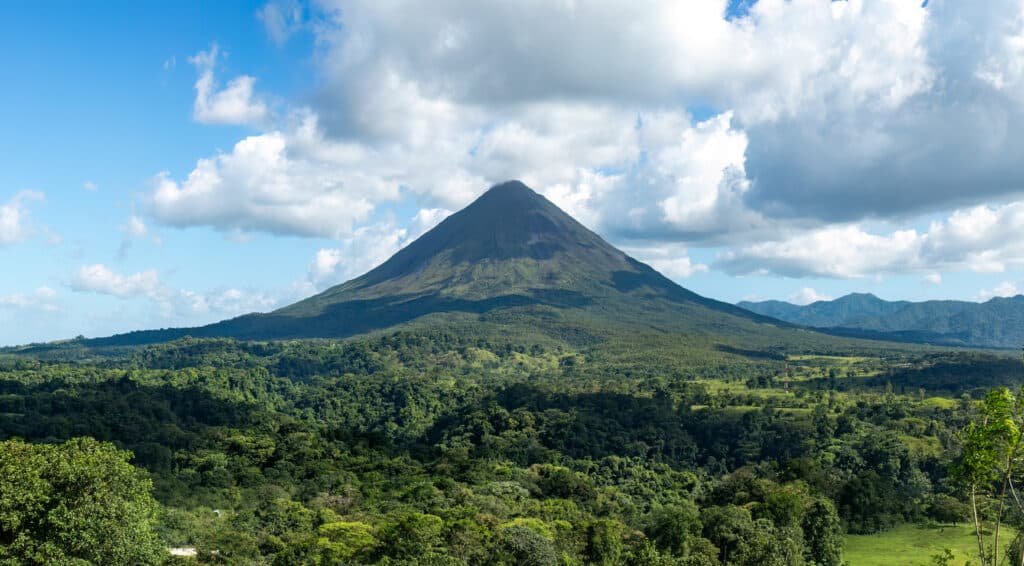
Costa Rica made its name on ecotourism before most of the world knew what that word meant, and the country genuinely lives up to it, roughly a quarter of its land is protected in some form, a staggering figure for a country roughly the size of West Virginia. This guide, built from independent research, walks through Costa Rica region by region, from the volcanic highlands to both coasts to the remote rainforest of the south, so you can build a trip beyond the standard resort strip.
What makes Costa Rica genuinely different from a lot of other tropical destinations is how deliberately the country has protected its own biodiversity. It holds an estimated 5% of the world’s species despite covering just a tiny fraction of the planet’s land area, a density that shows up everywhere, in the number of national parks packed into a small country, in the sheer variety of birds you’ll spot without even trying, and in a tourism industry built genuinely around access to nature rather than just beach resorts.
The Central Valley & Arenal Volcano
The Caribbean Coast & Tortuguero
The Pacific Coast & Nicoya Peninsula
The Osa Peninsula & Corcovado
Wildlife Watching Basics
Costa Rica Food Worth Seeking Out
Best Time to Visit Costa Rica
FAQ
The Central Valley & Arenal Volcano
Costa Rica’s mountainous heart holds its capital city and the country’s single most famous volcano.
Arenal Volcano
For decades, Arenal was one of the most active volcanoes in the world, its near-perfect cone regularly producing visible lava flows and glowing rock that drew visitors from across the globe. It’s been in a resting phase since 2010, but the volcano and the hot springs that formed around its base, heated naturally by the same geothermal activity, remain one of Costa Rica’s most popular destinations regardless.
Alajuela Province, near La Fortuna. Free to view; national park and hot springs entry fees vary. Best combined with a hike through Arenal Volcano National Park’s lava fields, formed during the volcano’s active decades.
Monteverde Cloud Forest
A genuinely otherworldly high-elevation forest, perpetually wrapped in mist, home to the resplendent quetzal, a strikingly colored bird considered one of the most beautiful in the Americas, alongside a network of hanging bridges that let visitors walk through the forest canopy itself.
Puntarenas Province, Central Costa Rica. Reserve entry fee; hanging bridges priced separately. Best early in the morning, when wildlife activity, particularly bird sightings, is at its peak.
.jpg)
San José
Costa Rica’s capital doesn’t get much attention compared to the country’s natural attractions, but it holds genuinely worthwhile museums, including the Gold Museum’s extensive pre-Columbian collection, and serves as the practical transport hub connecting most of the rest of the country.
Central Valley. Free to explore; museum entry fees vary. Best treated as a transit hub and short cultural stop rather than a primary destination.
The Caribbean Coast & Tortuguero
Costa Rica’s less-visited Caribbean side holds a genuinely different culture and one of the world’s most significant sea turtle nesting grounds.
Tortuguero National Park
Accessible only by boat or small plane, this remote coastal park is one of the most important nesting sites in the world for green sea turtles, along with leatherback and hawksbill turtles during their respective seasons, a genuinely significant conservation story that draws researchers as much as travelers.
Limón Province, Caribbean coast. Park entry fee; boat transport required. Best July-October for green turtle nesting season, or February-July for leatherbacks.
Puerto Viejo de Talamanca
A genuinely laid-back beach town on the Caribbean coast, its culture shaped by Afro-Caribbean heritage in a way that feels distinctly different from the rest of the country, reggae and calypso influences, Caribbean-style cooking, and a noticeably more relaxed pace of life.
Limón Province, southern Caribbean coast. Free beach access. Best for travelers wanting a genuinely different cultural experience than Costa Rica’s Pacific side offers.
The Pacific Coast & Nicoya Peninsula
Costa Rica’s more developed Pacific side holds its most famous national park and some of Central America’s best surf towns.
Manuel Antonio National Park
One of Costa Rica’s smallest national parks by area, and genuinely one of its most beloved, combining pristine beaches with dense rainforest trails where sloths, monkeys, and toucans are routinely spotted just steps from the sand.
Puntarenas Province, Central Pacific coast. Park entry fee, advance reservation required due to daily visitor caps. Best early in the morning, both for wildlife activity and to beat the park’s daily visitor limits.

Nicoya Peninsula
Home to some of Costa Rica’s best-known surf towns, including Santa Teresa and Nosara, this peninsula also holds Nicoya itself, an area recognized as one of the world’s five “Blue Zones,” regions with a notably high concentration of residents living past 100, attributed by researchers to diet, community, and lifestyle factors.
Guanacaste Province, northwestern Costa Rica. Free beach access. Best for travelers combining surfing with a genuine interest in the region’s wellness and longevity reputation.

Rincón de la Vieja National Park
A genuinely underrated volcanic park, its bubbling mud pots and hot springs offering a quieter, less touristed alternative to Arenal, with waterfalls and hiking trails through dry tropical forest, a distinct ecosystem from the lusher rainforest found elsewhere in the country.
Guanacaste Province, northwestern Costa Rica. Park entry fee. Best in the dry season, when trail conditions are most manageable.
The Osa Peninsula & Corcovado
Costa Rica’s most remote, least developed region holds what National Geographic once called the most biologically intense place on Earth.
Corcovado National Park
Home to Costa Rica’s largest remaining stretch of lowland tropical rainforest, sheltering the country’s largest population of scarlet macaws along with all four of Costa Rica’s monkey species and a genuine, if rare, chance of spotting a jaguar. Access requires a licensed guide, both for safety and to protect the park’s fragile ecosystem.
Osa Peninsula, southwestern Costa Rica. Park entry fee, guided tour required. Best staying overnight at one of the park’s ranger stations for the fullest wildlife-watching experience.

Drake Bay
A genuinely remote gateway town to Corcovado, still reachable mainly by boat or small plane rather than a paved road, its isolation having kept the surrounding area some of the least developed coastline left in the country.
Osa Peninsula. Free to explore; lodging and tour prices vary. Best as a base for multi-day Corcovado excursions rather than a quick day trip.
Wildlife Watching Basics
Costa Rica’s wildlife is genuinely most active in the early morning and late afternoon, when temperatures are cooler, making a dawn start worth the lost sleep at parks like Manuel Antonio and Monteverde. Hiring a local guide, rather than exploring independently, genuinely transforms the wildlife-watching experience, guides know exactly where to look and can spot camouflaged animals, particularly sloths, that most visitors would walk right past. Binoculars are worth packing regardless of which region you visit, given how much of Costa Rica’s wildlife, birds especially, is best appreciated from a distance rather than up close. And while the country’s reputation for wildlife is well earned, sightings are never guaranteed, patience and realistic expectations genuinely make for a better experience than assuming every walk will turn up a sloth or a toucan on command.
Costa Rica Food Worth Seeking Out
Gallo pinto, a simple dish of rice and beans typically served for breakfast alongside eggs, is genuinely considered Costa Rica’s national dish, and the exact preparation shifts slightly depending on which coast you’re on, the Caribbean side often adds coconut milk, giving it a genuinely distinct flavor from the more common Pacific-side version. Casado, a classic lunch plate combining rice, beans, salad, plantains, and a choice of protein, remains the most reliable, affordable meal to seek out at a local soda (a small, family-run diner) rather than a tourist restaurant. Costa Rican coffee, grown at high elevation in regions like the Central Valley, is genuinely worth seeking out directly from a small farm tour, since the country’s best beans are often reserved for export rather than found in everyday grocery stores. And fresh tropical fruit, mangoes, pineapples, and papayas among them, is worth buying directly from a roadside stand, where it’s typically both cheaper and fresher than anything available at a resort.
Best Time to Visit Costa Rica
December through April, Costa Rica’s dry season, offers the most reliable weather and is genuinely the most popular window for exactly that reason, meaning higher prices and bigger crowds at the country’s most famous parks. The green season, roughly May through November, brings more rain, though it’s typically concentrated in the afternoons rather than lasting all day, and mornings often stay clear enough for hiking and wildlife watching. This wetter season also brings noticeably lower prices and thinner crowds, along with a genuinely lush, vivid version of the rainforest that dry-season visitors don’t get to see. September and October bring the heaviest rain to the Pacific side specifically, worth avoiding if your trip is concentrated there, though the Caribbean coast often sees a brief drier stretch during these same months.
If this guide helped you plan your Costa Rica trip, subscribe to Worldly Traveler on YouTube for more travel guides from around the world.
Frequently Asked Questions
What are the best hidden gems in Costa Rica?
Some of the best hidden gems in Costa Rica include Arenal Volcano and its hot springs, the sea turtle nesting beaches of Tortuguero, Manuel Antonio National Park, the Nicoya Peninsula’s beach towns, and Corcovado National Park on the remote Osa Peninsula.
Is Arenal Volcano still active?
Yes, though it’s been in a resting phase since 2010, when it stopped producing the visible lava flows and glowing rock that made it famous for decades. It remains one of Costa Rica’s most-visited natural landmarks regardless.
How many days do you need to explore Costa Rica’s hidden gems?
10-14 days allows a well-paced trip covering the Central Valley, one coast, and a stretch of rainforest. A shorter 7-day trip works well focused on just Arenal and the Pacific coast.
What is the best time of year to visit Costa Rica?
December through April, the dry season, offers the most reliable weather. The green season (May-November) brings more rain but noticeably thinner crowds and lush, vivid rainforest scenery.
Do you need a car to explore Costa Rica?
A car (ideally 4-wheel drive) genuinely helps for reaching more remote regions like the Osa Peninsula and parts of the Nicoya Peninsula, though domestic flights and shuttle services also connect the country’s main tourist hubs.