
Vienna’s imperial palaces and Salzburg’s Mozart-and-Sound-of-Music fame anchor most first-time Austria itineraries, and both genuinely deserve the attention — but the country’s real depth lives in its alpine lakes, ice caves, and rural Styrian countryside, much of it a short train or drive from the capital. This guide covers a complete 2-day Vienna itinerary alongside 15+ Austria hidden gems, verified against two real video guides, organized so you can build a trip around whichever mix of imperial city and alpine adventure suits you.
Austria’s small size relative to its geographic diversity is part of what makes combining a Vienna city trip with a countryside loop so genuinely feasible. Within a country roughly the size of Maine, you can move from imperial Habsburg architecture to the largest ice cave in the world, from a UNESCO wine valley along the Danube to a lake that floods an entire public park each spring — a range that few countries this compact can match. That density is exactly why this guide pairs a focused Vienna itinerary with a genuinely wide-ranging tour of the rest of the country, rather than treating the capital as the whole trip.
Vienna in 2 Days
Salzburg & the Salzkammergut
Tyrol & the Alps
Styria
Lower Austria & the Danube Valley
Austria by Train
Austrian Food & Coffee Culture
Best Time to Visit Austria
FAQ
Vienna in 2 Days
Vienna’s compact, walkable historic center — a UNESCO World Heritage Site in its own right — makes a genuinely efficient 2-day itinerary possible without feeling rushed.
Day 1: Historic Center & Culture
Begin at St. Stephen’s Cathedral, Vienna’s Gothic centerpiece and the geographic heart of the Innere Stadt, before wandering the elegant Graben and Kohlmarkt shopping streets. Continue to the Hofburg Palace complex, the Habsburg dynasty’s winter residence for over six centuries, home to the Spanish Riding School’s famous Lipizzaner horses. In the afternoon, explore the MuseumsQuartier, one of the largest cultural complexes in the world, or the Albertina for its exceptional graphic arts and Impressionist collection. Round out the day at Naschmarkt, Vienna’s largest and most vibrant public market, before catching sunset views from the Giant Ferris Wheel in Prater Park, a Vienna landmark dating to 1897.
Innere Stadt, Vienna. Individual site entry fees vary. Best starting early to beat cathedral and palace tour crowds.
Day 2: Imperial Palaces & the Danube
Spend the morning at Schönbrunn Palace, the Habsburgs’ 1,441-room summer residence and a UNESCO World Heritage Site, walking through the formal gardens up to the Gloriette for a panoramic city view. In the afternoon, visit the Belvedere Palace, home to the world’s largest Gustav Klimt collection, including his iconic painting “The Kiss.” Finish with a Danube River boat tour and a traditional Austrian dinner paired with a classical music performance at one of the city’s historic concert halls — a genuinely fitting close to a city built on centuries of musical heritage.
Schönbrunn (Hietzing) and Belvedere (Landstraße), Vienna. Entry fees vary; book Schönbrunn tickets in advance during peak season. Best allotting a full day given the scale of both palace complexes.

Stadtpark
Vienna’s genuinely lovely “green oasis” city park, home to the famous gilded statue of composer Johann Strauss II, offering a relaxed break between museum and palace visits without leaving the city center.
Innere Stadt, Vienna. Free. Best combined with a walk between the MuseumsQuartier and Belvedere.
Salzburg & the Salzkammergut
Beyond Salzburg’s Mozart and “Sound of Music” fame, this lake district holds Austria’s most dramatic natural landmarks.
Eisriesenwelt Ice Cave
The largest ice cave in the world, stretching over 42 kilometers into the Hochkogel mountain, though only the first kilometer — dubbed the “Cathedral of Ice” for its massive frozen formations — is open to visitors, reached via a genuinely dramatic cable car ascent followed by a guided lantern-lit walk.
Near Werfen, Salzburg region. Cable car and tour fee. Best May-October, the cave’s only open season.
Hallstatt Skywalk
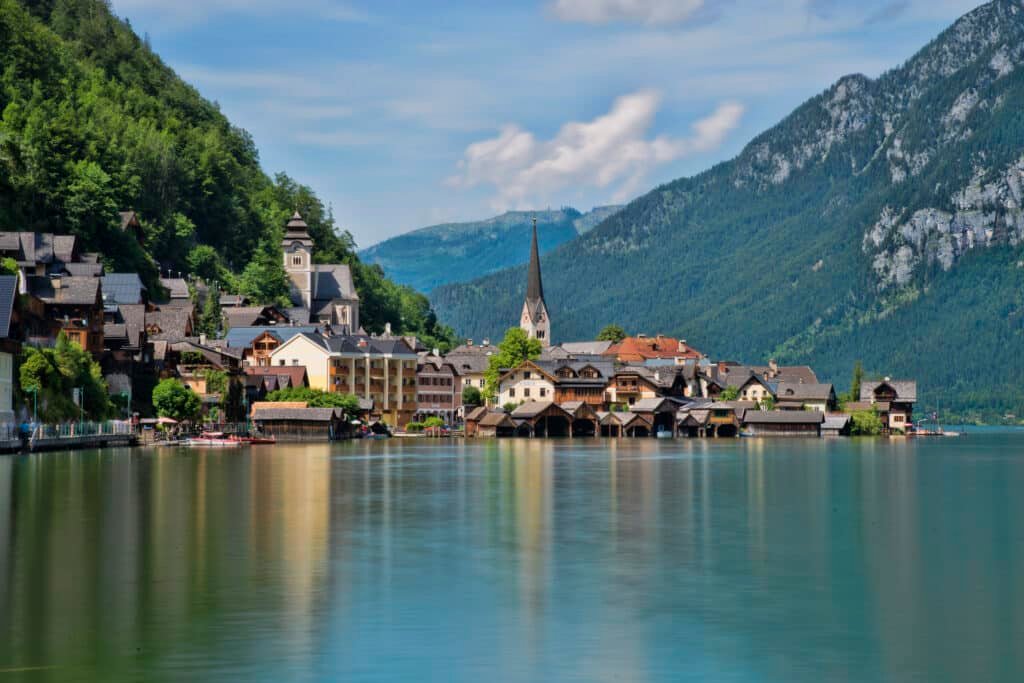
A cantilevered viewing platform hovering 360 meters above the rooftops of Hallstatt, Austria’s most photographed lakeside village, reachable via the Salzbergbahn funicular from the historic salt mine complex — the platform opened in 2013 and offers a genuinely vertigo-inducing view over Lake Hallstatt and the Dachstein mountains.
Hallstatt, Salzkammergut. Funicular and Skywalk entry fee. Best in the early morning before Hallstatt’s notoriously heavy day-trip crowds arrive.
Hallstatt’s Salt Mine (Salzwelten)
The oldest salt mine in the world, with archaeological evidence of continuous mining stretching back roughly 7,000 years — visitors descend via traditional wooden miners’ slides and a small underground train, learning about the Iron Age “Hallstatt culture” named directly after this site.
Hallstatt, Salzkammergut. Entry fee (often combined with Skywalk ticket). Best combined with the Skywalk given the shared funicular access.
Krimml Waterfalls
Europe’s tallest waterfall, cascading a combined 380 meters across three dramatic tiers, with a well-maintained trail winding directly alongside the falls’ mist and spray, offering some of the most refreshing summer hiking in the Austrian Alps.
Hohe Tauern National Park, Salzburg region. Small trail entry fee. Best May-June for maximum water flow from spring snowmelt.

Hohe Tauern National Park
Austria’s largest national park and the largest protected area in the Alps, home to Grossglockner, Austria’s highest peak, offering genuinely serious alpine hiking alongside more accessible valley trails and the Krimml Waterfalls at its edge.
Salzburg/Tyrol/Carinthia border region. Free; some trails and the Grossglockner High Alpine Road charge tolls. Best June-September for full trail access.
Golling Waterfall & Golling an der Salzach
A genuinely striking two-tiered waterfall reached by a short forest hike from the charming village of Golling an der Salzach, whose well-preserved historic center and 13th-century castle offer an easy, uncrowded stop between Salzburg and Hallstatt.
Near Salzburg. Free. Best after rainfall for maximum waterfall flow.
Tyrol & the Alps
Western Austria’s Tyrol region holds the country’s most dramatic high-mountain terrain and quietest valley communities.
Kaisertal Valley
A genuinely secluded valley beneath the dramatic Wilder Kaiser mountain range, accessible only on foot or by a small cable car (no road reaches the valley floor), home to a tiny permanent population and some of the best-preserved traditional alpine farming culture in Austria.
Near Kufstein, Tyrol. Cable car fee. Best for genuinely committed hikers seeking alpine solitude rarely found in more accessible parts of the Alps.
Innsbruck’s Nordkette
A genuinely rare experience for a European capital-adjacent city — a cable car whisks visitors from downtown Innsbruck to a dramatic 2,300-meter alpine summit in under 20 minutes, offering serious high-altitude hiking within a short trip of the city center.
Innsbruck, Tyrol. Cable car fee. Best on a clear day for the full panoramic Alps view.

Ötztal Valley
A dramatic glacial valley in Tyrol, home to some of Austria’s highest year-round skiable terrain and, notably, the site where “Ötzi the Iceman,” a genuinely remarkable 5,300-year-old mummified body, was discovered in 1991, preserved by glacial ice.
Southwestern Tyrol. Free to explore valley; ski and glacier access fees vary. Best for winter skiing or summer high-altitude hiking.
Styria
Austria’s “green heart” holds the country’s most surreal natural phenomenon alongside quirky rural attractions.
Grüner See (Green Lake)
A genuinely surreal seasonal phenomenon — during winter, this shallow lake in a public park measures barely a meter deep, but spring snowmelt from the surrounding Hochschwab Mountains floods the basin to depths of up to 12 meters, submerging the park’s benches, bridges, and trees entirely beneath strikingly clear, vivid green water. Note: all water sports, including diving and swimming, have been prohibited here since 2016 due to environmental damage from overtourism — the lake today is for hiking and viewing only.
Tragöß, Styria. Free; parking fee. Best mid-May through June for peak flood depth, viewed from the surrounding trail.

Riegersburg Castle
One of Austria’s most dramatic clifftop fortresses, its silhouette rising directly from a volcanic plug visible for miles around, holding a genuinely extensive collection tracing the castle’s centuries-long defense against Ottoman and Kuruc invasions.
Riegersburg, Styria. Entry fee. Best combined with a cycling loop through the surrounding Styrian wine country.
Zotter Chocolate Factory
A genuinely playful, entirely organic and fair-trade chocolate factory offering an unlimited self-guided tasting tour through dozens of unusual flavor combinations, alongside an on-site “chocolate zoo” of farm animals whose milk and eggs supply some of the factory’s ingredients.
Riegersburg area, Styria. Entry/tasting fee. Best combined with a Riegersburg Castle visit given the short distance.
Styrian Wine Country Cycling
Southern Styria’s rolling vineyard hills, sometimes nicknamed the “Styrian Tuscany,” offer genuinely excellent cycling routes connecting small wine estates and traditional Buschenschank (wine tavern) stops along the way.
Southern Styria, near the Slovenian border. Bike rental fees vary. Best September-October during the wine harvest.
Lower Austria & the Danube Valley
The Wachau Valley, easily reached from Vienna, holds some of Austria’s most scenic river landscape and historic wine towns.
The Wachau Valley
A UNESCO World Heritage stretch of the Danube River lined with terraced vineyards, medieval castle ruins, and riverside towns like Dürnstein and Melk, best experienced by riverboat cruise, bike path, or scenic train, all of which run the length of the valley.
Between Krems and Melk, Lower Austria. Free to explore; boat cruise and winery fees vary. Best April-October for boat cruise availability and vineyard scenery.
Melk Abbey
A monumental Benedictine abbey perched dramatically above the Danube, its Baroque library and church interior considered among the finest in Austria, still home to an active community of monks after nearly a thousand years.
Melk, Lower Austria. Entry fee. Best combined with a Wachau Valley boat cruise, which typically departs near the abbey.
.jpg)
Austria by Train
The ÖBB (Austrian Federal Railways) network connects Vienna, Salzburg, Innsbruck, and most larger towns efficiently and scenically, with several routes — particularly through the Alps and along the Danube — considered genuinely worthwhile for the views alone. For a trip concentrated in Vienna and easy day trips (the Wachau Valley, for instance), rail alone covers the itinerary well. Reaching more remote hidden gems in this guide — the Kaisertal Valley, Grüner See, rural Styria — generally requires a rental car or a combination of regional train/bus connections with longer transfer times, since Austria’s more scenic countryside is deliberately less densely served by rail than its major cities.
Austrian Food & Coffee Culture
Vienna’s coffeehouse tradition, recognized by UNESCO as an Intangible Cultural Heritage, remains genuinely central to the city’s identity — a Viennese café is meant for lingering, often for hours, over a single coffee and a newspaper, a custom worth actually adopting rather than rushing through. Wiener schnitzel, a breaded and fried veal (traditionally) or pork cutlet, remains Austria’s most iconic dish, best sought from a dedicated Gasthaus rather than a tourist-oriented restaurant. Sachertorte, the dense chocolate cake with apricot jam filling invented at Vienna’s Hotel Sacher in 1832, is worth trying at the original hotel or its historic rival, Demel, both of which claim the “authentic” recipe. In Styria, pumpkin seed oil (Kürbiskernöl) is a genuine regional specialty, drizzled over salads and soups with a distinctive nutty, dark green character found almost nowhere else in the world at this scale of production.
Best Time to Visit Austria
May through June and September offer the most comfortable weather for hiking and lake-focused travel, avoiding both the crowds of peak summer and the cold of winter, while May-June specifically catches Grüner See at its flooded peak. Winter (December-March) suits ski season across Tyrol and Salzburg’s alpine resorts, along with Vienna’s genuinely excellent Christmas markets, though many rural hidden gems and hiking trails close or become inaccessible. Summer (July-August) draws the largest crowds to Hallstatt and the Salzkammergut lakes specifically, worth factoring into planning if crowd avoidance is a priority — early morning visits to Hallstatt in particular meaningfully improve the experience during peak season.
I cover Vienna’s essential 2-day itinerary and 15 Austria hidden gems in the videos above. If this guide helped you plan your Austria trip, subscribe to Worldly Traveler on YouTube for more travel guides from around the world.
Frequently Asked Questions
What are the best hidden gems in Austria?
Some of the best hidden gems in Austria include the Eisriesenwelt ice cave, the Hallstatt Skywalk, Grüner See (Green Lake), Riegersburg Castle, and the Kaisertal Valley, all offering a side of the country beyond Vienna and Salzburg.
How many days do you need in Vienna?
2 full days allows a well-paced visit covering Schönbrunn Palace, the Hofburg, St. Stephen’s Cathedral, and the Belvedere. A longer 4-5 day trip allows time for museums, cafés, and day trips beyond the city center.
What is the best time of year to visit Austria?
May-June and September offer the most comfortable weather for hiking and lake visits. Winter (December-March) suits ski season in the Alps and Vienna’s Christmas markets, while summer draws the biggest crowds to Hallstatt and the Salzkammergut lakes.
Can you visit Grüner See for diving or swimming?
No — all water sports, including diving and swimming, have been prohibited at Grüner See since 2016 due to environmental concerns from overtourism. The lake is now for viewing and hiking around only.
Is it easy to day-trip from Vienna to other parts of Austria?
Some destinations, like Wachau Valley towns, are easy day trips from Vienna by train. Others, like Hallstatt or the Tyrolean Alps, are considerably better suited to a multi-day trip or a separate base given the travel distance involved.
What is the best way to get around Austria?
The ÖBB national rail network connects Austria’s cities and larger towns efficiently and scenically, though a rental car offers better access to more remote hidden gems like Grüner See, the Kaisertal Valley, and rural Styria.