
Paris and the Loire Valley anchor most first-time France itineraries, and the country’s northwestern coast — Normandy and Brittany — sees comparatively few international visitors despite holding some of the most dramatic coastline and significant history in the entire country. This guide covers Normandy and Brittany’s best hidden gems, organized by region so you can build a route through whichever part of France’s wild Atlantic edge genuinely calls to you.
Normandy and Brittany share a genuine Atlantic-facing identity distinct from the rest of France — both regions were shaped by centuries of maritime trade, fishing, and, in Normandy’s case, a pivotal role in world history that few other French regions can claim. Brittany additionally holds a genuinely distinct Celtic cultural heritage, historically an independent duchy with its own language (Breton, related to Welsh and Cornish rather than French) and folklore traditions that persisted well after the region’s formal union with France in 1532. That combination of dramatic coastline, deep history, and cultural distinctiveness makes this corner of France genuinely rewarding for travelers willing to look past the country’s more heavily trafficked central and southern regions.
The Atlantic itself shapes both regions’ character in a genuinely direct, ongoing way — Mont Saint-Michel’s bay holds tidal ranges among the most extreme in continental Europe, sometimes exceeding 14 meters between low and high tide, a phenomenon that literally transforms the landscape twice daily. That same exposed, weather-shaped coastline produced generations of skilled sailors, fishermen, and, in Saint-Malo’s case, licensed privateers, whose maritime livelihoods left a genuinely lasting imprint on both regions’ architecture, cuisine, and local identity that remains vividly present today.
Normandy’s D-Day Beaches & Coast
The Seine Valley
Brittany’s Pink Granite Coast
The Gulf of Morbihan
D-Day History Basics
Breton & Norman Food Worth Seeking Out
Best Time to Visit Normandy & Brittany
FAQ
Normandy’s D-Day Beaches & Coast
Normandy’s northern coastline holds both the site of the largest seaborne invasion in military history and some of France’s most dramatic natural coastal formations.
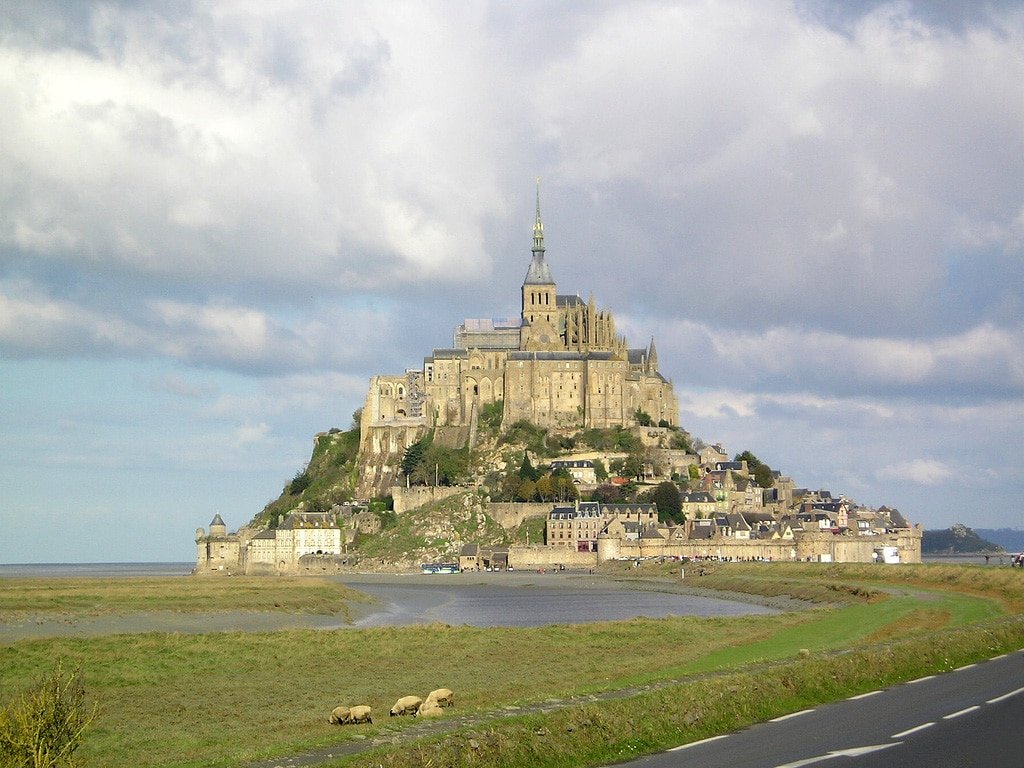
Mont Saint-Michel
One of the most recognizable silhouettes in all of France, this tidal island abbey rises dramatically from vast sand flats at the border of Normandy and Brittany, its medieval Benedictine monastery perched atop a rocky outcrop that becomes a genuine island during the bay’s exceptionally high tides — among the largest tidal ranges in continental Europe. The site has drawn Christian pilgrims for over a thousand years, and its distinctive silhouette against the bay remains one of the most photographed views in the entire country.
Normandy/Brittany border. Free to explore village; abbey entry fee. Best checking tide tables in advance, since the bay’s exceptional tidal range genuinely transforms the surrounding landscape throughout the day.
Étretat
A genuinely dramatic stretch of chalk cliffs along the Alabaster Coast, its natural arches and needle-shaped rock formations having drawn painters including Monet and Courbet, whose Impressionist depictions of these cliffs remain among the most famous coastal landscape paintings in French art history.
Normandy coast, near Le Havre. Free. Best at sunset for the cliffs’ warm light and dramatic shadows.
.jpg)
Omaha Beach & the D-Day Landing Beaches
The site of the June 6, 1944 Allied invasion of Nazi-occupied France, the beginning of the campaign that would liberate Western Europe — the beaches, still known by their military code names (Utah, Omaha, Gold, Juno, Sword), stretch across roughly 50 miles of Normandy coastline, each holding its own museums, memorials, and preserved fortifications.
Normandy coast, Calvados/Manche departments. Free to visit beaches; individual museum entry fees vary. Best with a guided tour for full historical context, particularly for visitors without extensive prior WWII knowledge.
American Cemetery at Colleville-sur-Mer
A genuinely solemn and immaculately maintained cemetery overlooking Omaha Beach, holding the graves of over 9,000 American service members who died during the Normandy campaign — the site’s visitor center offers detailed historical context, and the cemetery itself remains one of the most moving WWII memorial sites in Europe.
Colleville-sur-Mer, Normandy coast. Free. Best allotting several hours given the site’s scale and historical weight.
Honfleur
A genuinely picturesque fishing port at the mouth of the Seine, its slate-fronted, tall harbor houses among the most photographed in Normandy — the town’s distinctive light and atmosphere helped inspire the Impressionist movement, with Honfleur-born painter Eugène Boudin considered a direct precursor to and mentor of Monet himself.
Normandy coast, Seine estuary. Free to explore. Best at golden hour for the harbor’s classic reflected-light photograph.
The Seine Valley
Inland from the coast, the Seine River valley holds Normandy’s most significant Gothic architecture and Impressionist history.
Rouen
Normandy’s historic capital, its well-preserved medieval old town holding the site where Joan of Arc was executed in 1431, alongside a genuinely spectacular Gothic cathedral that Monet famously painted more than 30 times across different times of day and light conditions, a series now considered one of the most significant achievements in Impressionist art.
Seine Valley, Normandy. Free to explore old town; cathedral free, museum entry fees vary. Best combined with a Musée des Beaux-Arts visit for context on the city’s deep Impressionist connections.
Giverny
Claude Monet’s home and garden for the final 43 years of his life, its meticulously maintained water lily pond and Japanese footbridge directly inspiring some of the artist’s most famous late-career paintings — walking through the actual gardens depicted in his work offers a genuinely rare chance to see a masterpiece’s real-world source material.
Seine Valley, near Vernon. Entry fee. Best in late spring or early summer for peak water lily bloom, matching the season Monet most frequently painted.
Brittany’s Pink Granite Coast
Northern Brittany’s coastline holds a genuinely unique geological formation found in only a handful of places worldwide.
The Côte de Granit Rose (Pink Granite Coast)
A genuinely rare stretch of coastline where massive boulders of distinctly pink-hued granite, shaped by millions of years of erosion into surreal, rounded forms, create a landscape found in only a few other locations on Earth — the coastal footpath here (part of the GR34 trail) winds directly among these formations, offering some of the most photogenic coastal walking in all of France.
Côtes-d’Armor, northern Brittany. Free. Best at sunset for the pink granite’s most vivid color under warm evening light.
Saint-Malo
A genuinely dramatic walled port city, its ramparts almost entirely encircling the historic old town, largely rebuilt after WWII bombing destroyed much of the original medieval fabric — the city’s history as a base for corsairs (privateers licensed by the French crown) gave it a genuinely fearsome maritime reputation for centuries.
Northern Brittany coast. Free to explore; rampart walk free. Best walking the full rampart circuit for panoramic views over both the old town and the surrounding bay.

Dinan
A remarkably well-preserved medieval town, its half-timbered houses and cobblestone streets among the most intact in all of Brittany, its ramparts and clifftop position above the Rance River offering genuinely striking views largely unchanged since the medieval period.
Northern Brittany, Rance River. Free to explore. Best combined with a Saint-Malo visit given the short distance and shared river connection.
Locronan
A genuinely well-preserved granite village, its uniform 16th- and 17th-century stone architecture so intact it’s frequently used as a filming location for period productions — the town’s wealth, and by extension its architectural preservation, traces back to a historic linen and sailcloth manufacturing industry that once supplied ships across Europe.
Western Brittany, Finistère. Free to explore. Best on a quiet weekday morning for the most atmospheric, film-set-like experience.
The Gulf of Morbihan
Southern Brittany’s inland sea holds genuinely significant prehistoric monuments predating even Stonehenge.
Carnac Stones
The largest collection of prehistoric standing stones in the world, over 3,000 megaliths arranged in precise rows stretching across the Breton countryside, erected roughly 4,500-6,500 years ago for reasons still genuinely debated among archaeologists — theories range from astronomical observation to ceremonial or funerary purposes, though no single explanation has been definitively confirmed.
Carnac, southern Brittany. Free to view from designated paths; guided tours available for closer access. Best with a guided tour for full archaeological context, since direct access to the stones themselves is restricted to protect the site.

Gulf of Morbihan
A genuinely striking inland sea dotted with dozens of small islands, its name literally translating from Breton as “little sea” — the gulf’s sheltered waters and island-studded landscape offer some of the best sailing and boat-touring conditions in all of Brittany, with several islands holding their own small permanent communities.
Southern Brittany, near Vannes. Free to view; boat tour fees vary. Best with a boat tour for the fullest island-hopping experience across the gulf.
Vannes
A genuinely charming walled city on the Gulf of Morbihan, its half-timbered medieval houses and preserved ramparts offering a quieter, less internationally known counterpart to Saint-Malo further north, with a picturesque old port still active today.
Southern Brittany, Gulf of Morbihan. Free to explore. Best combined with a Gulf of Morbihan boat tour given the shared departure point.
D-Day History Basics
Visiting Normandy’s D-Day sites respectfully means recognizing these locations as genuine memorial and historical spaces rather than purely scenic attractions — the beaches, cemeteries, and museums here commemorate real, significant loss of life, and maintaining a quiet, reflective demeanor, particularly at the American Cemetery and similar memorial sites, is genuinely important. A guided tour, whether a dedicated D-Day tour operator or an audio guide, meaningfully enriches a visit for travelers without extensive prior knowledge of the campaign’s complex, multi-beach structure and timeline. Early June draws significant crowds to the region around the anniversary of the June 6, 1944 landings, particularly during major anniversary years, worth factoring into planning if visiting during this specific window. Beyond the beaches themselves, the Mémorial de Caen offers a genuinely comprehensive museum covering the broader context of WWII and the Battle of Normandy, worth combining with beach visits for fuller historical understanding.
Breton & Norman Food Worth Seeking Out
Normandy’s apple-based food and drink tradition genuinely defines the region’s cuisine — cidre (hard cider), Calvados (an apple brandy), and Pommeau (a blend of the two) reflect the region’s extensive apple orchards, an agricultural tradition suited to Normandy’s cooler, wetter climate compared to France’s more famous wine-growing regions further south. Norman cream and butter, both genuinely prized nationally for their quality, form the base of rich regional dishes including sole normande and the classic tarte normande apple tart. Brittany’s crêpe and galette tradition holds a genuinely distinct identity from crêpes found elsewhere in France — savory buckwheat galettes and sweet wheat-flour crêpes are traditionally treated as separate dishes, and a proper Breton meal often includes both in sequence, paired with the region’s own dry cider rather than wine. Fresh seafood, particularly oysters from Brittany’s Cancale region and mussels prepared moules-frites style, reflect both regions’ deep Atlantic coastal fishing heritage, worth seeking out directly at a portside restaurant rather than further inland.
Best Time to Visit Normandy & Brittany
May through June and September offer the most comfortable temperatures and generally manageable crowds, avoiding both the region’s genuinely unpredictable Atlantic weather patterns in winter and the more crowded peak summer season. Early June specifically draws significant additional crowds to the D-Day beaches around the anniversary of the landings, a detail worth factoring into planning whether you’re hoping to experience that commemorative atmosphere or avoid the associated crowds. Summer remains genuinely popular for Brittany’s beaches and coastal walking trails despite larger crowds, given the region’s comparatively cooler summer temperatures relative to southern France. Mont Saint-Michel’s dramatic tidal variations occur year-round regardless of season, though the exceptionally high “supermoon” tides that most dramatically transform the bay follow their own astronomical schedule worth checking specifically if witnessing the most extreme tidal shift is a priority for your visit.
More Hidden Gems Guides
Still planning your route through Europe’s quieter corners? These guides cover more hidden gems worth building into a trip:
If this guide helped you plan your Normandy or Brittany trip, subscribe to Worldly Traveler on YouTube for more travel guides from around the world.
Frequently Asked Questions
What are the best hidden gems in Normandy and Brittany?
Some of the best hidden gems in Normandy and Brittany include Mont Saint-Michel, the chalk cliffs of Étretat, the walled port city of Saint-Malo, the Pink Granite Coast, and the medieval town of Dinan, alongside the D-Day beaches’ significant WWII history.
Can you walk to Mont Saint-Michel?
Yes, via a modern causeway bridge that replaced the old land connection, though the surrounding bay has genuinely dangerous tidal currents and quicksand, so venturing onto the exposed sand flats independently, away from marked paths, is strongly discouraged without a licensed guide.
How many days do you need to explore Normandy and Brittany?
10-14 days allows a well-paced trip covering Normandy’s coast and D-Day sites alongside Brittany’s Pink Granite Coast and walled towns. A shorter 5-7 day trip works well focused on just one region.
What is the best time of year to visit Normandy and Brittany?
May-June and September offer the most comfortable temperatures and manageable crowds. Early June draws significant crowds to the D-Day beaches around the anniversary of the landings, worth planning around if visiting that specific week.
Do you need a car to explore Normandy and Brittany?
Yes, genuinely — while major cities like Rouen and Saint-Malo have train access, most of the coastal villages, D-Day beaches, and the Pink Granite Coast require a rental car, since regional bus service is limited.