
Bear Lake and Trail Ridge Road are where most first-time visitors start and stop — and they’re beautiful, but they’re also where the crowds concentrate. This guide covers 25 hidden gems in the Rocky Mountains, most inside Rocky Mountain National Park itself, a few in the wider Colorado high country nearby, all chosen for alpine lakes, waterfalls, and trails that reward the extra effort to reach them. I walk through all of these in the video below, so start there for a visual preview before you plan your route.
What ties this list together isn’t just remoteness for its own sake — it’s the kind of scenery that Colorado’s high country does better than almost anywhere else in the country: glacially carved cirques holding impossibly clear water, wildflower meadows that peak for only a few weeks each summer, and mining-era relics scattered through terrain that’s barely changed since the 1800s. Some of these spots require a serious hike; others are a short walk from a trailhead. Either way, they all sit a step beyond the handful of destinations that show up on every first-time Colorado itinerary.
Alpine Lakes & Viewpoints
Waterfalls & Hot Springs
Trails Beyond Bear Lake
Scenic Drives & Iconic Views
Planning Your Visit
FAQ
Alpine Lakes & Viewpoints
1. Emerald Lake
A short, well-trafficked but genuinely rewarding hike from Bear Lake trailhead, Emerald Lake sits beneath the sheer face of Hallett Peak and delivers one of the most photographed views in the park without requiring a full-day trek.
Rocky Mountain National Park. Free with park entry. Best in early morning to beat crowds and get calm water reflections.
2. Ice Lake Basin
A demanding but spectacular hike near Silverton, Ice Lake Basin’s turquoise alpine lakes sit above 12,000 feet, surrounded by wildflower meadows in midsummer.
San Juan Mountains, near Silverton. Free. Best in late July for peak wildflower bloom.
3. Blue Lakes Trail
A steep but rewarding trail near Ridgway climbing to a series of blue-hued alpine lakes beneath the jagged Mount Sneffels, less crowded than the more famous Ice Lakes.
San Juan Mountains, near Ridgway. Free. Best in summer for full trail access.
4. Lost Lake
A relatively easy hike near Crested Butte leading to a quiet lake framed by aspen groves, especially rewarding in fall when the surrounding trees turn gold.
Near Crested Butte. Free. Best in late September for fall color.
5. Lake Isabelle
A moderate hike in the Indian Peaks Wilderness leading to a glacially fed lake ringed by dramatic peaks, offering scenery comparable to more famous RMNP lakes with noticeably fewer visitors.
Indian Peaks Wilderness, near Nederland. Free (wilderness permit may be required for overnight). Best in July-August.
6. Devil’s Thumb Lake
A longer hike through the Indian Peaks Wilderness rewarding hikers with a quiet alpine lake beneath the distinctive rock formation that gives the trail its name.
Indian Peaks Wilderness, near Fraser. Free. Best as a full-day hike in summer.
7. Rainbow Lake
A lesser-known lake near Grand Lake, reached via a peaceful forested trail, offering solitude even during the park’s busiest summer weekends.
Near Grand Lake. Free. Best on weekday mornings.
8. Bluebird Lake
A long, challenging hike in the Wild Basin area of RMNP, passing multiple waterfalls en route to a stunning cirque lake that sees far fewer visitors than the park’s more accessible lakes.
Wild Basin, Rocky Mountain National Park. Free with park entry. Best as a full-day summer hike.
9. Mohawk Lakes
A steep hike near Breckenridge leading past a historic mining cabin to a chain of alpine lakes, offering both natural beauty and a glimpse of Colorado’s mining history.
Near Breckenridge. Free. Best in July-September.
10. Columbine Lake
A quieter alpine lake near Silverton offering the dramatic scenery of the San Juans without the crowds of the more famous Ice Lakes Basin nearby.
San Juan Mountains, near Silverton. Free. Best in summer.
11. Bear Lake
Bear Lake itself is well known, but it remains the essential starting point for many of the park’s best lake hikes and is worth including for its own easy, accessible beauty, especially outside peak midday hours.
Rocky Mountain National Park. Free with park entry. Best at sunrise before the parking area fills.

12. Monarch Lake
A gentle, family-friendly trail on the park’s western side near Grand Lake, offering easy access to mountain scenery without a strenuous climb.
Arapaho National Recreation Area, near Grand Lake. Free. Best for a shorter, easier outing.
13. Mirror Lake
A less-visited lake in the park’s northern reaches, reached via a longer approach that keeps crowds thin even in peak season.
Rocky Mountain National Park (Mummy Range area). Free with park entry. Best for hikers seeking solitude.
Waterfalls & Hot Springs
14. Hanging Lake
A turquoise, travertine-lined lake in Glenwood Canyon, fed by Bridal Veil Falls, and one of Colorado’s most distinctive hikes thanks to the mineral deposits that give the water its striking color. A permit system now limits daily visitors to protect the fragile ecosystem.
Glenwood Canyon. Permit required, booked in advance. Best in late spring for full water flow.
15. Conundrum Hot Springs
A backcountry hike near Aspen leading to natural hot springs at nearly 11,200 feet, one of the most rewarding (and most physically demanding) soaks in the state.
Near Aspen. Overnight permit required in season. Best as a 2-day backpacking trip.
16. St. Mary’s Glacier
A short, steep hike near Idaho Springs leading to a permanent snowfield and glacial lake, one of the most accessible glimpses of high-alpine terrain close to Denver.
Near Idaho Springs. Free. Best in early summer before the snowfield recedes.
17. Thunder Lake
A long Wild Basin hike passing several waterfalls on the way to a remote lake, rewarding hikers willing to commit to a full-day round trip.
Wild Basin, Rocky Mountain National Park. Free with park entry. Best as a full-day summer hike.
18. Ouzel Falls
A moderate Wild Basin hike to a dramatic multi-tiered waterfall, less crowded than the falls near Bear Lake Road despite comparable scenery.
Wild Basin, Rocky Mountain National Park. Free with park entry. Best in June for peak snowmelt flow.
Trails Beyond Bear Lake
19. Lone Eagle Peak
A dramatic granite spire in the Indian Peaks Wilderness, reachable via a long hike to Crater Lake at its base — one of the most striking mountain views in the state, seen by relatively few visitors given the distance required.
Indian Peaks Wilderness. Free. Best as a full-day or overnight trip.
20. Sky Pond
One of the park’s most rewarding hikes, passing Alberta Falls and the Loch en route to a dramatic glacial lake framed by the Sharkstooth and Taylor Peak — a longer, more strenuous alternative to Emerald Lake with a real payoff.
Rocky Mountain National Park. Free with park entry. Best as a full-day summer hike, arriving early.
21. Chasm Lake
A challenging hike at the base of Longs Peak, RMNP’s highest mountain, offering dramatic views without requiring a summit attempt.
Rocky Mountain National Park. Free with park entry. Best in July-September, early start recommended.
22. Blue Lake
A quieter alpine lake in the Indian Peaks Wilderness, reached via a less-trafficked trail than the park’s more famous destinations.
Indian Peaks Wilderness. Free. Best in summer.
Scenic Drives & Iconic Views
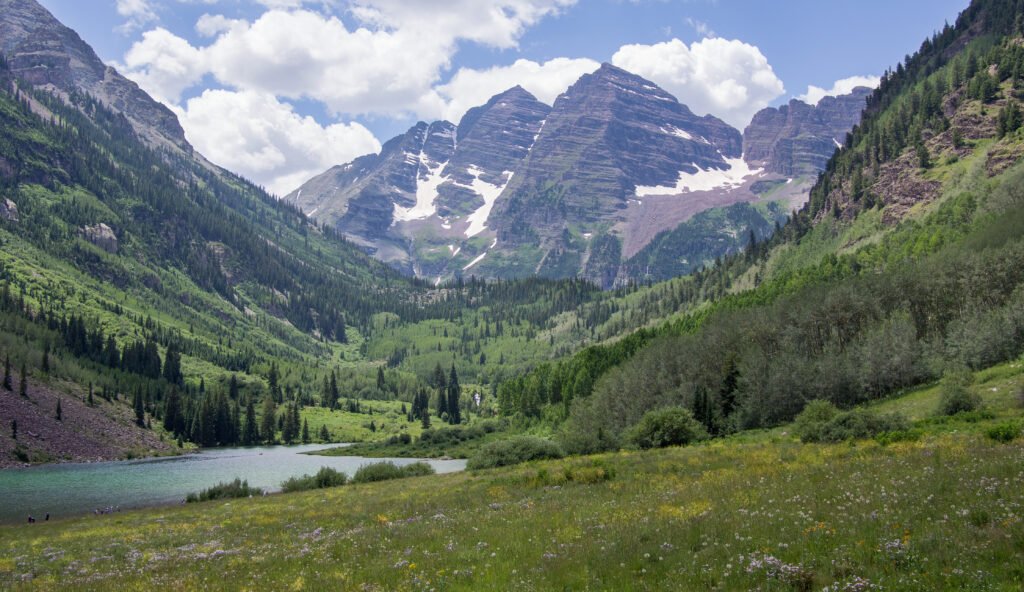
23. Maroon Bells
The most photographed peaks in Colorado, the twin fourteeners of Maroon Bells reflect dramatically in Maroon Lake, especially at sunrise. A shuttle system limits vehicle access during peak season to manage crowds.
Near Aspen. Entry fee; shuttle required in summer. Best at sunrise.
24. Crystal Mill
A 19th-century wooden mill perched dramatically over the Crystal River, one of the most photographed historic structures in Colorado, reached via a rough backcountry road near Marble.
Near Marble. Free to view; high-clearance vehicle recommended for the access road. Best in golden afternoon light.
25. Trail Ridge Road
The highest continuous paved highway in the United States, Trail Ridge Road climbs above 12,000 feet through RMNP, offering sweeping tundra views most visitors experience only from their car — worth a stop at one of its many overlooks.
Rocky Mountain National Park. Free with park entry; seasonal closures (typically mid-October to late May). Best midday when the road is fully open and clear.
Planning Your Visit
Timed-entry permits: Rocky Mountain National Park requires a timed-entry permit during peak season (roughly late May through mid-October) in addition to the standard entrance fee, especially for the Bear Lake Road corridor. Book online well in advance — permits for popular dates sell out.
Best season: June through September gives the widest trail access and mildest weather. Trail Ridge Road typically closes by mid-October and doesn’t reopen until late May, so shoulder-season visitors should check current conditions before planning a trip around it.
How many days to allow: 3-4 days lets you mix a couple of easier lake hikes with one longer trek like Sky Pond or Chasm Lake, plus a drive along Trail Ridge Road. A single day realistically covers only one or two major hikes given trailhead drive times and altitude.
Altitude: Many of these trailheads sit above 9,000 feet, and several lakes are above 10,000-11,000 feet. Give yourself a day or two to acclimate if you’re arriving from sea level, and start hikes early to avoid common afternoon thunderstorms at elevation.
Packing Essentials for Rocky Mountain Hikes
Layers: Mountain weather shifts fast — a warm, sunny trailhead start can turn into a cold, windy summit within an hour. Pack a shell layer even on clear days.
Sun protection: UV exposure increases significantly at altitude. Sunscreen, sunglasses, and a hat matter more here than they might at sea level, even on cool days.
Plenty of water: The dry mountain air and elevation both accelerate dehydration. Carry more water than you think you’ll need, especially on longer hikes like Sky Pond or Chasm Lake.
An early start: Afternoon thunderstorms are common in the Rockies through summer, particularly above treeline. Starting hikes by 7-8am gives you the best chance of summiting or reaching a lake before storms roll in.
I walk through all 25 of these locations in the video above, including Emerald Lake, Sky Pond, and Maroon Bells. If this guide helped you plan your trip, subscribe to Worldly Traveler on YouTube for more hidden gems guides from around the world.
Frequently Asked Questions
Do I need a permit to visit Rocky Mountain National Park?
Rocky Mountain National Park uses a timed-entry permit system during peak season (typically late May through mid-October), in addition to the standard park entrance fee. Permits should be booked online in advance, especially for popular corridors like Bear Lake Road.
What is the best time to visit Rocky Mountain National Park?
June through September offers the best access to high-elevation trails and lakes, with Trail Ridge Road typically open from late May to mid-October depending on snowfall. September offers cooler temperatures and fall color with slightly thinner crowds than summer.
How many days do you need in Rocky Mountain National Park?
3-4 days is enough to see a meaningful cross-section of the park’s hidden gems, including a mix of easy lake hikes and one or two longer treks. A single day only allows time for one or two major hikes.
Are the hidden gems in this guide all inside the national park boundary?
No — several, including Maroon Bells, Crystal Mill, and Conundrum Hot Springs, are located elsewhere in the Colorado Rockies, outside Rocky Mountain National Park itself. Each entry notes its general location.
Is Trail Ridge Road open year-round?
No. Trail Ridge Road, the highest continuous paved road in the U.S., typically closes for the winter by mid-October and reopens in late May, depending on snow conditions each year.