
Introduction
Reims offers a Christmas break with three distinct pleasures: a central seasonal market, a remarkable cathedral, and the Champagne houses that give the city an identity beyond the festive lights. They fit together well when you leave enough time between them. They fit much less comfortably when a cellar tour, market dinner, cathedral visit, and return train are squeezed into a single afternoon. For a first visit, two nights allow a balanced city break without renting a car.
The official Grand Est visitor page lists November 25 through December 27 for the 2026 Christmas market, with closure on December 25. Detailed seasonal schedules can change and some pages retain older program items, so verify the current municipal information before travel. This itinerary focuses on decisions that remain useful: where to stay, how to pace a cellar visit, and how to combine the city’s sights with warm breaks.
Quick answer: how should you combine the market and Champagne?
Stay centrally, arrive by train, and reserve one Champagne-house visit for a separate part of the day. Keep the market as a relaxed afternoon or evening outing rather than a deadline after a distant appointment. Use a suitable taxi or local transport for a cellar visit when that saves effort. A car adds little to this central city break, especially if tastings are part of the plan. Enjoying Champagne does not require driving into the vineyards.
| Visit period | Recommended focus | Practical safeguard |
|---|---|---|
| Arrival afternoon | Hotel and central orientation | Store luggage before the market |
| Full day morning | One reserved Champagne-house visit | Confirm tour language, access, and transfer |
| Full day afternoon | Lunch, cathedral area, rest | Avoid stacking timed appointments |
| Evening | Christmas market and dinner | Check holiday hours separately |
| Departure morning | Short familiar walk | Keep a generous station margin |
Read the current program carefully
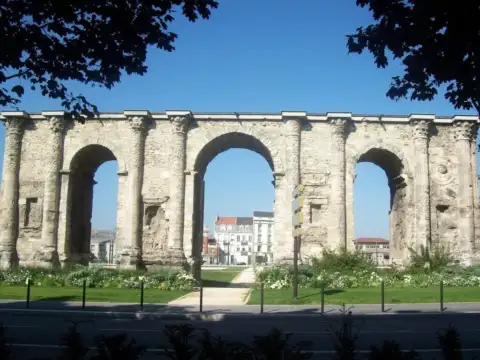
The market’s location along the Hautes Promenades and the Porte de Mars area makes it a natural part of a central Reims visit. The current Christmas information linked by the regional visitor office should be your reference for the current operating program. Do not assume that every festive photograph of Reims depicts the present market layout. Past cathedral-front arrangements and older light-show schedules can persist in travel articles long after the event has changed.
Plan around the dates and hours of the particular experience you want. A market, fairground ride, cathedral projection, and Champagne-house tour are different activities with separate calendars. If one is essential, verify it directly before booking a nonrefundable stay. For a Christmas-week trip, check December 24 and 25 separately, including meals and transport. A city may remain beautiful when some businesses are closed, but that is a different visit from an ordinary market weekend.
Arrive at the right station and simplify the transfer
Look carefully at the station on your rail booking. Reims central station and Champagne-Ardenne TGV are different places, and the latter requires an onward journey for a central-city stay. A fast mainline train is not automatically the easiest complete route. Compare the total travel time, transfers, waiting, and luggage handling. When a slightly longer itinerary ends directly at the station that suits your hotel, it may offer a more comfortable beginning.
Use current rail planners and read the fare conditions before purchasing. A reserved service, a flexible regional ticket, and an international connection can involve different rules. The TER Fluo Christmas-market page identifies Reims among its rail-accessible seasonal destinations. Follow through to a journey planner for actual departures rather than treating a promotional page as a timetable. Recheck engineering work and service notices shortly before traveling.
If you need boarding or transfer assistance, arrange it with the relevant operator and confirm the complete journey. Keep tickets, the hotel address, and any assistance confirmation available offline. On arrival, do not begin sightseeing with luggage simply because the market appears close. Go to the hotel or a verified luggage-storage arrangement first. A short pause to settle in protects the rest of the afternoon, particularly after an early start or a crowded train.

Choose a base that supports both the market and dinner
A central hotel is helpful for this itinerary because it makes an afternoon rest possible between the Champagne visit and the lights. Compare the approach from your station, the route to the cathedral area, and the location of restaurants you might actually use. A hotel on a lively dining street may be convenient but noisy. Ask about room position if sleep is a priority, and check whether a taxi can reach the entrance during seasonal traffic arrangements.
For reduced-mobility travelers, confirm the exact room rather than relying on a general accessibility description. Ask about entrance steps, elevator access, shower configuration, and any thresholds between reception and the room. If you need a particular type of bathroom, request photographs and measurements. It is easier to solve these questions before paying than after arriving tired with luggage. A dependable room and straightforward route back can contribute more to the weekend than a fashionable address.
Arrival day: understand central Reims
After check-in, take a small orientation walk between the hotel, a central dining area, and the market approach. Establish the route before darkness if possible. Notice where you can cross comfortably and where the crowd begins to tighten. The first afternoon is a useful time to identify a warm café and reserve dinner if you have not already done so. Keep the evening modest if the journey has been demanding; tomorrow contains the main cultural program.
Visit the market for atmosphere rather than a complete stall-by-stall inspection. Look at the layout, decide where you would like to return, and choose a small snack if it appeals. The Porte de Mars area adds a historical setting to the outing, but there is no need to attach a long history walk to the end of a travel day. Leave enough appetite and time for a seated meal. The market will be easier to appreciate when you are warm and no longer carrying bags.
Reserve one Champagne-house experience thoughtfully
Choose a house by the experience offered, the tour language, access, and the route from your hotel rather than by name recognition alone. A cellar tour, a tasting-only appointment, and a visit to a vineyard are not interchangeable. Read what the ticket includes, its duration, cancellation rules, and the meeting point. Reserve directly through the house or an authorized booking channel. If you cannot find an appropriate time, avoid building the rest of the weekend around an uncertain walk-in possibility.
Taittinger’s visitor FAQ distinguishes its historic Reims cellar visits from public access to the vineyard. That is a useful distinction across Champagne planning: a city break does not automatically include a vineyard landscape excursion. If your goal is understanding production and seeing cellars, one booked urban visit may provide exactly what you want. If your goal is traveling among villages and vines, give that a separate day with an appropriate organized transfer.
Ask direct questions about stairs and standing time. Underground cellars can involve different levels, long corridors, or a guided pace that is hard to shorten. Do not infer universal access from the presence of a tasting room at street level. Explain whether you use a wheelchair, cannot manage stairs, or need frequent seating. Obtain confirmation for the specific tour you are buying. An accessible alternative is only useful when it is available at your reserved time and understood by the staff expecting you.
Consider comfort inside the cellars as well as outside
Cellars are not necessarily a warm refuge from December weather. Pommery’s practical visitor page lists a cellar temperature of 10°C and provides information about visiting arrangements. Carry a layer you can comfortably wear during the experience rather than assuming the underground visit will feel like a heated museum. Sensible footwear matters for standing and any steps. Ask about bags and equipment before arrival if you travel with a mobility aid or bulky belongings.
Veuve Clicquot’s visitor page describes reduced-mobility access that should be mentioned when making an appointment. Use such information to begin a specific booking conversation, not to assume identical arrangements at every Champagne house. Leave transfer time on both sides of the visit. Arriving early enough to use the restroom and check in is more pleasant than entering out of breath after a long walk from the center.
If you taste Champagne, decide your transport before the first glass. This car-free itinerary removes the driving question, but you still need to navigate safely and return comfortably. Pace the tasting, eat normally, drink water, and choose a nonalcoholic alternative or decline a pour when that suits you. A cultural visit does not require consuming every sample. If alcohol is unsuitable with your health or medication circumstances, contact the house about the available experience before booking.


Give the cathedral its own unhurried visit
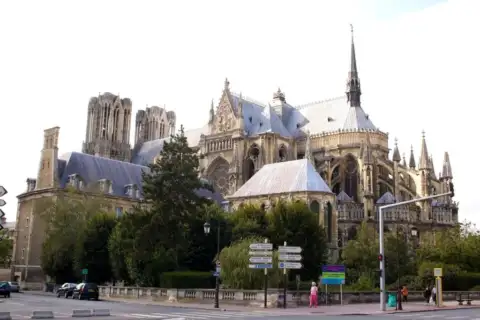
Return to the central area for lunch and a cathedral-focused afternoon. The scale of Notre-Dame de Reims is part of the city’s appeal, but the visit should respect worship, temporary restrictions, and the practical conditions at the entrance. Do not make an interior visit depend on a tightly timed gap. When access is limited, take time with the exterior and nearby streets instead. Looking carefully at a few details is more rewarding than moving quickly simply to record that you entered.
Separate the cathedral visit from any hoped-for evening projection. Check the current program for dates, times, and viewing arrangements; an old video of a light show is not evidence that it runs every night this year. If a projection is confirmed and you want to attend, consider the standing time and temperature. Choose a secure place where you can leave without pushing through a dense crowd. If it does not fit comfortably, the cathedral remains impressive in daylight.
Market evening: make a second visit more selective
Take a hotel break before returning to the market. Leave purchases behind, charge the phone, and choose what you still want to do: perhaps a particular food stall, a gift, or simply another view of the lights. A second outing does not need to repeat the first in full. Start with the part farthest from your intended dinner location and work back, so the final walk is short. Avoid saving the most demanding stretch for when your feet are already tired.
Ask traders about ingredients and product origin rather than assuming every item is made locally. Set a gift budget, check payment methods, and consider how purchases will travel home. Bottles and food gifts need particular thought about luggage, airline restrictions, and destination rules. A tasting purchase at a Champagne house can add weight to a rail journey; ask about shipping only if that genuinely suits you and read the terms. Do not buy a heavy souvenir without a transport plan.
Keep food and rest as part of the itinerary
Market snacks and Champagne tastings should complement regular meals rather than replace them. A restaurant reservation is useful when you need dependable seating, a particular diet, or an early dinner. Ask about steps and restroom access if relevant. A restaurant’s central address does not establish that its dining room is on the ground floor. On holiday dates, get explicit opening confirmation rather than relying on an ordinary weekly listing.
Use the full-day lunch as a turning point. If the morning cellar visit has taken more energy than expected, shorten the cathedral outing and return to the hotel earlier. If you feel fresh and the weather is pleasant, add a small street circuit. That flexibility is the reason to avoid several prepaid appointments in one day. The itinerary should support your priorities rather than make you feel that every rest is a missed attraction you have already paid for.
Walking, visibility, and a low-stress departure
Central Reims can be explored in manageable sections, but standing at stalls and on guided tours adds to the effort. Track that total rather than counting distance alone. Wear shoes with grip, carry a weatherproof layer, and leave room in the plan for cold rain. For low-vision travelers, learn the market approach in daylight and use a clear meeting point away from the busiest flow. Reflective paving and bright decorations can make judging edges more tiring after dark.
Prepare for departure before the final evening: confirm the station, train, luggage arrangement, breakfast time, and check-out process. Pack fragile gifts securely and keep essential medication or documents with you. On the last morning, choose a familiar nearby walk rather than a new neighborhood. Give yourself time to locate the platform and respond to changes without rushing. A relaxed departure protects the memory of the whole weekend more effectively than one extra stop squeezed in at the end.
Use the companion video for atmosphere
The French Christmas-markets video accompanying this guide includes Reims in a wider destination tour. Watch it to compare the city’s character with other festive choices, then use the current official event pages for practical decisions. Filmed stalls, decorations, and performances may belong to a previous edition. A video can help you choose the place; it cannot establish your tour’s accessibility, your hotel’s entrance, or the operating time of an attraction on your travel date.

Make a reservation checklist before paying
For each Champagne-house option, write down the date, arrival time, spoken language, meeting address, tour route, tasting arrangement, and cancellation condition. Compare those details side by side. A tour that looks similar in a booking photograph may differ substantially in its practical demands. If one member of your group cannot use stairs or does not drink, establish how the experience works for that person before purchasing tickets for everyone. A clear written confirmation is more useful than a vague assumption based on a general promotional description.
Keep the confirmation with the transfer details and allow enough time to return for lunch without rushing. If the chosen appointment is unavailable, move it to another part of the stay and adjust the flexible market outing around it. Avoid booking a second house simply to fill a free hour. One well-chosen visit gives you more time to absorb what you learned and to enjoy the city above ground.
Frequently asked questions
Can I combine the Christmas market and a Champagne cellar in one weekend?
Yes. Reserve one cellar visit and keep the market in a separate afternoon or evening window. Two nights provide useful flexibility for transfers, meals, the cathedral, and a hotel rest between activities.
Do I need to rent a car?
No. A central rail arrival, well-located hotel, and a suitable taxi or local transport for the Champagne house can support this itinerary. A vineyard excursion requires separate planning and is optional.
Are Champagne cellars accessible without stairs?
Arrangements vary by house and tour. Ask about the exact route, elevator access, standing time, and alternative experience before booking. Confirm any reduced-mobility requirement with the house expecting you.
Will a cellar tour be warm in December?
Not necessarily. Cellars can remain cool throughout the year. Pommery lists 10°C for its cellars. Check your chosen venue and carry an appropriate layer rather than treating the visit as a heated indoor break.
Is the market open on December 25?
The official regional 2026 visitor page lists a Christmas Day closure. Check the current municipal program and arrange meals, transport, and any other attraction separately for the holiday.
Can I see the cathedral light show every evening?
Do not assume that. Seasonal projections have specific programs that can change. Verify the current event before booking around it, and avoid relying on an older article or video for this year’s schedule.
Conclusion
Reims is most satisfying when its Christmas atmosphere, cathedral, and Champagne heritage each receive a little space. Choose a central base, reserve one appropriate cellar experience, and make the market a relaxed outing with a warm meal nearby. Check the current seasonal program and the access details that matter to you. With those foundations in place, two nights can deliver a distinctive festive city break without driving or hurrying between competing appointments.
Sources and further reading
- Explore Grand Est: Reims Christmas market
- TER Fluo: Christmas markets by train
- Taittinger: official visitor FAQ
- Pommery: plan your visit
- Veuve Clicquot: official cellar visits and accessibility
Sources reviewed: 2026-10-28.
Featured photo: Reims Cathedral and Palais du Tau; daytime documentary photograph — Ludovic Péron · Original photo · CC BY-SA. Resized, JPEG compressed, and brightness slightly increased; documentary photograph may show another season.
