
America’s apple-growing regions genuinely span from centuries-old New England family farms to the massive irrigated valleys of central Washington that now supply most of the country’s fresh apples today. This guide walks through three of the best regions for apple picking and orchard visits, checked against real research into each area’s history and growing conditions, along with practical advice for planning a genuinely worthwhile fall orchard visit.
What makes America’s apple story genuinely worth understanding beyond just picking fruit is how directly it traces the country’s own westward agricultural development, apples were among the first fruits planted by colonial settlers along the East Coast, and the industry’s center of gravity has shifted dramatically westward over the past two centuries as irrigation technology and new growing regions opened up considerably more productive land. That migration from Virginia’s Shenandoah Valley in the early 1800s to Washington’s Columbia Basin today genuinely mirrors much of the broader story of American agricultural expansion, and visiting orchards in each of these regions offers a tangible way to experience that history firsthand rather than simply reading about it.
New England’s Historic Orchards
The Pacific Northwest
The Mid-Atlantic & Shenandoah Valley
Understanding Apple Varieties
A Brief History of the American Apple
The Revival of American Cider
Comparing the Regions
Planning Your Visit
FAQ
New England’s Historic Orchards
Genuinely home to some of the oldest continuously operated apple orchards in the entire country, several dating back well over a century.
New England’s Historic Orchards
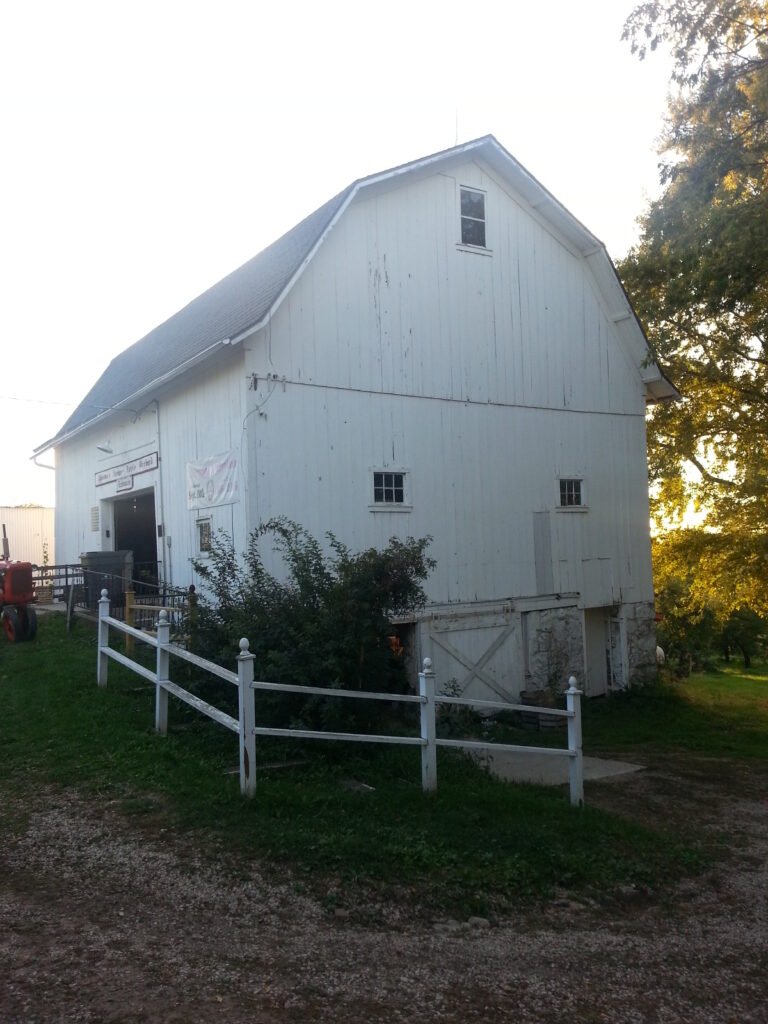
Applecrest Farm Orchards in Hampton Falls, New Hampshire, claims to be the oldest continuously operated apple orchard in America, its history tracing back to the 1920s when a local farmer began running a weekly “Apple Train” bringing tourists from Boston specifically to pick their own apples, a genuinely novel marketing idea at the time that’s since grown into an operation drawing as many as 15,000 visitors on a single autumn Sunday. Four generations of the same family have farmed the 225-acre property, and its 200-year-old barn and buildings dating to the 18th century give the farm a genuine sense of accumulated history rarely found at more recently established agritourism operations. That same farm’s early embrace of tourism, decades before the broader agritourism industry took shape elsewhere in the country, makes it a genuinely significant piece of American fall tourism history in its own right, not simply an old working farm that happens to still be in business.
Vermont’s Southern Vermont Orchards, operating over 300 acres remaining from a much larger original spread, grows historic varieties including the Northern Spy, which originated in upstate New York around 1800, and the considerably older Gravenstein, a variety with roots stretching back to 17th-century Europe, offering visitors genuine access to apple varieties predating the handful of commercially dominant types found in most grocery stores today. Massachusetts’ Honey Pot Hill Orchards and Lakeside Orchards, both in the Boston area’s commuting range, combine pick-your-own apples with additional fall activities, paddle boats, mini golf, and scenic hilltop views, reflecting the broader New England pattern of pairing apple picking with a full day’s worth of family activities rather than a simple, single-purpose farm visit.
New York’s Hudson Valley and Catskills region adds a further genuinely significant layer to the broader Northeast apple scene, Stone Ridge Orchard’s hillside setting amid the Catskill Mountains offers views of some of the region’s best fall foliage alongside its apple and pumpkin picking, corn maze, and hayride offerings, a genuinely comprehensive version of the classic Northeast farm visit that combines several fall traditions into a single stop.
New Hampshire, Vermont, Massachusetts, and New York. Entry typically free; apples priced by the pound or pre-paid bag. Best September through October, with specific peak timing varying by variety and that year’s growing season.
The Pacific Northwest
Genuinely the commercial heart of American apple production, responsible for a majority of the fresh apples sold nationwide.
The Pacific Northwest
Washington State has been the nation’s leading apple-growing state for nearly a century, its apple story beginning in the 1820s when the first seeds were planted at Fort Vancouver, though large-scale commercial production didn’t truly take off until irrigation projects in the 1890s opened up the Yakima and Wenatchee valleys to widespread orchard planting. Wenatchee, genuinely nicknamed the “Apple Capital of the World” and home to the Washington Apple Commission since 1937, sits at the heart of a region where hot, dry summers and cold, crisp winters, combined with abundant water from the Wenatchee and Columbia Rivers, create genuinely ideal growing conditions found in few other apple-producing regions worldwide.
The Yakima Valley, stretching from Naches to the Tri-Cities, represents the state’s single largest apple-producing region, its irrigated terrain functioning as a genuine oasis for large-scale commercial cultivation, while the smaller Lake Chelan region, its orchards lining a deep, temperate lake that moderates both summer heat and winter cold, produces apples specifically prized for their color, shape, and keeping quality in export markets. The Columbia River region, situated between the Columbia and Snake rivers, benefits from genuinely rich volcanic soil left behind by ancient lava flows, supporting the cultivation of especially large, later-maturing apple varieties across the broad Columbia Basin.
The Red Delicious dominated Washington’s apple identity for much of the 20th century, though it’s been genuinely challenged in recent decades by newer varieties including the Gala, Fuji, and the state’s own specifically developed Cosmic Crisp, first released commercially in 2019 after decades of breeding research at Washington State University, a variety genuinely engineered specifically for the region’s growing conditions and consumer preferences, its late-September to early-October ripening window falling neatly between the earlier Gala harvest and the later Fuji season. That deliberate breeding effort, combining decades of horticultural research with a genuine understanding of what modern consumers want from an apple, crisp texture, balanced sweetness, and strong keeping quality, reflects just how far Washington’s apple industry has evolved from its origins as scattered homestead orchards in the early 19th century.
Central Washington, particularly the Yakima, Wenatchee, and Lake Chelan valleys. Most large commercial orchards focus on wholesale production rather than pick-your-own visits; check individual farm stands for public access. Best September through October for the freshest harvest-season fruit.
.jpg)
The Mid-Atlantic & Shenandoah Valley
Genuinely one of America’s original apple-growing regions, its significance dating back well over two centuries.
The Shenandoah Valley
The Blue Ridge and Shenandoah Valley region of Virginia was genuinely the largest apple-growing region in the entire United States during the early 1800s, and while that title has long since passed to Washington State, the Shenandoah Valley remains the clear epicenter of Virginia’s apple industry today, with more than 100 commercial orchards still operating across the state, producing five to six million bushels annually. Historic varieties like the Hewes’ Crab, a colonial-era apple prized specifically for cider production, can still be found at a handful of specialty orchards, alongside the more widely grown modern varieties, Gala, McIntosh, Honeycrisp, and Fuji, that dominate the state’s commercial output today.
Several genuinely well-established fall festivals celebrate the region’s apple heritage each year, the Shenandoah Valley Apple Harvest Festival, the Graves’ Mountain Apple Harvest Festival, and the Apple Butter Celebration held within Shenandoah National Park itself, each offering visitors a chance to see the valley’s apple culture on genuine display beyond simply picking fruit. Roughly 70% of Virginia’s apple crop is processed into products like cider, applesauce, and apple butter rather than sold as fresh fruit, a genuinely different market orientation than Washington’s fresh-fruit-focused industry, reflecting Virginia’s older, more traditionally rooted relationship to the apple as an ingredient rather than primarily a grocery store commodity.
The Frederick County Fruit Growers Association, which coordinates seasonal migrant labor to support the region’s harvest each fall, reflects the genuinely significant scale of agricultural infrastructure still required to keep Virginia’s apple industry running, even at a considerably smaller scale than Washington’s massive commercial operations, and the presence of that organized labor system speaks to just how central apples remain to the regional economy well beyond the pick-your-own farms most visitors actually see.
Shenandoah Valley, Virginia, extending through the Roanoke area and parts of Rappahannock County. Entry fees vary by orchard. Best September through October, with the region’s several apple festivals typically held throughout that window.

Understanding Apple Varieties
With an estimated 7,500 apple varieties genuinely existing worldwide today, though only a small fraction are grown commercially at any real scale, understanding a handful of the most common types genuinely helps visitors choose what to pick at any given orchard. McIntosh, a tart, juicy variety developed in Canada in the early 1800s, remains a genuine New England favorite, particularly well suited to baking given how it breaks down into a soft texture when cooked. Honeycrisp, developed through a University of Minnesota breeding program and released commercially in 1991, has become genuinely one of the most popular eating apples in the country within just a few decades, prized for its distinctively crisp, juicy texture that resulted from decades of deliberate crossbreeding rather than a naturally occurring variety.
Heirloom and antique varieties, increasingly rare outside specialty orchards specifically committed to preserving them, offer genuinely different flavor profiles, often more complex and less uniformly sweet than the handful of varieties bred for mass commercial appeal, and seeking these out at a dedicated heritage orchard offers a genuinely worthwhile contrast to the familiar supermarket selection. Cider apples specifically, including varieties like the Hewes’ Crab mentioned earlier, are often genuinely inedible fresh, too tannic or bitter to eat raw, but essential to producing a well-balanced hard or sweet cider, a distinction worth understanding for visitors specifically interested in the cider side of apple culture rather than simply eating fruit off the tree.
A Brief History of the American Apple
Apples aren’t genuinely native to North America at all, the fruit originated in Central Asia, likely in the mountains of present-day Kazakhstan, and arrived in America with European colonists who brought seeds and grafted cuttings across the Atlantic starting in the 17th century. John Chapman, popularly remembered as “Johnny Appleseed,” genuinely did plant orchards across the Midwest in the late 18th and early 19th centuries, though the popular image of him randomly scattering seeds is somewhat misleading, he actually established organized nurseries and sold seedlings to settlers, a genuinely more entrepreneurial operation than the folk legend suggests. Those early American apples, grown primarily from seed rather than grafted from known varieties, produced genuinely unpredictable results, most seedling apples were considerably too tart or bitter to eat fresh and were instead pressed into hard cider, which for much of early American history was genuinely a safer, more commonly consumed beverage than water in many rural areas.
The shift toward the sweeter, more uniform eating apples familiar today didn’t happen until considerably later, driven by 19th and 20th century breeding programs, improved grafting techniques that allowed specific desirable varieties to be reliably reproduced, and eventually a Prohibition-era decline in cider apple cultivation that pushed the industry toward fresh-eating varieties instead. That history genuinely explains why so many of today’s most popular varieties, McIntosh, Red Delicious, Honeycrisp, trace back to relatively recent breeding efforts rather than ancient, naturally occurring types, the modern American apple industry is, in a real sense, a considerably more deliberately engineered product than its centuries-old agricultural roots might suggest.
.jpg)
The Revival of American Cider
Hard cider’s genuine near-disappearance from American drinking culture during the 20th century, following Prohibition’s devastating effect on the country’s cider apple orchards, many of which were simply grubbed up and replanted with sweeter, more profitable eating varieties, represents a genuinely significant, often overlooked chapter of the apple’s American story. Before Prohibition, hard cider had been genuinely one of the most commonly consumed alcoholic beverages in colonial and early American life, safer than often-contaminated water supplies and considerably easier to produce at home than beer or wine, and its decline over the following century meant that by the late 20th century, most Americans had little to no direct experience with a beverage their ancestors drank routinely.
The craft cider revival that’s taken hold over the past two decades has genuinely brought renewed attention back to cider-specific apple varieties, and several orchards across all three regions covered in this guide have begun deliberately replanting historic cider varieties specifically to supply this growing market, a genuine reversal of the earlier post-Prohibition trend toward purely sweet, mild eating apples grown for the grocery store. Vermont, Virginia, and parts of the Pacific Northwest have each developed genuinely notable craft cider industries in recent years, several producers working directly with orchards to source specific tannic or bitter-sharp varieties that would have been considered worthless for the fresh fruit market but are genuinely prized for producing a well-balanced, complex hard cider. Visiting an orchard that also operates its own cidery offers visitors a genuinely direct way to taste the real difference between fruit bred specifically for eating and fruit bred specifically for fermentation, a distinction that a purely grocery-store relationship with apples rarely reveals.
Comparing the Regions
| Region | Character | Best For |
|---|---|---|
| New England | Historic family farms, agritourism | Pick-your-own experience, tradition |
| Pacific Northwest | Large-scale commercial production | Understanding the industry at scale |
| Mid-Atlantic (Shenandoah) | Historic roots, cider-focused products | Apple butter, cider, historic varieties |
Each region genuinely reflects a different relationship to the apple industry’s history. New England represents the tradition’s oldest continuously operated pick-your-own farms, the Pacific Northwest represents the industry’s modern commercial scale, and the Mid-Atlantic’s Shenandoah Valley represents the country’s original 19th-century apple-growing epicenter, now reoriented toward processed products like cider and apple butter rather than the fresh fruit market Washington has come to dominate. Cost and crowds also genuinely vary by region, New England’s smaller family farms typically charge only for the fruit itself, while some of the larger, more elaborate Pacific Northwest and Mid-Atlantic operations increasingly add general admission fees covering additional fall attractions and activities beyond apple picking alone.
Planning Your Visit
Calling ahead or checking a specific orchard’s website before visiting genuinely matters, since picking availability depends heavily on that particular variety’s ripening schedule, and a farm advertised as “open for apple picking” may only have limited varieties actually ready on any given weekend, meaning a specific type a visitor is hoping to pick might not yet be available or might have already sold out for the season. Wearing sturdy, closed-toe walking shoes and clothing that can get dirty is genuinely practical advice for orchard visits, since the ground between rows is rarely paved and can become muddy after rain, and orchard rows themselves often involve uneven terrain that flip-flops or open sandals handle poorly.
Bringing cash remains worthwhile for smaller family farms, particularly in New England, where some operations still handle payment for smaller purchases informally rather than through a full point-of-sale system. Visiting on a weekday when possible genuinely reduces both crowds and the real risk of popular varieties selling out entirely before a weekend visitor even arrives, and asking farm staff directly about which specific varieties are at peak ripeness that particular week, rather than assuming based purely on a general seasonal guide, genuinely improves the odds of picking the best possible fruit during any given visit.
If this guide helped you plan an apple-picking trip, check out more travel videos from Worldly Traveler.
Whichever region ends up on your itinerary, America’s apple-growing tradition genuinely offers a meaningful window into both agricultural history and regional identity. New England’s centuries-old family farms, the Pacific Northwest’s massive irrigated valleys, and the Mid-Atlantic’s cider-focused Shenandoah orchards each tell a genuinely different chapter of how this single fruit shaped American farming, and visiting even one of them with that broader context in mind turns a simple afternoon of apple picking into something considerably richer than just filling a bag with fruit. From Johnny Appleseed’s actual entrepreneurial nurseries to Washington’s deliberately engineered Cosmic Crisp, the apple’s American story genuinely spans the full, remarkable arc of the country’s agricultural evolution, one variety, one valley, and one small family farm at a time.
Frequently Asked Questions
What state produces the most apples in the US?
Washington State has been the nation’s leading apple-growing state for nearly a century, producing roughly two-thirds of all apples grown in the country, thanks largely to the Yakima, Wenatchee, and Okanogan valleys’ genuinely ideal growing conditions.
What is the oldest apple orchard in America?
Applecrest Farm Orchards in Hampton Falls, New Hampshire, operating since the 1920s under four generations of the same family, claims to be the oldest continuously operated apple orchard in the country, with roots as an agritourism destination stretching back nearly a century.
When is the best time to go apple picking?
September through October is generally the best window for apple picking across most of the US, though exact timing depends on the specific variety and region, with some early varieties ready as early as August in warmer climates.
Why is the Shenandoah Valley significant for apples?
The Shenandoah Valley was the largest apple-growing region in the United States in the early 1800s, and it remains the epicenter of Virginia’s apple industry today, with over 100 commercial orchards still operating in the state.
Are apples native to North America?
No. Apples originated in Central Asia, likely in present-day Kazakhstan, and were brought to America by European colonists starting in the 17th century, meaning even the most iconic American apple varieties trace their genetic roots back across the Atlantic and further east.