
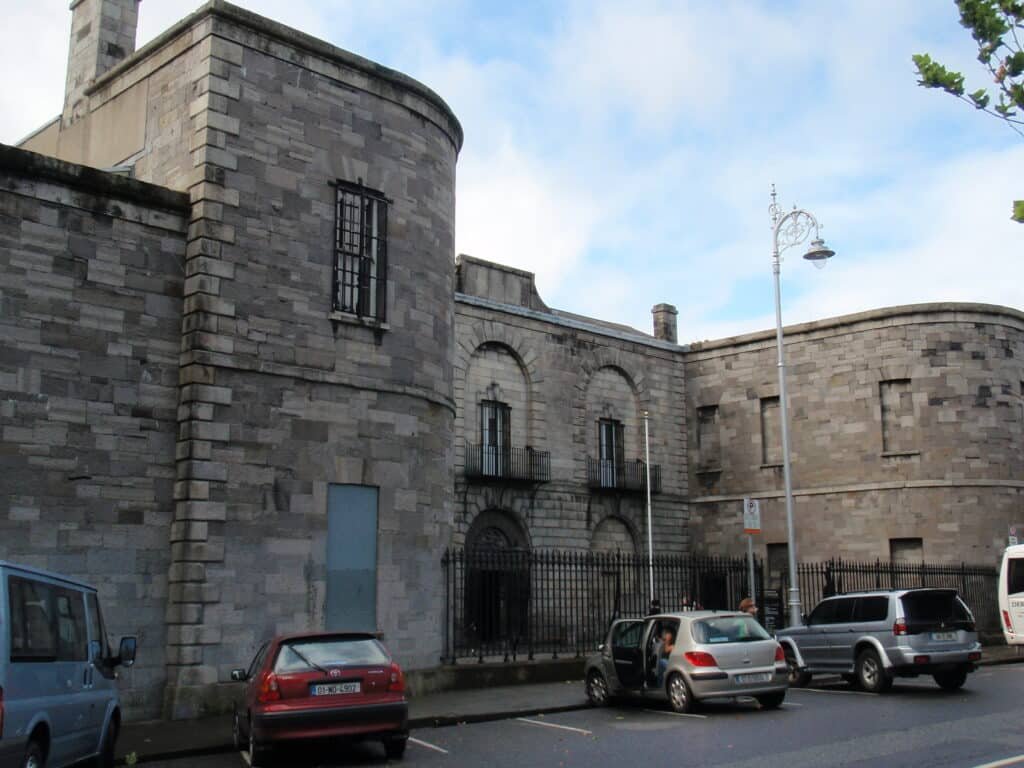
Temple Bar gets the tourist attention, and the pub crawls and street music genuinely have their own appeal, but reducing Dublin to that single, loud neighborhood misses most of what makes the city genuinely worth a slower visit. This is a city that holds one of the most significant sites in the entire story of Irish independence, one of the largest enclosed urban parks in Europe, and a literary heritage deep enough to have produced four Nobel laureates in literature. This guide walks through Dublin’s best hidden gems, checked against real research into each location, with a look at how the city genuinely compares to its counterpart in the north, Belfast.
Trinity College & the Book of Kells: Dublin’s oldest university and its illuminated medieval manuscript remain genuinely essential for any first visit, this guide picks up from there and heads toward the sights most itineraries never quite reach.
What’s easy to overlook about Dublin, given how compact and walkable its central tourist zone genuinely is, is how much of the city’s real depth sits just outside that core. Dublin’s history as the “second city” of the British Empire for much of its existence, followed by its role as the birthplace of the modern struggle for Irish independence, gives the city a genuinely layered identity, elegant Georgian architecture built under colonial rule sitting alongside monuments to the rebellion that eventually ended it. Understanding that tension adds real weight to a visit here, well beyond the pub culture most first-time visitors expect.
Dublin’s compact size, genuinely walkable across most of its central districts, means the city rewards a slower, more deliberate approach better than most European capitals its size. Rather than needing extensive public transport to reach the highlights covered in this guide, a visitor can realistically walk from Trinity College to the Georgian squares, and from there catch a short bus or taxi out to Kilmainham or Phoenix Park, all within a single well-planned day. That accessibility is part of why Dublin’s hidden gems genuinely reward curiosity, they’re rarely far from the beaten path, just far enough that the average two-day visitor never quite gets around to them, particularly once the pull of Temple Bar’s pubs and live music tends to absorb whatever time is left in an evening itinerary.
Kilmainham Gaol
Phoenix Park
Hidden Literary Pubs
The Georgian Squares
Dublin’s Road to Independence
Dublin vs. Belfast
Dublin Food Worth Seeking Out
FAQ
Kilmainham Gaol
Genuinely one of the most historically significant, and sobering, sites in all of Ireland, this former prison sits just outside the main tourist center and rewards the short trip out, offering a version of Irish history considerably more direct and unfiltered than anything found in a museum display case.
Kilmainham Gaol
Officially the County of Dublin Gaol, Kilmainham held prisoners in conditions that were genuinely brutal even by the standards of its era, cells roughly 28 square meters in size sometimes housed up to five prisoners at once, men, women, and children together, lit by a single candle expected to last two weeks. Its real historical weight comes from its role in Ireland’s fight for independence, many leaders of Irish rebellions were held here across the 18th and 19th centuries, and following the 1916 Easter Rising, 14 of its leaders, including Patrick Pearse and James Connolly, were executed by firing squad within the prison’s walls, an event that genuinely helped turn public opinion in favor of the independence movement that followed. Children were sometimes imprisoned here too, the youngest reportedly just three years old, arrested for petty theft, a genuinely stark detail that underscores just how harsh the prison’s history really was. The prison closed in 1924 and now operates as a museum run by Ireland’s Office of Public Works, its guided tours widely considered among the most moving historical experiences in the entire city.
Kilmainham, Dublin 8. Entry fee, guided tour required, advance booking strongly recommended given genuine demand. Best booking well ahead, since tours regularly sell out during peak season.

Phoenix Park
One of the largest enclosed urban parks in any European capital, and genuinely underused by visitors who never make it past the city center despite sitting just a short bus ride from Temple Bar.
Phoenix Park
Covering roughly 707 hectares, more than twice the size of New York’s Central Park, Phoenix Park holds a genuinely wild resident herd of fallow deer, descendants of animals introduced here in the 17th century, that still roam freely across the parkland today. The park is also home to Áras an Uachtaráin, the official residence of the President of Ireland, along with Dublin Zoo and the Wellington Monument, an obelisk commemorating the Dublin-born Duke of Wellington, genuinely one of the tallest obelisks in Europe. A quirky Irish legal detail worth knowing: the park operates under its own dedicated statute, which includes a provision that “no person shall act contrary to public morality” within its grounds, a genuinely old-fashioned piece of legislation still technically on the books. Pope John Paul II celebrated Mass here in 1979 before an estimated 1.25 million people, one of the largest gatherings in Irish history, a fact that gives the park’s open meadows a genuine layer of significance beyond its role as a green escape.
Phoenix Park, west of the city center. Free. Best in the early morning or evening for the best chance of spotting the resident deer herd, particularly active during those cooler hours.


Hidden Literary Pubs
Dublin’s literary reputation runs genuinely deep, and its pubs have played host to that tradition for centuries, long before the city ever became a stop on an international tour bus route.
Literary Pub Heritage
Dublin has produced four Nobel laureates in literature, William Butler Yeats, George Bernard Shaw, Samuel Beckett, and Seamus Heaney, along with James Joyce, whose novel “Ulysses” mapped the city’s streets and pubs in extraordinary, obsessive detail, the entire novel takes place across a single day, June 16th, now celebrated annually by devoted fans as “Bloomsday,” when enthusiasts dress in period costume and retrace the novel’s route through the city. Several of the city’s older pubs, tucked away from the busier Temple Bar strip, genuinely retain the atmosphere and history that drew these writers in the first place, quiet snugs and worn wooden interiors that feel closer to the Dublin these authors actually knew than the louder, more tourist-oriented bars closer to the river. Dublin’s UNESCO City of Literature designation, awarded in 2010, reflects this genuinely deep and continuous literary tradition, one that shows up as readily in an ordinary neighborhood pub as it does in any formal museum.
Scattered across central Dublin, particularly north of the Liffey. Free to enter (drinks priced individually). Best seeking out a guided literary pub crawl for context on which specific pubs held genuine significance to which writers.
The Georgian Squares
Dublin’s 18th-century expansion left behind some of the finest Georgian architecture found anywhere in the British Isles, a genuinely well-preserved counterpoint to the older medieval streets closer to the castle.
Merrion Square & Fitzwilliam Square
These elegant garden squares, ringed by genuinely well-preserved Georgian townhouses with their distinctive brightly colored doors, a Dublin architectural signature believed by some to have originated so residents could identify their own home after a night out, though the story’s full historical accuracy is debated, offer some of the city’s most photogenic streets well away from the crowds. Oscar Wilde’s childhood home overlooks Merrion Square, marked today by a statue of the writer reclining on a rock across the street, a genuinely playful, colorful memorial that suits Wilde’s own famously witty personality better than a conventional formal statue would. Fitzwilliam Square, the smallest and best-preserved of Dublin’s Georgian squares, has its private central garden accessible only to keyholding residents, a genuine, still-functioning piece of 18th-century urban exclusivity that persists into the present day.
Merrion Square and Fitzwilliam Square, south of the city center. Free to walk (Fitzwilliam Square gardens are private, residents-only). Best in the morning, when the squares are at their quietest and the light is softest on the colorful doors.

Dublin’s Road to Independence
Understanding Kilmainham Gaol’s significance genuinely requires some context on the broader independence movement it’s tied to. The 1916 Easter Rising, a week-long armed insurrection against British rule centered largely in Dublin, was initially met with limited public support, many Dubliners were reportedly hostile toward the rebels at the time, whose fighting caused real damage and disruption across the city center, including significant destruction along O’Connell Street, the city’s main thoroughfare. That sentiment shifted dramatically after the British government’s response, the courts-martial and subsequent executions of the Rising’s leaders at Kilmainham, carried out in secret over ten days in May 1916, which many Irish people came to see as excessive and unjust.
That shift in public opinion is widely credited by historians as a genuine turning point, transforming a failed uprising into a rallying point that helped fuel the Irish War of Independence just a few years later, and ultimately the creation of the Irish Free State in 1922. Walking through Kilmainham’s stonebreakers’ yard, where the executions took place, genuinely brings that pivotal moment in Irish history into sharp, immediate focus in a way no textbook account quite manages, and the museum’s collection of personal letters and artifacts from the executed leaders adds a genuinely human dimension to what could otherwise remain an abstract historical narrative.
Dublin vs. Belfast
| Category | Dublin | Belfast |
|---|---|---|
| Size | Larger, more sprawling | More compact, easier to walk |
| Cost | Generally more expensive | Generally more affordable |
| Historical focus | Independence movement, literary history | The Troubles, industrial heritage (Titanic) |
| Day trips | Wicklow Mountains, Glendalough | Giant’s Causeway, Game of Thrones filming sites |
The choice between Dublin and Belfast genuinely comes down to what kind of Irish history and atmosphere you’re after. Dublin offers a larger, livelier city with deep literary heritage and the story of Irish independence at its center, while Belfast, still processing its own more recent and genuinely painful history from the Troubles, offers politically engaged walking tours (including the city’s famous peace walls and murals) alongside easy access to the Giant’s Causeway and Northern Ireland’s dramatic coastline. Cost genuinely differs meaningfully between the two as well, Belfast, still part of the United Kingdom and using the pound sterling rather than the euro, tends to run noticeably cheaper across accommodation, food, and drink than Dublin, a real consideration for budget-conscious travelers planning a longer trip across the island.
Many travelers combine both cities, connected by a train or bus of roughly two hours, using Dublin for a larger city experience and Belfast for a more compact, budget-friendly add-on with a genuinely different historical focus. Belfast’s status as the filming location for much of HBO’s “Game of Thrones” has also become a genuine draw in its own right, with dedicated tours built around the show’s Northern Ireland filming sites, a modern pop-culture layer added on top of the city’s older, heavier historical narrative.
Dublin Food Worth Seeking Out
Irish stew, traditionally made with lamb or mutton, potatoes, and root vegetables, remains genuinely central to Irish home cooking, worth seeking out at a proper traditional restaurant rather than a tourist-oriented pub near Temple Bar, where quality and authenticity can vary considerably from one kitchen to the next. Boxty, a traditional potato pancake, reflects Ireland’s deep culinary relationship with the potato, and it’s worth trying in its various regional forms, some pan-fried, others more like a dumpling, a dish with genuine roots in the country’s long, often difficult agricultural history, particularly the potato’s central and sometimes precarious role in Irish rural life.
Guinness, brewed in Dublin since 1759 at the St. James’s Gate Brewery, is genuinely worth tasting fresh at the source, locals will insist a pint poured and served in Dublin tastes noticeably different from the same beer exported abroad, a claim genuinely worth testing for yourself at the Guinness Storehouse, one of Ireland’s most visited attractions and a genuinely well-designed piece of brand storytelling in its own right, or better yet, at a quieter neighborhood pub away from the tourist crowds. And Irish soda bread, a simple, dense bread traditionally made without yeast, is worth trying fresh from a proper bakery, its slightly tangy flavor and hearty texture reflecting centuries of practical, ingredient-driven Irish baking, a genuinely humble dish that remains a staple of everyday Irish tables today, not just a tourist novelty aimed at visitors passing through for a weekend. Fish and chips, while not uniquely Irish, are worth seeking out at one of Dublin’s long-established chippers, several of which have served the same neighborhoods for multiple generations and genuinely rival anything found across the water in Britain, a small but real point of local pride among regulars.
I reference this Belfast vs. Dublin comparison in the video above. If this guide helped you plan your Dublin trip, check out more travel videos from Worldly Traveler.
Whichever combination of sights makes it onto your itinerary, Dublin genuinely rewards travelers willing to walk a bit further than Temple Bar’s main strip. The city’s real character lives in the contrast between its elegant Georgian squares and the harder, more sobering history held at Kilmainham, between a quiet literary pub and the wide open green space of Phoenix Park. None of it requires a car, a tour bus, or an advance reservation beyond the gaol itself, just a willingness to treat Dublin as a city worth a few unhurried days rather than a single loud night out.
Frequently Asked Questions
What are the best hidden gems in Dublin?
Some of the best hidden gems in Dublin include Kilmainham Gaol, Phoenix Park (one of the largest enclosed urban parks in Europe), the city’s hidden literary pubs, and the Georgian squares of Merrion Square and Fitzwilliam Square.
Why is Kilmainham Gaol significant?
Kilmainham Gaol held many leaders of Irish rebellions across its history, and it’s where 14 leaders of the 1916 Easter Rising were executed by firing squad, making it one of the most significant sites in the story of Irish independence.
Should I visit Dublin or Belfast?
It genuinely depends on your priorities. Dublin offers a larger, livelier city with deep literary and cultural history, while Belfast delivers a more compact, generally more affordable experience with significant Troubles-era history and access to the Giant’s Causeway.
How many days do you need in Dublin?
3-4 days gives you enough time to see the city center, explore Kilmainham Gaol and Phoenix Park, and take in the Georgian squares and literary pubs at a relaxed pace.
How big is Phoenix Park?
Phoenix Park covers roughly 707 hectares (about 1,750 acres), making it one of the largest enclosed urban parks in any European capital, more than twice the size of New York’s Central Park, and home to a genuinely wild herd of fallow deer that has lived within its boundaries for centuries.