
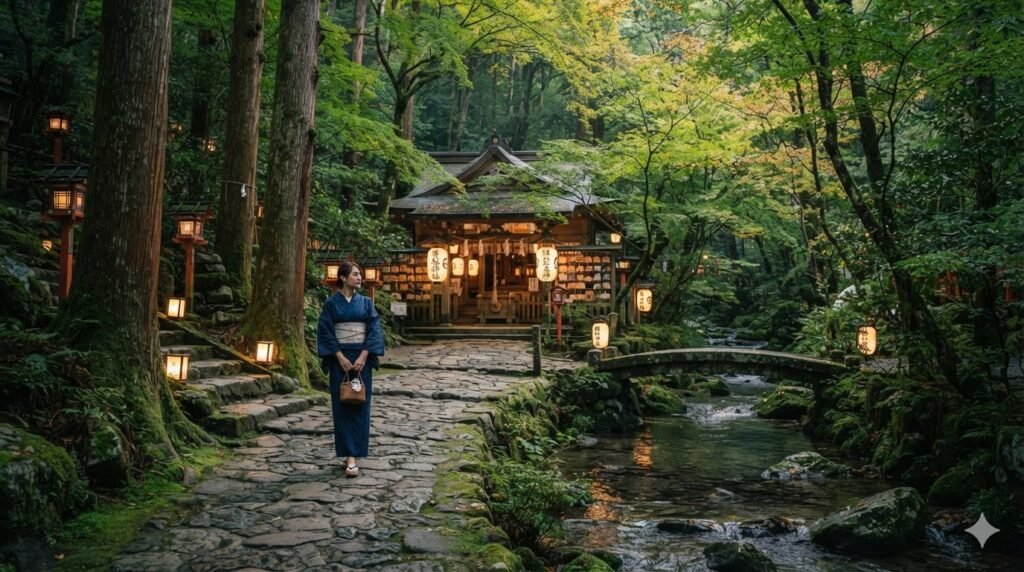
Tokyo’s neon crossings and Kyoto’s temple circuit anchor nearly every first Japan trip, and both are genuinely worth it — but Japan is a country of 47 prefectures spanning subarctic Hokkaido to subtropical Okinawa, and the overwhelming majority of that territory sees only a trickle of the visitors who crowd Shibuya and Fushimi Inari. This guide covers 50 hidden gems in Japan, drawing on two real video guides and extensive independent research, organized by region so you can build a route through whichever part of the country genuinely calls to you.
Part of what makes Japan reward this kind of deep, regional exploration is how different its regions actually are from one another. The volcanic isolation of a remote Izu island, the snow-country farmhouses of the Japanese Alps, the subtropical cedar forests of Yakushima, and the flower fields of Hokkaido’s Furano basin have almost nothing in common beyond the flag flying over them — each region developed its own dialect, cuisine, architecture, and rhythm of life across centuries of relative isolation before modern rail and road networks connected the country. Traveling beyond Tokyo and Kyoto isn’t really “skipping the highlights” so much as encountering a genuinely different, more complete version of Japan.
A sourcing note: this guide draws on two real videos — “25 Hidden Gems in Japan You Must Visit” and “Tokyo Haneda Has an Edo Market, Shrine, and Hot Spring Nobody Talks About” — cross-referenced against independent research to identify exact locations, since several of the first video’s chapter titles are stylized descriptions rather than direct place names. The remaining locations needed to reach a full 50 are independently researched and clearly woven into each regional section alongside the video-sourced entries. We couldn’t locate a dedicated Kyoto-specific video in our own library for this post, so Kansai’s entries below are entirely research-based.
Tokyo & the Kanto Region
Kyoto, Osaka & the Kansai Region
The Japanese Alps & Chubu
Tohoku
Hokkaido
Chugoku & Shikoku
Kyushu & Okinawa
Getting Around Japan
Japan Etiquette & Practical Tips
Japanese Food Worth Seeking Out by Region
Best Time to Visit Japan
FAQ
Tokyo & the Kanto Region
Beyond Shibuya and Senso-ji, Tokyo and its surrounding Kanto region hold genuinely overlooked corners — including, remarkably, the city’s own international airport.
Quick essentials for context: Senso-ji Temple, Shibuya Crossing, and the Meiji Shrine remain genuinely worthwhile first-time stops — this guide focuses on what to see once you’ve covered them.
Haneda Airport’s Edo Market Place
A meticulously recreated Edo-period (17th-19th century) streetscape built directly into Haneda Airport’s terminal, with traditional shopfronts, lanterns, and a working replica of Nihonbashi bridge — genuinely one of the most atmospheric airport shopping areas anywhere in the world, turning a layover into a mini cultural experience.
Haneda Airport, Tokyo. Free to browse. Best combined with a longer layover to fully explore.
Haneda Airport Hot Spring (Kuuko-no-yu)
A genuine natural hot spring bathhouse located directly within Haneda Airport’s Terminal 3 hotel complex, drawing from real geothermal groundwater — a genuinely unusual way to relax before a long flight rather than sitting in a standard airport lounge.
Haneda Airport, Tokyo. Entry fee. Best for travelers with several hours before a flight.
Haneda Airport’s Hidden Shrine
A small Shinto shrine tucked within the airport grounds, dedicated to aviation safety, offering a quiet, easily missed moment of traditional spirituality inside one of the world’s busiest airports.
Haneda Airport, Tokyo. Free. Best combined with the Edo Market Place, given their shared location.
TIAT Sky Road
An elevated indoor walkway within Haneda Airport offering direct runway views of departing and arriving aircraft, popular with aviation enthusiasts and genuinely one of the best plane-spotting vantage points at any major international airport.
Haneda Airport, Tokyo. Free. Best in the late afternoon for golden-hour lighting on departing aircraft.
Yanaka Ginza
One of the few Tokyo neighborhoods to survive both the 1923 earthquake and WWII bombing largely intact, retaining a genuinely old-fashioned shopping street atmosphere with independent shops, cats, and a temple district that feels decades removed from the rest of the city.
Taito, Tokyo. Free to explore. Best in the late afternoon, locally known as “cat hour,” when the neighborhood’s numerous street cats become most active.
Kawagoe (“Little Edo”)
A well-preserved merchant town roughly 30 minutes from central Tokyo, retaining Edo-period warehouse architecture (kurazukuri) along its main street, offering a genuine taste of pre-modern Japanese urban life without leaving the greater Tokyo area.
Saitama Prefecture, near Tokyo. Free to explore. Best combined with a sweet potato treat, a local Kawagoe specialty.
Enoshima Island
A small, easily accessible island connected to the mainland by a footbridge, holding a historic shrine complex, sea caves, and panoramic views toward Mount Fuji on clear days — genuinely one of the best easy day-trip escapes from Tokyo.
Kanagawa Prefecture, near Tokyo. Small shrine entry fees. Best on a clear winter day for the best Mount Fuji visibility.
Kusatsu Onsen (“Bathhouse Bliss”)
One of Japan’s most celebrated hot spring towns, its central Yubatake (“hot water field”) releasing dramatic steam clouds as naturally hot mineral water flows through a wooden channel at the town’s heart, considered by many onsen connoisseurs to hold the highest natural water output in the country.
Gunma Prefecture. Public bath entry fee; many ryokan include private onsen access. Best for an overnight stay to experience the full ritual of multiple bathing sessions.
Nikko’s Kegon Falls
A dramatic 97-meter waterfall near the famous Nikko shrine complex, reached via an elevator descent to an observation platform at the base — while Nikko’s shrines draw the bulk of visitors, the falls themselves and the surrounding Lake Chuzenji area see comparatively few international tourists.
Nikko, Tochigi Prefecture. Elevator fee for the base viewing platform. Best in autumn for foliage framing the falls.
Kyoto, Osaka & the Kansai Region
Beyond Kyoto’s famous temple circuit and Osaka’s street food scene, the Kansai region holds quieter mountain shrines, sacred pilgrimage sites, and lesser-known corners of Kyoto itself.
Kifune Shrine
A mountain shrine north of Kyoto dedicated to the god of water, famous for its illuminated stone stairway lined with red lanterns, along with a distinctive water fortune-telling practice where fortunes appear on paper only after being placed in the shrine’s sacred spring.
Northern Kyoto. Free entry. Best in early evening when the stone stairway lanterns are lit.
Kurama
A small mountain village connected to Kifune by a scenic hiking trail through cedar forest, home to Kurama-dera temple and legends tying the area to the mythical tengu (mountain goblin) and the training of the famous 12th-century warrior Minamoto no Yoshitsune.
Northern Kyoto. Temple entry fee; free public onsen access nearby. Best combined with the Kifune hiking trail for a full day in the northern mountains.
Ine (Funaya Boathouse Village)
A fishing village on Kyoto Prefecture’s northern coast, its waterfront lined with distinctive funaya — traditional two-story boathouses with boat storage on the ground floor and living quarters above — offering a genuinely different coastal Japan than anything found in Kyoto city itself.
Northern Kyoto Prefecture, near Amanohashidate. Free to view from shore; boat tours available. Best combined with an Amanohashidate day trip given regional proximity.
Kayabuki no Sato, Miyama (“A Village Lost in Time”)
A rural thatched-roof village in the mountains north of Kyoto, offering a quieter, less touristed alternative to the more famous Shirakawa-go, with traditional kayabuki (thatch) farmhouses still standing among rice paddies against a forested mountain backdrop.
Miyama, northern Kyoto Prefecture. Free to explore. Best in autumn for the surrounding foliage against the thatched roofs.
Takeda Castle Ruins (“Misty Morning Magic”)
Nicknamed “Japan’s Machu Picchu,” these hilltop castle ruins become genuinely spectacular on autumn and winter mornings when a sea of clouds fills the valley below, leaving the ruins appearing to float above the mist.
Asago, Hyogo Prefecture. Entry fee. Best at sunrise, September-November, for the highest chance of the cloud sea phenomenon.
Mount Yoshino
Considered Japan’s most celebrated cherry blossom destination among domestic travelers, with over 30,000 trees blooming in staggered waves up the mountainside across roughly a month each spring — genuinely spectacular, yet far less internationally known than Kyoto’s blossom spots.
Nara Prefecture. Free to hike; some temple entries have small fees. Best in early-to-mid April, though exact timing shifts year to year.
Koyasan
A mountain monastic complex founded in 819 AD as the center of Shingon Buddhism, offering overnight stays in working temple lodgings (shukubo) alongside Okunoin, one of Japan’s largest and most atmospheric cemeteries, its moss-covered stone lanterns and towering cedars creating a genuinely otherworldly nighttime walk.
Wakayama Prefecture. Temple lodging and entry fees vary. Best with an overnight shukubo stay for the full monastic experience, including a Buddhist vegetarian breakfast.
The Japanese Alps & Chubu
Central Japan’s mountainous Chubu region holds the country’s most dramatic alpine scenery, historic post towns, and preserved farming villages.
Shirakawa-go (“Fairytale Farmhouses”)
A UNESCO World Heritage mountain village of gassho-zukuri (“praying hands”) thatched farmhouses, their steeply angled roofs engineered specifically to shed the region’s exceptionally heavy snowfall, some of the surviving structures over 250 years old and still inhabited today.
Gifu Prefecture. Free to explore village; some houses charge small entry fees. Best in winter for the snow-covered roofs, especially during limited evening illumination events in January-February.

The Nakasendo Trail (Magome-Tsumago)
A remarkably preserved section of the historic Edo-period highway connecting Kyoto and Tokyo, with the roughly 8-kilometer walk between the post towns of Magome and Tsumago offering one of the best-preserved feudal-era hiking routes in the country, complete with waterfalls, cedar forest, and traditional wooden inns.
Nagano/Gifu border. Free (small luggage-forwarding fee available). Best in spring or autumn for comfortable walking temperatures.
Sado Island (“Gold, Drums, and Coastlines”)
Once the site of Japan’s largest gold mine, now offering tours through the historic Sado Gold Mine tunnels, alongside dramatic rocky coastlines and deep ties to Kodo, the internationally renowned taiko drumming ensemble based on the island.
Niigata Prefecture, ferry access. Ferry fare; mine tour entry fee. Best combined with the annual Earth Celebration taiko festival in August, if timing allows.
The Tateyama Kurobe Alpine Route (“Views for Days”)
A dramatic mountain transportation route crossing the Northern Japanese Alps via cable car, ropeway, and electric bus, famous for its towering “Snow Corridor” walls reaching up to 20 meters high each spring, offering genuinely spectacular high-altitude scenery with minimal hiking required.
Toyama/Nagano border. Route ticket fee. Best in April-May for the snow corridor, or October for autumn foliage.
Kanazawa’s Higashi Chaya District (“Geisha Elegance”)
A beautifully preserved geisha entertainment district in Kanazawa, its wooden latticed teahouse facades still hosting traditional geisha performances today, offering a genuinely more accessible and less crowded alternative to Kyoto’s famous Gion district.
Kanazawa, Ishikawa Prefecture. Free to walk; teahouse experiences priced separately. Best in the early evening for the atmospheric lantern lighting.
Kamikochi
A pristine alpine valley within the Chubu Sangaku National Park, closed to private vehicles to preserve its genuinely untouched mountain scenery, offering some of the best easy alpine hiking in Japan along the Azusa River.
Nagano Prefecture. Park entry via bus/taxi. Best June-October, since the valley closes entirely each winter.
Takayama’s Old Town
A remarkably preserved Edo-period merchant district, its wooden storefronts still housing generations-old sake breweries identifiable by the cedar ball (sugidama) hung above each entrance, offering a genuine sense of pre-modern mountain-town Japan.
Gifu Prefecture. Free to explore; sake tasting fees vary. Best combined with the morning market along the Miyagawa River.
Zenkoji Temple
A major Buddhist temple in Nagano predating the split of Buddhism into competing sects in Japan, meaning it has historically welcomed pilgrims of all denominations — its pitch-black underground passage, meant to be navigated entirely by touch in search of a “key to paradise,” remains a genuinely unusual pilgrimage ritual still practiced today.
Nagano city. Entry fee for the underground passage. Best combined with a Nagano city visit given its central location.
Tohoku
Northern Honshu’s Tohoku region remains genuinely underrated relative to its natural beauty, holding some of Japan’s most atmospheric onsen towns and dramatic gorges.
Ouchi-juku
A remarkably preserved Edo-period post town, its thatched-roof buildings lining a single unpaved main street lit by paper lanterns, offering one of the best-preserved historical streetscapes in the entire country, especially striking under winter snow.
Fukushima Prefecture. Free to explore. Best in February during the annual snow festival, when candles line the snow-covered street.
Ginzan Onsen
A nostalgic hot spring town of wooden multi-story ryokan lining a narrow river, its gas-lit lamps and snowy winter atmosphere making it a widely cited visual inspiration for elements of Studio Ghibli’s “Spirited Away,” even though Dogo Onsen (covered below) holds the more directly confirmed connection.
Yamagata Prefecture. Free to walk; ryokan and bath entry fees vary. Best at dusk in winter, when the gas lamps illuminate the snow.
Yamadera Temple
A mountainside temple complex reached by climbing over 1,000 stone steps through cedar forest, founded in 860 AD and famously the subject of a haiku by the celebrated poet Matsuo Basho, offering sweeping valley views from its clifftop halls.
Yamagata Prefecture. Small entry fee. Best in autumn for the surrounding forest color.
Zao Fox Village
A genuinely unusual sanctuary where more than 100 foxes across six different species roam semi-freely across open, snow-covered terrain, offering an up-close wildlife encounter unlike anything else in Japan.
Miyagi Prefecture. Entry fee. Best in winter for the striking contrast between the foxes’ fur and the snow.
Naruko Gorge
A dramatic autumn-foliage destination, its steep canyon walls turning brilliant red and gold each fall, with a walking trail beneath the Ofukazawa Bridge offering some of the best gorge-floor views in the Tohoku region.
Miyagi Prefecture. Free. Best mid-to-late October for peak foliage.
Aomori’s Oirase Gorge
A genuinely lush riverside walking trail winding alongside a series of small waterfalls and mossy rock formations, considered one of the most beautiful stream-side hikes in Japan, connecting to Lake Towada at its upper end.
Aomori Prefecture. Free. Best in autumn for foliage, though the fresh green of early summer is equally celebrated locally.
Hokkaido
Japan’s northernmost main island holds dramatic volcanic landscapes, flower fields, and a genuinely different pace of life shaped by its short growing season and long winters.
Biei & Furano (“Romance in Hokkaido”)
A patchwork of rolling farmland and flower fields, including Biei’s famous “Blue Pond” (its striking color caused by dissolved minerals from a nearby volcanic river) and Furano’s lavender fields, together forming one of Hokkaido’s most photographed rural landscapes.
Central Hokkaido. Free to view most areas. Best in July for peak lavender bloom in Furano.
Shiretoko Peninsula
A UNESCO World Heritage peninsula at the northeastern edge of Hokkaido, considered one of the last genuinely wild landscapes in Japan, home to brown bears, drift ice in winter, and dramatic coastal cliffs largely untouched by development.
Northeastern Hokkaido. Free; boat tours and guided hikes priced separately. Best January-March for drift ice viewing, or summer for hiking and wildlife.
Otaru Canal
A former merchant shipping canal turned atmospheric evening walking route, its restored brick warehouses and gas lamps creating one of Hokkaido’s most photogenic streetscapes, especially during the town’s winter snow lantern festival.
Otaru, near Sapporo. Free. Best at dusk, and in February during the Otaru Snow Light Path festival.
Noboribetsu Onsen & Hell Valley (Jigokudani)
A dramatic volcanic valley of steaming vents and bubbling sulfurous pools that gives the surrounding onsen town its abundant, mineral-rich hot spring water, with a genuinely otherworldly landscape that fully earns its “hell valley” nickname.
Noboribetsu, Hokkaido. Free to walk the valley; onsen entry fees vary by facility. Best at dusk when steam vents are most visually dramatic against the darkening sky.
Rishiri and Rebun Islands
Remote northern islands off Hokkaido’s coast, Rishiri dominated by a striking volcanic peak nicknamed “Rishiri Fuji” for its symmetrical cone, and Rebun known for genuinely rare alpine wildflowers found nowhere else in Japan at sea level.
Off northwestern Hokkaido, ferry access. Ferry fare. Best June-August for wildflower season and reliable ferry service.
Sounkyo Gorge
A dramatic basalt gorge with columnar cliff formations and seasonal waterfalls, transformed each winter into an elaborate ice festival featuring illuminated ice sculptures set directly within the gorge itself.
Central Hokkaido. Free; ice festival may have small fees. Best late January-March for the ice festival.
Chugoku & Shikoku
Western Honshu’s Chugoku region and the smaller island of Shikoku hold some of Japan’s most surreal landscapes and best-preserved rural traditions.
Tottori Sand Dunes (“The Surreal Sands of Tottori”)
Japan’s largest sand dune system, stretching roughly 14 kilometers along the Sea of Japan coast, formed over 100,000 years by sediment carried down from the Chugoku Mountains — a genuinely surreal, desert-like landscape unlike anywhere else in the country.
Tottori Prefecture. Free; camel rides and sandboarding priced separately. Best at sunset for dramatic shadows across the dune ridges.

Okunoshima (“Rabbit Island”)
A small Seto Inland Sea island home to hundreds of free-roaming wild rabbits, alongside the sobering, largely overgrown ruins of a secret WWII-era poison gas facility, giving the island a genuinely striking contrast between cheerful wildlife and dark history.
Hiroshima Prefecture, ferry access. Ferry fare. Best with rabbit-appropriate vegetable feed purchased before boarding, since the island’s shop stock can run out.
Shodoshima (“A Slice of the Mediterranean”)
An island in the Seto Inland Sea nicknamed “Japan’s Mediterranean” for its olive groves, first successfully cultivated here over a century ago, alongside a dramatic gorge (Kankakei) and a seasonal sandbar path that appears only at low tide.
Kagawa Prefecture, ferry access. Ferry fare; individual attraction fees vary. Best at low tide for the “Angel Road” sandbar crossing.
The Iya Valley
One of Japan’s three “hidden valleys,” historically a refuge for defeated samurai fleeing pursuit, still crossed today by dramatic hand-woven vine bridges suspended high above the Iya River, along with thatched farmhouses clinging to steep mountainside terrain.
Tokushima Prefecture. Small bridge-crossing fee. Best in autumn for foliage color against the valley’s dramatic terrain.

Niyodo River (“The Clearest Water in Japan”)
Widely cited as having the clearest water of any river in the country, its striking cobalt-blue color (nicknamed “Niyodo Blue”) drawing photographers and swimmers to its remote mountain valley in southern Shikoku.
Kochi Prefecture. Free. Best in summer for swimming, when the water’s clarity and color are most vivid.
Dogo Onsen (“Ghibli’s Inspiration”)
One of Japan’s oldest hot springs, its labyrinthine wooden interior of stairways and rooms confirmed by Studio Ghibli’s own production sketches as the direct inspiration for the bathhouse in “Spirited Away,” making it a genuine pilgrimage site for fans of the film.
Matsuyama, Ehime Prefecture. Entry fee. Best with time allotted to explore both the public bath and the surrounding historic onsen town.
Naoshima Art Island
A small Seto Inland Sea island transformed since the 1990s into an open-air contemporary art destination, home to the Chichu Art Museum (built largely underground to preserve the island’s natural landscape) and Yayoi Kusama’s iconic yellow pumpkin sculpture on the shoreline.
Kagawa Prefecture, ferry access. Museum entry fees vary. Best on a weekday to avoid the island’s significant weekend crowds.
Kyushu & Okinawa
Japan’s southern islands hold volcanic drama, subtropical forest, and the country’s most remote inhabited outposts.
Hashima Island (“Gunkanjima”) — “Battleship Island’s Eerie Ruins”
An abandoned undersea coal-mining island off Nagasaki, once the most densely populated place on Earth with over 5,000 residents crammed onto barely 6 hectares, now a genuinely haunting ghost town of collapsing concrete apartment blocks, recognizable to film fans as a visual influence on the villain’s lair in “Skyfall.”
Off Nagasaki, licensed boat tour required. Tour fee. Best checking weather forecasts before booking, since landings are frequently canceled in rough seas.

Yakushima (“Ancient Forests and Wildlife”)
A UNESCO World Heritage island south of Kyushu, home to yakusugi cedar trees over 1,000 years old — including the legendary Jomon Sugi, estimated at up to 7,200 years old — with the moss-covered Shiratani Unsuikyo forest trail serving as a direct visual inspiration for Studio Ghibli’s “Princess Mononoke.”
Off southern Kyushu, ferry or flight access. Park entry fees vary by trail. Best May-September, though the island’s exceptionally high rainfall means packing for rain regardless of season.

Beppu’s Hot Spring “Hells” (Jigoku)
A collection of dramatically colored, scalding hot spring pools not meant for bathing but for viewing, including a striking cobalt-blue pool and a boiling, blood-red pool colored by iron oxide, reflecting Beppu’s status as the highest hot-spring-output city in Japan.
Beppu, Oita Prefecture. Entry fees per hell or combined ticket. Best combined with an actual onsen soak elsewhere in town, given the hells themselves are for viewing only.
Mount Aso & the Aso Caldera
One of the largest active volcanic calderas on Earth, its vast grassland interior actually home to working farms and villages within the caldera itself, offering a genuinely rare chance to peer into an active volcanic crater from a safe, accessible viewpoint (conditions permitting).
Kumamoto Prefecture. Free to view caldera; crater access fees and closures vary based on volcanic activity. Best checking current activity status before planning a crater-rim visit.
Aogashima (“Volcanic Isolation”)
One of the most remote inhabited places in Japan, this volcano-within-a-volcano island holds a small village of roughly 170 residents living inside the outer caldera rim, with steam vents still used communally to cook food using natural geothermal heat.
Izu Islands, Tokyo. Ferry or helicopter access, frequently weather-disrupted. Best allowing flexible extra days given how often boat and helicopter service gets canceled.

Ishigaki & Iriomote Islands
Subtropical Okinawan islands offering some of Japan’s best coral reef diving, alongside Iriomote’s dense, largely unspoiled jungle interior, home to the critically endangered Iriomote wildcat, found nowhere else on Earth.
Okinawa Prefecture, flight access. Dive and jungle tour fees vary. Best April-June or October-November, avoiding both typhoon season and peak summer crowds.
The Kerama Islands
A cluster of small islands near Okinawa recognized as a national park, home to some of the clearest water in Japan (locally nicknamed “Kerama Blue”) and a significant population of nesting sea turtles.
Off Okinawa, ferry access from Naha. Ferry fare; snorkel/dive fees vary. Best May-October for swimming and snorkeling conditions.
Getting Around Japan
The JR Pass: Best value for multi-region trips involving several long-distance Shinkansen journeys; for a trip concentrated in one or two regions, regional rail passes or individually booked tickets are often cheaper.
Regional passes: Many regions (Kansai, Hokkaido, Kyushu) offer their own dedicated rail passes, worth researching against your specific itinerary before defaulting to the national JR Pass.
IC cards: A rechargeable IC card (Suica, Pasmo, or regional equivalents) covers most urban trains, buses, and convenience store purchases nationwide, and is worth acquiring on arrival regardless of which rail pass you choose.
Rental cars for remote areas: Many of the hidden gems in this guide — the Iya Valley, rural Tohoku onsen towns, parts of Hokkaido — are genuinely difficult to reach without a car, since local bus schedules can be sparse. An international driving permit is required.
Domestic flights: Worth considering for reaching Hokkaido, Kyushu, or Okinawa quickly from Tokyo, rather than relying solely on the Shinkansen for the full length of the country.
Japan Etiquette & Practical Tips
Onsen etiquette: Wash thoroughly at the shower stations before entering the communal bath water, never bring soap or a towel into the bath itself, and keep long hair tied up. Most traditional onsens still prohibit visible tattoos, though attitudes and specific policies vary and are gradually loosening at some establishments.
Shoe removal: Remove shoes when entering homes, many traditional restaurants, temples, and ryokan — look for a raised floor or a designated shoe rack as the visual cue.
Garbage and recycling: Public trash cans are genuinely scarce in Japan, and waste sorting categories can be detailed — carrying a small bag for your own trash until you find an appropriate bin (often near vending machines or convenience stores) is standard practice.
Cash vs. card: Card and contactless payment acceptance has expanded significantly in cities, but rural areas, small family-run restaurants, and traditional accommodations often remain cash-only — carrying yen is still genuinely necessary outside major urban centers.
Quiet public transport: Phone calls and loud conversation are generally avoided on trains, a small but consistently observed norm worth following.
Japanese Food Worth Seeking Out by Region
Regional specialties vary considerably enough that “Japanese food” undersells the country’s culinary range. In Tohoku, Yamagata’s soba and Sendai’s grilled beef tongue (gyutan) reflect the region’s cold-climate ingredients and hearty portions. Hokkaido is genuinely essential for fresh seafood (particularly uni and crab), dairy products, and Sapporo-style miso ramen, all reflecting the island’s short growing season and rich fishing grounds. Shikoku’s Kagawa Prefecture is famous nationwide for sanuki udon, thick, chewy wheat noodles worth seeking out from a genuine local udon shop rather than a chain restaurant. Kyushu’s Fukuoka is considered the birthplace of tonkotsu ramen, its rich pork-bone broth distinct from Tokyo’s shoyu-based style, and Kagoshima is known for kurobuta (Berkshire pork) specialties. In Kansai, Osaka’s takoyaki and okonomiyaki reflect the city’s reputation as Japan’s culinary capital for casual, comfort-oriented street food, distinct from Kyoto’s more refined kaiseki tradition.
Best Time to Visit Japan
Late March through April brings cherry blossom season, among the most popular and scenic times to visit nationwide, though exact bloom timing shifts by both year and region — southern Kyushu blooms weeks before Hokkaido. October through November brings autumn foliage, similarly popular and similarly staggered by region and elevation. Summer (June-August) brings heat and humidity to most of the mainland, along with a rainy season in June, making it a better fit for Hokkaido’s milder climate or the beach-focused islands of Okinawa, which stay warm and swimmable well beyond mainland summer. Winter suits Hokkaido’s snow festivals and powder skiing, along with onsen-focused trips to Tohoku and the Japanese Alps, where snow-covered hot spring towns offer a genuinely different, quieter side of the country than the peak spring and autumn crowds.
I cover many of these hidden gems in the video above, along with a dedicated look at Tokyo Haneda Airport’s own secret spots. If this guide helped you plan your Japan trip, subscribe to Worldly Traveler on YouTube for more travel guides from around the world.
Frequently Asked Questions
What are the best hidden gems in Japan?
Some of the best hidden gems in Japan include the Iya Valley’s vine bridges, Shirakawa-go’s thatched farmhouses, Aogashima’s volcanic caldera, Yakushima’s ancient cedar forests, and the abandoned Hashima (Gunkanjima) island, all offering a side of the country beyond Tokyo, Kyoto, and Osaka.
Is Japan easy to travel around for off-the-beaten-path destinations?
Japan’s rail network reaches most regions efficiently, though many hidden gems require local trains, buses, or a rental car beyond the Shinkansen network. Planning extra time and, in rural areas, considering a car rental makes reaching these destinations considerably easier.
What is the best time of year to visit Japan?
Late March-April (cherry blossoms) and October-November (autumn foliage) are the most popular and scenic times to visit, though also the most crowded. Winter suits Hokkaido and onsen-focused trips, while summer favors northern regions and islands over the hot, humid mainland.
Is the JR Pass worth it for visiting hidden gems in Japan?
It depends on your itinerary — the JR Pass offers strong value for long-distance, multi-region trips covering several Shinkansen routes, but regional rail passes or point-to-point tickets are often more economical for a trip concentrated in one area.
Do you need to speak Japanese to visit off-the-beaten-path places in Japan?
Not strictly, though English signage and spoken English become less common outside major cities. Translation apps, offline maps, and basic Japanese phrases meaningfully smooth travel to Japan’s more rural and remote hidden gems.
What is onsen etiquette in Japan?
Wash thoroughly at the shower stations before entering the communal bath, never bring soap or shampoo into the bath water itself, keep long hair tied up and out of the water, and know that most traditional onsens still prohibit visible tattoos, though policies are gradually loosening at some establishments.
How many days do you need to see hidden gems across Japan?
3 weeks allows a genuinely thorough multi-region trip covering several of the areas in this guide. A shorter 10-14 day trip works well focused on 2-3 regions rather than attempting the whole country.
Can you visit Hashima (Gunkanjima/Battleship Island) today?
Yes, via a limited number of licensed boat tours departing from Nagasaki, though tours are frequently canceled due to weather since the island’s landing dock is exposed to open sea conditions, and only a small, fenced section of the island is accessible to visitors.