

Introduction
Colmar rewards a slower Christmas visit. Its half-timbered houses, narrow lanes, canals, and market squares make a compact setting, but the experience becomes much less comfortable when every hour is committed to another village. A car-free stay lets you enjoy the town before the busiest evening period, return to your room when the cold catches up, and see the lights without worrying about parking. For a first visit, plan two nights in Colmar with one full day devoted to its own markets. Add a third night if you want a village excursion.
The official Christmas-market practical page lists November 23 through December 29 for the 2026 main markets. Seasonal activities do not all share those dates. This guide separates confirmed event information from a suggested itinerary, with particular attention to luggage, uneven surfaces, indoor breaks, and the temptation to make an Alsace holiday too ambitious.
Quick answer: how should you plan a car-free Colmar visit?
Stay near the edge of the historic center, arrive by train, and explore two market clusters at a time. Make your first outing in daylight so that the streets become familiar before darkness and crowds. Keep the second evening for returning to a favorite square rather than completing a checklist. The most practical improvement is an accessible hotel room within easy reach of the old town, even when that costs more than a property requiring a complicated transfer.
| Visit length | Suggested focus | Comfort adjustment |
|---|---|---|
| Day trip | Historic center and two or three markets | Reserve a seated lunch; leave a generous station buffer |
| Two nights | Colmar markets, Petite Venise, one museum | Return to the hotel before the evening lights |
| Three nights | Colmar plus one village excursion | Keep a separate day for the village and its transport |
Choose dates before booking trains
At the time of review, the main markets are scheduled from November 23 to December 29, 2026. The official page gives different weekday and weekend hours and an earlier Christmas Eve finish. Check its complete schedule before booking around a holiday. An attractive hotel rate on the wrong side of an event’s closing date does not buy the experience shown in a December photograph. Equally, a dining area or fairground remaining open later does not mean that every traditional market continues.
For a calmer visit, compare a midweek stay with a Friday-to-Sunday break. Midweek is a planning preference, not a promise of empty streets: coaches, school groups, and popular evenings still affect the center. Choose dates that allow an unhurried arrival rather than a late check-in followed immediately by a crowded outing. If you cannot change dates, change your rhythm. Browse when the markets open, take a proper afternoon break, and return briefly after dark.
Arrive by train with a simple last mile
Colmar’s railway station makes a car-free trip realistic. Use a rail journey planner to compare actual connections from your arrival city; a route through Strasbourg or Basel may be convenient, but the best option depends on where you start. A direct regional journey and a high-speed journey with a tight change are different products. Read the reservation, exchange, and ticket-validity rules before paying. Do not assume that a ticket bought for one service can simply be used on another.
The TER Fluo Christmas-market page is a useful starting point for regional travel and seasonal connections. Consult the journey planner again close to departure for engineering work or altered services. Carry your accommodation address in writing and download essential tickets before leaving reliable Wi-Fi. A car-free itinerary works best when the arrival sequence is short: train, one manageable transfer, luggage drop, then lunch or a rest.
Decide in advance whether you can comfortably roll your suitcase to the hotel. A map’s short distance does not account for cold rain, crowds, rough paving, and unfamiliar crossings. If that walk would use up the energy reserved for the markets, arrange an appropriate taxi or ask the hotel about a legal drop-off point. Access restrictions in the historic center can affect where vehicles stop. Get a precise meeting place rather than expecting a driver to reach every pedestrian lane.
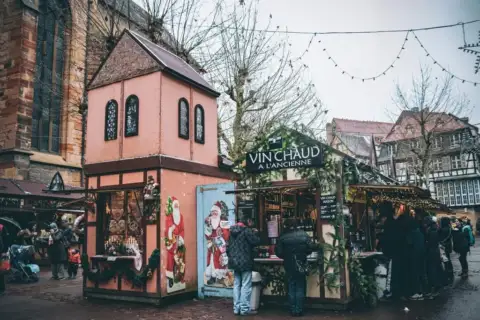

Where to stay: center or station?
A room within or just outside the old town is especially useful when you want an afternoon rest. Look for a hotel whose approach is straightforward from the station and whose entrance does not require carrying luggage up steps. A building’s charming exterior tells you very little about its elevator, bathroom, or interior thresholds. Ask which room category has step-free access, whether the elevator reaches that floor, and whether there are steps between reception and the room.
A station-area stay can simplify arrival and departure, especially for an early train, but it shifts more walking into every market outing. Compare the whole daily pattern rather than the booking map alone. Three short returns to a central room may be easier than one long day away from a cheaper station hotel. Travelers who need an accessible bathroom should request actual measurements and photographs. Treat a generic accessibility symbol as the beginning of a conversation, not a detailed guarantee.
Arrival afternoon: learn the town before chasing lights
After dropping your luggage, choose a small first circuit. Walk toward the center, identify the route back to your hotel, and locate a café or restaurant where you can sit indoors. Allow the town to establish its own scale. The point of this first outing is orientation: which streets feel crowded, where the paving is awkward, and which square you would like to revisit. You will enjoy the decorations more when you are no longer navigating at the same time.
Keep dinner close to the accommodation on the first night. An early arrival may leave time for a short illuminated walk, but it does not require an extended market session. If your train is delayed, shorten the evening without trying to recover every planned stop. Colmar is particularly well suited to repeated small outings. Returning to one attractive façade in changing light can be more satisfying than rushing past several neighborhoods with cold hands and a suitcase still waiting at reception.
A full Colmar day in manageable sections
Start with breakfast and a daylight walk around the historic center. Plan a morning cluster around the central squares rather than crossing town repeatedly. Place des Dominicains and Place Jeanne-d’Arc are useful names to mark on your map, but use the current official market map for the season’s exact layout. Look at the stalls first and buy later if you want to compare craftsmanship. Carrying fragile purchases for the entire day makes even a compact circuit feel longer.
Take lunch seated indoors before fatigue becomes the main event. Market food is part of the pleasure, yet standing to eat beside a busy stall is not the same as a warm meal with a chair and a restroom. After lunch, choose between a museum and the hotel. That decision should depend on energy and weather, not on an obligation to remain outdoors until dusk. Leave a clear gap before your evening outing, including time to dry outer clothing if needed.
In the late afternoon, head toward Petite Venise and the southern part of the center. The waterside lanes provide a different visual setting from the larger squares. Do not assume that a photograph taken from a bridge shows the easiest or safest viewing position during a crowd surge. Stop where you can stand securely without blocking movement. When darkness falls, revisit a favorite market and then finish. A short, enjoyable evening leaves energy for tomorrow’s departure or village trip.
Use Unterlinden as a purposeful indoor visit
The Musée Unterlinden offers an important cultural counterweight to shopping and decorations. It deserves a deliberate visit rather than being treated merely as shelter. Review the current collection information, opening days, and ticket arrangements before choosing your time. If your interests are specific, identify a few works or rooms in advance. A focused visit often works better than attempting the whole museum between two cold market sessions.
The museum’s accessibility information includes wheelchairs available for loan. Contact staff about your own requirements, including equipment availability and the route through different parts of the building. Borrowed equipment should not be assumed to be available without checking. If you have limited standing tolerance, explain that separately from walking distance. Indoor sightseeing can still involve substantial time on your feet, and a museum should fit your energy budget as carefully as a market walk.
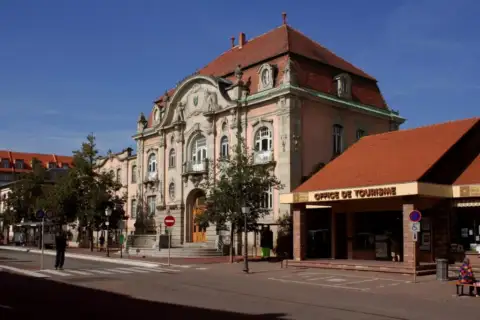

Should you add an Alsace village?
A village excursion is an optional extension, not a requirement for a successful Colmar trip. Eguisheim, Kaysersberg, and other nearby towns have distinct settings, but their market calendars are not interchangeable. Some events operate on selected weekends rather than continuously. Before planning a day, match the village’s opening date, outbound service, return service, and last connection. The regional railway’s Christmas page points to seasonal transport information; follow through to the actual operating calendar rather than relying on a previous year’s blog.
For an easier outing, choose one village and leave the rest for another trip. A shuttle itinerary can still involve queues, steps, a standing journey, and a walk from the stop to the center. Ask about wheelchair carriage or boarding assistance where relevant. Keep the return information accessible offline, and agree on a departure time before everyone disperses. If the weather is unpleasant or the service looks too complicated, use the day for Colmar’s museums and a longer lunch instead.
Food, gifts, and realistic spending
Look for regional foods and crafts, but read individual stall information instead of assuming every item is locally made. Ask about materials, origin, and the maker when a purchase matters to you. A small number of considered gifts is easier to transport than a series of impulse buys. Bring a foldable bag that closes securely, and protect delicate ornaments before boarding a train. Consider whether a food gift can travel unrefrigerated and meets the rules at your final destination.
Set a daily allowance for food, snacks, drinks, and gifts separately from the hotel and rail budget. Keep a little flexibility for a taxi or an extra seated meal; those purchases may improve the trip more than another souvenir. Carry a payment card and a modest amount of cash, while checking each stall’s accepted methods. If a drink uses a deposit cup, ask how the return works before walking away. Hot alcohol is optional: choose a nonalcoholic warm drink whenever that suits you better.
Walking, crowds, and winter comfort
Historic paving and bridges can become awkward when wet. Wear shoes with dependable grip and take the shortest comfortable route, even when a more decorative lane appears on social media. A cane, walker, or wheelchair may need more maneuvering room than a busy stall aisle allows. Avoid treating Colmar’s compact size as proof that it is universally accessible. Conditions vary by street and building, and temporary market infrastructure can change the route you expected from a summer map.
For travelers with low vision, darkness, reflections, and strings of bright lights may make edges harder to judge. A daylight orientation walk, a companion’s clear directions, and an easy return route can reduce that burden. Plan named meeting points that will still be identifiable in a crowd. Keep hands free when moving and step aside before using a phone. Build warmth into the itinerary with seated breaks, spare gloves, and an indoor fallback rather than relying on a hot drink to solve prolonged exposure.
Booking order and a useful final check
Book the accommodation first once your dates are firm, then compare the rail journey that actually fits check-in and departure. Reserve any timed museum visit or village transport only after confirming its current conditions. Restaurant reservations are useful when you need a reliable chair, a particular diet, or an early meal. Tell the restaurant about access requirements directly. A reservation guarantees neither a step-free entrance nor an accessible restroom unless the venue has specifically confirmed those details.
A few days before traveling, check market notices, transport alerts, weather, museum opening days, and the hotel’s arrival instructions. Keep a simple version of the itinerary on paper: hotel address, arrival route, two preferred market areas, one indoor alternative, and the return train. This is enough structure to protect the practical essentials while leaving room for discovery. If an attraction changes, exchange it for a restful pause instead of rebuilding the entire holiday around an unavailable stop.
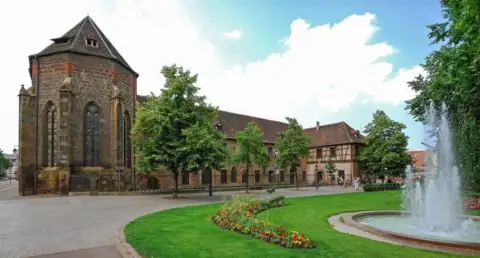

Use the video to compare, then narrow the plan
The accompanying French Christmas-markets video includes Colmar within a broader tour of festive destinations. It is useful for deciding whether its intimate streets and waterside setting match the trip you want. Watch for the overall character of the town rather than treating a filmed crowd, a stall, or a decoration as a promise for your travel date. Seasonal footage may show an earlier edition, and the article’s linked official calendar remains the source for current operating information.
After watching, choose two personal priorities: perhaps canal-side scenery and handmade ornaments, or architecture and a museum. Use those priorities to decide what to omit. If a village scene attracts you, give it a separate day instead of squeezing it between Colmar’s lunch and evening lights. Video works best as visual orientation, while the itinerary handles the less photogenic details of suitcase transfers, a dry coat, a reserved chair, and getting home before the last useful connection.
Keep departure morning light
Pack the night before departure and confirm whether the hotel can hold luggage if your train leaves later. Avoid a final shopping circuit that ends far from your bags. A relaxed breakfast and one familiar street are usually enough for the last morning. Allow time at the station to find the correct platform and respond to a change without rushing. If a return journey involves a reserved connection, give that connection priority over one more photograph.
Frequently asked questions
Is Colmar a good Christmas destination without a car?
Yes. A train arrival and a central hotel make the main town a practical car-free base. Nearby villages require separate transport planning, so keep them optional rather than assuming they are as straightforward as the central markets.
How many nights should a first visit include?
Two nights allow an arrival outing, one complete Colmar day, and a less hurried departure. Choose three nights if you want a village excursion without sacrificing the time reserved for Colmar itself.
Are all the markets open after Christmas?
The official schedule lists the 2026 main markets through December 29. Other attractions have their own calendars. Check the individual event and special holiday hours rather than assuming the entire program continues together.
Can a wheelchair user follow this itinerary?
The itinerary can be adapted, but no universal access guarantee is implied. Confirm the hotel, station assistance, museum route, market entrances, and any village transport. Wet paving, crowd density, and temporary layouts also affect the practical experience.
Should I visit Strasbourg and Colmar on the same day?
It is possible to travel between them, but combining both market programs leaves less time for seated breaks and the evening atmosphere. For a comfortable first trip, choose one town per day and avoid carrying luggage through either market.
What should I do if the weather is poor?
Shorten the outdoor circuit, use a planned Unterlinden visit if it is open, and reserve a warm lunch. Do not replace one long wet walk with an equally demanding museum marathon; a hotel rest remains a useful option.
Conclusion
The strongest car-free Colmar itinerary protects the pleasure of being there. Two nights, a well-chosen room, a daylight orientation walk, and a few favorite market areas provide a complete visit without the pressure of collecting villages. Check the official 2026 calendar, book transport around your real pace, and keep a warm indoor option. The lights are easier to appreciate when comfort has already been planned.
Sources and further reading
- Colmar Christmas markets: official dates and practical information
- TER Fluo: Christmas markets by train in Grand Est
- Musée Unterlinden: visit and activities
- Musée Unterlinden: access and accessibility
Sources reviewed: 2026-10-28.
Featured photo: Petite Venise, Colmar; daytime photograph outside the Christmas-market season — Flocci Nivis · Original photo · CC BY. Resized, JPEG compressed, and brightness slightly increased; documentary photograph may show another season.
