

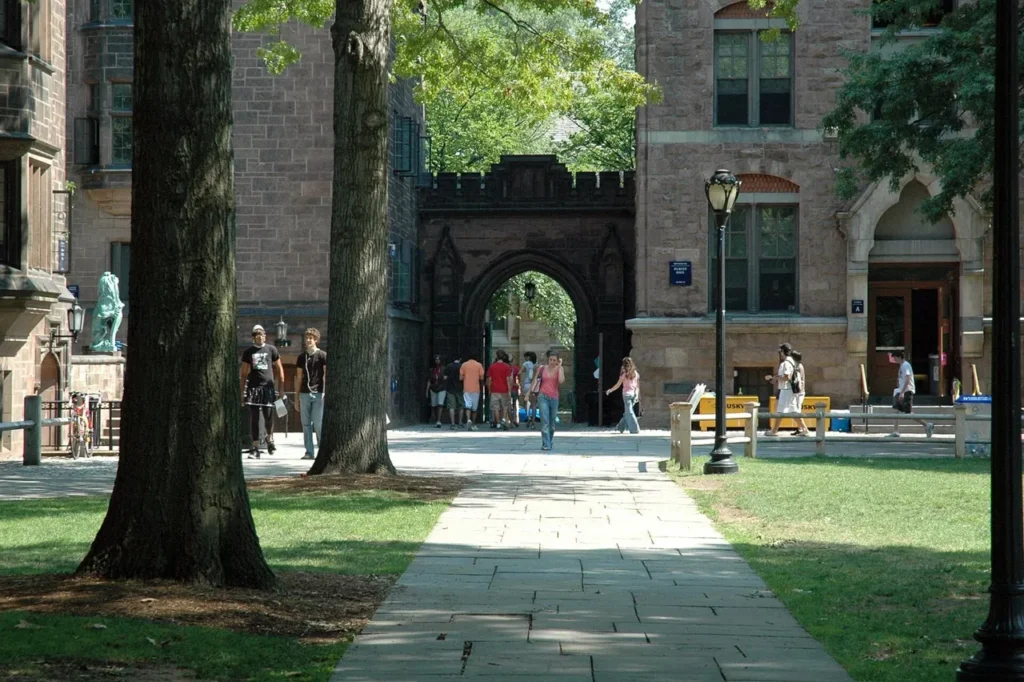

A three-day Connecticut coast road trip from New Haven to Mystic works as a one-way journey through shoreline towns and the lower Connecticut River area. It is not a tour of the state’s entire coast. Use one night around New Haven and one around Old Saybrook, Essex or Mystic according to your preferred pace. The route combines art and architecture with village stops and maritime history, leaving enough time for meals and short walks.
MAKE YOUR BASE
New Haven 1 night; lower river or Mystic area 1
BEST TIME TO GO
Late spring–fall; selected city attractions year-round
GETTING AROUND
Car for this village-based route
Day 1: New Haven’s art and food
Begin with a Yale museum that is open on your date, then spend time around the central campus streets and New Haven Green. Choose lunch or dinner around the food you want to try, allowing for queues at popular pizza places. Campus buildings do not all permit unscheduled visitor entry, so treat the exterior walk and any official tour as different experiences. Stay nearby tonight rather than driving east after a late arrival.


Day 2: Shoreline towns and the lower river
Drive east and choose one shoreline town, such as Guilford or Madison, before continuing toward Old Saybrook or Essex. Avoid stopping in every town: parking, lunch and short walks quickly consume the day. Essex offers a river-village setting, while an optional train-and-boat excursion is a substantial timed activity that should replace another stop. The historic railway is not a transport link between all the villages. Stay in the lower river area or continue to your Mystic base.
Day 3: Mystic’s maritime focus
Spend the final day at Mystic Seaport Museum or around Mystic’s downtown, depending on your interests and departure time. If a museum is the priority, allow it several hours rather than squeezing it between a long list of shops. A nearby village excursion is optional. If returning west by road, account for traffic on the main coastal corridor and leave a buffer for the journey home. Ending the trip in Mystic creates less backtracking than returning to New Haven every evening.


Good to know before you go
A shoreline railway can support a different car-free trip, but stations, town greens and beaches do not always line up closely. This driving version uses a car to reach selected villages and river attractions without depending on sparse connections. Public beach access and parking rules vary by municipality and season; check the exact place before detouring. For a shorter version, spend one full day in New Haven and one in Mystic and omit the intermediate villages. Book any train-and-boat excursion directly, checking departure location, season and access requirements for historic equipment.
For the wider regional plan, use the New England travel hub. Compare nearby options in the Connecticut travel guide.
Choose a sequence of coastal towns rather than every shoreline stop
The Connecticut coast contains several distinct experiences, from New Haven’s art and architecture to the lower Connecticut River villages and Mystic’s maritime focus. A three-day route needs to select among them. Use the suggested sequence as a progression with one principal stop each day, not a requirement to leave the main road at every town sign.
Start with the direction of travel and the actual hours available on arrival. If you begin late, choose a compact first stop and preserve the next day for the major attraction. A museum, heritage excursion or maritime campus can occupy much of a useful day once meals and parking are included. The coast is not one uninterrupted visitor promenade, and moving between towns involves ordinary roads, local approaches and sometimes a separate journey away from the main corridor. A smaller selection gives you more time to enjoy the differences between the places.
Choose one move or one base deliberately
A linear road trip can justify a planned accommodation move, particularly if you continue east or west afterward. A round trip may work better with a central-enough base and fewer towns. Compare the two patterns using the exact attractions and departure direction. Do not choose a new hotel each night simply because the guide assigns a different place to each day.
For each accommodation, check parking, dinner access and the morning journey. A low room rate outside the town may be worthwhile, but repeated drives for meals can erode the saving. For a rail adaptation, redesign the route around served stations and confirmed transfers rather than trying to reproduce the driving itinerary. Shore Line East serves the New Haven–New London corridor, while Mystic requires a different selected service or connection. Inland river villages and heritage railways need their own last-mile plans. A line on a regional rail map does not establish convenient access to every stop in the road itinerary.
Give New Haven and Mystic different cultural roles
New Haven can anchor the art-and-architecture part of the route, with a substantial visit to the collection that interests you most. Check the Yale institutions’ separate calendars and visitor arrangements rather than assuming they operate as one attraction. Keep the surrounding walk compact enough to allow lunch and the onward journey without rushing through the gallery.
Mystic provides a different emphasis. If choosing the Seaport, treat it as a real museum visit with time for its interpretation and waterfront setting. The downtown riverfront is a separate outing and does not replace the museum experience. Decide which matters more if arrival is late. One good cultural block in each location creates a richer route than a sequence of brief admissions. For mobility needs, check the precise entrances and internal routes at each site; an art-gallery visit and a historic-vessel visit have very different physical demands despite both being described as museums.
Treat Essex or Chester as more than a transit pause
The lower-river villages can offer a quieter middle portion, but choose the experience you want before adding a heritage train or riverboat. The Essex Steam Train is a separate excursion with its own departure point, product and calendar. It is not a regular passenger service connecting the coastal towns. If a boat is included, read the boarding and transfer arrangements for that specific outing.
If you prefer village time, use the public streets, a meal and a short suitable waterfront interval rather than assuming you must buy an excursion. Chester and Essex have distinct locations; getting between them and returning to the car uses real time. For travelers with mobility needs, ask about the actual train and boat access before booking, as historic equipment can involve steps and narrow spaces. A slower village visit can be the better choice when the excursion does not fit your comfort or the wider road-trip schedule.
Keep the shore and final departure flexible
A selected public coastal stop can provide a useful outdoor contrast, but check local access, facilities, parking and seasonal rules. A scenic coastline on the map does not mean every shoreline is publicly accessible or that every beach entrance has the same conditions. Give a beach stay a proper block; do not treat it as a five-minute addition between two museum visits.
For wet weather, move the main indoor visit into the less comfortable period where opening days allow. Keep exposed shore activities optional and avoid adding a distant town to compensate for poor visibility. Budget for room, fuel or rail, parking, admissions, excursions and meals as a whole. On the final day, calculate the journey home separately from breakfast and sightseeing. If you gain another night, deepen the part of the route you most enjoy before expanding inland or toward another state. The coast can support a satisfying three-day holiday without becoming an exhaustive tour of every community between New York and Rhode Island.
Choose the route’s middle day by interest
The middle day is where this road trip can become either coherent or overfilled. Choose an Essex-and-Chester village emphasis or a booked heritage excursion as the main experience. The villages offer time for public streets, food and a quieter river setting, while the train-and-boat product creates a more structured day with fixed departure and boarding arrangements.
Do not assume both versions fit within the same small block before continuing to Mystic. If you choose the longer excursion, shorten the evening sightseeing and arrive at the next base in time for dinner. If you choose the villages, leave room for a slower meal rather than filling the saved hours with another distant town. This decision gives the coastal route a genuine change of pace between New Haven’s art and Mystic’s maritime history. It also makes the accommodation move easier to plan because you know which activity actually determines the day’s timing.
Budget for this route
October 2026 planning worksheet in US dollars: these are editorial spending allowances, not surveyed hotel rates, live quotes or guaranteed ticket prices. Price your actual dates before committing; peak weekends can exceed the room allowance.
| Item | Allowance | What to check |
|---|---|---|
| Room, per night for two adults | $170–$320 | Before lodging taxes; use your actual overnight count |
| Meals, per adult per day | $45–$80 | Casual meals; alcohol and gratuities extra |
| Activities, per adult per sightseeing day | $20–$60 | An allowance, not the price of a specific ticket |
| Rental car and fuel, per vehicle per day | $90–$160 | Parking, tolls and rental coverage extra |
For two adults sharing transport, the illustrated sightseeing-day spending is $110–$220 per adult, before lodging and the exclusions above. Add $85–$160 per adult for each shared-room night, before tax. Multiply nights and sightseeing days separately; arrival days need their own meals and transfers.
Price the expensive transport first: obtain a complete car quote for the pickup and return locations, then add each hotel’s overnight parking charge.
What to book, and in what order
Check the Yale museum calendar and Essex excursion date before booking the two overnight bases.
Next, confirm cancellation deadlines and the time you must report for any timed entry or departure. Leave meals and unbooked village stops flexible. Save tickets offline and avoid scheduling a non-refundable connection immediately after a weather-dependent outing.
Access, walking and places to pause
Museum galleries, heritage rail carriages and waterfront paths need individual access checks; station access does not guarantee train-and-boat access.
Before buying, ask the chosen venue for the entrance-to-main-attraction walking distance, surface and slope, stair count, working elevator or ramp, nearest restroom and seating on the actual route. For low-vision travelers, ask about audio description, large-print information and assistance locating the entrance. These are questions to confirm, not a claim that every listed service is available. Arrange a seated break after the main visit and keep an indoor alternative close to the overnight base.
Getting from your arrival point to the sights
Use a car for the full sequence; regular shoreline trains do not replace the Essex village transfer or serve every coastal attraction.
Save the exact pickup address and the provider’s contact details offline. Check the final return service before leaving the center; a map pin for a town is not a station exit or attraction entrance. If a ride is essential, confirm its availability and cost before making the reservation that depends on it.
Short on time? Keep these stops
With two days, choose New Haven and Mystic with one main attraction in each.
Remove the lower-river detour if it creates an extra hotel move.
Check actual prices, calendars and access
Printable trip checklist
3-Day Connecticut Coast Road Trip: New Haven to Mystic
Use your browser’s print dialog to print the checklist or save a PDF. Fill in your own travel dates, reservations and quoted costs on the printed copy.
Overnight base: New Haven 1 night; lower river or Mystic area 1
Travel dates: ____________________ Booking references: ____________________
- Day 1: New Haven’s art and food — Begin with a Yale museum that is open on your date, then spend time around the central campus streets and New Haven Green.
- Day 2: Shoreline towns and the lower river — Drive east and choose one shoreline town, such as Guilford or Madison, before continuing toward Old Saybrook or Essex.
- Day 3: Mystic’s maritime focus — Spend the final day at Mystic Seaport Museum or around Mystic’s downtown, depending on your interests and departure time.
Area map links
Open these links in a saved PDF; on paper, use the place and state names to look them up. These are area searches, not verified entrances or turn-by-turn routes.
Before leaving
- Check the Yale museum calendar and Essex excursion date before booking the two overnight bases.
- Use a car for the full sequence; regular shoreline trains do not replace the Essex village transfer or serve every coastal attraction.
- Museum galleries, heritage rail carriages and waterfront paths need individual access checks; station access does not guarantee train-and-boat access.
- Record each paid ticket, final admission time, cancellation deadline and return departure.
- Confirm hotel nights, lodging taxes, meals, local transport and the total quoted trip cost.
- Save tickets, attraction entrance addresses and return pickup contacts offline.
- Check weather, service alerts and closures before the first outing.
Shorter version
With two days, choose New Haven and Mystic with one main attraction in each. Remove the lower-river detour if it creates an extra hotel move.
Confirmed bookings / access arrangements: ________________________________________
Return service / pickup: ________________________________________
Actual budget total: ________________________________________
FIND YOUR WAY
Orient your trip
Markers show the areas discussed, not exact entrances. Follow the article’s day order and check local access before traveling.
The map loads when you choose to open it. You can also use the direct place links below.
Approximate locations for orientation. Check official station, attraction and ferry-terminal directions for your arrival. Interactive maps use Leaflet and OpenStreetMap.
THE PRACTICAL DETAILS
Frequently asked questions
Is this the whole Connecticut coast?
No. It focuses on the eastern section from New Haven to Mystic so the trip remains manageable.
Can I follow the same route on Shore Line East?
Only with changes. Shore Line East serves specific stations between New Haven and New London, while village centers and Mystic require their own connections.
Can I follow the entire itinerary by commuter train?
A rail version needs redesign around the stations and services actually used. Shore Line East ends at New London and does not directly serve Mystic. River villages and the heritage excursion also need separate connections. Choose a smaller set of served places and confirm every last mile rather than assuming the road route has an equivalent train journey.
How many hotel changes are sensible?
One planned move can suit a linear three-day route, while a round trip may work with one base and fewer destinations. Compare the exact driving and dinner journeys before deciding. Repeated one-night stays can consume the time you hoped to spend exploring, especially when checkout, luggage and parking interrupt the middle of each day.
Is the Essex Steam Train part of the regular rail network?
No. It is a separately booked heritage excursion and does not provide a through passenger connection along the coast. Check its departure point, duration, seasonal calendar and any boat component. Arrange road transport to the excursion and assess its access requirements independently from any Amtrak or commuter-rail arrival.
Can I make this mostly a museum trip?
Yes. Choose the specific New Haven collection and Mystic maritime experience that interest you, then keep village and shore time as shorter contrasts. Check opening days before fixing the sequence. A substantial museum visit needs time for interpretation and rest, so remove other stops honestly rather than shortening every admission.
What is the best use of an extra day?
Stay longer in the part that matches your main interest: art in New Haven, lower-river villages or maritime Mystic. Extra time can absorb weather and opening-day constraints without adding another hotel. Expanding the route makes sense only when the next destination receives meaningful time rather than becoming another rushed stop before the journey home.
Official sources & current travel information
Use the official information below for current operating dates, reservations, access details and transport changes. Journey times in this guide are approximate planning allowances, not live predictions.
- Connecticut tourism: coastal road trip
- Yale University Art Gallery: visiting
- Mystic Seaport Museum: visiting
- Essex Steam Train & Riverboat: train and boat
- CTrail Shore Line East: schedules
Guide prepared October 23, 2026. Recheck time-sensitive arrangements for your travel dates.