
Introduction
Strasbourg’s Christmas markets are easier to enjoy when you stop treating the city as a single square with a single entrance. The cathedral, Place Kléber, the streets between them and your arrival route each play a different part in the visit. A short break can feel spacious if you choose one base, understand the current transport arrangements and leave time to return to the areas you most enjoy.
This guide explains how to plan a first car-free Christmas visit with a manageable pace. It distinguishes confirmed seasonal information from details that still need checking, then works through hotels, tram journeys, shopping, breaks and a three-night example. The suggested itinerary is an editorial planning aid. It does not establish that every street, hotel, market entrance or vehicle will meet your access needs.
Quick answer: what is the simplest first-trip plan?
Stay in Strasbourg for the nights you will actually use, give the Christmas sites at least one daylight outing, and keep a separate evening visit short. Choose accommodation by its complete arrival route rather than by its distance from the cathedral alone. Check the current event map and CTS transport notices before traveling. Keep any additional Alsace town optional until you know how much time and energy you want to spend in Strasbourg itself.
The official city Christmas website announces an opening on Friday, November 27, 2026. At the time of this review, its opening announcement is clearer than the complete season’s closing and daily-hour information. Use the city’s current program for the final dates and hours of your intended visit. A regional calendar, old photograph or previous year’s schedule should not be treated as confirmation that every individual market operates on the same days.
Some official tourism FAQ text still mixes older-season dates with newer references. For the opening date in this guide, the primary city announcement takes precedence. Check detailed daily schedules separately rather than trying to reconcile an older date by guessing.
| Decision | Practical answer |
|---|---|
| Confirmed opening | Friday, November 27, 2026, in the official city announcement. |
| Hours and closing dates | Recheck the individual market program; this guide does not assert an unconfirmed closing date. |
| Suggested rhythm | Daylight orientation, seated break, optional shorter evening return. |
| Local transport | CTS current routes and notices; read instructions for the selected ticket. |
| Extra towns | Optional only after checking their separate dates and return transport. |
Separate the market season from each day’s program
A Christmas destination can contain stalls, lights, performances and other activities with different schedules. Decide which part matters most before choosing your dates. If you want to browse and eat, investigate the market program. If a particular concert or guided experience is essential, check that listing separately and compare it with your hotel nights. One seasonal headline cannot answer every booking question.
Travel around a public holiday deserves an extra check. Ask about the specific service you need rather than assuming that transport, restaurants and visitor attractions follow their usual pattern. Keep written confirmation for anything you prepay. This guide deliberately does not supply an unverified closing date or universal set of market hours. Your final travel plan should use the organizer’s current information for the exact places and days you intend to visit.
Choose accommodation for both arrival and rest breaks
A hotel near the station can simplify the part of the trip when you have luggage. A hotel nearer your preferred market area can make an afternoon return easier. Compare those advantages using the actual entrance, tram stop and walking route. A location that looks ideal on a map may involve cobbles, steps, an indirect crossing or more walking than you want after dinner.
Useful hotel questions concern the booked room, not just the building in general. Ask whether the entrance has steps, whether an elevator serves your floor and whether you must use additional stairs to reach breakfast. Request relevant bathroom or doorway details when needed. Tell the property if visual navigation, balance or equipment affects your requirements. Keep the answers alongside the room description so you know what was actually confirmed.
Think about the stay as a repeating journey from the room to the city and back. A slightly different address may be worth considering if it makes those repeated trips easier. Compare the same room type and cancellation conditions before deciding whether a price difference is meaningful. A cheaper room is not automatically the better choice if it creates several difficult journeys during a short holiday.
Make the station-to-hotel leg explicit
Check the exact station named on your railway booking and the onward journey to the hotel. Save the entrance address, intended tram stop if used, and a fallback contact before arriving. If assistance is required, arrange it with the relevant operator for that journey. Do not assume a request for a train also covers carrying luggage to your hotel or navigating a street outside the station.
Arrival day is more comfortable with a small task list. Reach the room, put the bags away, eat and learn one useful route. A short Christmas outing can be a bonus rather than a commitment. Avoid tying an expensive timed activity to a connection that might change. Giving the first full day to the market protects the experience that brought you to Strasbourg in the first place.

## Use CTS information for the actual tram journey
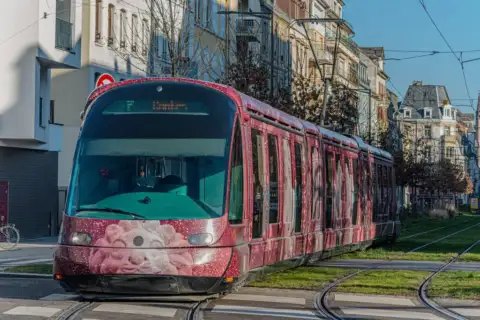
CTS is Strasbourg’s public transport operator, and its current network and service information should guide your journeys. Check the route for your starting point and destination rather than copying a line number from an older holiday article. Special-event arrangements or maintenance can change what is convenient. The city’s Christmas transport guidance is a useful starting point, but verify the final route against current operator notices.
Ticket validity and validation are separate questions. Read the instructions for the product you buy, including how it applies to a transfer and whether any action is needed before or during boarding. A contactless bank card is not automatically a universal ticket unless the operator says that payment method applies to your service. Keep evidence of the product you selected rather than relying on an assumption from a different European city.
If you need a specific boarding arrangement, investigate it before choosing the hotel. Ask about the intended stop, vehicle and onward street route as a connected journey. A generally accessible network does not guarantee that every temporary diversion or final pavement will work for you. Use transport to reduce effort where appropriate, while remembering that the distance between the stop and the actual market entrance is still part of the visit.
Give Place Kléber and the cathedral different roles
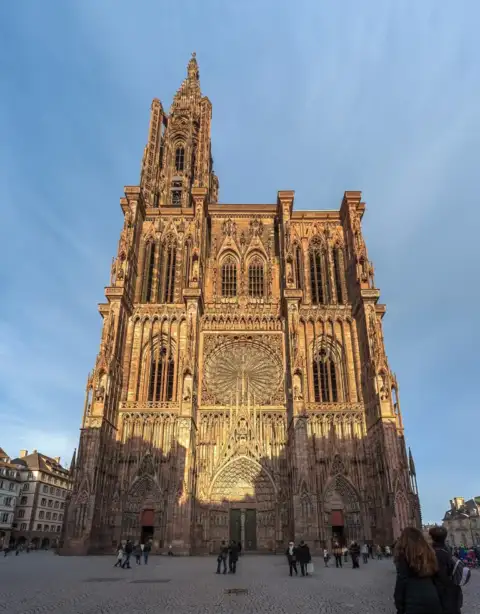
Place Kléber is a useful named reference when orienting your Christmas visit, while the cathedral provides another distinct landmark. Mark both on your map and compare the routes from your hotel. You do not need to walk every connecting street in one outing. Choosing one area first can help you understand the setting before deciding what else deserves a return visit.
A daylight outing is useful for identifying signs, surfaces and places to pause. An evening visit can then concentrate on atmosphere and a smaller shopping list. Neither time guarantees a quiet market or ideal conditions. Decide on a meeting point with your companion and agree how you will leave if the area becomes tiring. A plan to stop should be as clear as the plan to arrive.
Keep shopping deliberate and portable
Choose a small number of things you want to look for instead of treating every stall as an essential stop. Compare the item itself, its price, its packaging and how it will travel home. Ask the seller about materials or care instructions when they matter to your purchase. The atmosphere of a market can make a spontaneous object appealing without making it convenient to carry on the rest of your journey.
Fragile purchases deserve a transport plan before payment. Ask whether suitable packaging or shipping is available and what those options cost. Check import rules for food or other restricted items with the relevant official authority before buying them for another country. A sale in France does not itself establish admission elsewhere. Keep gifts separate from the luggage space needed for your ordinary belongings.


## Plan food around the break you need
Food stalls can be part of the Christmas experience, but they are not a guaranteed substitute for a suitable seated meal. Choose an indoor lunch or dinner option that fits the part of the city you expect to visit. Check opening and booking information directly. If you need an accessible entrance or particular seating arrangement, ask about those details when reserving rather than after you arrive.
Dietary questions should concern the actual product and preparation. A familiar regional name does not confirm ingredients, cross-contact arrangements or whether a particular serving suits your requirements. Ask the vendor or restaurant directly and use a written explanation if communication would otherwise be difficult. Keep a reliable alternative in mind. It is easier to enjoy browsing when the day’s meal does not depend on finding one specific stall at exactly the right moment.
Visit Petite France as its own outing
Petite France can provide a different focus from the Christmas shopping areas. Plan a route that matches your interest in the streets and waterside setting rather than adding it as a compulsory detour. Consider the return to the hotel before continuing farther. A short visit with time to look carefully can be more satisfying than crossing the area quickly on the way to another appointment.
Photographs of the district in this guide show recognizable settings from previous visits by the credited photographers. They are not predictions of the weather, water conditions or seasonal decorations on your dates. Check the route and current local guidance when planning the actual walk. If outdoor conditions are unsuitable, move the visit or shorten it rather than trying to recreate the photograph at any cost.
Choose an indoor alternative with a clear purpose
An indoor plan should begin with something you genuinely want to see. Use the official tourism information to find a museum, exhibition or historic interior, then check that attraction’s own opening and access details. Identify the correct entrance and the journey there. A fallback that requires an unexpected long walk is less useful than one that fits the part of the city where you will already be.
Keep one indoor option flexible if possible. You may want it because of rain, fatigue, a crowded street or simply a change of interest. That does not make the visit a second-best experience. Give it enough time to be worthwhile rather than squeezing it between two outdoor commitments. The most resilient itinerary has several satisfying forms, not one ideal version and a collection of emergency substitutes.
A three-night Strasbourg example
Use arrival day to reach the hotel and make one brief orientation trip. Learn the path back before you stay out late. If the market is open and you feel comfortable, browse a small part without trying to complete the shopping list. Finish with a straightforward dinner. The first evening should help you understand the city, not make you feel behind before the holiday has properly begun.
The first full day can focus on your chosen Christmas areas. Start in daylight, choose a small number of priorities and pause for a seated meal. Return to the hotel if that suits your pace. An optional evening outing can be limited to lights, photographs or a stall you want to revisit. There is no requirement to remain outdoors continuously to get good value from the day.
The second full day can pair Petite France with a separately researched indoor interest. Keep the order flexible according to opening times and conditions. If Strasbourg itself still holds your attention, stay in the city rather than feeling obliged to visit another town. A second Christmas visit with a clearer shopping purpose can be more enjoyable than a transfer-heavy excursion chosen mainly to increase the destination count.
Departure day is for the booked journey first. Leave enough time to collect luggage and reach the correct station entrance or assistance meeting point. Any final shopping should fit around that commitment, not compete with it. Keep tickets and important contacts accessible. A calm departure is part of a successful trip, particularly when the next connection requires navigating another unfamiliar station.


## Add another Alsace town only when the details work
Colmar and other Alsace destinations can be appealing, but each adds its own transport and seasonal program. Choose the particular town and experience you want, then check the outbound and return services, market dates and local arrival route. Do not assume that every market is open every day or that a regional calendar describes identical operating arrangements across towns.
Compare the entire outing with the time you would actually spend there. Packing another destination into the schedule may mean reducing rest, shortening a meal or arriving after dark. Those tradeoffs can be worthwhile when the visit is a priority. They are less persuasive when the only reason is that a list says the town is a must-see. Leaving an excursion for a future trip is a valid planning decision.
Budget for the holiday you intend to take
Your core budget should include the room, main transport, local journeys, meals and any paid visits you have chosen. Keep shopping and optional excursions in separate lines so they do not disguise the cost of the basic stay. Obtain current quotations for the exact dates rather than using a universal daily allowance. Compare cancellation conditions and included services alongside the displayed price.
A centrally useful hotel can have value beyond its nightly cost if it makes repeated rest breaks practical. Another property may offer a simpler station arrival at a price you prefer. Decide which advantage matters more for your itinerary. This guide does not claim that one area is always cheaper or quieter. Evaluate the particular address and booking rather than assigning a fixed character to an entire neighborhood.
Questions travelers ask
Are all Strasbourg Christmas dates confirmed for 2026?
The official city announcement confirms the opening on November 27, 2026. Check the current program for closing dates, individual market hours and special-day arrangements before booking. Do not use a previous year’s schedule or a broad regional date range as proof of every site’s operating period.
Do you need a car for a first visit?
A car-free plan is reasonable when your railway arrival, chosen accommodation and local routes work together. Use current CTS and city information for the intended journeys. Confirm any access requirements separately. The absence of a rental car does not remove the need to plan the final walk to a room or market entrance.
Should you stay near the station or near the markets?
Compare the complete routes rather than choosing solely by an area label. A station-side location may simplify luggage handling, while a market-side address may make daytime rests easier. Ask about the entrance and booked room, then decide which repeated journey matters most to your stay.
Can you visit Strasbourg and another Alsace market in one short break?
Possibly, but use actual operating dates and transport connections before deciding. An excursion should earn its place through an experience you want, not through pressure to collect destinations. For a first three-night stay, Strasbourg can provide enough variety without another hotel or town.
Conclusion
A comfortable Strasbourg Christmas visit grows from a few well-chosen decisions: a suitable hotel route, current seasonal information, manageable market outings and a reliable place to pause. Daylight orientation and a shorter evening return can give the same streets two different purposes without making every day a marathon.
Begin with the official opening announcement, then confirm the full program for your dates and compare accommodation routes. Keep one indoor interest and one optional extension rather than filling every available hour. Our guide to France’s medieval villages can provide ideas for a separate future itinerary; it does not need to become another obligation during this Christmas break. Let Strasbourg be the destination, rather than merely a stop between markets.
Sources and further reading
- City of Strasbourg: official Christmas opening announcement
- Strasbourg Tourism: Christmas market questions
- CTS: tram and bus network
- CTS: current transport notices
Sources reviewed: 2026-10-19.
Featured photo: Strasbourg Cathedral; a previous daylight view rather than a Christmas forecast — Diliff · Original photo · CC BY-SA. Resized by Wikimedia Commons for this download; no other edits.
