
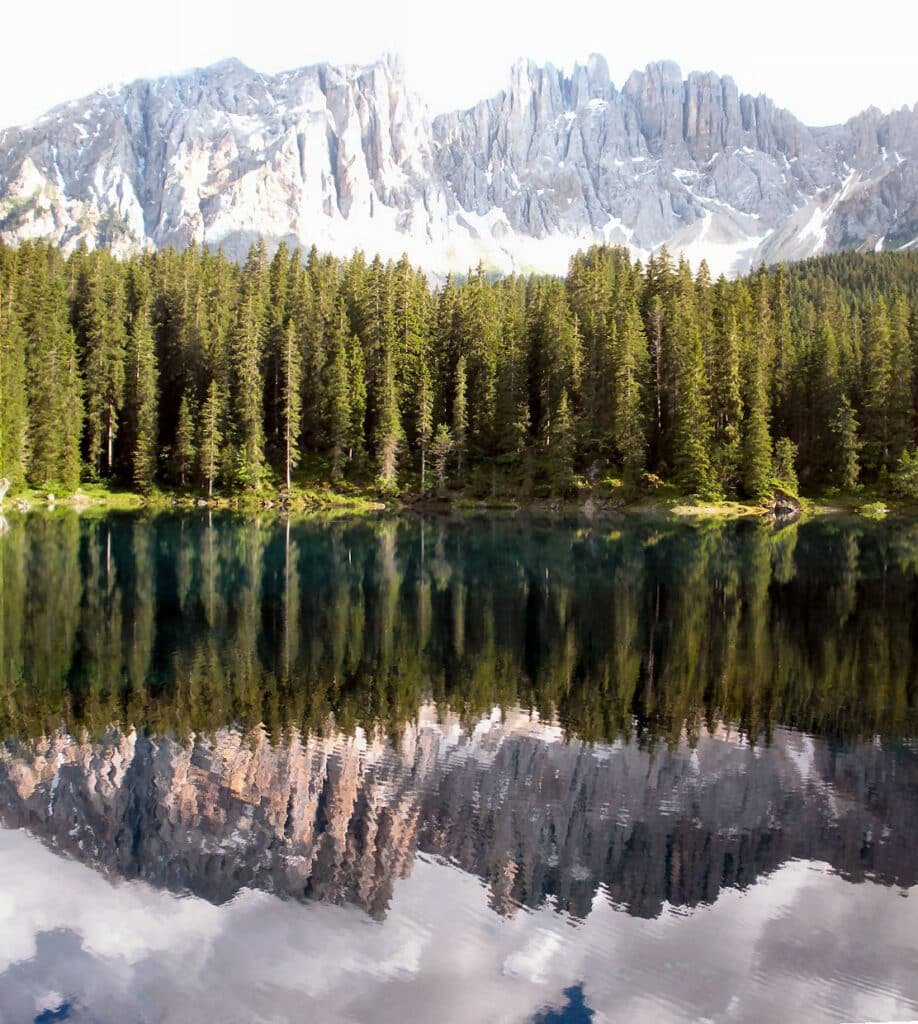
The dramatic limestone spires of the Dolomites have become one of the most photographed mountain landscapes in Europe, and the region’s most famous overlooks — Tre Cime di Lavaredo, Lake Braies, Seceda’s ridgeline — genuinely earn every bit of that fame. But the Dolomites span roughly 350,000 acres of UNESCO World Heritage terrain across multiple valleys, and the overwhelming majority of that landscape sees only a fraction of the crowds concentrated at its handful of Instagram-famous viewpoints. This guide covers more than 20 Dolomites hidden gems, verified against a real video guide, organized by sub-region so you can build a route through whichever part of Italy’s secret Alps genuinely calls to you.
The Dolomites’ distinct character traces back to genuinely unusual geology and an equally unusual cultural history layered on top of it. The mountains themselves formed from ancient coral reef deposits, later thrust upward by tectonic collision, giving the range its distinctive pale limestone color and jagged, almost architectural silhouette — a formation process genuinely different from the granite peaks of the Western Alps. That geological distinctiveness pairs with a genuinely unique cultural one: much of the Dolomites sits within South Tyrol, an officially trilingual region (German, Italian, and the ancient Ladin language) that only became part of Italy after World War I, giving the area a layered Austro-Hungarian and Italian identity found nowhere else in the country.
That layered identity shows up everywhere once you start looking for it — village architecture shifts between Tyrolean-style wooden balconies and more conventionally Italian stonework within the same valley, road signs carry three languages, and local cuisine blends Alpine dumplings and cured meats with pasta and polenta on the same restaurant menu. Understanding this cultural complexity genuinely enriches a Dolomites visit beyond the scenery alone, since so much of what makes individual valleys feel distinct from one another traces directly back to this layered linguistic and political history rather than pure geography.
Val Gardena
The Sella Group & Alta Badia
Lake Braies & the Prags Dolomites
The Tre Cime Area
South Tyrol’s Wine Valley
Dolomites Hiking Basics
South Tyrol Culture & Language
Dolomites Food Worth Seeking Out
Best Time to Visit the Dolomites
FAQ
Val Gardena
This Ladin-speaking valley holds some of the Dolomites’ single most photographed viewpoints, along with genuinely peaceful side valleys most visitors skip.
Seceda (“Walking on the Edge of the World”)
A genuinely dramatic ridgeline reached via cable car from Ortisei, its jagged edge dropping away toward the valley below while the famous Odle (Geisler) peaks rise sharply behind — the ridge has earned a genuine reputation among photographers as one of the most striking single viewpoints in the entire Alps, the “edge of the world” nickname reflecting the ridge’s precipitous, exposed feel.
Val Gardena, near Ortisei. Cable car fee. Best in early morning for the clearest light and thinnest crowds on the ridge.

Val di Funes (“A Valley from a Dream”)
A genuinely postcard-perfect valley, its small onion-domed churches set against the dramatic backdrop of the Odle peaks, considered by many Dolomites photographers to be the single most beautiful valley in the entire range, especially around the tiny hamlet of Santa Maddalena.
Near Val Gardena. Free. Best at sunrise for the Odle peaks’ warm “alpenglow” light over the valley.
Santa Maddalena (“The Postcard Village”)
A genuinely tiny hamlet within Val di Funes, its small church and cluster of farmhouses framed directly against the Odle massif, creating what is likely the single most reproduced photograph of the entire Dolomites region.
Val di Funes. Free. Best at sunrise, when the classic shot’s warm light and mist most reliably appear.

Alpe di Siusi (“Europe’s Largest Meadow”)
The largest high-altitude alpine meadow in Europe, its rolling green pastures stretching for miles beneath the Sciliar massif, historically used for centuries of traditional alpine cattle grazing and now largely closed to private vehicle traffic to preserve its genuinely rare open landscape.
Between Val Gardena and Val di Siusi. Cable car or shuttle bus access; private cars restricted. Best in June for peak wildflower bloom across the meadow.
Puez-Odle Nature Park (“Untouched Wilderness”)
A genuinely rugged protected area surrounding the Odle and Puez mountain groups, offering some of the least-developed, most demanding hiking terrain in the entire Dolomites, largely free of the cable car infrastructure found elsewhere in the region.
Val Gardena/Alta Badia border. Free. Best for experienced hikers seeking genuine backcountry solitude within the Dolomites.
The Sella Group & Alta Badia
The dramatic Sella massif and surrounding Alta Badia valleys hold some of the range’s most distinctive rock spires and quiet mountain culture.
Cinque Torri (“The Dragon’s Teeth”)
A genuinely striking cluster of five distinctive rock towers, their jagged, tooth-like silhouette earning comparisons to dragon’s teeth, alongside preserved WWI-era trenches and fortifications from the brutal mountain warfare fought across this front between Italian and Austro-Hungarian forces.
Near Cortina d’Ampezzo. Free; chairlift fee for easier access. Best combined with the preserved open-air WWI museum trail among the towers.

Passo Sella
A genuinely dramatic mountain pass connecting Val Gardena to Val di Fassa, its hairpin switchbacks offering some of the most spectacular drive-through mountain scenery in the entire Dolomites, with the Sella, Sassolungo, and Sella massifs visible in a single sweeping panorama.
Between Val Gardena and Val di Fassa. Free to drive. Best in summer, since the pass closes seasonally due to snow.

A Secret War Bunker
Scattered across the Dolomites’ WWI front lines, preserved bunker and tunnel systems — including notable examples near the Lagazuoi and Marmolada fronts — offer a genuinely sobering counterpoint to the region’s scenic beauty, a reminder that these same dramatic peaks were the site of brutal high-altitude combat over a century ago.
Various sites, Alta Badia/Cortina region. Some sites free; guided tours available for others. Best with a guided WWI history tour for full historical context.
Messner Mountain Museum Corones (“A Museum in the Sky”)
A genuinely striking museum designed by architect Zaha Hadid, built directly into the summit of Mount Kronplatz by legendary mountaineer Reinhold Messner, the first person to summit Mount Everest without supplemental oxygen — the museum’s dramatic, futuristic architecture and exhibits on mountaineering history make it one of the most unusual cultural attractions anywhere in the Alps.
Kronplatz/Plan de Corones, near Bruneck. Entry fee; cable car access. Best combined with the mountain’s broader hiking and viewpoint network.
Val di Fassa (“The Valley of Flowers”)
A genuinely lush Ladin-speaking valley beneath the Catinaccio (Rosengarten) massif, its alpine meadows bursting into vivid summer wildflower bloom, with the surrounding peaks’ distinctive pink “alpenglow” at sunset tied to a local legend of a rose garden cursed by a dwarf king.
Central Dolomites. Free. Best in July for peak wildflower bloom across the valley meadows.
Lake Braies & the Prags Dolomites
The Prags Valley holds the Dolomites’ single most famous lake alongside genuinely quieter turquoise water nearby.
Lake Braies (“The Secret Side of a Famous Lake”)
The Dolomites’ most photographed lake, its vivid turquoise water framed by the dramatic Seekofel massif — while the main boathouse shore draws significant crowds, the lake’s far, quieter shore, reached via the perimeter trail, offers the same dramatic water and mountain backdrop with a fraction of the visitors.
Prags Valley. Parking reservation required in peak season. Best walking the full perimeter trail to reach the quieter far shore.

Lago di Sorapis (“The Hike to Turquoise Heaven”)
A genuinely spectacular glacial lake, its milky turquoise color produced by finely ground rock sediment (glacial “rock flour”) suspended in the water, reached only via a demanding, exposed hiking trail that keeps visitor numbers meaningfully lower than the more accessible Lake Braies.
Near Cortina d’Ampezzo. Free; genuinely challenging trail requiring good fitness and sure footing. Best in summer for both trail conditions and the lake’s most vivid color.
Lago di Antorno (“The Tiny Mirror Lake”)
A genuinely small, easily accessible lake offering one of the most classic reflection photographs of the Tre Cime peaks in the entire region, requiring none of the demanding hiking that reaching Lago di Sorapis does.
Near Misurina, Tre Cime area. Free. Best at sunrise for still water and the clearest Tre Cime reflection.
The Tre Cime Area
The Sexten Dolomites hold Italy’s single most iconic mountain silhouette alongside genuinely underrated cave systems.
Caves Under the Three Peaks
The Tre Cime area holds several WWI-era tunnel and cave systems carved directly into the mountainside by Austro-Hungarian and Italian troops during the brutal high-altitude front fought here — a genuinely sobering historical layer beneath one of the world’s most photographed mountain views.
Sexten Dolomites, near Tre Cime di Lavaredo. Some sites accessible via marked trails; guided tours available. Best with a guided historical tour for full context on the wartime tunnel network.

Where the Wild Horses Are
The Fanes-Sennes-Braies Nature Park region holds a genuine local legend of the mythical “Kingdom of Fanes,” said to be protected by magical marmots and wild horses — while fully wild horses are rare today, semi-free grazing herds still roam parts of the high alpine pastures here each summer, a living echo of the old Ladin folklore.
Fanes-Sennes-Braies Nature Park. Free. Best in summer when herds are moved to high pastures for seasonal grazing.
The Sunrise Plateau
The high plateau surrounding the Plose above Bressanone offers some of the most reliably spectacular sunrise views in the entire Dolomites, its position facing directly east across the Isarco Valley toward the rising sun over successive mountain ridgelines.
Near Bressanone. Cable car fee. Best at dawn, given the plateau’s specific reputation for sunrise photography.
South Tyrol’s Wine Valley
Beyond the high peaks, the valleys surrounding Bolzano hold Italy’s northernmost significant wine region.
The Valley of Wine
The Alto Adige/South Tyrol wine region, centered around the valleys near Bolzano and stretching south toward Trento, produces genuinely excellent cool-climate wines — particularly Gewürztraminer (whose name traces to the South Tyrolean village of Tramin, its likely place of origin) and Pinot Noir grown at unusually high alpine elevations for the variety.
South Tyrol wine region, near Bolzano. Tasting fees vary by winery. Best in September-October during the harvest season, or spring for the valley’s famous apple blossom bloom.
Dolomites Hiking Basics
The Dolomites’ rifugio system — a network of staffed mountain huts offering meals and, at many locations, overnight beds — genuinely transforms what’s possible for a hiking trip here, allowing multi-day traverses without carrying camping gear, since a hot meal and a bed are typically available at the end of each day’s hike. Reservations at popular rifugi genuinely fill up during peak summer season, particularly along well-known routes, so booking ahead rather than assuming walk-in availability is worth doing for any multi-day plan, sometimes months in advance for the most famous huts along routes like the Alta Via 1.
Via ferrata routes — protected climbing paths using fixed cables, ladders, and rungs bolted into the rock, many originally built for WWI mountain warfare — offer a genuinely accessible way to reach terrain that would otherwise require technical climbing skill, though they still require proper harness equipment, basic technique, and a real head for exposure. Cable cars provide access to many of this guide’s highest viewpoints, including Seceda and Alpe di Siusi, without requiring a hike at all, making the region genuinely accessible to visitors with a wide range of fitness levels and time constraints. Weather in the high Dolomites can shift genuinely rapidly, and afternoon thunderstorms are a common summer pattern, which is exactly why experienced local hikers recommend starting early and being off exposed ridges and via ferrata routes well before early afternoon.
South Tyrol Culture & Language
Much of the Dolomites sits within South Tyrol (Alto Adige in Italian, Südtirol in German), an autonomous province with a genuinely distinct trilingual identity — German remains the majority first language for much of the region’s population, alongside Italian and, in several central Dolomite valleys including Val Gardena and Val di Fassa, the ancient Ladin language, a Romance language predating both Italian and German’s arrival in the region by centuries and still actively taught in local schools. This linguistic layering directly reflects the area’s complicated 20th-century history: South Tyrol was part of Austria-Hungary until the end of World War I, when it was annexed by Italy, a transition that involved decades of genuine cultural tension — including a period of forced Italianization under Mussolini’s fascist government — before the region’s current autonomous status and trilingual protections were established in the postwar decades.
Traveling through the Dolomites means genuinely encountering this layered identity directly — road signs, menus, and local greetings shift between German, Italian, and Ladin depending on exactly which valley you’re passing through, and many towns carry three official names simultaneously (Bolzano/Bozen, Ortisei/St. Ulrich/Urtijëi) rather than a single settled name. This trilingual reality is worth approaching with genuine curiosity rather than confusion — asking locals which language they prefer, rather than defaulting to Italian, is often appreciated in the more strongly German- or Ladin-identifying valleys.
Dolomites Food Worth Seeking Out
South Tyrolean cuisine reflects the region’s Austro-Hungarian heritage as much as its Italian one, and dishes like canederli (bread dumplings, similar to Austrian Knödel), speck (a distinctive smoked and cured South Tyrolean ham with its own protected geographical designation), and goulash appear alongside more familiar Italian pasta and polenta dishes on the same regional menus. Strudel, genuinely as central to South Tyrolean dessert culture as it is to neighboring Austria, is worth seeking out from a traditional rifugio or bakery rather than an Italian-style pastry shop further south, and apple strudel in particular reflects the region’s significant apple-growing industry in the valleys around Bolzano and Merano.
Local rifugi (mountain huts) often serve genuinely excellent, hearty regional cooking built around whatever ingredients can be reasonably transported to their high-altitude locations, making a rifugio meal a genuine culinary experience worth planning a hike around rather than treating as an afterthought — many hikers plan entire multi-day routes specifically to reach rifugi known for particularly good food. South Tyrol’s wine region, discussed above, pairs naturally with the area’s richer, heartier alpine cuisine, particularly the region’s aromatic white wines against the local cured meats and cheeses, and a genuine South Tyrolean “Marende” (a light afternoon meal of speck, cheese, and bread) remains a beloved local tradition worth experiencing at a working farm or mountain hut.
Best Time to Visit the Dolomites
June through September offers the best hiking conditions and full operation of the region’s cable car and rifugio network, with July and August representing peak season — genuinely the most reliable weather window, though also the most crowded, particularly at famous viewpoints like Lake Braies and Seceda. Late June brings peak wildflower bloom to the alpine meadows, while September offers a genuinely excellent compromise of still-warm hiking weather and noticeably thinner crowds than midsummer. December through March suits skiing across the Dolomites’ extensive interconnected ski areas, including the famous Sella Ronda circuit, though many hiking-focused hidden gems in this guide become genuinely inaccessible during winter months. The shoulder seasons of April-May and October-November see many cable cars, rifugi, and mountain roads close entirely for maintenance and weather, making them genuinely the least practical window for a Dolomites trip despite the appeal of avoiding crowds.
I cover all of these hidden gems in the video above. If this guide helped you plan your Dolomites trip, subscribe to Worldly Traveler on YouTube for more travel guides from around the world.
Frequently Asked Questions
What are the best hidden gems in the Dolomites?
Some of the best hidden gems in the Dolomites include Lago di Carezza (the Rainbow Lake), the Seceda ridgeline, Lake Braies, the Messner Mountain Museum Corones, and Lago di Sorapis, all offering a side of the region beyond the most photographed overlooks.
Do you need a car to explore the Dolomites?
A car genuinely helps given how spread out the region’s valleys are, though an extensive network of cable cars, buses, and the Alto Adige/South Tyrol public transit system make much of the region reachable without one, particularly if you base yourself in one valley.
How many days do you need to explore the Dolomites?
7-10 days allows a well-paced trip covering two or three valleys and a mix of easy viewpoints and longer hikes. A shorter 4-5 day trip works well focused on a single base, such as Val Gardena or Cortina d’Ampezzo.
What is the best time of year to visit the Dolomites?
June-September offers the best hiking conditions and full cable car and rifugio operation, while December-March suits skiing. Many trails and lifts close entirely during the shoulder seasons of April-May and October-November.
What language do people speak in the Dolomites?
The South Tyrol region of the Dolomites is officially trilingual, with German, Italian, and the ancient Ladin language all spoken, reflecting the area’s history as part of Austria-Hungary before becoming Italian territory after World War I.