
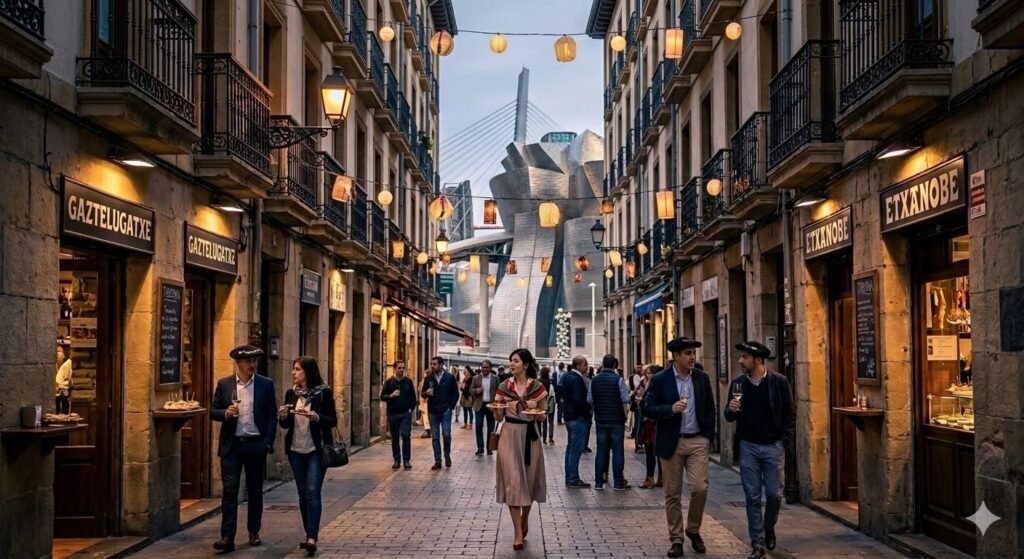
If you’ve already decided to visit the Basque Country and just need a plan, this is it: a tightly scoped Basque Country itinerary covering three days from the French coast into Spain, ending in either San Sebastián or Bilbao depending on your priorities. This is deliberately narrower than a full regional guide — for the broader picture with more towns, background, and planning detail, see our Ultimate Guide to the Basque Country. Here, we’re just telling you where to go each day.
Three days is enough to get a genuine feel for both sides of the border without rushing through any single stop, but it does mean picking selectively rather than trying to see everything covered in the fuller regional guide. This route prioritizes a manageable driving pace — no single day involves more than about 1.5 hours behind the wheel — over cramming in every possible stop, on the theory that arriving somewhere relaxed and actually enjoying it beats checking off a longer list at a rushed pace. If you find yourself with an extra day or two, the “extending this trip” note near the end of this guide covers the most natural ways to stretch it out.
Day 1: French Basque Coast
Day 2: Crossing into Spain
Day 3: Bilbao or San Sebastián
Before You Go
FAQ
Day 1: French Basque Coast
Start in Biarritz and spend the day working south along the French coast toward the Spanish border. This first day sets the tone for the trip — a relaxed, resort-town pace that contrasts nicely with the more food-and-culture-focused days to come.
Midday: Drive 25 minutes to Saint-Jean-de-Luz for lunch at a harborside restaurant; try fresh anchovies or a Basque seafood platter.
Afternoon: Wander Saint-Jean-de-Luz’s old town and sheltered beach, then drive 20 minutes inland to Espelette to see the famous pepper-hung house facades (best in autumn; still worth a stop year-round for the village itself).
Evening: Return to Biarritz or Saint-Jean-de-Luz for dinner and an early night before crossing the border.
Drive time today: roughly 1 hour total across all stops. Tip: Book a Biarritz hotel for Night 1 rather than trying to reach Spain the same day — it keeps the pace relaxed.
If you’re arriving jet-lagged from a long-haul flight, this first day is deliberately the lightest of the three — a beach walk, a relaxed lunch, and one inland detour rather than a packed schedule. Resist the urge to add a fourth stop; the goal on Day 1 is arriving in Spain the next morning rested rather than exhausted from overplanning.

Day 2: Crossing into Spain
Cross the border in the morning and spend the day working along the Spanish coast, ending near San Sebastián or continuing toward Bilbao depending on your Day 3 plan. This is the day the trip’s character shifts — from resort-town France into the more food-and-culture-driven rhythm of the Spanish side.
Midday: Continue 30 minutes to Getaria for lunch — grilled turbot on the harbor is the local specialty, paired with txakoli.
Afternoon: If heading toward Bilbao, continue along the coast; if staying near San Sebastián, backtrack 30 minutes to settle into your city base for the evening.
Evening: Start your first pintxos crawl — San Sebastián’s Parte Vieja or Bilbao’s Plaza Nueva, depending on where you’re based tonight.
Drive time today: roughly 1-1.5 hours depending on your evening destination. Tip: No formal border checkpoint exists between France and Spain here — both are Schengen countries — so the “crossing” is seamless by car.
Getaria deserves a slightly longer stop than its size suggests — beyond the turbot, it’s the birthplace of designer Cristóbal Balenciaga, whose namesake museum sits right in the village, worth 30-45 minutes if fashion history interests you at all. If you’re tight on time, though, skipping the museum and simply enjoying lunch on the harbor is a perfectly reasonable trade-off given the rest of the day’s driving.

Day 3: Bilbao or San Sebastián
Your final day depends on which city you want to spend the most time in — both are excellent choices with different strengths.
If you choose San Sebastián
Spend the morning on La Concha Beach, then walk Monte Urgull for the harbor views, and use the afternoon for a longer pintxos crawl through the old town. For the full 25-gem list, see the site’s dedicated San Sebastián hidden gems guide. This is the stronger pick if beach time and food are what you came for — it’s a compact city where you genuinely can walk everywhere.
Best for: beach-and-food priorities, resort pace.
If you choose Bilbao
Spend the morning at the Guggenheim Museum, walk through Casco Viejo for lunch, and use the afternoon for Mount Artxanda’s funicular viewpoint before an evening pintxos crawl at Plaza Nueva. For the full 25-gem list, see the site’s dedicated Bilbao hidden gems guide. This is the stronger pick if you want a fuller city experience — a real metro, distinct neighborhoods, and noticeably better value on food and lodging.
Best for: museum and architecture priorities, urban pace.
Drive time today: San Sebastián to Bilbao is about 1 hour, if you want to see both cities briefly rather than committing fully to one.
Extending This Trip
If you end up with a fourth or fifth day, the most natural additions are a full day in whichever city you didn’t choose for Day 3 (San Sebastián to Bilbao or vice versa is only an hour’s drive), or a detour to San Juan de Gaztelugatxe and the Urdaibai Biosphere Reserve for a scenic, less touristed day away from both cities. Travelers with a week or more should consider working from our full Ultimate Guide to the Basque Country instead, since it covers considerably more ground on both sides of the border than this condensed itinerary is designed to.
Why This Order Works
Starting in France and ending in Spain isn’t the only way to do this trip, but it has a real logic to it: Biarritz’s international airport connections make it a natural entry point for many travelers, and ending the trip in a bigger Spanish city (San Sebastián or Bilbao) means your final night has the most dining and nightlife options right when you’re most likely to want them, after two days of smaller-town travel. Running the route in reverse — starting in Bilbao, ending in Biarritz — works just as well logistically and simply flips which airport you fly into and out of; choose based on flight availability and price rather than any inherent advantage to one direction.
The three-day structure also deliberately avoids the common mistake of trying to see too much too fast. Each day here has one clear anchor experience — France’s resort coast, the border crossing and coastal villages, and a single city explored properly — rather than cramming five towns into one exhausting day of driving. That’s a trade-off: you won’t see everything the region offers in three days, but what you do see, you’ll actually get to enjoy rather than photograph from a moving car.
Before You Go
Car rental: Book a small or compact car — easier to park in old town centers and navigate narrow coastal roads.
What to pack: A light rain layer regardless of season (Atlantic weather changes fast), comfortable walking shoes for cobblestones, and a reusable bag for market and bakery stops.
Border-crossing notes: No passport checks are typical for most travelers between France and Spain, but carry ID regardless, and confirm your rental car’s cross-border insurance coverage before you leave the rental desk.
Currency: Both countries use the euro, so no currency exchange is needed at the border.
Booking ahead: If your Day 3 pick is San Sebastián, reserve dinner at any Michelin-starred restaurant weeks in advance — walk-ins are rarely possible at the region’s best-known kitchens.
Language basics: A few French phrases for Day 1 and Spanish phrases for Days 2-3 go a long way; English is widely understood in the main tourist areas but far less so in smaller villages.
Rough Budget for the Trip
Costs vary by season and choices, but as a rough guide: expect higher prices in Biarritz and San Sebastián’s old town, and better value in Bilbao and the smaller coastal villages like Getaria and Hondarribia. Rental car costs, tolls on the French/Spanish motorway corridor, and parking in old town centers are worth budgeting for separately from meals and lodging, since none of them are large individually but they add up across three days of coastal driving.
I cover the full French coast, Spanish coast, and San Sebastián vs Bilbao comparison across the videos above. If this itinerary helped you plan your trip, subscribe to Worldly Traveler on YouTube for more travel guides from around the world.
Frequently Asked Questions
Is 3 days enough for the Basque Country?
3 days is enough for a focused introduction covering the French coast, the border crossing into Spain, and one Spanish city, though it doesn’t allow time to see everything. Travelers with more flexibility should consider 5-7 days for a fuller trip.
Do I need a car for this itinerary?
Yes, a rental car is essential for this itinerary, since it crosses an international border and covers coastal towns not well connected by public transport.
Should I end the trip in San Sebastián or Bilbao?
San Sebastián suits travelers prioritizing beaches and pintxos, while Bilbao suits those wanting museums and city culture. Both are covered in the itinerary’s Day 3 decision section.
How difficult is it to cross the border from France to Spain in this itinerary?
Very simple — both countries are in the Schengen Area, so there’s no formal border checkpoint for most travelers, and the drive from the French coast into Spain takes under an hour.
What is the best starting point for this itinerary?
Biarritz, with its own airport (Biarritz Pays Basque Airport), works well as a starting point, though Bilbao Airport is also a practical option if you’d rather start on the Spanish side and reverse the route.