
America’s fall foliage season genuinely spans an enormous range of landscapes, from New England’s classic maple-lined country roads to Oregon’s waterfall-studded river gorge, each region offering a genuinely distinct version of autumn color and a genuinely different kind of road trip. This guide walks through four of the country’s best fall foliage routes, checked against real research into each region’s peak timing and highlights, along with practical advice for timing a trip around a season that shifts meaningfully from one year to the next.
What makes American fall foliage genuinely distinct from many other parts of the world is the sheer scale and variety available within a single country, a traveler chasing peak color here can realistically choose between dense maple forests, high alpine ridgelines, Great Lakes shoreline cliffs, and a waterfall-lined river gorge, each delivering a genuinely different visual experience despite falling under the same general “fall foliage road trip” category. That range is part of why fall tourism has become such a significant economic driver for so many different American regions, each has developed its own distinct identity and infrastructure around the season rather than competing directly with the others.
New England
The Blue Ridge Parkway
Michigan’s Upper Peninsula
The Columbia River Gorge
Comparing the Routes
Why Peak Color Varies So Much Year to Year
Planning Your Trip
Driving Distances & Trip Length
FAQ
New England
Genuinely the benchmark against which most American fall foliage destinations are measured, thanks largely to one specific tree species.
New England
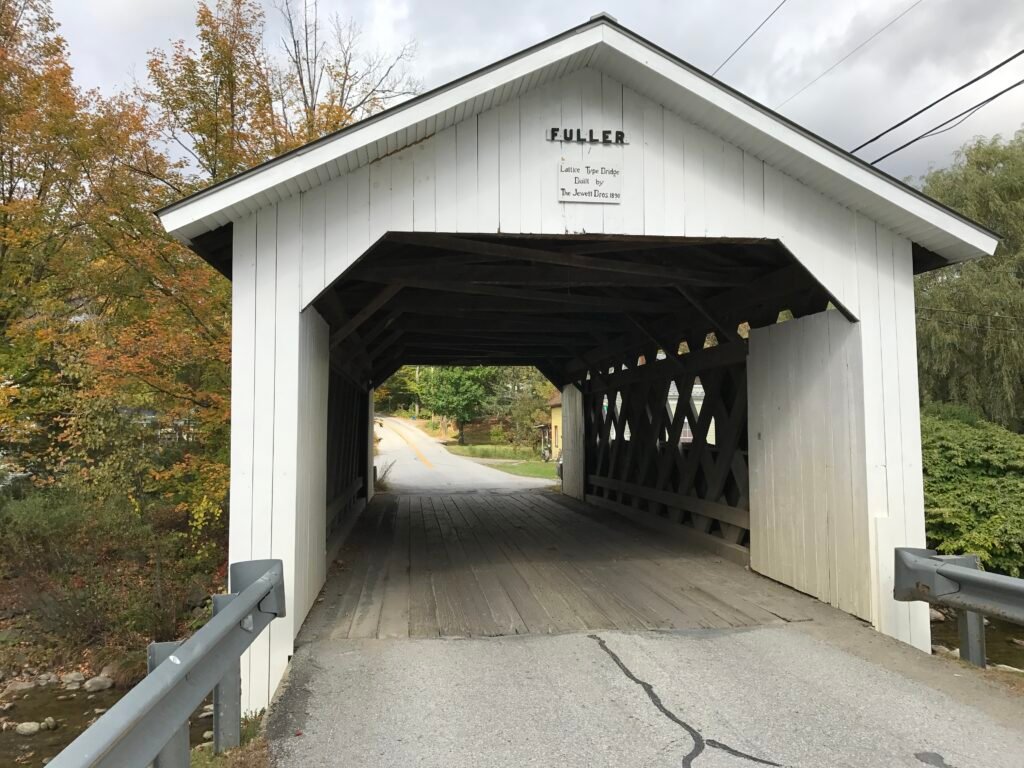
The sugar maple, genuinely the star of New England’s fall display, produces a uniquely vivid combination of red, orange, and gold rarely matched by other tree species, and the dense concentration of sugar maples across Vermont, New Hampshire, and Massachusetts is a large part of why this region became America’s original fall foliage tourism destination, with organized “leaf peeping” tours dating back well over a century. Vermont’s country roads, dotted with historic covered bridges, white church steeples, and small-town general stores, offer a genuinely quintessential version of the New England fall road trip, and the state’s Route 100, running the length of the Green Mountains, remains one of the most popular and well-regarded scenic drives in the entire region.
New Hampshire’s White Mountains add a genuinely more dramatic, elevated dimension to the New England foliage experience, the Kancamagus Highway, a 34.5-mile stretch through the White Mountain National Forest, offers sweeping mountain views alongside the same maple-driven color found throughout the wider region, and its relatively compact length makes it a genuinely manageable day trip compared to Vermont’s more spread-out network of country roads. Massachusetts’ Berkshires, somewhat less crowded than Vermont and New Hampshire’s most famous routes, offer a genuinely worthwhile alternative for travelers seeking similar scenery with noticeably thinner crowds, particularly on weekdays, and the region’s historic estates and cultural institutions, several with their own significant fall event calendars, add a further layer of things to see beyond the foliage itself.
Maine’s western mountains and coastal regions genuinely round out the broader New England fall experience, offering a quieter, less commercially developed alternative to the more famous Vermont and New Hampshire routes, with the added bonus of combining inland maple color with the state’s famously rugged Atlantic coastline for travelers willing to extend their trip further east.
Vermont, New Hampshire, and Massachusetts. Free to drive; individual attraction fees vary. Best late September through mid-October, with northern Vermont and New Hampshire peaking earliest and southern New England following roughly two weeks later.
The Blue Ridge Parkway
Often called “America’s favorite drive,” this roughly 469-mile parkway connects Shenandoah National Park in Virginia to the Great Smoky Mountains in North Carolina.
The Blue Ridge Parkway
Built in stages between 1935 and 1987 as a Depression-era public works project, the Blue Ridge Parkway was specifically designed with recreation and scenery in mind rather than efficient transportation, its speed limit capped at 45 mph and its route deliberately following ridgelines to maximize panoramic overlooks rather than taking the most direct path between destinations. That design genuinely pays off each autumn, dozens of designated overlooks along the route offer sweeping views across layered mountain ridges turning shades of red, orange, and gold, and because the parkway spans elevations from roughly 650 to over 6,000 feet, peak color genuinely arrives at different points along the route across a span of several weeks rather than all at once, meaning a single well-timed multi-day trip can actually chase peak color as it moves progressively down in elevation.
Craggy Gardens, near Asheville, North Carolina, offers a genuinely unique high-elevation foliage display, its rare Catawba rhododendron thickets turning color alongside the surrounding hardwood forest, while Peaks of Otter in Virginia provides some of the parkway’s most photographed lake and mountain reflection shots each fall. Asheville itself, sitting roughly at the parkway’s midpoint, makes a genuinely practical base for exploring both the northern Virginia and southern North Carolina sections of the route without excessive backtracking, and the city’s own significant food and arts scene offers a worthwhile break from driving for travelers tackling the parkway’s full length over several days. Mabry Mill, a historic gristmill along the Virginia section, remains one of the most photographed single stops on the entire parkway, its water wheel and reflecting pond framed by surrounding autumn color in a scene that’s appeared on countless postcards and calendars over the decades, genuinely earning its reputation as one of the most iconic single images associated with the entire route.
Virginia and North Carolina, connecting Shenandoah National Park to the Great Smoky Mountains. Free to drive. Best early October at higher elevations, progressing to late October and even early November at lower elevations.

Michigan’s Upper Peninsula
Genuinely one of the most underrated fall foliage destinations in the country, combining dense hardwood forest with dramatic Great Lakes shoreline.
Michigan’s Upper Peninsula
Pictured Rocks National Lakeshore, its colorful sandstone cliffs rising directly from Lake Superior, offers a genuinely unique combination of geological color, the cliffs themselves streaked with mineral stains in shades of red, orange, and green, and the surrounding hardwood forest’s own autumn transformation, a pairing found in few other American fall destinations. Boat tours along the lakeshore during peak color offer a genuinely different perspective than the clifftop hiking trails, viewing the layered cliffs and forest color together from the water below, a vantage point many photographers consider genuinely superior to any land-based overlook along the entire route, since it reveals the full height and texture of the mineral-streaked cliffs in a way no clifftop trail can match.
Beyond Pictured Rocks, the Upper Peninsula’s Porcupine Mountains Wilderness State Park, genuinely one of the largest tracts of old-growth forest remaining in the Midwest, and Tahquamenon Falls, one of the largest waterfalls east of the Mississippi, both offer additional genuinely worthwhile stops for a longer fall road trip through the region. The Upper Peninsula’s relative remoteness, considerably less visited than New England or the Blue Ridge Parkway despite genuinely comparable foliage quality, means smaller crowds even during peak color weekends, a real advantage for travelers prioritizing a quieter, less commercialized fall experience. The region’s nickname, “the U.P.,” and its residents, known locally as “Yoopers,” reflect a genuinely distinct regional identity within Michigan itself, one shaped by the peninsula’s relative isolation from the more populous Lower Peninsula and its historically significant mining and logging industries, a heritage still visible in several small museums and preserved sites scattered throughout the region.
Michigan’s Upper Peninsula, along Lake Superior. Free to explore; Pictured Rocks entry included with a National Park pass. Best late September to early October, generally peaking earlier than most of the lower Midwest given the region’s northern latitude.
.jpg)
The Columbia River Gorge
Genuinely unique among American fall foliage road trips for pairing autumn color with dramatic, cascading waterfalls.
The Columbia River Gorge
Multnomah Falls, at 620 feet the second-highest year-round waterfall in the United States, anchors the Columbia River Gorge’s fall appeal, its two-tiered cascade framed by vine maples and bigleaf maples that turn genuinely vivid shades of yellow and orange each autumn, a combination of falling water and turning leaves found in very few other American road trip destinations. The Historic Columbia River Highway, completed in 1922 and among the first scenic highways built in the United States, winds along the gorge’s edge connecting Multnomah Falls to numerous other waterfalls, including Wahkeena, Latourell, and Bridal Veil, each offering its own genuinely distinct fall photo opportunity within a relatively short overall driving distance, several accessible via short, family-friendly trails rather than requiring serious hiking.
The gorge’s unique microclimate, shaped by the Columbia River carving directly through the Cascade Range, creates noticeably different foliage timing on its Oregon and Washington sides, and the persistent mist generated by the numerous waterfalls genuinely keeps much of the gorge’s vegetation lush and green longer into the season than drier inland areas, meaning peak color here often arrives slightly later than in other parts of the Pacific Northwest. A significant 2017 wildfire, the Eagle Creek Fire, damaged considerable portions of the gorge’s forest, and while recovery has continued in the years since, some trails and viewpoints remain affected, worth checking current conditions before planning a visit to specific, lesser-known trailheads. The gorge’s dual identity as both a scenic corridor and a genuine wind-sports destination, its consistent easterly winds drawing windsurfers and kiteboarders to the town of Hood River year-round, adds an unexpected layer of activity for travelers wanting to combine sightseeing with something more active during a fall visit, and Hood River itself makes for a genuinely pleasant overnight base given its concentration of local breweries and restaurants overlooking the river.
Columbia River Gorge, Oregon-Washington border. Free to drive; some trailhead parking requires a permit. Best mid-to-late October, slightly later than most of the Pacific Northwest given the gorge’s unique moist microclimate.

Comparing the Routes
| Route | Peak Timing | Best For |
|---|---|---|
| New England | Late Sept – mid-Oct | Classic maple color, covered bridges |
| Blue Ridge Parkway | Early Oct – early Nov | A long, elevation-staggered scenic drive |
| Michigan’s Upper Peninsula | Late Sept – early Oct | Lakeshore scenery, fewer crowds |
| Columbia River Gorge | Mid-to-late October | Foliage paired with waterfalls |
Each of these four routes genuinely rewards a different kind of traveler. New England suits visitors seeking the most iconic, widely recognized version of American fall color, complete with the small towns and covered bridges that dominate postcards and calendars. The Blue Ridge Parkway offers the longest single continuous route, genuinely ideal for a multi-day road trip with flexible timing given how much its elevation range staggers peak color. Michigan’s Upper Peninsula rewards travelers specifically seeking a quieter alternative to the more famous eastern routes, and the Columbia River Gorge offers a genuinely unique pairing of foliage and dramatic water features unmatched by the other three destinations. Distance and logistics also genuinely factor into the choice, New England and the Blue Ridge Parkway both sit within reasonable driving distance of major East Coast population centers, while Michigan’s Upper Peninsula and the Columbia River Gorge each require a more deliberate, dedicated trip given their more remote locations relative to major metropolitan areas.
Why Peak Color Varies So Much Year to Year
Fall color intensity and timing genuinely depend on a specific combination of weather conditions in the weeks leading up to autumn, warm, sunny days paired with cool, but not freezing, nights generally produce the most vivid displays, since that combination allows trees to produce sugars during the day while slowing their transport out of the leaves overnight, concentrating the pigments responsible for red and purple hues. A summer drought, by contrast, can genuinely cause trees to drop leaves early or produce duller, more muted color, while an unusually warm, wet autumn can delay the whole process by a week or more compared to a typical year, sometimes pushing peak color considerably later than the historical averages most travel guides quote. That year-to-year variability is exactly why experienced leaf-peepers rely on updated regional foliage reports rather than fixed calendar dates when planning a specific trip, since the same destination can look meaningfully different from one October to the next depending entirely on that particular year’s weather pattern.
Planning Your Trip
Checking state tourism department foliage tracking tools, several New England states and the Forest Service both maintain updated fall color reports throughout the season, genuinely helps time a trip more precisely than relying purely on historical averages, since peak color can shift by a week or more depending on that year’s specific weather pattern across any of these four regions. Weekday travel genuinely reduces crowds substantially compared to weekend trips during peak color windows, particularly along the most famous, heavily trafficked stretches of New England and the Blue Ridge Parkway, where popular overlooks and small towns can become genuinely congested on peak fall Saturdays. Booking accommodation well in advance matters considerably for New England specifically, where small-town inns and bed-and-breakfasts have limited capacity and regularly sell out months ahead for the most popular foliage weekends.
Layered clothing and a reliable rain layer are worth packing for all four routes covered in this guide, mountain and gorge weather in particular can shift quickly regardless of season, and morning temperatures at higher elevations along the Blue Ridge Parkway specifically can drop considerably below what a visitor might expect based on lower-elevation forecasts. Building flexibility into a multi-day itinerary, rather than fixing an exact date months in advance, genuinely improves the odds of catching any of these regions at their most vivid, and travelers with the flexibility to shift a trip by even a few days based on updated foliage reports genuinely see a meaningfully better display than those locked into fixed dates set months in advance.
If this guide helped you plan a fall road trip, check out more travel videos from Worldly Traveler.
Whichever route ends up on your itinerary, America’s fall foliage season genuinely offers enough regional variety to reward repeat trips across multiple years rather than a single definitive visit. New England’s maples, the Blue Ridge’s layered mountain ridges, Michigan’s lakeshore cliffs, and Oregon’s waterfall-lined gorge each represent a genuinely distinct chapter of the same broader autumn transformation, and together they offer some of the best reasons to plan a road trip specifically around the season rather than treating fall as simply the quiet stretch between summer and winter travel. A traveler who’s covered New England’s classic maple routes might find genuine novelty in Michigan’s quieter lakeshore cliffs the following year, or discover an entirely different pace of travel along the Blue Ridge Parkway’s slow, ridge-hugging miles, proof that “fall foliage road trip” genuinely covers far more ground than any single itinerary could capture.
Driving Distances & Trip Length
A well-paced New England foliage trip genuinely fits into a long weekend or a full week, depending on how many of the region’s states a traveler wants to cover in total, Vermont alone offers enough scenic driving to fill three or four days without repeating a single road. The Blue Ridge Parkway’s full 469-mile length genuinely requires a minimum of three to four full days to drive comfortably at its intentionally leisurely 45 mph speed limit, though many visitors instead choose to focus on just one section, northern Virginia or southern North Carolina, rather than attempting the entire route in a single trip. Michigan’s Upper Peninsula, while genuinely compact compared to the Blue Ridge Parkway’s sprawling length, still requires several hours of driving time between its major highlights, Pictured Rocks, the Porcupine Mountains, and Tahquamenon Falls are all spread across a considerable distance, making a minimum three-to-four day trip genuinely worthwhile for covering the region properly.
The Columbia River Gorge, by contrast, offers a genuinely more compact experience, its most significant waterfalls and viewpoints are clustered within a relatively short stretch of highway, meaning even a single well-planned day trip from Portland can cover the gorge’s essential highlights, though extending the visit to two or three days allows for a considerably less rushed pace and the chance to explore some of the region’s less crowded side trails.
Frequently Asked Questions
What is the best road trip for fall foliage in the US?
New England, particularly Vermont and New Hampshire, is widely regarded as the best fall foliage road trip in the US, thanks to its dense concentration of sugar maples, which produce genuinely vivid scarlet and orange color unmatched by most other regions in the country.
When is peak fall foliage on the Blue Ridge Parkway?
Peak color on the Blue Ridge Parkway typically runs from early October at higher elevations to early November at lower elevations, since the parkway’s roughly 469-mile length spans a wide range of altitudes that each peak at a genuinely different time.
Is Michigan’s Upper Peninsula good for fall foliage?
Yes, genuinely. The Upper Peninsula’s dense hardwood forests, combined with dramatic Lake Superior shoreline at spots like Pictured Rocks National Lakeshore, offer some of the most underrated fall foliage scenery in the country, typically peaking in late September to early October each year.
What is special about fall foliage in the Columbia River Gorge?
The Columbia River Gorge combines autumn color with numerous waterfalls, including Multnomah Falls, one of the tallest in the country, creating a genuinely unique pairing of fall foliage and dramatic cascading water not found in most other American fall destinations.