
Europe’s grape harvest season genuinely brings entire wine regions to life each autumn, from France’s famous race to deliver the year’s first bottles to Portugal’s terraced valley where grapes are still trodden by foot in the traditional way, transforming quiet countryside into genuinely bustling centers of activity. This guide walks through four of the continent’s most significant wine harvest traditions, checked against real research into each region’s specific customs and timing, along with the historical roots that shaped each one’s distinct character.
What makes these four harvest traditions genuinely worth understanding together is how differently each region has balanced the tension between preserving authentic historical practice and adapting to modern tourism demand. Some, like the Douro Valley’s foot-treading, remain functionally unchanged because the traditional method genuinely produces a superior result that no machine can replicate. Others, like Beaujolais Nouveau’s midnight release, represent a deliberately modern marketing invention layered onto a genuinely old harvest custom. Recognizing which category a given tradition falls into genuinely changes what a visitor should expect, authentic working agriculture in one case, and a more theatrical, if still genuinely enjoyable, celebration in another.
France & Beaujolais Nouveau
Italy’s Vendemmia
Germany’s Mosel Valley
Portugal’s Douro Valley
Why Harvest Timing Varies So Much
Comparing the Traditions
Planning Your Visit
FAQ
France & Beaujolais Nouveau
Genuinely one of the most successful wine marketing traditions ever created, transforming a simple harvest celebration into an internationally anticipated annual event.
Beaujolais Nouveau
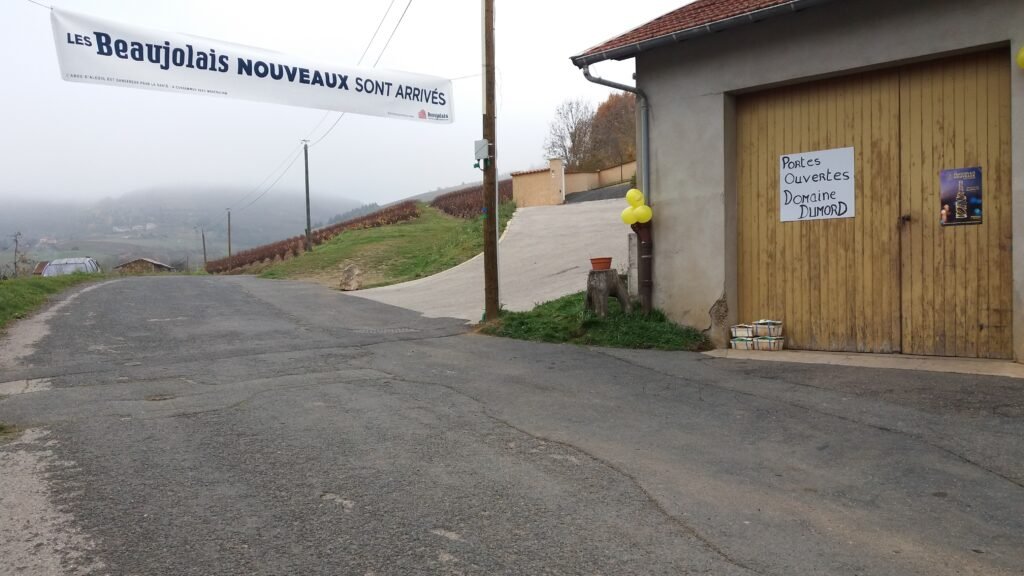
Made from Gamay grapes grown in the Beaujolais region north of Lyon, Beaujolais Nouveau is a genuine vin de primeur, fermented for just a few weeks after harvest before being released for sale, a tradition tracing back to 19th-century growers who would gather to celebrate the end of harvest by toasting that year’s young wine straight from the barrel. The modern version of the tradition took shape in the mid-20th century, when Lyonnais bars and restaurants began competing to be first to receive each year’s new Beaujolais, a genuine race that grew into an international phenomenon by the 1970s and 1980s, with particular followings developing in the United States, Japan, and Germany. Since 1985, French decree has fixed the official release date at one minute past midnight on the third Thursday of November, and in 2024 alone, 14.3 million bottles of Beaujolais Nouveau sold worldwide, representing roughly 22% of the entire Beaujolais region’s total wine production for that year.
Visiting the region itself during harvest, typically running through September, offers genuine access to the working vineyards behind the eventual bottles, and several producers host open house events (portes ouvertes) welcoming visitors to see the harvest and pressing process firsthand before the wine’s official November release. The wider Beaujolais region genuinely produces more than just the Nouveau style, ten official Cru appellations, including Fleurie, Morgon, and Moulin-à-Vent, offer considerably more serious, age-worthy wines from the same Gamay grape, a genuine contrast worth exploring for visitors who assume Beaujolais means only the young, fruity Nouveau style. The soil itself genuinely explains that quality divide, southern Beaujolais’s clay-heavy soil warms more slowly and produces lighter, fruitier grapes better suited to the quick-turnaround Nouveau style, while the granitic soils of the north retain more heat and support the deeper, more complex character found in the Cru wines.
Beaujolais region, north of Lyon, France. Harvest visits typically free at open house events; Beaujolais Nouveau Day itself celebrated at bars and restaurants worldwide. Best mid-September for harvest activity, or the third Thursday of November for the official release celebration.
Italy’s Vendemmia
Genuinely one of the oldest continuous winemaking traditions in the world, with roots extending back to the Roman Empire and beyond, and a harvest culture that varies dramatically from region to region.
Vendemmia
Vendemmia, the Italian word for the grape harvest, unfolds across the country from late August through October, with the exact timing shifting considerably by region and grape variety, Sicily often begins as early as late August, Tuscany’s Sangiovese grapes typically get picked in mid-September, and Piedmont’s Nebbiolo, used for the region’s prestigious Barolo and Barbaresco wines, often waits until October. Tuscany’s rolling hills, its vineyards framed by medieval hill towns and cypress-lined roads, offer a genuinely picturesque backdrop to the harvest, though the reality of the work itself, hand-picking under time pressure regardless of steep terrain or unpredictable weather, is considerably more physically demanding than the postcard image suggests. Sicily’s Mount Etna region offers a genuinely distinct volcanic terroir within the broader Vendemmia story, vines here grow directly in ancient lava soils, their roots winding through layers formed by the still-active volcano looming above, a genuinely unique growing environment found nowhere else in Italy.
Italian harvest laws genuinely restrict hands-on participation to contracted, insured workers, meaning the romantic notion of tourists picking grapes themselves is largely a myth, though many estates now offer “harvest experiences” allowing guests to observe the process closely, pick a small cluster under supervision, or watch grapes arrive at the cellar, without disrupting the actual working harvest. The myth of barefoot grape-stomping, once a genuine part of traditional winemaking, now survives mostly as a demonstration for visitors rather than standard practice, most estates today use gentle modern presses specifically to protect the nuance and quality of the finished wine. Local vocabulary genuinely enriches a harvest visit too, vigneto (vineyard), cantina (winery), degustazione (tasting), and brindisi (a toast) are all words visitors will hear constantly throughout any autumn trip to Italian wine country.
Tuscany, Piedmont, Sicily, and Veneto, Italy. Harvest tours and tastings typically require booking; many estates offer paid vendemmia experiences. Best mid-September in Tuscany, adjusting earlier or later depending on the specific region and grape variety.

Germany’s Mosel Valley
Genuinely home to some of the most dramatically steep vineyards in the entire world, a landscape shaped almost as much by engineering as by nature.
The Mosel Valley Harvest
The Mosel River, winding roughly 150 miles from France into Germany before joining the Rhine, has hosted vineyards since Roman times, when soldiers stationed near what’s now Trier, Germany’s oldest city, planted vines specifically to supply local garrisons rather than pay the considerable cost of transporting wine from further south. Riesling, first documented in Germany’s Rheingau region in 1435 and established in the Mosel shortly after, remains the valley’s signature grape today, its slate soils genuinely ideal for the variety, storing daytime heat and releasing it slowly to the vines overnight, a natural process that produces the region’s distinctively mineral, crisp white wines. Roughly 90% of the Mosel’s vineyards are planted to white varieties, making it one of the world’s great strongholds for white wine specifically, a genuinely different profile from the red-focused traditions found in Beaujolais or much of Tuscany.
The Bremmer Calmont, near the town of Bremm, holds a genuine claim as the steepest vineyard in Europe, its incline reaching a startling 68 degrees, a slope so extreme that machinery simply cannot operate there, requiring as much as seven times more manual labor than a comparable flat vineyard just to maintain and harvest. Workers on the Mosel’s steepest slopes must even gather slate that winter rain washes down the hillsides and carry it back up by hand, since the slate’s heat-retaining properties are considered essential to the vines’ success, a genuinely labor-intensive practice that’s continued largely unchanged for generations. The story of Spätlese wine, a “late harvest” style now considered one of Germany’s most important, reportedly originated by accident in the 18th century when a messenger carrying harvest permission from a prince-bishop to a monastery was delayed by two weeks, forcing the monks to pick grapes already affected by noble rot, a fortunate accident that produced the region’s first genuinely successful late-harvest vintage. That same accidental discovery, according to German wine historians, also gave rise to the term “Kabinett,” originally referring to the specific cabinet in a monastery cellar where monks stored their very best wines.
Mosel Valley, western Germany, between Trier and Koblenz. Free to view vineyards from public roads and trails; winery tastings priced individually. Best September through October, with the region’s numerous small wine villages hosting harvest festivals throughout the season.

Portugal’s Douro Valley
Genuinely the world’s oldest officially demarcated wine region, and home to a harvest tradition that remains authentically hands-on in a way few other European wine regions still practice.
The Douro Valley Vindima
Established as a protected wine region in 1703, considerably earlier than similar systems in France or Italy, the Douro Valley’s steep, terraced hillsides, carved from schist rock originally by Roman settlers in the 3rd century AD, were built up over centuries into the dramatic stone terraces that define the landscape today, a UNESCO World Heritage Site recognized specifically for this remarkable, continuously cultivated wine-growing terrain. The valley remains the only place in the world legally permitted to produce true port wine, a fortified wine blended from over 150 registered grape varieties, some found nowhere else on Earth, and the region’s harvest, known as the Vindima, running through September and October, remains genuinely one of the most hands-on grape harvests still practiced in Europe today. Unlike the Rhine, Loire, and many of Europe’s other great wine rivers, the Douro was genuinely never a strategic military location, meaning visitors encounter working farms and sleepy villages here rather than castles and fortifications, the only thing genuinely fortified in this valley is the wine itself.
Grapes destined for the finest ports are still frequently crushed by foot in traditional granite tanks called lagares, a practice maintained not out of nostalgia but because machines genuinely cannot replicate the gentle, thorough extraction human feet achieve without crushing the seeds and releasing unwanted bitter tannins. Many quintas (wine estates) now welcome overnight guests during harvest season specifically to join in this foot-treading tradition, locking arms with local harvest teams and treading grapes to traditional folk songs, a genuinely communal, celebratory atmosphere that transforms the hard physical work of harvest into a nightly festival once each day’s picking concludes. Towns anchoring a Douro Valley trip each offer their own distinct character, Pinhão sits at the genuine heart of the valley’s most prestigious vineyards, Peso da Régua serves as the historic river-trade capital with a dedicated museum devoted to the region’s wine history, and Vila Nova de Gaia, across the river from Porto itself, houses the historic port wine lodges where the fortified wine has traditionally been aged and blended for centuries.
Douro Valley, northern Portugal, inland from Porto. Many quintas offer paid harvest experiences and overnight stays; some require advance booking given genuine seasonal demand. Best September through October for the Vindima, when the valley is at its most active.

Why Harvest Timing Varies So Much
Understanding why grape harvest dates shift so considerably from year to year, and vary so widely even within the same country, genuinely comes down to how precisely winemakers must balance sugar content, acidity, and flavor development in the grapes themselves. Grapes picked too early genuinely produce thin, overly acidic wine, while grapes left too long out on the vine genuinely lose the fresh acidity needed for balance, meaning each producer genuinely monitors their specific vineyard’s ripeness daily as harvest approaches, rather than picking on a fixed calendar date regardless of conditions. That vineyard-by-vineyard decision-making explains why, in a single region like Tuscany, one estate might begin picking Sangiovese a full week or more before their neighbor, based purely on that specific plot’s exposure, soil, and that year’s particular growing conditions.
Climate change has genuinely begun shifting these traditional timing windows earlier across much of Europe in recent years, extended heat and drought accelerating ripening in ways that have pushed some harvests considerably ahead of their historical averages, a trend winemakers and agricultural organizations across multiple countries have begun tracking closely as a genuine indicator of longer-term changes to the growing conditions these historic wine regions have relied on for centuries. That shift adds a genuinely practical layer of uncertainty for any traveler hoping to time a visit around peak harvest activity, checking recent regional reports rather than relying purely on traditional seasonal guides has become increasingly worthwhile advice in recent years, since a harvest that once reliably began in mid-September might now genuinely start weeks earlier in an unusually hot, dry year.
Comparing the Traditions
| Country | Signature Tradition | Best For |
|---|---|---|
| France (Beaujolais) | Nouveau release race, mid-Nov | A festive, internationally celebrated release day |
| Italy (Vendemmia) | Guided harvest experiences | Scenic countryside, historic wine regions |
| Germany (Mosel) | Extreme steep-slope viticulture | Dramatic scenery, Riesling specifically |
| Portugal (Douro) | Traditional foot-treading (lagares) | The most authentically hands-on harvest experience |
Each tradition genuinely reflects a different relationship between modern tourism and centuries-old winemaking practice. France’s Beaujolais Nouveau represents the most deliberately marketed, globally recognized version of a harvest celebration, built around a single specific release date rather than the harvest itself, a genuinely modern commercial invention layered onto older, more organic harvest customs. Italy’s Vendemmia sits somewhere in the middle, genuinely rooted in ancient practice but increasingly packaged into curated “harvest experiences” for visitors given strict labor laws that prevent hands-on tourist participation in the actual picking. Germany’s Mosel Valley offers less in the way of formal tourist harvest experiences but compensates with genuinely dramatic, physically astonishing vineyard scenery unmatched by any of the other three regions, its extreme slopes a genuine spectacle in their own right regardless of harvest timing.
Portugal’s Douro Valley, by contrast, offers genuinely the most authentic hands-on experience of the four, foot-treading remains a real production method here, not a staged demonstration, making it the clear choice for travelers specifically seeking physical participation over passive observation. That distinction between genuine working tradition and curated tourist experience is worth weighing carefully when choosing where to focus a wine harvest trip, since a traveler hoping to actually participate in the harvest itself will find considerably more opportunity in Portugal than in Italy’s more strictly regulated vineyards.
Planning Your Visit
Booking harvest experiences well in advance genuinely matters across all four regions, since the exact start date shifts each year based on weather and ripeness, and the narrow, weather-dependent window means popular estates, particularly in Portugal and Italy, can sell out available harvest-season accommodations months ahead of the actual dates. Comfortable, sturdy footwear and clothing that can genuinely get stained or dirty are essential for any hands-on harvest activity, particularly foot-treading in Portugal, which involves standing directly in grape must for extended periods, and packing a genuine change of clothes for afterward is worthwhile advice from experienced harvest-season travelers who’ve learned this lesson the hard way.
Checking each region’s specific harvest calendar closer to a planned trip, rather than relying purely on general seasonal guidance, genuinely improves the odds of witnessing real harvest activity rather than arriving either too early or after the picking has already concluded for that year. Language barriers matter genuinely less than many travelers expect at working wineries across all four regions, wine tourism has developed sophisticated multilingual infrastructure over recent decades, though learning a handful of genuinely useful local terms, degustazione in Italy, vindima in Portugal, genuinely enriches the entire experience and signals a real, sincere interest in the culture beyond simply drinking the finished product.
If this guide helped you plan a wine harvest trip, check out more travel videos from Worldly Traveler.
Whichever region ends up on your itinerary, Europe’s wine harvest season genuinely offers a rare chance to see centuries-old agricultural tradition still actively practiced rather than simply preserved as heritage. From Beaujolais’ modern marketing triumph to the Douro Valley’s genuinely unbroken foot-treading tradition, each of these four regions tells a different story about how European wine culture has balanced authenticity against the demands of an increasingly tourism-driven industry, and visiting during the harvest itself, rather than the quieter tasting-room season that follows, offers a considerably richer, more immediate connection to how these wines actually come into being each year. Whether it’s watching a Roman-era Mosel slope get hand-harvested by workers using techniques barely changed in centuries, or joining a Douro Valley lagares session under a full autumn moon, the harvest itself remains the single most genuine, unfiltered window into European wine culture available to any traveler willing to time a trip around it.
Frequently Asked Questions
When is Beaujolais Nouveau Day?
Beaujolais Nouveau is officially released on the third Thursday of November each year, a date fixed by French decree since 1985, though the tradition of racing the first bottles to Paris dates back to the mid-20th century, when Lyonnais bars and restaurants competed to be first to serve the new vintage.
What is the Vendemmia in Italy?
Vendemmia is the Italian word for the annual grape harvest, typically running from late August through October depending on the region, variety, and that year’s weather, with Tuscany’s Sangiovese grapes usually picked in mid-September and Piedmont’s Nebbiolo often waiting until October.
What makes the Mosel Valley’s vineyards unique?
The Mosel Valley contains some of the steepest vineyards in the world, including the Bremmer Calmont at a 68-degree incline, requiring as much as seven times more manual labor than a level vineyard since machinery cannot be used on such extreme slopes at all.
Is grape treading still practiced in Portugal’s Douro Valley?
Yes, genuinely. Many Douro Valley quintas still foot-tread grapes by hand in traditional granite tanks called lagares during the harvest, since this method remains widely considered essential to producing the highest-quality port wine, a technique modern machinery still cannot fully replicate.