Seoul packs over 600 years of continuous royal, colonial, and modern history into a single sprawling metropolis, moving between centuries-old palaces and some of the densest, most futuristic shopping districts in Asia sometimes within a single subway ride. This guide covers the 25 best things to do in Seoul, verified against a real video guide, organized into palaces and historic neighborhoods, famous markets and shopping streets, and parks and city views, with practical planning advice for building a trip around them.
Few cities compress this much historical whiplash into one skyline. Seoul served as the capital of the Joseon Dynasty for roughly five centuries starting in 1392, then endured 35 years of Japanese colonial rule beginning in 1910, followed by the devastation of the Korean War in the early 1950s, which left much of the city in ruins. What followed — the so-called “Miracle on the Han River” — transformed Seoul from a war-flattened city into one of the world’s most technologically advanced capitals within a couple of generations, and that compressed transformation is still visible everywhere: a centuries-old palace gate sits a block from a glass skyscraper, and a traditional market operates in the shadow of a Zaha Hadid-designed building.
Historic Palaces & Temples
Famous Seoul Neighborhoods
Best Shopping Streets & Markets
Beautiful Parks & City Views
Korean Street Food Hotspots
Getting Around Seoul
Best Time to Visit Seoul
FAQ
Historic Palaces & Temples
Seoul’s Five Grand Palaces, built during the roughly 500-year Joseon Dynasty, anchor the city’s historic core and remain remarkably well preserved despite Japanese colonial-era damage and the devastation of the Korean War.
Gyeongbokgung Palace
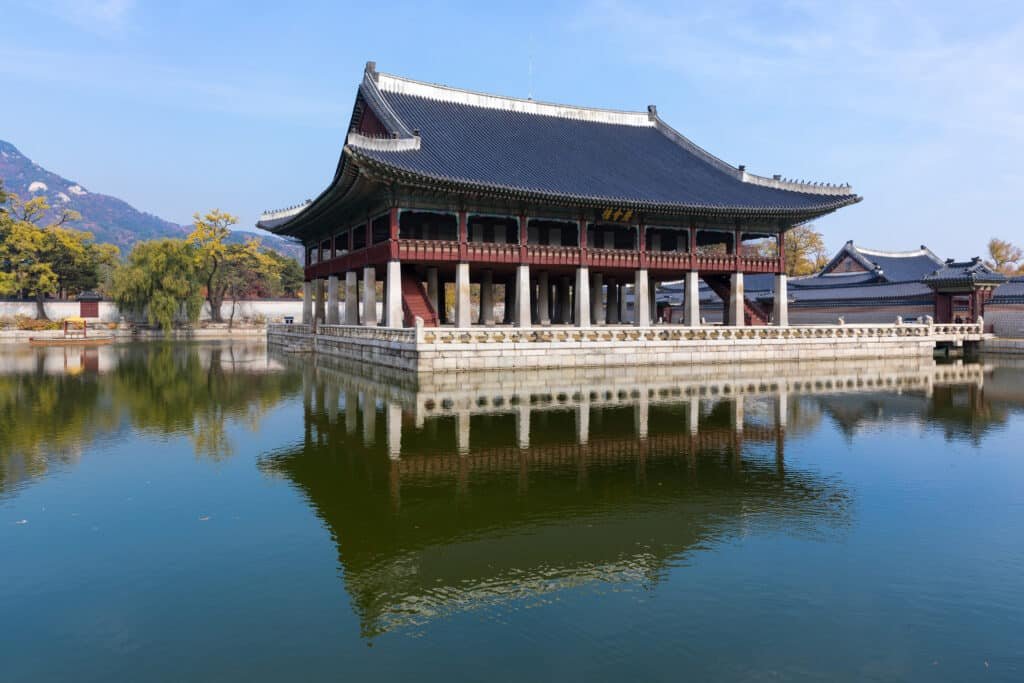
The largest and most important of Seoul’s Five Grand Palaces, originally built in 1395 as the primary royal residence of the Joseon Dynasty, with the striking Gyeonghoeru Pavilion built over an artificial lake for royal banquets. The palace hosts a popular changing-of-the-guard ceremony at its main gate, reenacting historic royal guard rituals, and much of what stands today is actually careful post-Korean War reconstruction, since the original complex was extensively destroyed during Japanese colonial rule.
Central Seoul (Jongno district). Entry fee; free for visitors wearing traditional hanbok clothing. Best combined with a hanbok rental for both the discount and the photo opportunity.
Changdeokgung Palace
A UNESCO World Heritage palace considered by many to be the most beautiful of Seoul’s royal residences, notable for its “Secret Garden” (Huwon), a rear garden designed to blend harmoniously with the natural landscape rather than impose rigid formal symmetry, in deliberate contrast to Gyeongbokgung’s more formal, symmetrical layout.
Central Seoul, near Bukchon. Entry fee; Secret Garden requires a separate guided tour booking. Best to book the Secret Garden tour in advance given limited daily capacity.
Bongeunsa Temple
A working Buddhist temple dating to 794 AD, offering a genuinely serene contrast to the ultra-modern Gangnam skyscrapers surrounding it, with temple stay programs available for visitors wanting a deeper cultural immersion.
Gangnam district. Free to visit. Best combined with a Gangnam-area day given the unusual juxtaposition with the surrounding district.
Famous Seoul Neighborhoods
Seoul’s neighborhoods each carry a distinct identity, from preserved traditional architecture to cutting-edge youth culture.
Bukchon Hanok Village
A hillside neighborhood of traditional Korean hanok houses, some centuries old, still functioning as a genuine residential area alongside cafés, galleries, and cultural centers — visitors are asked to keep noise down given that people actually live in many of these homes.
Between Gyeongbokgung and Changdeokgung palaces. Free to walk the public streets. Best in the early morning for quieter streets and better photography light.

Insadong
The traditional heart of Korean arts and antiques, with galleries, tea houses, and shops selling calligraphy supplies, hanbok, and ceramics along a pedestrian-friendly main street, offering a more culturally traditional shopping experience than Myeongdong. Small alleyways branching off the main street hold some of the neighborhood’s best traditional tea houses, many tucked behind unassuming doorways easy to miss without deliberately exploring.
Central Seoul, near Jongno. Free to explore. Best on weekends when the main street closes to traffic.
Hongdae
A youthful, artsy neighborhood centered around Hongik University, known for street performances, indie music venues, and a genuinely energetic nightlife scene that runs later and louder than most other parts of the city. The area’s name has become nearly synonymous with Korean indie music culture, and unsigned musicians and buskers regularly draw crowds on its main pedestrian streets.
Northwest Seoul. Free to explore; standard bar and club pricing. Best on weekend evenings for the fullest street performance scene.
Itaewon
Historically Seoul’s most internationally diverse neighborhood, shaped by its proximity to a former US military base, offering a genuinely wide range of international cuisine and a distinctly cosmopolitan nightlife scene compared to more traditionally Korean districts.
Central Seoul, near Namsan. Free to explore. Best for travelers seeking international food options within Seoul.
Ewha Womans University
Home to a striking, sunken glass-and-concrete campus building (the Ewha Campus Complex), the surrounding neighborhood has developed into a popular shopping district specifically catering to younger fashion trends.
Northwest Seoul. Free to visit campus and surrounding shops. Best combined with a Hongdae visit given proximity.
Best Shopping Streets & Markets
Seoul’s markets range from centuries-old traditional trading grounds to some of the most futuristic retail architecture in Asia.
Myeongdong
Seoul’s best-known shopping district, packed with cosmetics shops, fashion retailers, and street food stalls, drawing enormous crowds of both local and international shoppers, especially in the evening when the street food stalls open in full force. The district’s cosmetics stores are particularly known for aggressive but genuinely helpful sample-and-sell tactics, worth navigating for the frequent tourist discounts on offer.
Central Seoul. Free to browse. Best in the evening for the full street food stall experience.
Gwangjang Market
One of Seoul’s oldest and largest traditional markets, dating to 1905, now famous internationally for its street food alley serving bindaetteok (mung bean pancakes), mayak gimbap (small seaweed rice rolls), and countless other Korean street food staples. The market also retains a genuine textile and secondhand clothing trade dating back generations, worth browsing beyond just the food stalls.
Central Seoul, near Jongno. Free to browse; food priced per item. Best at lunchtime or early evening when stalls are busiest and freshest.
Namdaemun Market
Korea’s largest traditional market and one of its oldest, dating to 1414, spread across a dense maze of alleys selling everything from clothing and kitchenware to imported goods, offering a genuinely comprehensive traditional market experience. Certain sections specialize by trade — a dedicated fabric alley, a kitchenware section, an area known for imported goods — reflecting centuries of organic market organization.
Central Seoul, near Namdaemun Gate. Free to browse. Best in the morning when the market is at its most active.
Dongdaemun Design Plaza (DDP)
A dramatic, futuristic building designed by the late architect Zaha Hadid, its flowing, neon-lit exterior housing design exhibitions, markets, and event spaces, standing in striking contrast to the historic markets surrounding it. The building’s curved, seamless steel exterior required custom-fabricated panels, making it one of the most structurally complex buildings ever constructed in South Korea.
Dongdaemun district. Free to view exterior and most public spaces; specific exhibitions may charge entry. Best at night when the building’s LED rose garden and facade lighting are active.
Namdaemun Gate
Officially Sungnyemun, this historic gate was originally built in 1398 as the main southern entrance to walled Seoul, and remains Korea’s Historic Site No. 1, despite a 2008 arson fire that destroyed much of the wooden structure before a careful, traditional-method restoration.
Central Seoul, near Namdaemun Market. Free to view. Best combined with a Namdaemun Market visit.
Beautiful Parks & City Views
Seoul balances its urban density with genuinely excellent green space and panoramic viewpoints.
N Seoul Tower
Built in 1971 atop Namsan mountain as South Korea’s first general radio wave tower, this 236-meter structure remains Seoul’s most iconic viewpoint, especially popular for its “love locks” tradition, where couples attach padlocks to the surrounding fencing. A cable car and a network of hiking trails both climb Namsan to reach the tower, offering visitors a choice between a scenic walk and a quicker ride up.
Namsan, central Seoul. Cable car and observation deck fees apply. Best at night for the full city light display.
.jpg)
Cheonggyecheon Stream
A restored urban stream running through the heart of downtown Seoul, once buried beneath an elevated highway before an ambitious 2005 restoration project uncovered and revitalized it into a genuinely peaceful, sunken linear park. The project is widely cited internationally as a model for urban stream daylighting and has measurably reduced the surrounding area’s temperature during summer months.
Central Seoul, running through downtown. Free. Best in the evening when the stream is illuminated.
Olympic Park
Built for the 1988 Summer Olympics, this large park combines sports facilities, ancient earthen fortress remains dating to the early Baekje kingdom, and an impressive outdoor sculpture collection from artists around the world.
Southeast Seoul (Songpa district). Free. Best combined with a Lotte World visit given proximity.
Han River
Seoul’s major river, lined with parks, bike paths, and floating facilities on both banks, offering a genuinely relaxed local pastime — many residents order delivery food directly to riverside parks for a picnic with a skyline view, a practice supported by a surprisingly efficient network of riverside delivery services.
Running through central Seoul. Free. Best at sunset, particularly from Banpo Bridge for its rainbow fountain show.
Seoul City Wall
Originally built in 1396 to defend the newly established capital, remaining sections of this fortress wall can still be walked or hiked today, offering panoramic views over the city from several of its restored gates and watchtowers.
Various sections around central Seoul. Free. Best for a half-day hiking route connecting several wall sections.
Bukhansan National Park
A genuinely rugged granite peak national park within city limits, among the most-visited national parks in the world relative to its size, offering serious hiking just a subway ride from downtown Seoul.
North Seoul. Free. Best on a weekday to avoid the significant weekend hiking crowds.
Seoullo 7017
A converted elevated highway overpass transformed into a linear “skygarden” park, planted with hundreds of native plant species and offering a genuinely unusual elevated walking route through downtown Seoul, reminiscent of New York’s High Line.
Near Seoul Station. Free. Best combined with a Namdaemun Market visit given proximity.
Historic Sites Worth Knowing
War Memorial of Korea: A comprehensive and genuinely moving museum documenting Korean military history, with particular focus on the Korean War, including outdoor displays of tanks, aircraft, and other military equipment.
Seodaemun Prison History Hall: A former colonial-era prison used by Japanese authorities to detain Korean independence activists, now preserved as a genuinely sobering museum documenting this difficult period of Korean history.
Korean Street Food Hotspots
Korean street food culture is genuinely central to experiencing Seoul, not a side activity — Gwangjang Market’s food alley remains the essential destination, but nearly every neighborhood market and night market offers its own version of the experience. Tteokbokki (spicy rice cakes), hotteok (sweet filled pancakes, especially popular in winter), and gimbap (Korean-style rice rolls) are worth trying from multiple vendors, since quality and style vary meaningfully between stalls. Myeongdong’s evening food stall scene adds fusion and Instagram-oriented street food to the more traditional Gwangjang offerings, giving visitors a good sense of both old and new Korean street food trends within walking distance of each other.
Beyond street stalls, Korean barbecue (gogigui) remains the essential sit-down meal experience — tabletop grilling of marinated meat, typically shared and paired with an array of small side dishes (banchan) that arrive automatically and are frequently refilled at no extra cost. Korean fried chicken, a genuinely distinct style from American fried chicken thanks to its thinner, crispier double-fried coating and range of sauces, has its own dedicated restaurant category worth seeking out, often paired with beer in a combination locals call “chimaek.”
K-Culture Beyond the Palaces
Seoul’s global cultural influence through K-pop and Korean television has created its own tourist infrastructure worth knowing about: several entertainment agencies operate stores and experience centers in districts like Gangnam and Hongdae, and studio tours or fan events occasionally open to the public depending on the season. Myeongdong and Hongdae both hold a dense concentration of K-beauty stores, worth browsing even for visitors without a specific shopping list, given how central skincare culture is to daily life in Seoul. Traditional Korean culture and K-pop-era modern culture aren’t really separate tracks for most visitors — a single day easily moves between a centuries-old palace in the morning and a K-pop-themed café or shopping district by evening.
Getting Around Seoul
Subway system: Seoul’s subway network is extensive, clean, and has full English signage and announcements, making it genuinely easy to navigate even without Korean language skills. The system connects nearly every neighborhood in this guide, and trains run frequently enough that transfer waits rarely exceed a few minutes.
T-money card: A rechargeable transit card covering subway, bus, and even some taxi payments, available at convenience stores and subway stations, well worth picking up on arrival. Transfers between subway and bus within a set time window are typically discounted or free, making the card genuinely cost-effective for a multi-day visit.
Walking neighborhoods: Areas like Bukchon, Insadong, and the palace district are best explored on foot once you’ve arrived via subway, since much of their charm is in wandering smaller side streets that don’t show up clearly on a map.
Taxis: Affordable relative to many major cities, though English-speaking drivers aren’t guaranteed — having your destination written in Korean (many map apps can generate this) makes taxi trips significantly smoother.
Airport access: Incheon International Airport connects to central Seoul via a dedicated express train (AREX) that reaches Seoul Station in under an hour, generally the fastest and most predictable option compared to a taxi during peak traffic.
Best Time to Visit Seoul
Spring (April-May) brings comfortable temperatures and cherry blossoms, particularly around Yeouido and the Han River parks, making it one of the most popular times to visit and one that fills hotels and flights well in advance. Fall (September-October) offers similarly pleasant weather with the added bonus of autumn foliage in Bukhansan and other city parks, and arguably even better hiking conditions than spring given typically drier air. Summer (June-August) brings intense heat, humidity, and a distinct monsoon season with heavy rainfall concentrated in July, making it the least comfortable season for extensive walking-based sightseeing. Winter (December-February) turns genuinely cold, often below freezing, but offers a completely different, quieter seasonal atmosphere along with excellent Korean winter food specialties like hot stews and street-stall hot drinks that feel especially fitting in the cold.
Day Trips from Seoul
DMZ (Demilitarized Zone): The heavily fortified border between North and South Korea, roughly an hour from Seoul, offers guided tours to observation points, infiltration tunnels dug by North Korea, and the Joint Security Area — a genuinely sobering and historically significant day trip unlike anything else near the city.
Nami Island: A crescent-shaped island on the Han River known for its tree-lined avenues, made famous internationally as a filming location for the Korean drama “Winter Sonata,” now a popular romantic day trip destination.
Suwon Hwaseong Fortress: A UNESCO World Heritage fortress built in the late 18th century, with an intact 5.7-kilometer wall that can be walked in its entirety, offering a genuinely impressive example of Joseon-era military architecture about an hour from Seoul.
Everland: South Korea’s largest theme park, roughly an hour from the city, offering a full day of rides and seasonal flower festivals for travelers wanting a break from historical sightseeing.
I cover all 25 of these Seoul destinations in the video above. If this guide helped you plan your Seoul trip, subscribe to Worldly Traveler on YouTube for more travel guides from around the world.
Frequently Asked Questions
What are the top things to do in Seoul?
Top things to do in Seoul include visiting Gyeongbokgung Palace, exploring the traditional Bukchon Hanok Village, shopping in Myeongdong and Insadong, eating street food at Gwangjang Market, and taking in panoramic city views from N Seoul Tower.
What is the best time of year to visit Seoul?
Spring (April-May) and fall (September-October) offer the most comfortable temperatures and, in spring, cherry blossoms. Summer is hot and humid with a monsoon season, while winter is cold but offers a distinct seasonal atmosphere.
How many days do you need in Seoul?
4-5 days allows time to see the major palaces, explore several neighborhoods, and experience the food and shopping scenes at a comfortable pace. A shorter 2-3 day trip can cover the essential highlights.
Is Seoul easy to get around without speaking Korean?
Yes, generally — Seoul’s subway system has English signage and announcements throughout, and English is commonly understood in tourist areas, hotels, and among younger residents, though basic Korean phrases are appreciated.
What is the best way to get around Seoul?
Seoul’s subway system is extensive, efficient, and affordable, making it the best way to reach most attractions in this guide. A T-money card covers subway, bus, and even some taxi payments across the city.