
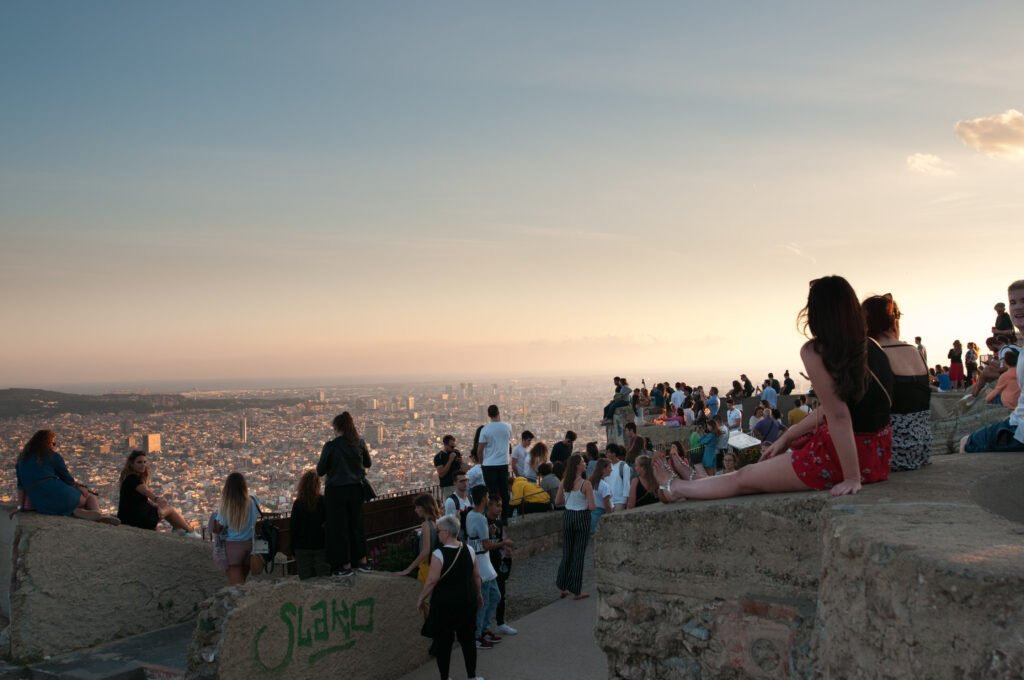
Sagrada Família and Park Güell get all the postcards, but Barcelona’s real texture lives in the corners most visitors walk right past — a WWII-era bunker turned sunset viewpoint, an early Gaudí house most tourists don’t know exists, and an air raid shelter carved into a hillside during the Spanish Civil War. This guide covers 25 hidden gems in Barcelona that reveal the city’s authentic soul, organized so you can build a route through them by neighborhood. I walk through all of these in the video below, so start there for a visual tour before you go.
What separates these spots from Barcelona’s headline attractions isn’t just lower crowd numbers — it’s that most of them tell a different, less-polished side of the city’s story. Where Gaudí’s most famous buildings represent Barcelona at its most ambitious, spots like the Refugi 307 bomb shelter and Plaça de Sant Felip Neri’s shrapnel-scarred walls carry the weight of the Spanish Civil War, a period the city doesn’t shy away from but also doesn’t put front and center for tourists. Layer in the quieter Gràcia squares, the working-class Sant Andreu neighborhood, and the sculptural surprises of Poblenou Cemetery, and you get a fuller picture of Barcelona than a weekend hitting only the Gothic Quarter and Sagrada Família ever could.
Architecture & Hidden Gaudí
Parks & Gardens
Historic & Underground Sites
Neighborhoods & Local Culture
Viewpoints
FAQ
Architecture & Hidden Gaudí
1. Casa Vicens
Antoni Gaudí’s first major commission, Casa Vicens predates his more famous works by decades and shows his early experiments with color, ceramic tile, and Moorish-influenced design. It gets a fraction of the visitors that Sagrada Família or Casa Batlló do, despite being a UNESCO World Heritage Site in its own right since 2005.
Gràcia district. Entry fee (~€18). Best on weekday mornings.

2. Hospital de Sant Pau
A UNESCO-listed modernist masterpiece by Lluís Domènech i Montaner, this former hospital complex rivals Gaudí’s work for sheer decorative ambition, with tiled pavilions connected by underground tunnels, now open as a museum.
Eixample district. Entry fee (~€17). Best in the morning for fewer crowds.
3. Casa Amatller
Overshadowed by its neighbor Casa Batlló on the same block, Casa Amatller’s Gothic-inspired facade and ornate details make it one of the most photographed yet under-visited buildings on the “Block of Discord.”
Eixample district, Passeig de Gràcia. Exterior free; interior tour has a fee. Best in late afternoon light.
4. Torre Bellesguard
A lesser-known Gaudí building built on the ruins of a medieval royal residence, Torre Bellesguard combines Gothic references with Gaudí’s signature organic style, and sees a fraction of the visitors of his more famous works.
Sarrià-Sant Gervasi district. Entry fee (~€9). Best combined with a Gràcia hillside walk.
5. Palau de la Música Catalana
A modernist concert hall dripping with stained glass, mosaic, and sculptural detail, the Palau’s interior is often called one of the most ornate concert venues in the world, yet it draws far fewer visitors than the city’s Gaudí sites.
Sant Pere district. Guided tour fee (~€20) or attend a concert. Best to book a tour or performance in advance.

Parks & Gardens
6. Jardins de Mossèn Costa i Llobera
A cactus and succulent garden built into the slopes below Montjuïc, offering sweeping sea views and a genuinely different landscape from anywhere else in the city.
Montjuïc. Free entry. Best at sunset for the sea views.
7. Laberint d’Horta
Barcelona’s oldest surviving garden, built around a neoclassical cypress hedge maze, offers a formal, quiet contrast to the city’s busier parks.
Horta-Guinardó district. Small entry fee (~€2.30). Best on weekday mornings to avoid families on weekends.
8. Jardins de la Tamarita
A romantic, English-style garden tucked into the northern edge of the city, rarely visited despite being an easy add-on to a trip up toward Tibidabo.
Sarrià-Sant Gervasi district. Free entry. Best in spring for the garden blooms.
9. Montjuïc’s Secret Gardens
Beyond the well-known Montjuïc Castle and cable car, the hill holds several lesser-visited garden pockets, including the Jardins de Joan Maragall and Jardins Mossèn Jacint Verdaguer, both quiet enough to have almost to yourself.
Montjuïc. Free entry. Best combined with a full Montjuïc day.
10. Parc del Guinardó
A hillside park with sweeping city views and far fewer visitors than Park Güell just up the hill, popular with locals for picnics and quiet walks.
Horta-Guinardó district. Free. Best in the late afternoon.
Historic & Underground Sites
11. El Born Cultural Center
Built inside a former 19th-century market hall, this cultural center displays excavated ruins of the Barcelona neighborhood destroyed to build the Ciutadella fortress in 1714, telling a chapter of Catalan history most visitors never encounter.
El Born district. Entry fee for the archaeological site (~€5-8). Best paired with a Born neighborhood walk.
12. MUHBA Refugi 307
A Spanish Civil War-era air raid shelter carved 400 meters into the hillside, built by residents to protect themselves from Franco-era bombing raids, now open for guided tours.
Poble-sec district. Entry fee (~€3.60), guided tour required, booking recommended. Best booked a few days ahead.
13. Sant Pau del Camp
Barcelona’s oldest surviving church, dating to the 10th century, with a Romanesque cloister that feels centuries removed from the busy streets just outside.
Raval district. Small entry fee. Best in the morning when it’s quietest.
14. El Poblenou Cemetery
A 19th-century cemetery filled with elaborate sculptural mausoleums, including the famous “Kiss of Death” statue, offering some of the city’s most striking (and most overlooked) public art.
Poblenou district. Free entry. Best in soft morning light.

15. Biblioteca Arús
A privately funded public library from 1895 with a striking neoclassical reading room, one of the least-known libraries in Europe and still free to enter for anyone curious about its ornate interior.
Eixample district. Free entry. Best on a weekday afternoon.
Neighborhoods & Local Culture
16. Plaça de Sant Felip Neri
A small, quiet square in the Gothic Quarter, still bearing shrapnel scars from a 1938 bombing during the Spanish Civil War, offering a sobering contrast to the square’s otherwise peaceful atmosphere.
Gothic Quarter. Free. Best early morning before crowds arrive.
17. Carrer de les Aigües
A flat walking and running path that traces the base of Collserola hill above the city, popular with locals for exercise and offering long, uninterrupted views over Barcelona.
Sarrià-Sant Gervasi district. Free. Best in the early morning.
18. Antic Teatre
A small alternative theater and bar hidden behind an unmarked door, with a leafy interior courtyard that feels like a secret garden in the middle of the Born district.
El Born district. Free to enter; drinks and shows priced separately. Best in the evening.
19. Poble-sec Street Art
A neighborhood known locally for its concentration of murals and street art, offering a very different visual experience from the Gothic Quarter’s medieval streets just across the city.
Poble-sec district. Free. Best explored on foot over an hour or two.
20. Sant Andreu Neighborhood
A former independent village absorbed into Barcelona, Sant Andreu retains its own town-square feel, market, and local businesses, largely untouched by the city’s tourist flow.
Sant Andreu district. Free to explore. Best around midday for the local market.
21. El Quinto Pino Bar
A small, unassuming neighborhood bar known among locals rather than tourists, offering an authentic taste of Barcelona’s everyday bar culture away from the crowded tapas spots downtown.
Cost varies. Best in the early evening.
Viewpoints
22. Bunkers del Carmel
Originally built as anti-aircraft fortifications during the Spanish Civil War, these hilltop ruins now offer arguably the best 360-degree view of Barcelona, and have become a beloved (if increasingly discovered) local sunset spot. Long before it became a viewpoint, the area also served as an informal shantytown for decades after the war, housing thousands of Barcelona residents until the 1990s.
Carmel district. Free. Best at sunset; arrive early to get a seat on the wall.
23. Carmel Bunkers Picnic Spot
Just below the main bunker viewpoint, a flatter grassy area offers the same panoramic views with more room to spread out for a picnic, away from the more crowded main platform.
Carmel district. Free. Best combined with the main Bunkers visit.
24. Plaça de la Virreina
A quiet, tree-shaded square in the Gràcia neighborhood, popular with locals for a slower, more residential side of Barcelona away from the main tourist routes.
Gràcia district. Free. Best in the late afternoon.
25. Plaça de la Concordia
A small, distinctive square in Les Corts featuring a striking bell tower, offering a neighborhood atmosphere most visitors to Barcelona never experience.
Les Corts district. Free. Best during a slow neighborhood wander.
Tips for Exploring Barcelona’s Hidden Gems
Group by neighborhood: Gràcia alone holds Casa Vicens, Plaça de la Virreina, and easy access up toward Bunkers del Carmel — plan a full afternoon there rather than crossing the city repeatedly.
Book ahead where needed: MUHBA Refugi 307 requires advance reservation for its guided tour, and it fills up during peak season — don’t leave it for a walk-up visit.
Wear real shoes: Several of these spots — Bunkers del Carmel, Carrer de les Aigües, the Montjuïc gardens — involve uphill walking or uneven terrain that flip-flops won’t handle well.
Respect residential areas: Sant Andreu, Poble-sec, and the Gràcia squares are lived-in neighborhoods, not attractions — keep noise down, especially in the evening.
I cover all 25 of these spots in the video above, including Bunkers del Carmel, Casa Vicens, and MUHBA Refugi 307. If this guide helped you plan your trip, subscribe to Worldly Traveler on YouTube for more hidden gems guides from around the world.
Frequently Asked Questions
What are the best hidden gems in Barcelona?
Some of the best hidden gems in Barcelona include Bunkers del Carmel for panoramic views, Casa Vicens as an early Gaudí masterpiece, El Born Cultural Center for hidden history, and MUHBA Refugi 307, a Spanish Civil War air raid shelter open to visitors.
Are Barcelona’s hidden gems free to visit?
Many are completely free, including Bunkers del Carmel, Plaça de Sant Felip Neri, and most parks and gardens. Sites like Casa Vicens, Hospital de Sant Pau, and MUHBA Refugi 307 charge modest entry fees, generally under 15 euros.
What is the best time of year to explore Barcelona’s hidden gems?
Spring (April-May) and fall (September-October) offer mild weather and fewer crowds than peak summer. Bunkers del Carmel in particular is best visited at sunset, and outdoor sites are more comfortable outside the July-August heat.
How many days do you need to see Barcelona’s hidden gems?
2-3 extra days beyond the standard Sagrada Família and Park Güell itinerary is enough to work through most of these hidden gems, especially if grouped by neighborhood.
Can you walk to most of Barcelona’s hidden gems?
Many cluster well by neighborhood, such as the Gràcia district gems or the Gothic Quarter sites. Bunkers del Carmel and some of the outer parks are better reached by metro plus a short walk or uphill climb.