
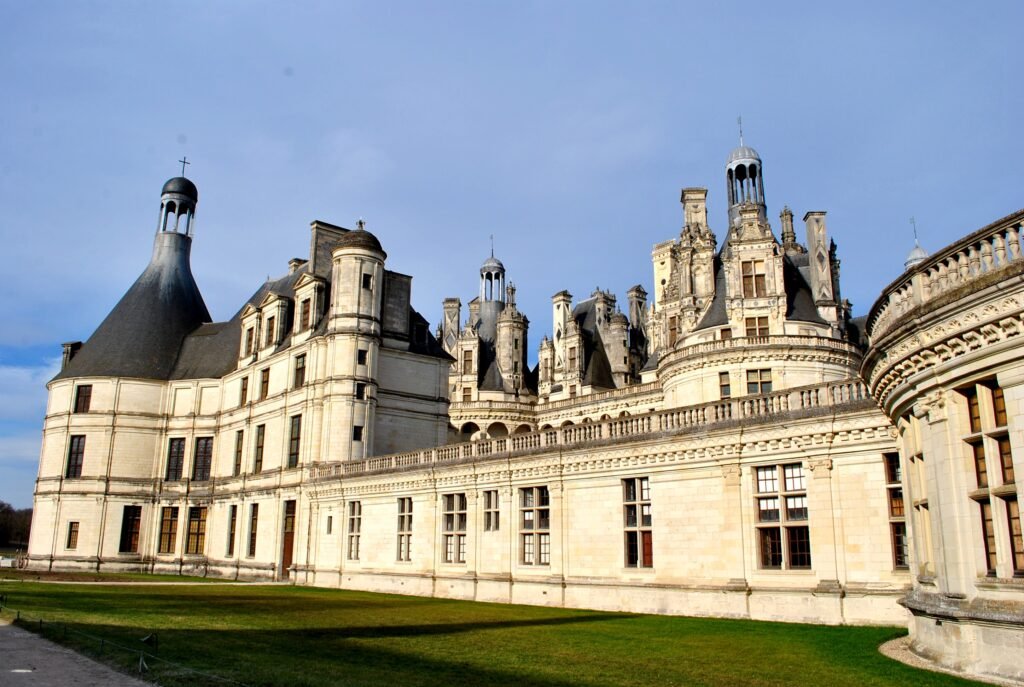
Chambord and Chenonceau anchor most first-time Loire Valley itineraries, and both genuinely deserve their fame as two of the most architecturally significant châteaux in the world — but the valley holds over 300 châteaux scattered across roughly 175 miles of river, and the overwhelming majority of them see only a fraction of the crowds concentrated at the handful of household names. This guide covers the Loire Valley’s best hidden gems, organized by sub-region so you can build a route through whichever stretch of France’s château country genuinely calls to you.
Chambord & Chenonceau: The largest château in the valley and the elegant “Château des Dames” spanning the River Cher remain genuinely essential for any first Loire Valley trip — this guide picks up where that standard itinerary leaves off.
The Loire Valley earned its UNESCO World Heritage status not from any single château but from the cumulative density and quality of Renaissance and pre-Renaissance architecture concentrated along this specific stretch of river — a legacy of the Loire’s historic role as a favored retreat for French royalty and nobility, who built increasingly ambitious pleasure palaces here throughout the 15th and 16th centuries as the region shifted from purely defensive medieval fortresses toward architecture designed explicitly to impress. That density means genuinely excellent châteaux sit just a short drive from each other throughout the valley, making it entirely possible to build a rewarding trip around the region’s lesser-known properties without ever feeling like you’re settling for something lesser.
That royal favor for the Loire wasn’t accidental — the valley’s mild climate, fertile soil, and position roughly midway between Paris and the Atlantic made it genuinely attractive as both a hunting ground and a strategic buffer zone during centuries of French and English conflict, particularly the Hundred Years’ War. Many of the region’s earliest fortresses, built for genuine defensive necessity, were gradually transformed or entirely rebuilt into the elegant Renaissance pleasure palaces visible today once the military threat receded and French kings increasingly used the region as a stage for displaying wealth and cultural sophistication rather than pure defense.
The Eastern Loire, near Orléans
The Central Loire: Blois & Amboise
The Western Loire: Angers & Saumur
Château Visiting Basics
Loire Valley Wine Worth Seeking Out
Best Time to Visit the Loire Valley
FAQ
The Eastern Loire, near Orléans
The valley’s eastern stretch, anchored by Orléans, holds Chambord’s neighboring châteaux and genuinely underrated garden estates.
Château de Chaumont-sur-Loire
A genuinely dramatic clifftop château overlooking the river, its history including a forced property exchange between Catherine de’ Medici and her husband’s mistress, Diane de Poitiers — Catherine essentially compelled Diane to trade the more desirable Chenonceau for this property after King Henry II’s death. Today the estate hosts an internationally significant annual garden festival, transforming its grounds into a showcase of experimental contemporary landscape design each year.
Loir-et-Cher, Eastern Loire. Entry fee. Best April-November during the International Garden Festival, if timing allows.
Château de Cheverny
A genuinely elegant château notable for having remained in the same family since its construction in the 17th century, its interior offering some of the best-preserved original period furnishings in the entire valley — the estate’s kennels, housing a large working pack of hunting hounds, reportedly served as a direct visual inspiration for Hergé’s fictional Marlinspike Hall in the Tintin comic series.
Loir-et-Cher, near Chambord. Entry fee. Best combined with a Chambord visit given the short distance between the two estates.
Château de Beauregard
A genuinely underrated château, its most significant feature a remarkable 17th-century portrait gallery containing over 300 painted portraits of French kings and prominent historical court figures, offering a genuinely unique visual chronicle of French royal history under one roof.
Loir-et-Cher, near Blois. Entry fee. Best for travelers with a genuine interest in French royal history and portraiture.
The Central Loire: Blois & Amboise
The valley’s central stretch holds its highest concentration of significant châteaux and riverside towns.
Château Royal de Blois
A genuinely fascinating architectural timeline in a single building, its four wings each constructed in a different century and style — medieval, Gothic, early Renaissance, and classical — offering visitors a rare chance to see the evolution of French architecture across roughly 300 years within one connected structure.
Blois, Central Loire. Entry fee. Best combined with a broader Blois old town walk given the château’s central city location.
Château d’Amboise
A significant royal château overlooking the town of Amboise, home to the small Chapel of Saint-Hubert where Leonardo da Vinci is believed to be buried, having spent his final years at nearby Clos Lucé under the patronage of King Francis I.
Amboise, Central Loire. Entry fee. Best combined with a Clos Lucé visit, Leonardo da Vinci’s final residence, given the short distance.
Château d’Azay-le-Rideau
Widely considered one of the most elegant and harmoniously proportioned châteaux in the entire valley, its Renaissance facade rising directly from the moat’s still water to create a genuinely striking mirrored reflection — the property’s relatively intimate scale, compared to Chambord’s overwhelming size, makes it a favorite among visitors seeking Renaissance architecture without the largest château’s crowds.
Indre-et-Loire, Central Loire. Entry fee. Best at golden hour for the château’s reflection in the surrounding moat.
Château de Villandry
Genuinely famous not primarily for its château building but for its extraordinary Renaissance-style ornamental gardens, meticulously recreated in the early 20th century based on historical garden design records — the geometric vegetable garden (potager) alone, with its decorative arrangement of ordinary produce into elaborate patterns, remains one of the most photographed garden designs in France.
Indre-et-Loire, Central Loire. Entry fee. Best in summer for the vegetable garden’s peak color and fullest growth.
Chinon
A genuinely significant medieval town along the Vienne River, its dramatic hilltop fortress the site where Joan of Arc first met the future King Charles VII in 1429, a pivotal early moment in the story that would eventually lead to her military campaigns — the town’s well-preserved medieval streets remain genuinely worth wandering beyond the fortress itself.
Indre-et-Loire, Central Loire. Free to explore town; fortress entry fee. Best combined with a Chinon wine tasting given the town’s central role in the appellation.
The Western Loire: Angers & Saumur
The valley’s western reaches hold a genuinely significant medieval tapestry and the region’s cave-cellar wine tradition.
Château d’Angers
A genuinely imposing medieval fortress, its 17 massive defensive towers among the most intact in France, home to the Apocalypse Tapestry, the largest surviving medieval tapestry in the world at nearly 100 meters long, depicting scenes from the Book of Revelation in extraordinary, still-vivid detail after more than 600 years.
Angers, Western Loire. Entry fee. Best allotting significant time for the tapestry alone, given its genuine scale and detail.
Saumur
A genuinely elegant riverside town, its hilltop château overlooking a landscape defined by an extensive network of underground cave cellars (troglodyte caves) carved into the region’s soft tufa limestone, many now used for wine storage and, in several cases, mushroom cultivation — a genuinely unusual dual use of the same underground geology.
Maine-et-Loire, Western Loire. Free to explore town; château and cave tour fees vary. Best combined with a sparkling wine tasting at one of the region’s cave-cellar producers.
Fontevraud Abbey
One of the largest surviving monastic complexes in Europe, notable as the burial site of several Plantagenet royals, including Eleanor of Aquitaine and Richard the Lionheart — a genuinely significant piece of English royal history located, somewhat surprisingly, deep in the French countryside, reflecting the Plantagenets’ vast cross-Channel territorial holdings at the height of their power.
Near Saumur, Western Loire. Entry fee. Best allotting several hours given the abbey’s genuine scale and historical significance.
Château Visiting Basics
Two châteaux is genuinely a comfortable pace for a single day, allowing time to actually explore each property’s interior, gardens, and any special exhibitions without rushing through — three is possible but tiring, and most experienced Loire Valley visitors genuinely recommend fewer, unhurried stops over an exhausting checklist approach that leaves little time to actually absorb any single property. Advance tickets, particularly for the most popular châteaux like Chambord and Chenonceau, are worth booking online ahead of a summer visit, since peak-season lines can genuinely stretch long at the entrance gates. Guided tours, offered at most châteaux either as included audio guides or dedicated docent-led tours, meaningfully enrich a visit given how much specific historical and architectural detail a self-guided walkthrough alone can miss. The Loire à Vélo, a dedicated long-distance cycling route running much of the length of the valley, offers a genuinely scenic, increasingly popular alternative to driving between châteaux, with bike rental widely available in most riverside towns.
Loire Valley Wine Worth Seeking Out
The Loire Valley holds a genuinely distinct white wine tradition within French winemaking, its cool climate and varied soil types across the valley’s length supporting a wider range of grape varieties than most single French wine region — Sancerre and Pouilly-Fumé, both built on Sauvignon Blanc, produce crisp, mineral-driven whites considered among the finest expressions of that grape variety anywhere in the world. Vouvray, made from Chenin Blanc around the town of the same name, ranges genuinely widely from bone-dry to lusciously sweet depending on the specific vintage and producer, a versatility relatively rare among single-appellation wines. Saumur and the surrounding region produce genuinely excellent sparkling wine using the traditional méthode champenoise, often aged in the same cave-cellar tufa caves used for still wine storage, offering a genuinely distinctive, less expensive alternative to Champagne itself. Chinon and Bourgueil, centered on Cabernet Franc, represent the valley’s most significant red wine tradition, producing genuinely food-friendly wines with a distinctive herbaceous character that distinguishes them from Cabernet Franc grown elsewhere in the world.
Best Time to Visit the Loire Valley
April through June and September offer the most comfortable temperatures and noticeably thinner crowds than peak summer, when both heat and tourist volume climb significantly at the valley’s most famous châteaux. Spring brings peak garden bloom to properties like Villandry and Chaumont-sur-Loire, making it a genuinely rewarding season for garden-focused visits specifically. Summer remains genuinely popular despite larger crowds, given school vacation schedules and the pleasant conditions for outdoor château garden exploration, though advance ticket booking becomes considerably more important during this peak window. Fall brings the wine harvest to the valley’s various appellations, a genuinely rewarding season for wine-focused travelers, alongside comfortable temperatures and the beginning of the region’s fall foliage color along the riverbanks.
If this guide helped you plan your Loire Valley trip, subscribe to Worldly Traveler on YouTube for more travel guides from around the world.
Frequently Asked Questions
What are the best hidden gems in the Loire Valley?
Some of the best hidden gems in the Loire Valley include Azay-le-Rideau’s moated château, Villandry’s elaborate ornamental gardens, Chaumont-sur-Loire’s annual garden festival, the town of Saumur with its cave-cellar wine tradition, and the walled riverside city of Amboise.
How many châteaux can you realistically visit in one day?
Two châteaux is genuinely a comfortable pace for a single day, allowing time to actually explore each property’s interior and gardens without rushing; three is possible but tiring, and most experienced Loire Valley visitors recommend fewer, unhurried stops over a packed itinerary.
How many days do you need to explore the Loire Valley?
7-10 days allows a well-paced trip covering the Eastern, Central, and Western Loire sub-regions with time for wine tastings and riverside towns. A shorter 4-5 day trip works well focused on the Central Loire’s dense château cluster.
What is the best time of year to visit the Loire Valley?
April-June and September offer the most comfortable temperatures and manageable crowds, with spring also bringing peak garden bloom at châteaux like Villandry and Chaumont-sur-Loire.
Do you need a car to explore the Loire Valley?
A car genuinely helps given how spread out the châteaux are, though train service to towns like Blois, Amboise, and Tours is reliable, and bike rental along the region’s dedicated Loire à Vélo cycling route offers a genuinely scenic car-free alternative.