
Spain is bigger and more varied than most first-time visitors realize — a country that holds volcanic islands, glacier-carved mountains, whitewashed hill towns, and a river canyon lined with monasteries, all within its borders. This guide covers 50 hidden gems in Spain, researched and cross-checked for accuracy, spread across every region of the country. A “hidden gem” here means something specific: a real, verifiable place that’s genuinely off the main tourist circuit — not just a quieter version of somewhere already famous. Madrid and Barcelona each get their own dedicated hidden gems guides on this site, so this list focuses on everywhere else.
Andalusia
Catalonia & the Northeast
Galicia & the Northwest
Asturias & Cantabria
Central Spain
Aragón & La Rioja
Canary Islands
Balearic Islands
Valencia & Murcia
Extremadura
Planning a Spain Hidden Gems Road Trip
FAQ
Andalusia
1. Caminito del Rey
A walkway pinned to the sheer cliff walls of a gorge in El Chorro, once labeled the “world’s most dangerous walkway” before a full renovation reopened it in 2015 with safety rails throughout.
Málaga province. Entry fee (~€10-18), advance booking required. Best in spring or fall.

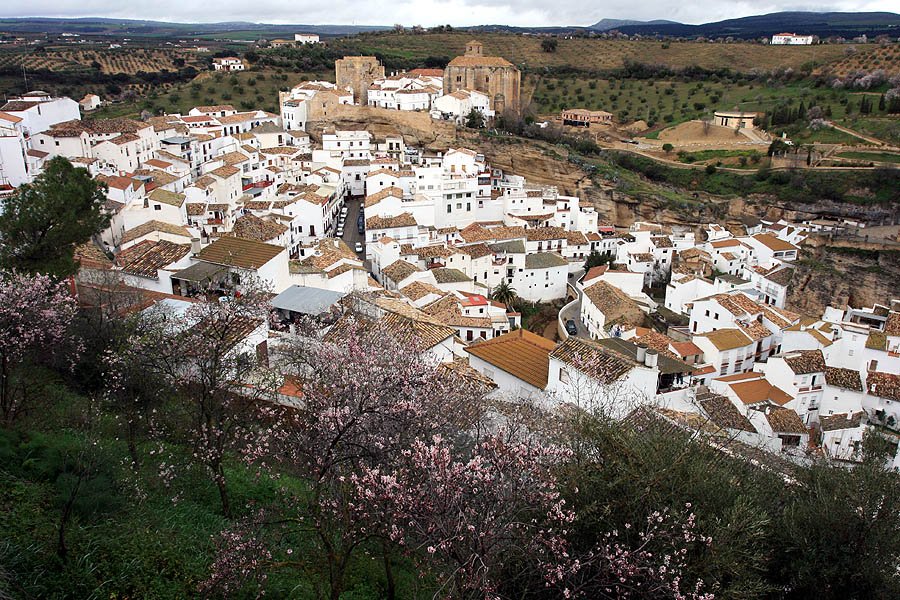
2. Setenil de las Bodegas
A white Andalusian village where many homes and restaurants are built directly into overhanging rock, creating streets that are literally roofed by the cliff above them.
Cádiz province. Free to explore. Best in the morning for photos without crowds.
3. Frigiliana
Consistently ranked among Spain’s prettiest villages, Frigiliana’s whitewashed streets climb a steep hillside above the Costa del Sol, with far less traffic than the coastal resorts below.
Málaga province. Free to explore. Best in spring before summer heat sets in.
4. Vejer de la Frontera
A hilltop white town overlooking the Atlantic near Cádiz, with a genuinely well-preserved old quarter and views stretching toward Africa on a clear day.
Cádiz province. Free to explore. Best at sunset for the coastal views.
5. Cabo de Gata-Níjar Natural Park
Spain’s only desert landscape meets the Mediterranean here, with volcanic cliffs, empty beaches, and almost none of the development found elsewhere on the Andalusian coast.
Almería province. Free to explore. Best in spring or fall to avoid summer heat.
6. Medina Azahara
The ruins of a 10th-century Moorish palace-city outside Córdoba, once one of the most sophisticated cities in Europe before being destroyed in a civil war, now a UNESCO World Heritage Site with far fewer visitors than the Mezquita in central Córdoba.
Córdoba province. Free entry (EU citizens); modest fee for others. Best in the morning.
7. Zahara de la Sierra
A hilltop white village crowned by a Moorish castle, overlooking a turquoise reservoir in the Sierra de Grazalema natural park, offering some of the best views in the region.
Cádiz province. Free to explore. Best in spring for the reservoir’s color.
8. Baelo Claudia
Remarkably intact Roman ruins directly on the Atlantic coast near Tarifa, including a preserved forum, theater, and fish-salting factory, with almost no crowds compared to Spain’s better-known Roman sites.
Cádiz province, near Bolonia. Small entry fee. Best combined with a Bolonia beach visit.
Catalonia & the Northeast
9. Besalú
A medieval town centered on a fortified Romanesque bridge, with a well-preserved old Jewish quarter and mikveh (ritual bath) that few visitors realize is one of the best-preserved in Europe.
Girona province. Free to explore. Best on a weekday to avoid tour groups.
10. Cadaqués
A whitewashed fishing village on the Costa Brava that captivated Salvador Dalí, who lived nearby, its winding lanes and rocky coastline still relatively protected from mass tourism thanks to a winding mountain access road.
Girona province. Free to explore. Best in late spring or September.
11. Peratallada
A medieval stone village built almost entirely from the golden local rock, with a moat carved directly into bedrock and streets so narrow cars can’t enter most of the old center.
Girona province. Free to explore. Best combined with nearby Pals and Girona.
12. Montserrat
A dramatic mountain monastery built into jagged rock formations outside Barcelona, home to a centuries-old Benedictine community and a famous Black Madonna statue.
Barcelona province. Free entry to the monastery; museum has a fee. Best via the Aeri de Montserrat cable car.
13. Delta de l’Ebre
A vast river delta wetland on the Catalan coast, home to flamingos and hundreds of bird species, offering a completely different Catalonia experience than the Costa Brava further north.
Tarragona province. Free to explore. Best in spring for migratory birds.
14. Aigüestortes i Estany de Sant Maurici National Park
Catalonia’s only national park, holding over 200 glacial lakes in the Pyrenees, remains far less visited than France’s or even Spain’s more famous mountain parks.
Lleida province. Free entry. Best in summer for full trail access.
Galicia & the Northwest
15. Playa de las Catedrales
A beach lined with towering natural rock arches that resemble cathedral vaults, fully visible only at low tide, making it one of Spain’s most distinctive coastal landscapes.
Lugo province. Free; access permits required in peak summer season. Best at low tide — check tide tables before visiting.

16. Combarro
A traditional Galician fishing village known for its granaries (hórreos) built on stilts directly along the waterfront, one of the most photographed and least internationally known villages in Spain.
Pontevedra province. Free to explore. Best at low tide.
17. Ribeira Sacra
A dramatic river canyon lined with terraced vineyards and centuries-old monasteries, some accessible only by boat, earning it consideration for UNESCO status.
Lugo/Ourense provinces. Free to explore; boat tours available for a fee. Best in autumn for the vineyard colors.
18. Illas Cíes
A protected national park archipelago off the Galician coast with beaches regularly ranked among the best in the world, kept pristine by a daily visitor cap.
Pontevedra province, ferry from Vigo. Daily visitor permit required, booked in advance. Best in summer for swimming.
19. Muxía
A windswept coastal town at the end of an alternate Camino de Santiago route, with a dramatic clifftop sanctuary church and rock formations pounded by Atlantic waves.
A Coruña province. Free to explore. Best at sunset.
20. Cidade da Cultura de Galicia
A striking contemporary architectural complex on a hilltop above Santiago de Compostela, offering a modern counterpoint to the medieval cathedral most visitors come to see.
Santiago de Compostela. Free entry to the grounds; exhibitions vary. Best combined with a Santiago cathedral visit.
Asturias & Cantabria
21. Picos de Europa National Park
Dramatic limestone peaks straddling Asturias, Cantabria, and León, with hiking, a cable car at Fuente Dé, and a genuinely mountainous landscape unlike most people’s image of Spain.
Asturias/Cantabria/León. Free entry. Best in summer for full trail access.
22. Cudillero
A brightly colored fishing village built into a natural amphitheater on the Asturian coast, its houses stacked up the hillside in tiers above the harbor.
Asturias. Free to explore. Best in the morning for the harbor views.
23. Santillana del Mar
A remarkably preserved medieval town, despite its name meaning “by the sea,” it actually sits slightly inland, near the famous Altamira cave paintings.
Cantabria. Free to explore town; Altamira replica museum has an entry fee. Best on a weekday.
24. Playa de Gulpiyuri
A bizarre inland “beach” formed inside a collapsed limestone cave roughly 100 meters from the actual coastline, filled by seawater through underground channels.
Asturias. Free to visit. Best at high tide when the pool fills.
Central Spain
25. Cuenca’s Casas Colgadas
Medieval “hanging houses” built directly into the cliff edge above a gorge, with balconies suspended dramatically over the drop, best appreciated from the footbridge across the ravine.
Castilla-La Mancha. Free to view exterior. Best from the San Pablo bridge at golden hour.
26. Segovia’s Alcázar
A fairy-tale castle perched on a rocky spur, said to have influenced Walt Disney’s Cinderella Castle, paired with a still-functioning Roman aqueduct running through the town below.
Castilla y León. Entry fee (~€6-9). Best in the morning before tour buses arrive from Madrid.
27. Ávila’s Medieval Walls
The most complete surviving medieval city walls in Spain encircle Ávila’s old town, allowing visitors to walk the full ramparts for sweeping views over the city and surrounding plains.
Castilla y León. Wall walk entry fee (~€5). Best late afternoon.
28. Chinchón
A historic town just outside Madrid, built around a circular Plaza Mayor lined with wooden balconies, still used for occasional bullfights, and known for its anise liqueur.
Community of Madrid. Free to explore. Best on a weekday to avoid Madrid day-trippers.
29. Sigüenza
A hilltop medieval town crowned by a fortress-cathedral hybrid, with a genuinely well-preserved old quarter that sees a fraction of Toledo’s crowds.
Castilla-La Mancha. Free to explore town; cathedral has a small fee. Best in autumn.
30. Las Médulas
A dramatic red landscape carved by ancient Roman gold mining, using a hydraulic technique that literally blasted mountains apart, leaving eerie orange cliffs and caves.
León province. Free to explore. Best at sunset when the red rock glows.
31. Covarrubias
A medieval village of half-timbered houses along the Arlanza River, one of the best-preserved medieval towns in Castile and largely overlooked in favor of nearby Burgos.
Castilla y León. Free to explore. Best combined with a Burgos day trip.
Aragón & La Rioja
32. Albarracín
A hilltop town built from distinctive pink-toned stone, with a maze of medieval streets and a defensive wall snaking along the ridge above, often cited as one of Spain’s most beautiful villages.
Teruel province. Free to explore. Best in the golden light of late afternoon.

33. Ordesa y Monte Perdido National Park
A glacier-carved canyon in the Aragonese Pyrenees, sometimes called Spain’s answer to the Grand Canyon, with waterfalls and dramatic limestone walls rising on either side.
Huesca province. Free entry; shuttle bus required in peak season. Best in summer for full trail access.
34. Peñafiel
A striking ship-shaped castle overlooking a sea of Ribera del Duero vineyards, with an underground network of centuries-old wine cellars still in use beneath the town.
Castilla y León (Valladolid province). Castle entry fee (~€8). Best combined with a Ribera del Duero wine tasting.
35. Monasterio de Piedra
A monastery complex built around a network of waterfalls, caves, and a lush garden that feels startlingly green against the surrounding Aragonese steppe.
Zaragoza province. Entry fee (~€18). Best in spring when water flow is highest.
Canary Islands
36. Teide National Park
Home to Spain’s highest peak, this volcanic landscape looks more like Mars than Europe, with a cable car climbing near the summit and some of the clearest night skies in the world for stargazing.
Tenerife. Free park entry; cable car and summit permit have fees. Best at sunrise or for stargazing.
37. Masca
A tiny mountain village at the head of a dramatic gorge, once one of the most remote settlements in the Canary Islands, now connected by a winding road and a popular (strenuous) hiking trail down to the sea.
Tenerife. Free to explore; gorge hike requires a permit. Best in the morning before the hike heats up.

38. Timanfaya National Park
A volcanic landscape formed by 18th-century eruptions, so geothermally active that park guides still demonstrate heat by pouring water into a hole in the ground and watching it erupt as steam.
Lanzarote. Entry fee (~€12-15), guided bus tour included. Best in the morning for cooler temperatures.
39. Garajonay National Park
An ancient laurel forest, a living remnant of vegetation that once covered much of Southern Europe millions of years ago, kept alive by the island’s near-constant mist.
La Gomera. Free entry. Best in the misty morning hours for the forest’s full atmosphere.
40. Playa de Papagayo
A string of secluded, golden-sand coves on Lanzarote’s southern coast, reachable by a dirt road that keeps crowds thinner than the island’s resort beaches.
Lanzarote. Small vehicle entry fee. Best on a weekday.
Balearic Islands
41. Deià
A stone-built artist village in Mallorca’s Tramuntana mountains, long favored by writers and painters, with terraced hillsides tumbling down toward a small cove.
Mallorca. Free to explore. Best in late afternoon light.
42. Es Vedrà
A dramatic limestone islet rising sharply from the sea off Ibiza’s coast, wrapped in local legend and considered one of the most striking natural landmarks in the Mediterranean.
Ibiza. Viewable free from Cala d’Hort beach. Best at sunset.

43. Cala Macarella
A hidden turquoise cove on Menorca’s south coast, reachable only by a walking trail or boat, offering water clarity that rivals more famous Mediterranean destinations.
Menorca. Free (parking fee applies). Best early morning before beach crowds arrive.
44. Sa Calobra
A dramatic coastal road with 26 hairpin turns descending to a rocky cove at the base of Mallorca’s mountains, one of the most scenic (and vertigo-inducing) drives in Spain.
Mallorca. Free; parking fee at the cove. Best driven early to avoid tour bus traffic.
45. Formentera’s Ses Illetes
A beach with Caribbean-clear water, reachable only by ferry from Ibiza, offering a genuinely quieter island experience than its famous neighbor.
Formentera. Ferry fee from Ibiza. Best in shoulder season (May, September) for fewer crowds.
Valencia & Murcia
46. Albufera Natural Park
A freshwater lagoon just south of Valencia city, ringed by rice paddies that produce the rice used in traditional paella, with boat tours at sunset that rank among the most peaceful experiences in the region.
Valencia province. Free to explore; boat tours have a fee. Best at sunset.
47. Peñíscola
A walled coastal town built on a rocky promontory, crowned by a castle once home to a breakaway Pope, with a well-preserved old town rarely mentioned outside Spain.
Castellón province. Castle entry fee (~€5). Best at sunset from the castle walls.
48. Guadalest
A tiny clifftop village crowned by a ruined castle, accessible through a passage carved directly into the rock, with dramatic views over a turquoise reservoir below.
Alicante province. Small entry fee for the castle. Best on a weekday morning.
Extremadura
49. Cáceres Old Town
A UNESCO-listed medieval and Renaissance old town so well preserved it’s regularly used as a filming location, with storks nesting on its towers and almost no modern intrusions visible from its central streets.
Cáceres province. Free to explore. Best at golden hour for the golden stone facades.
50. Trujillo
A conquistador-era town, birthplace of Francisco Pizarro, centered on a grand medieval plaza and crowned by a hilltop castle, largely bypassed by the standard Spain itinerary despite its outsized history.
Cáceres province. Free to explore town; castle has a small fee. Best combined with a Cáceres day trip.
Planning a Spain Hidden Gems Road Trip
Best time of year: Spring (April-June) and fall (September-October) offer the most comfortable temperatures across mainland Spain. Southern Andalusia gets extremely hot in July and August, while the Canary Islands stay mild year-round, making them a solid winter option.
Regional driving distances: Spain is larger than it looks on a map — Andalusia to Galicia is roughly a 9-10 hour drive. Rather than attempting the whole country in one trip, most travelers pick one or two regions and go deep rather than wide.
How to prioritize: If you only have time for one region, Andalusia offers the highest concentration of accessible hidden gems within a manageable driving radius. For dramatic natural scenery, Galicia and the Pyrenees (Aragón/Catalonia) are the strongest picks. For island trips, the Canary Islands and Balearic Islands each work well as standalone weeks.
Getting around: A rental car is essential for the majority of these locations. Spain’s AVE high-speed rail connects major cities efficiently, but almost none of these hidden gems are reachable without a car for the final stretch.
If you’re building out a full Spain itinerary, check out the dedicated Madrid and Barcelona hidden gems guides on this site for the full 25-gem lists in each city. Subscribe to Worldly Traveler on YouTube for more hidden gems guides from around the world.
Frequently Asked Questions
What are the best hidden gems in Spain?
Some of the best hidden gems in Spain include the Caminito del Rey walkway in Andalusia, Setenil de las Bodegas with its houses built into rock overhangs, Playa de las Catedrales in Galicia, and the village of Albarracín in Aragón, along with dozens of other spots spread across every region of the country.
Which region of Spain has the most hidden gems?
Andalusia and Galicia both offer an especially high concentration of off-the-beaten-path destinations, from Andalusia’s white hill towns to Galicia’s dramatic Atlantic coastline and river canyons, though every region of Spain has its own lesser-known standouts.
Is it better to explore hidden gems in Spain by car?
Yes, for the vast majority of these locations. Spain’s high-speed trains connect major cities well, but most hidden gems sit in rural areas only practically reachable by car.
What is the best time of year to visit Spain’s hidden gems?
Spring (April-June) and fall (September-October) offer the most comfortable weather across most of mainland Spain. The Canary Islands maintain mild temperatures year-round, making them a good option even in winter.
Should I visit hidden gems in Spain or stick to Madrid and Barcelona?
Both are worth it rather than an either-or choice. Madrid and Barcelona anchor a Spain trip well, and this guide is built to help you branch out from those cities into the rest of the country rather than replace a visit to either.
How many days do you need to see hidden gems across Spain?
Seeing all 50 in one trip isn’t realistic — most travelers pick one or two regions per trip. A focused regional trip (e.g., Andalusia’s hidden gems) can be done well in 7-10 days.