
This is the companion deep-dive to our Ultimate Guide to the Basque Country, built for anyone who wants the full picture rather than the highlights reel. Bilbao and San Sebastián are both cities that reward wandering past the obvious stops — the Guggenheim in Bilbao and La Concha Beach in San Sebastián are essential, but they’re also just the entry point. Below are the complete 25 hidden gems in Bilbao and 25 hidden gems in San Sebastián, grouped by category so you can actually plan a route through each city rather than bouncing between disconnected stops.
Both cities are compact enough that these lists are realistic to work through over a few focused days each, and both reward a slower pace than a typical checklist-style city visit. Bilbao’s gems cluster naturally around its old town and riverfront, with a few hillside viewpoints requiring a short funicular ride. San Sebastián’s gems spread across its bay, old town, and a handful of quieter neighborhoods just beyond the tourist center. Treat each list less as a rigid itinerary and more as a menu — pick the categories that match what you’re after, whether that’s food, viewpoints, or architecture, and build your day around those.
25 Hidden Gems in Bilbao
Plazas, Streets & Neighborhoods
1. Plaza Nueva
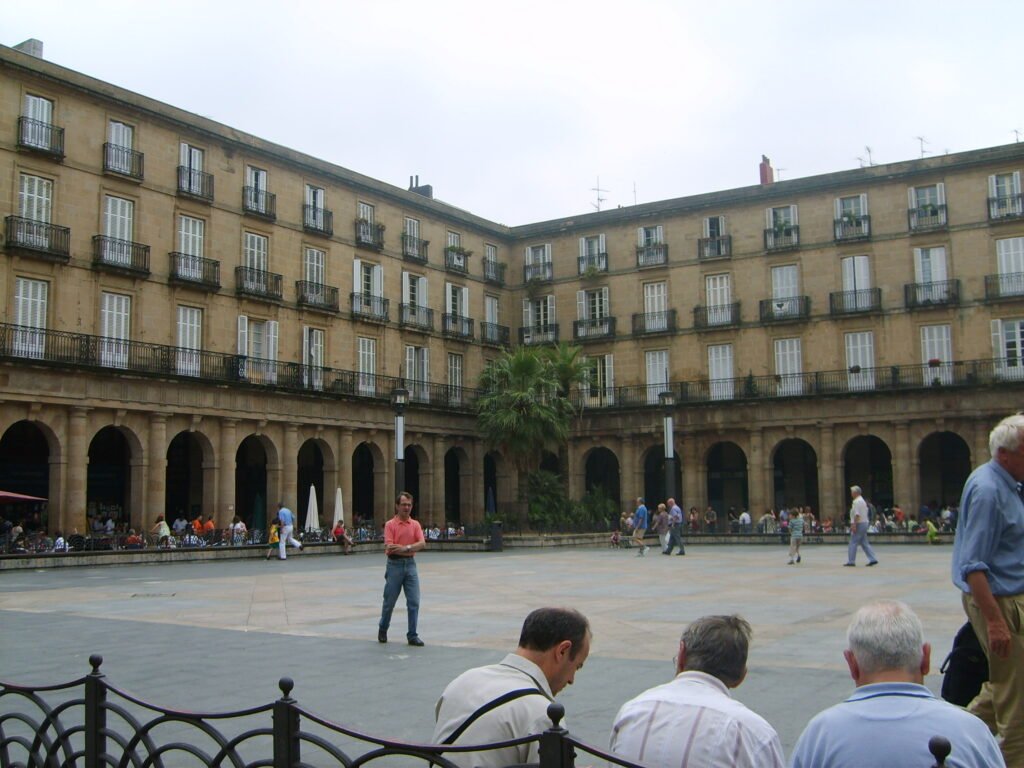
A neoclassical arcaded square in the heart of the old town, Plaza Nueva is Bilbao’s best pintxos-hopping destination, ringed by columned walkways and dozens of traditional bars. On Sundays it also hosts a small flea market selling old books, coins, and stamps, giving it a completely different character from its evening bar-hop identity.
Free. Best in the early evening, or Sunday morning for the flea market.
2. Calle Somera
One of the seven original streets of Bilbao’s medieval old town, Calle Somera retains more of its original character than the busier tourist-facing streets nearby.
Free. Best explored during a slow daytime wander.
3. Plaza Miguel de Unamuno
A quieter square named for the famous Basque writer and philosopher, offering a calmer break from the old town’s busier pintxos streets.
Free. Best for a rest stop mid-wander.
4. El Ensanche District
Bilbao’s 19th-century expansion district, El Ensanche holds the city’s more upscale shopping streets and elegant apartment buildings, a contrast to the medieval old town.
Free to explore. Best combined with the Guggenheim, which sits at its edge.
5. Bilbao La Vieja
A formerly rough riverside neighborhood now known for street art, independent galleries, and a younger, more alternative bar scene than the old town.
Free. Best in the early evening for the bar scene.
Markets & Food
6. Mercado de la Ribera
One of Europe’s largest covered markets, sitting directly on the Nervión River, combining produce stalls with a ground-floor pintxos bar scene locals treat as a real lunch destination.
Free to browse. Best around midday.
7. La Ribera Jazz Club
A small, unassuming jazz venue near the market that hosts regular live sets, popular with locals rather than tourists.
Cover charge varies by show. Best on weekend evenings.
Museums & Culture
8. Azkuna Zentroa
A former wine warehouse transformed by designer Philippe Starck into a cultural center with a library, cinema, gym, and a striking glass-bottomed rooftop pool visible from below.
Free to enter the building; individual events/facilities charge separately. Best for the architecture alone.
9. Museo de Bellas Artes
Bilbao’s fine arts museum holds an excellent collection spanning old masters to contemporary Basque artists, with far shorter lines than the Guggenheim.
Entry fee (~€10). Best on weekday mornings.
10. La Alhóndiga
The historic name for what’s now Azkuna Zentroa, worth knowing as many locals still refer to the building this way — its striking column-filled atrium is worth seeing even briefly.
Free to enter. Best combined with the Azkuna Zentroa visit.
11. Museo Marítimo Ría de Bilbao
A maritime museum built into Bilbao’s old shipyards along the river, tracing the city’s industrial and seafaring history with real boats on display in outdoor dry docks.
Entry fee (~€6). Best paired with a riverside walk.
12. Arkeologi Museoa
A compact archaeology museum tracing Basque history from prehistory through the Middle Ages, offering context that deepens a visit to the rest of the old town.
Small entry fee. Best as an early stop before exploring the old town further.
13. Museo Vasco
Housed in a former Jesuit convent, the Basque Museum covers Basque ethnography, rural life, and identity in far more depth than a typical city museum.
Entry fee (~€3). Best for understanding Basque culture before the rest of the trip.
14. Deusto University Library
A striking modern library building on the University of Deusto campus, worth a look for its architecture even if you’re not a student.
Free to view exterior; interior access varies. Best combined with a riverside walk near the university.
Churches & Historic Landmarks
15. Basílica de Begoña
Perched on a hill overlooking the city, this basilica is dedicated to Bilbao’s patron saint and reached by a funicular or a long staircase, with views over the old town along the way.
Free entry. Best combined with the funicular ride up.
16. Iglesia de San Nicolás
A baroque church at the edge of the old town dedicated to the patron saint of sailors, reflecting Bilbao’s maritime and trading history.
Free entry. Best during a wander through the old town.
17. San Antón Bridge & Church
One of Bilbao’s oldest bridges, paired with a Gothic-era church, forming one of the most photographed corners of the old town along the river.
Free. Best at golden hour for photos.
18. Puente de San Antón
The bridge itself deserves its own mention — a defining piece of Bilbao’s skyline that appears on the city’s own coat of arms.
Free. Best combined with the San Antón Church visit.
19. Pasaje de la Esperanza
A narrow, atmospheric covered passage in the old town lined with small shops, easy to miss but worth ducking into.
Free. Best during a slow old town wander.
Architecture & Modern Bilbao
20. Zubizuri Bridge
A striking white pedestrian bridge designed by Santiago Calatrava, arching gracefully over the Nervión River and connecting the old town side to the newer Ensanche district.
Free to cross. Best at night when it’s lit up.
21. Estación de Abando
Bilbao’s main train station is worth a look on its own for its large stained-glass mural depicting Basque rural and industrial life, a piece of public art most travelers walk past without noticing.
Free to view. Best on the way to or from a train.
Viewpoints & Green Spaces
22. Mount Artxanda Funicular
A funicular ride from the city center climbs to Mount Artxanda, delivering sweeping views over the whole of Bilbao and the surrounding green hills in under five minutes.
Funicular fare (~€2.60 round trip). Best at golden hour.
23. Parque de Doña Casilda
Bilbao’s central park, with a small lake, gardens, and a duck population that makes it a favorite with local families away from the tourist crowds.
Free. Best for a relaxed break between museum visits.
24. Parque Etxebarria
A hillside park built on the site of a former steel factory, offering panoramic views over the old town from a spot most visitors never discover.
Free. Best in late afternoon.
25. Casco Viejo (Old Town) Wandering
Beyond any single stop, simply wandering Bilbao’s seven original medieval streets without a fixed plan remains one of the best ways to experience the city’s atmosphere.
Free. Best in late afternoon into evening.
25 Hidden Gems in San Sebastián
Viewpoints & Parks
1. Monte Urgull
A forested hill overlooking the harbor and old town, Monte Urgull holds a 12th-century castle and a giant Sacred Heart statue at its summit, with quiet walking paths most beach-focused visitors never explore. The climb takes under 30 minutes at a relaxed pace, and the summit offers one of the best free panoramic views over both the bay and the old town rooftops below.
Free. Best in the morning before the day heats up.

2. Cristina Enea Park
A romantic 19th-century landscaped park near the train station, with ponds, exotic trees, and enough quiet corners that it rarely feels crowded even in peak season.
Free. Best for a quiet break from the beach crowds.
3. Aiete Park
The former summer residence gardens of Spain’s royal family, now a public park with formal gardens and a small palace building, well off the main tourist path.
Free. Best in spring for the garden blooms.
4. Mount Igueldo Secret Path
Beyond the funicular and amusement park at the summit, a lesser-known hiking path around Mount Igueldo offers coastal views without the tourist crowds at the main viewpoint.
Free. Best combined with the funicular ride up or down.
5. Paseo de los Curas
A quiet coastal walking path along the base of Monte Urgull, offering sea views away from the busier Paseo Nuevo promenade.
Free. Best at low tide.
Beaches & Coastline
6. Sagüés Surf Spot
A local surf break near Zurriola Beach, popular with San Sebastián’s surf community and a good spot to watch surfers even if you’re not one yourself.
Free to watch; surf lessons available nearby. Best in the morning.
7. Ondarreta Beach Sculptures
The quieter western neighbor to La Concha, Ondarreta Beach is dotted with small public sculptures and backed by pine-covered Monte Igueldo.
Free. Best in the late afternoon.
8. Paseo Nuevo
A scenic seafront promenade circling the base of Monte Urgull, offering dramatic views of the open Atlantic beyond the sheltered bay.
Free. Best on days with rougher surf for dramatic wave-watching.
9. Peine del Viento (Comb of the Wind)
A set of iron sculptures by Basque artist Eduardo Chillida, anchored directly into the rocks at the western end of La Concha bay.
Free. Best at sunrise or on a day with rough surf.

10. Santa Clara Island
A small island in the middle of La Concha bay, reachable by a short boat ride in summer, with a lighthouse and a quiet beach that empties out once the last boat leaves.
Boat fare (~€5 round trip, seasonal). Best on a calm summer day.
11. Peine del Viento at Sunrise
Worth a second mention on its own: visiting the sculptures specifically at sunrise transforms the experience, with golden light hitting the iron structures and almost nobody else around.
Free. Best in the 30 minutes after sunrise.
Food & Markets
12. La Bretxa Market Basement
Most visitors see La Bretxa’s ground floor produce stalls, but the basement level holds a fish market and more local, less touristy food stalls.
Free to browse. Best in the morning when the fish market is active.
13. Bretxa Market Pintxos
The pintxos bars surrounding La Bretxa market offer a more local, less crowded alternative to the old town’s busiest pintxos streets.
Cost varies (~€3-5 per pintxo). Best around lunchtime.
14. Secret Pintxos Bar in Old Town
Tucked away from the main pintxos strip, a handful of small bars in the old town’s quieter side streets serve some of the city’s best food without the tourist markup.
Cost varies. Best asking a local for their current favorite, since these spots shift over time.
15. Local Cheese Shop
A small, family-run cheese shop specializing in Idiazabal, the Basque Country’s signature smoked sheep’s-milk cheese, offering tastings most tourists never think to ask for.
Free tastings, cheese for purchase. Best combined with a market visit.
Museums & Culture
16. San Telmo Museoa Courtyard
Housed in a former Dominican convent, San Telmo’s peaceful cloistered courtyard is worth a visit even for those who skip the museum inside.
Courtyard free; museum entry fee for exhibits. Best combined with a Monte Urgull visit nearby.
17. Tabakalera Rooftop
A former tobacco factory converted into a contemporary culture center, Tabakalera’s rooftop terrace offers city views that most visitors never realize are accessible to the public.
Free rooftop access. Best at sunset.
18. San Vicente Church Crypt
The city’s oldest church holds a lesser-visited crypt beneath its Gothic nave, offering a quieter, more atmospheric stop than the main old town churches.
Free entry. Best combined with an old town walk.
19. Hidden Bookstore in Centro
A small, independent bookstore tucked into the Centro district, stocking Basque literature and a curated selection of English titles, popular with local readers.
Free to browse. Best on a rainy afternoon.
Neighborhoods
20. Egia Neighborhood Street Art
A residential neighborhood east of the center, Egia has become known for its street art scene, with murals scattered across its streets far from the tourist center.
Free. Best explored on foot over an hour or two.
21. Gros District Cafés
The neighborhood behind Zurriola Beach, popular with surfers and younger locals, holds a growing scene of independent cafés and a more relaxed, less touristy vibe than the old town.
Free to explore. Best for a slow morning coffee before the beach.
22. Plaza de la Trinidad
A quiet square tucked into the old town, used for local events and markets, offering a calmer alternative to the busier plazas nearby.
Free. Best during a local market or festival.
Landmarks & Architecture
23. Miramar Palace Gardens
The former summer residence of the Spanish royal family sits on a hill between La Concha and Ondarreta beaches, with public gardens offering some of the best bay views in the city.
Gardens free. Best at sunset.
24. Zurriola Bridge Mosaic
One of the bridges connecting the old town to the Gros district features decorative mosaic work easy to miss while crossing quickly.
Free. Best on a slow walk rather than a quick crossing.
25. Aquarium Tunnel
San Sebastián’s aquarium includes an underwater tunnel walkthrough that offers a different, family-friendly perspective on the bay’s marine life beyond the beach itself.
Entry fee (~€14). Best for a rainy-day activity with kids.
Tips for Exploring Both Cities’ Hidden Gems
Pace yourself: Trying to hit all 25 gems in either city in a single day will mean rushing past the parts that make them worth visiting. Split each list across 2-3 days and mix categories — a viewpoint in the morning, a market for lunch, a neighborhood wander in the afternoon.
Funiculars: Both cities have hillside viewpoints reached by funicular — Mount Artxanda in Bilbao and Mount Igueldo in San Sebastián. Check operating hours in advance, since they can vary seasonally and sometimes close for maintenance.
Pintxos etiquette: At pintxos bars, it’s customary to keep your napkins and toothpicks on the bar so staff can count them to calculate your bill — don’t be surprised if this is how you’re charged at the end.
Timing markets: Both Mercado de la Ribera in Bilbao and La Bretxa in San Sebastián are liveliest in the morning; by mid-afternoon many stalls have closed for the day.
This companion guide pairs with our broader Ultimate Guide to the Basque Country, which covers both the French and Spanish sides of the region along with a full San Sebastián vs Bilbao breakdown. If these hidden gems helped you plan, subscribe to Worldly Traveler on YouTube for more destination guides.
Frequently Asked Questions
What are the best hidden gems in Bilbao?
Some of the best hidden gems in Bilbao include Plaza Nueva, Mercado de la Ribera, the Zubizuri Bridge, Mount Artxanda’s funicular viewpoint, and the Bilbao La Vieja neighborhood, all of which sit beyond the well-known Guggenheim Museum.
What are the best hidden gems in San Sebastián?
Some of the best hidden gems in San Sebastián include Monte Urgull, Cristina Enea Park, the Mount Igueldo secret path, Santa Clara Island, and the pintxos bars tucked into the Gros and Egia neighborhoods, away from the busiest old town streets.
How many days do you need to see the hidden gems in both cities?
2-3 days in each city is enough to comfortably work through most of these hidden gems, for a combined 4-6 days if visiting both Bilbao and San Sebastián.
Are these hidden gems free to visit?
The majority are free, including plazas, viewpoints, parks, and neighborhood walks. A handful of museums and funiculars charge modest entry fees, typically under 10 euros.
Is it easy to walk between these hidden gems?
Both San Sebastián’s old town cluster and Bilbao’s Casco Viejo cluster are highly walkable. A few spots, like Bilbao’s Mount Artxanda or San Sebastián’s Monte Igueldo, are best reached by funicular rather than on foot.