
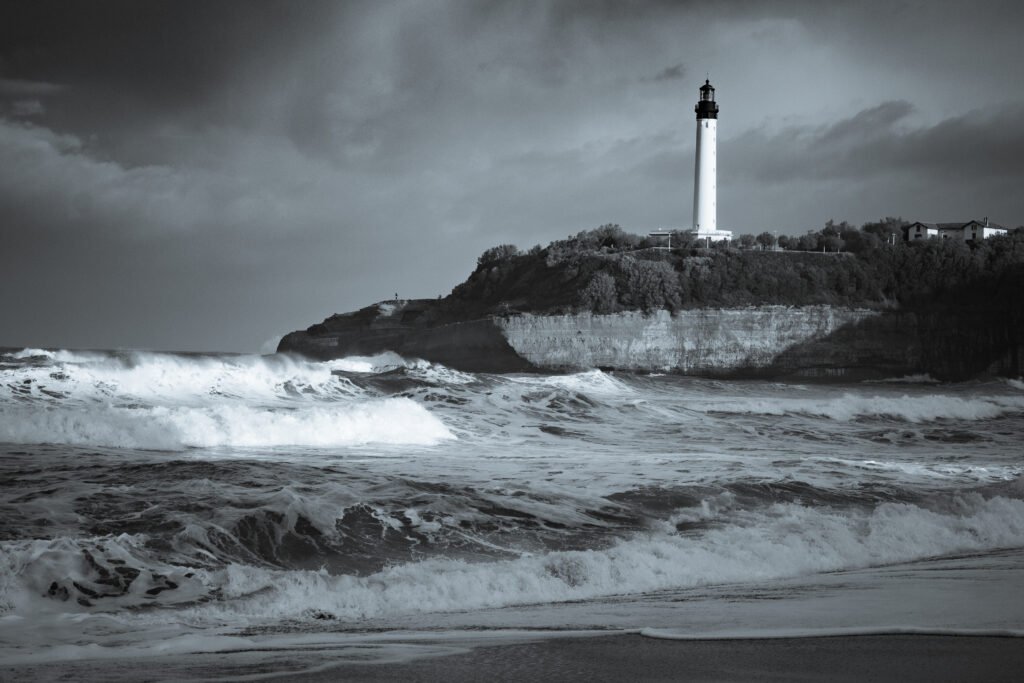
The Basque Country doesn’t stop at a national border, but the two sides genuinely feel different once you’re there. This is a different comparison than choosing between two cities — it’s about the character of an entire region on each side: French Basque Country vs Spanish Basque Country, resort towns against dramatic coastline, Belle Époque elegance against modern city culture. If you’re trying to decide where to spend your time, or whether to do both, this breaks down what each side actually offers. For the complete regional picture spanning both countries, see our Ultimate Guide to the Basque Country.
It’s worth saying upfront that this isn’t really a France-vs-Spain question in the usual sense. Both sides share the same Basque language, the same flag, many of the same surnames, and a food culture built around small plates and communal bars — the border here is more of an administrative line than a cultural one. What actually differs is history and development: the French side was shaped by 19th-century aristocratic tourism, which produced grand hotels and a genteel seaside identity, while the Spanish side carries a heavier 20th-century industrial and political history that shaped a more independent, occasionally gritty regional character, especially in Bilbao. Understanding that distinction helps explain why the two sides feel different even though the underlying culture is the same.
Comparison Table
French Basque Country
Spanish Basque Country
Which Side Should You Visit
FAQ
Comparison Table
| Category | French Basque Country | Spanish Basque Country |
|---|---|---|
| Cost | Higher, especially Biarritz dining and lodging | Generally better value, especially Bilbao |
| Food style | Refined, Belle Époque seaside dining | Pintxos culture, dense Michelin-star concentration |
| Pace/atmosphere | Resort town, genteel, slower | City energy in Bilbao, resort pace in San Sebastián |
| Best beaches | Biarritz, Guéthary, Saint-Jean-de-Luz (consistent surf) | La Concha, Mundaka (wilder coastline further out) |
| Language | French, with Basque spoken regionally | Spanish, with Basque spoken regionally |
| Standout towns | Biarritz, Bayonne, Saint-Jean-Pied-de-Port | San Sebastián, Bilbao, Hondarribia |
French Basque Country
The French Basque Country occupies the southwestern corner of France, shaped by 19th-century aristocrats who made Biarritz fashionable and centuries of Camino de Santiago pilgrims passing through its mountain villages.
Bayonne
The cultural capital of French Basque Country, with half-timbered riverside houses and an excellent market and food scene. Its Musée Basque offers the best single introduction to Basque history and identity anywhere in the region, and the annual Fêtes de Bayonne in late July is one of the biggest festivals in southwestern France.
Biarritz
Once the summer playground of European royalty, retaining Belle Époque grandeur alongside a genuine surf culture and consistent Atlantic swell. Grand hotels line the coast above beaches that also happen to be the historic birthplace of European surfing.
Saint-Jean-de-Luz
A working fishing port turned elegant beach town, centered on one of the calmest, most family-friendly beaches on this stretch of coast. It also hosted the wedding of Louis XIV in 1660, giving the town a genuine royal history alongside its resort reputation.
Espelette
Famous across France for its namesake red pepper, hung drying from house facades each autumn. The pepper carries a protected designation of origin and shows up in everything from local charcuterie to chocolate.
Guéthary & Bidart
Two small coastal villages trading Biarritz’s grandeur for a quieter, more local surf-town feel, with clifftop views and some of the best-regarded seafood restaurants on the coast.
La Rhune
A distinctive peak summited by hiking trail or a century-old rack railway, with views stretching from the Atlantic to the Pyrenees and into Spain on a clear day.
Saint-Jean-Pied-de-Port
A walled medieval town and the traditional starting point for the Camino de Santiago’s French Route, its cobbled main street still filling with pilgrims preparing to cross into Spain, much as it has for centuries.

Spanish Basque Country
The Spanish Basque Country (Euskadi) is larger and more industrial in its history, home to the region’s two biggest cities and a dramatic coastline of cliffs and fishing villages.
Hondarribia
A brightly painted fishing town right on the French border, ringed by medieval walls and centered on a castle-turned-parador. Its proximity to France makes it a natural first or last stop when crossing between the two sides.
Getaria
A tiny fishing village on a peninsula, famous for txakoli wine and grilled turbot cooked right on the harbor, and also the birthplace of designer Cristóbal Balenciaga, whose museum sits here.
San Juan de Gaztelugatxe
A hermitage atop a rocky islet connected by a stone bridge and 241 steps, one of the most photographed spots in the region — visitor numbers are now capped and require a small booking fee to help protect the site.

Urdaibai Biosphere Reserve
A UNESCO-recognized estuary and wetland reserve protecting one of the last undeveloped stretches of the Basque coast, including the fishing village of Mundaka, famous among surfers for its long left-hand wave.
Rioja Alavesa
The Basque Country’s own wine country, offering rolling vineyards and striking modern winery architecture just south of Vitoria-Gasteiz.
Elantxobe
A tiny fishing village built into a cliffside so steep its main street doubles back on itself, one of the least-visited villages on the entire Basque coast.
Food: A Different Emphasis on Each Side
Both sides share the same underlying Basque culinary tradition, but the emphasis shifts noticeably crossing the border. French Basque cuisine leans into refined seaside dining and French technique — think grand hotel restaurants in Biarritz and elegant seafood platters in Saint-Jean-de-Luz — alongside genuinely excellent market towns like Bayonne. Spanish Basque cuisine leans harder into the bar-hopping pintxos culture and holds one of the highest concentrations of Michelin-starred restaurants per capita in the world, concentrated heavily in San Sebastián. Neither side does the other’s specialty badly, but if pintxos bar-hopping is the main draw for your trip, that experience genuinely only exists in its full form on the Spanish side.
Practical Differences to Know
Meal times: Spanish Basque Country runs on later meal hours — lunch around 2pm, dinner rarely before 9pm — while the French side keeps closer to standard French timing, with dinner more commonly starting around 7:30-8pm.
Currency and payment: Both sides use the euro, so there’s no exchange needed crossing the border, though smaller Spanish-side bars and village shops lean more cash-friendly than their French counterparts.
Driving norms: Both countries drive on the right, and the E70/A63 corridor connecting Biarritz to San Sebastián is a straightforward, well-signed motorway — the border crossing itself involves no formal checkpoint for most travelers, since both countries are in the Schengen Area.
Shopping hours: Spanish-side towns still commonly observe a midday closure for smaller shops (roughly 2-4:30pm), a holdover from siesta culture that’s less pronounced on the French side.
Which Side Should You Visit
If you have limited time and want a resort-town pace with refined dining and consistent beach weather, the French side — Biarritz and its neighboring towns — delivers that experience cleanly. If you want dramatic coastline, city culture, and the region’s best-known food scene, the Spanish side wins, with San Sebastián and Bilbao both offering more to do in a compact area.
Given the drive between Biarritz and San Sebastián takes under an hour, though, most travelers with more than 3-4 days simply do both rather than picking one. A short 2-3 day trip is really the only scenario where choosing just one side makes practical sense — and even then, a single day trip across the border is usually worth the detour.
Think about it in terms of what you’d regret missing. Skip the French side entirely and you lose the Belle Époque grandeur of Biarritz and the pilgrim history of Saint-Jean-Pied-de-Port — a genuinely different flavor of Basque culture shaped by centuries of French influence. Skip the Spanish side and you lose the region’s most famous food city, its most architecturally significant modern building (Bilbao’s Guggenheim), and the more dramatic, less manicured stretches of coastline further along toward Bilbao. For most travelers planning a trip specifically around the Basque Country rather than passing through on a broader Spain or France itinerary, doing both sides isn’t just possible — it’s really the point.
Solo travelers or those on a tight timeline might lean Spanish side only, since San Sebastián and Bilbao alone offer enough density of food, culture, and scenery to fill several days without ever needing a car. Families or travelers prioritizing a slower, beach-first trip might lean French side only, since Biarritz and Saint-Jean-de-Luz both offer excellent, low-effort beach days without the driving or bar-hopping culture that defines the Spanish side’s appeal.
I cover both sides of the Basque Country in the two videos above. If this comparison helped you plan your trip, subscribe to Worldly Traveler on YouTube for more travel guides from around the world.
Frequently Asked Questions
Is the French Basque Country or Spanish Basque Country better to visit?
Neither is objectively better — the French side suits travelers wanting a resort-town pace and Belle Époque beach towns, while the Spanish side suits those wanting city culture, dramatic coastline, and a stronger pintxos and Michelin-star food scene.
Is it expensive to visit the Basque Country?
The French side, especially Biarritz, tends to run more expensive for dining and lodging than the Spanish side, though San Sebastián’s top restaurants can also be pricey. Bilbao and the smaller Spanish coastal towns generally offer better value.
Can you visit both the French and Spanish Basque Country in one trip?
Yes, easily. The drive from Biarritz to San Sebastián takes under an hour, making it simple to combine both sides even on a shorter trip.
What language is spoken in the Basque Country?
French is spoken on the northern side, Spanish on the southern side, and Basque (Euskara) is spoken to varying degrees on both sides of the border, independent of the national language.
Which side of the Basque Country has better beaches?
Both sides have excellent beaches. The French side, especially around Biarritz, is more resort-developed with consistent surf, while the Spanish side offers a mix of city beaches like La Concha and wilder, less developed coastline further along the coast.