
Bilbao’s Guggenheim and San Sebastián’s pintxos scene anchor most first-time trips to Spain’s northern coast, and both genuinely deserve their reputation — but the coastline stretching from the Basque Country west through Cantabria, Asturias, and Galicia holds a genuinely rewarding string of lesser-known cities, each with its own distinct regional identity. This guide covers Northern Spain’s best cities beyond the Basque Country, verified against a real video guide, organized region by region so you can build a coastal route through whichever part of “Green Spain” genuinely calls to you.
San Sebastián & Bilbao: The Basque Country’s pintxos culture and the Guggenheim Museum remain genuinely essential stops, covered in depth in this site’s dedicated Basque Country and Bilbao/San Sebastián guides — this post focuses on the equally rewarding cities further west and east along the northern coast.
Northern Spain’s Atlantic-facing coast is often nicknamed “España Verde” (Green Spain), a genuinely fitting label for a stretch of coastline that receives considerably more rainfall than the rest of the country, producing lush green hills and dairy farming traditions that feel closer to Ireland or the UK than the sun-baked image most people associate with Spain. That climate and geography shaped genuinely distinct regional cultures — Cantabria, Asturias, and Galicia each developed their own dialects, culinary traditions, and architectural styles in relative isolation from both the rest of Spain and each other, connected historically more by the Camino de Santiago pilgrimage route than by any shared regional identity.
That relative isolation also carries a genuinely significant historical footnote — this northern strip of the Iberian Peninsula, particularly the Kingdom of Asturias, was the one region never conquered during the 8th-century Moorish invasion that swept across the rest of Spain, making it the genuine starting point of the centuries-long Reconquista that would eventually reshape the entire peninsula. That distinct history is part of why Northern Spain’s architecture, cuisine, and regional identity feel so genuinely different from Andalucía’s Moorish-influenced south, despite both falling under the same national identity today.
Cantabria: Santander
Asturias: Oviedo & Gijón
Galicia: A Coruña
Navarre: Pamplona
Northern Spain Road Trip Basics
Northern Spain Food Worth Seeking Out
Best Time to Visit Northern Spain
FAQ
Cantabria: Santander
Cantabria’s coastal capital holds a genuinely royal seaside history alongside significant prehistoric heritage nearby.
Santander & the Magdalena Peninsula
Santander’s genuine claim to fame is the Palacio de la Magdalena, an elegant early 20th-century royal summer residence built directly on its own peninsula, funded by public subscription and gifted to the Spanish royal family — the palace’s construction transformed Santander into a fashionable royal summer retreat, and the surrounding peninsula grounds, now open to the public, include a small zoo and sweeping bay views.
Santander, Cantabria. Free to walk the peninsula grounds; palace interior tour fee. Best combined with a walk along Santander’s genuinely excellent urban beaches, considered among the best city beaches in Spain.

Altamira Cave
A short drive from Santander, this cave holds some of the most significant prehistoric art ever discovered, its ceiling covered in remarkably preserved polychrome bison paintings created roughly 36,000 years ago — the original cave remains closed to protect the fragile artwork, but the adjacent museum’s precise facsimile, the Neocave, offers visitors a genuinely faithful recreation of the original chamber.
Near Santillana del Mar, Cantabria. Museum and Neocave entry fee. Best combined with a Santillana del Mar visit, a genuinely well-preserved medieval town just steps from the museum.
Santillana del Mar
A genuinely exceptional medieval town near Santander, its cobblestone streets and stone manor houses so well preserved that the town is often cited as one of the most beautiful in all of Spain, despite — somewhat ironically, given its name meaning “Saint Juliana of the Sea” — not actually sitting directly on the coast.
Near Santander, Cantabria. Free to explore. Best combined with the Altamira Cave museum given the shared location.
Asturias: Oviedo & Gijón
Asturias holds two genuinely distinct cities within a short distance of each other — one historic and inland-feeling, the other a lively seaside city.
Oviedo
Asturias’ regional capital, its well-preserved old town home to several genuinely significant pre-Romanesque churches predating the wider European Romanesque style by centuries, recognized collectively as a UNESCO World Heritage Site — Oviedo’s origins as the capital of the small Christian Kingdom of Asturias, one of the few areas of the Iberian Peninsula never conquered during the Moorish invasion, gave the city an outsized historical and architectural significance relative to its modest size. Santa María del Naranco, originally built as a royal palace before later becoming a church, remains one of the finest surviving examples of this genuinely unique pre-Romanesque architectural style found nowhere else in the world at this scale.
Oviedo, Asturias. Free to explore old town; individual church entry fees vary. Best combined with a walk past the city’s numerous public sculptures, including several by Fernando Botero.
Gijón
A genuinely lively seaside city, its long urban beach (Playa de San Lorenzo) and Roman baths ruins offering both contemporary coastal leisure and significant ancient history within the same compact city center — Gijón’s industrial shipping and fishing heritage gave the city a genuinely different character from Oviedo’s more historic, inland feel just a short drive away. The city’s Cerro de Santa Catalina headland park, home to a striking modern sculpture by Basque artist Eduardo Chillida, offers sweeping views over both the beach and the surrounding coastline.
Gijón, Asturias. Free to explore; Roman baths entry fee. Best combined with an Oviedo day trip given the short distance between the two cities.
Galicia: A Coruña
Spain’s rainy, Celtic-influenced northwestern corner holds a genuinely ancient working lighthouse and some of the country’s best seafood.
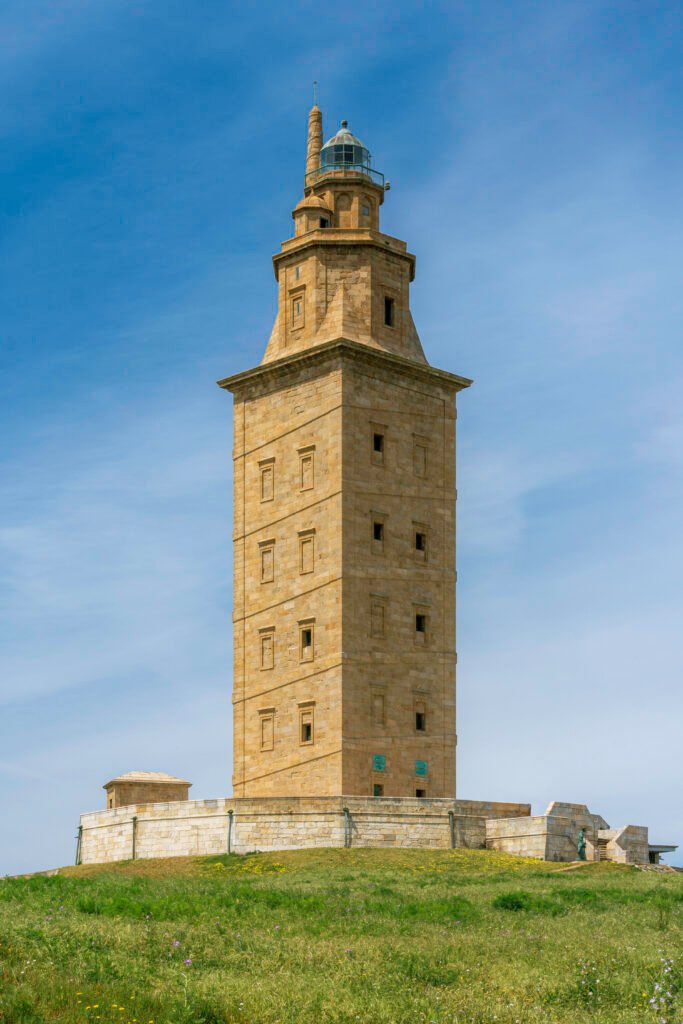
Tower of Hercules
The oldest Roman lighthouse still in operational use anywhere in the world, built in the 1st century AD and known historically as the Farum Brigantium — the structure’s Roman core stands 34 meters tall, later augmented with an additional 21 meters during an 18th-century restoration, and the surrounding grounds hold a sculpture garden along with Iron Age rock carvings, a genuinely rare combination of ancient engineering still serving its original function nearly 2,000 years later. Local Galician legend ties the tower’s origin to the mythical hero Breogán, said to have built the original structure, a story commemorated by a large statue of Breogán standing near the tower today.
A Coruña, Galicia. Entry fee for tower climb; grounds free. Best at sunset for views over the Atlantic from the tower’s summit.
A Coruña’s Glass City & Seafood Scene
A Coruña’s old town is genuinely nicknamed the “Glass City” (Ciudad de Cristal) for its distinctive galerías — enclosed glass-paneled balconies designed to let residents enjoy views of the Atlantic while sheltered from the region’s frequent rain and wind — a genuinely practical architectural adaptation that gives the city’s waterfront a uniquely shimmering appearance, particularly striking when viewed from the harbor at golden hour. The city’s seafood tradition, particularly its octopus (pulpo a la gallega) and percebes (goose barnacles, a genuinely prized and expensive regional delicacy harvested from dangerous rocky coastline by divers working in perilous conditions), reflects Galicia’s deep Atlantic fishing heritage.
A Coruña, Galicia. Free to explore. Best combined with a genuine seafood meal at a local marisquería given the city’s outsized reputation for fresh Atlantic seafood.
Santiago de Compostela
The genuine spiritual endpoint of the Camino de Santiago pilgrimage, its massive cathedral believed to hold the remains of the apostle St. James, drawing pilgrims from across Europe for over a thousand years — even for travelers not walking the Camino itself, witnessing the arrival ceremony at the cathedral’s Pilgrim’s Mass offers a genuinely moving sense of the route’s enduring significance.
Santiago de Compostela, Galicia, near A Coruña. Free to explore town and cathedral exterior; museum and rooftop tour fees vary. Best combined with an A Coruña visit given the short distance between the two cities.
Navarre: Pamplona
Beyond its famous summer festival, Pamplona holds significant medieval fortifications and a genuinely underrated old town.
Pamplona
Genuinely world-famous for the Running of the Bulls (encierro) during the San Fermín festival each July, immortalized internationally by Ernest Hemingway’s novel “The Sun Also Rises” — beyond the festival, Pamplona’s well-preserved old town and star-shaped 16th-century citadel fortifications reward exploration year-round, offering a genuinely different, quieter side of the city outside its one famous week each summer.
Pamplona, Navarre. Free to explore old town and citadel grounds. Best outside the July San Fermín festival week for a genuinely quieter, more contemplative visit to the historic old town.
Northern Spain Road Trip Basics
The cities in this guide string together naturally along Spain’s northern Atlantic coast, making a west-to-east (or east-to-west) coastal road trip a genuinely efficient way to connect them — Santander, Oviedo, Gijón, and A Coruña sit within a manageable day’s drive of each other, while Pamplona, further inland in Navarre, works better as either a standalone destination or an add-on connected to the Basque Country given its more southern, inland position. The AP-8 and A-8 highways run much of this coastal route, though the scenic coastal roads (particularly through Asturias and Cantabria) genuinely reward a slower pace than the fastest highway route would allow, winding through fishing villages and dramatic cliff-top viewpoints easy to miss if sticking purely to the motorway.
This entire stretch of coast also forms part of the Camino del Norte, one of the lesser-known but genuinely rewarding branches of the Camino de Santiago pilgrimage route, worth knowing about for travelers interested in overlapping a road trip with sections of the historic pilgrim path — unlike the more crowded French Way further south, the Camino del Norte remains genuinely quieter, tracing this same rugged coastline through Santander, Gijón, and onward toward Santiago de Compostela in Galicia. Rental car availability is generally reliable in the region’s larger cities, though smaller towns along the coast may have more limited options, worth booking in advance for a multi-city itinerary.
Northern Spain Food Worth Seeking Out
Asturias holds a genuinely distinct cider (sidra) culture, its traditional pouring method — holding the bottle high overhead and the glass low to aerate the pour — considered an essential skill worth watching (or attempting) at a proper Asturian sidrería, where the practice remains genuinely central to the social ritual of drinking rather than a mere novelty. Fabada asturiana, a rich bean stew with chorizo, morcilla (blood sausage), and pork, remains the region’s signature hearty dish, genuinely suited to Asturias’ cooler, rainier climate, and a properly made version, simmered slowly for hours, is considered a genuine point of regional pride worth seeking out from a dedicated local restaurant rather than a tourist menu.
Galicia’s pulpo a la gallega, tender boiled octopus dressed simply with olive oil, paprika, and coarse salt, is worth seeking out specifically in Galicia rather than elsewhere in Spain, given the region’s genuine mastery of octopus preparation built on centuries of coastal fishing tradition — the dish’s deceptive simplicity actually requires considerable skill to execute properly, particularly in achieving the octopus’s characteristically tender texture. Cantabria’s anchovies (anchoas de Santoña), cured using a specific regional method distinct from more common Mediterranean preparations, represent another genuinely protected regional specialty worth seeking out by name, and Cantabria’s overall dairy tradition, reflected in cheeses like Queso de Cabrales, a pungent blue cheese aged in the region’s limestone caves, offers a genuinely distinct alternative to Spain’s more commonly exported cheese varieties.
Best Time to Visit Northern Spain
June through September offers the most reliable weather for this genuinely rainier, cooler stretch of Spain’s coast, since “Green Spain” earns its nickname through weather patterns considerably wetter than the rest of the country year-round — even in peak summer, packing a light rain layer is genuinely worthwhile for this region in a way it wouldn’t be for Andalucía or the Mediterranean coast. Pamplona’s San Fermín festival, held annually July 6-14, draws its own dedicated crowd of visitors specifically for the Running of the Bulls, worth planning around whether attending or actively avoiding given the significant crowds and price increases during that specific week.
Spring and fall bring noticeably fewer crowds to the region’s coastal cities, along with the genuine lush greenery that gives the region its nickname, though rain remains a realistic possibility in any season. Winter stays genuinely mild by broader European standards along the coast, though it also brings the wettest, grayest conditions of the year, making it the least popular season for this specific region despite the mild temperatures — travelers specifically drawn to Northern Spain’s dramatic, moody coastal atmosphere may actually find winter genuinely rewarding, provided expectations are set accordingly for the weather.
I cover all of these cities in the video above. If this guide helped you plan your Northern Spain trip, subscribe to Worldly Traveler on YouTube for more travel guides from around the world.
Frequently Asked Questions
What are the best cities to visit in Northern Spain?
Some of the best cities to visit in Northern Spain include Santander (with its royal Magdalena Palace), Oviedo and Gijón in Asturias, A Coruña in Galicia (home to the world’s oldest working Roman lighthouse), and Pamplona in Navarre, all offering a genuine alternative to the more famous Basque Country cities.
Is the Tower of Hercules still a working lighthouse?
Yes — built in the 1st century AD, it remains the oldest Roman lighthouse still in operational use in the world, and it’s a UNESCO World Heritage Site in A Coruña, Galicia.
How many days do you need to explore Northern Spain’s cities?
10-14 days allows a well-paced coastal road trip covering Cantabria, Asturias, Galicia, and Navarre. A shorter 5-7 day trip works well focused on just two or three neighboring cities.
What is the best time of year to visit Northern Spain?
June-September offers the most reliable weather for this genuinely rainier, cooler stretch of Spain’s coast (often called “Green Spain” for its lush landscape), while Pamplona’s July Running of the Bulls draws its own dedicated crowd.
Is Northern Spain’s food scene as good as the Basque Country’s?
Genuinely, yes in its own right — Asturias and Galicia each hold distinct, highly respected culinary traditions (Asturian cider and fabada, Galician seafood and octopus) that stand entirely on their own rather than as a lesser version of Basque cuisine.