
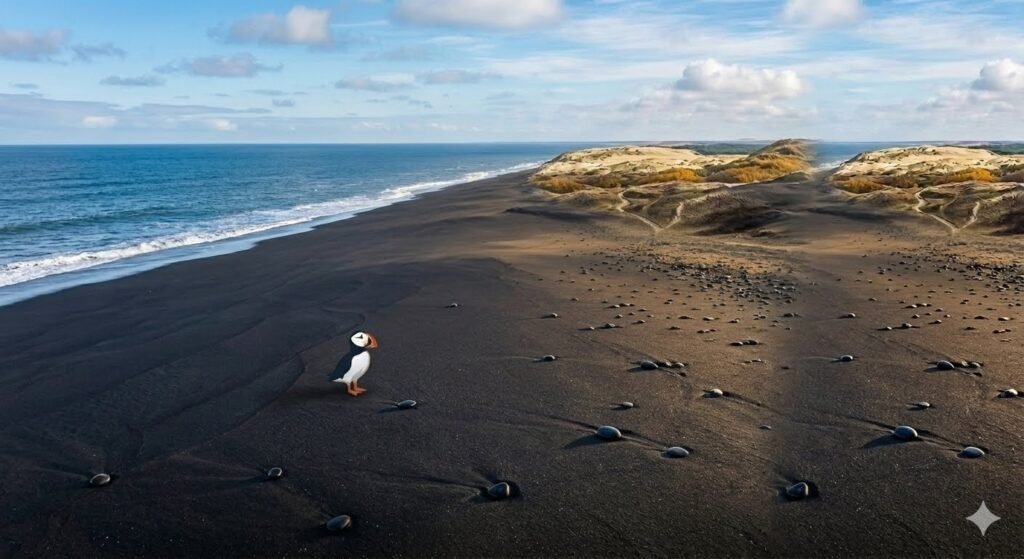
Iceland has a way of making every itinerary feel too short. It’s a country you can circle entirely on one road, yet somehow every stretch of that road has something worth stopping for. This guide covers 25 hidden gems across Iceland, from the South Coast and Golden Circle out to the highlands, Westfjords, and North Iceland, plus the planning details — timing, driving, and budget — that don’t make it into a highlight reel. I walk through all of these in the video below, so start there for a visual preview before you plan your route.
Many of these gems cluster naturally by region, so this guide groups them the same way: South Coast and Golden Circle first, then the highlands (summer-only), central and western Iceland, the north, the Westfjords, and finally the islands and cultural stops. Use the quick jump links below to skip straight to whichever region fits your trip.
South Coast & Golden Circle
The Highlands
Central & Western Iceland
Northern Iceland
The Westfjords
Islands & Culture
Planning Your Visit
FAQ
South Coast & Golden Circle
1. Fjaðrárgljúfur Canyon
This roughly 2-kilometer canyon plunges up to 100 meters deep, carved by glacial meltwater over thousands of years. Its moss-covered cliffs and winding river make it one of the most photographed spots in south Iceland — a status cemented after it appeared in a 2015 Justin Bieber music video, which brought a surge of visitors and led authorities to temporarily close sections of the canyon to let vegetation recover.
South Iceland, near Kirkjubæjarklaustur. Free. Best from a marked overlook trail, since off-trail walking damages the moss.
2. Kvernufoss
Tucked just east of the famous Skógafoss, Kvernufoss requires a short scenic hike through a narrow gorge to reach, and rewards the walk with a 30-meter waterfall you can walk behind — a quieter, far less crowded version of the “walk behind the falls” experience most visitors associate with Seljalandsfoss.
Near Skógar. Free. Best in the morning before Skógafoss crowds spill over.
3. Dyrhólaey Peninsula
Dyrhólaey means “door hill island,” a reference to the massive rock arch here that’s large enough for small boats — and historically, small planes — to pass through. A lighthouse built in 1927 sits atop the cliffs, and in summer the promontory becomes a nesting site for puffins.
South Iceland, near Vík. Free. Best May-August for puffin viewing; closed during nesting closures some years.
4. DC-3 Plane Wreck, Sólheimasandur
The fuselage on this black sand beach is what remains of a U.S. Navy Douglas C-117D (a military DC-3 variant) that crash-landed here on November 21, 1973, after both engines failed in severe icing conditions. All seven crew members survived. It’s roughly a 4-kilometer walk each way from the parking area.
Sólheimasandur, South Iceland. Free; shuttle available for a fee. Best with several hours to spare for the walk.

5. Vestrahorn Mountain
Nicknamed “Batman Mountain” for its jagged silhouette, Vestrahorn rises above the black sand beaches of Stokksnes on the southeast coast. Its sharp peaks are especially striking at sunrise or sunset, when they reflect in the wet sand below.
Stokksnes, near Höfn. Small entry fee for the private land access road. Best at sunrise or sunset.
6. Secret Lagoon (Gamla Laugin)
Dating to 1891, the Secret Lagoon in the village of Flúðir is Iceland’s oldest swimming pool. The geothermal water stays around 38–40°C year-round, and small geysers occasionally erupt nearby. It’s smaller and far less crowded than the Blue Lagoon.
Flúðir, on the Golden Circle. Entry fee required. Best in the late afternoon, less busy than midday.
7. Hraunfossar
Hraunfossar — literally “lava falls” — isn’t a single waterfall but a series of small streams emerging from beneath a lava field and flowing into the Hvítá River for nearly a kilometer. The water originates as glacial meltwater from Langjökull, traveling underground through porous lava rock before surfacing.
West Iceland, near Húsafell. Free. Best in autumn against golden birch trees.
The Highlands
Highland roads (marked with an “F”) typically open only from late June through September and require a 4×4 — check road.is before planning a highland day.
8. Gjáin Valley
Tucked into the Þjórsárdalur region of southern Iceland, Gjáin is a small, lush valley of cascading waterfalls, clear streams, and moss-covered lava formations — a scaled-down, hidden counterpart to the more famous highland valleys nearby.
Þjórsárdalur, South Iceland. Free. Best in summer when the F-road access is open.
9. Þórsmörk
Named for the Norse god Thor, this nature reserve sits between glaciers and is only reachable by crossing glacial rivers, which keeps it feeling remote even in peak season. It’s the endpoint of the well-known Laugavegur trail.
Southern highlands. Free; 4×4 with river-crossing capability required, or take a highland bus. Summer only.
10. Kerlingarfjöll
A former ski resort turned hiking destination in Iceland’s central highlands, Kerlingarfjöll is known for its rhyolite mountains that shift through red, orange, and yellow, alongside steaming geothermal vents and hot springs.
Central highlands. Small day-use fee. Summer only (roughly late June-September).
11. Landmannalaugar
One of Iceland’s most-photographed highland regions, Landmannalaugar is known for rhyolite mountains in shades of red, orange, and green, natural geothermal hot springs to soak in after a hike, and its role as the starting point of the Laugavegur trek.
Southern highlands. Free; 4×4 required or highland bus. Summer only.
Central & Western Iceland
12. Stuðlagil Canyon
This canyon of geometric basalt columns was submerged for centuries and only fully revealed after a nearby hydroelectric plant lowered the river’s water level, exposing the vivid turquoise water and dramatic cliffs that make it one of Iceland’s most striking geological formations today.
East Iceland, near Egilsstaðir. Free. Best in clear weather for the turquoise water color.
13. Seljavallalaug
Built in 1923 at the foot of the Eyjafjallajökull volcano, Seljavallalaug is one of Iceland’s oldest pools, fed by natural geothermal water and reached by a roughly 20-minute hike through mossy hills and volcanic rock. It’s unstaffed and rustic.
South Iceland, near Skógar. Free. Best on a weekday to avoid crowds at this small pool.
14. Hvítá River Rafting
The Hvítá (“white river”) is fed by the Langjökull glacier, giving it a milky color and strong flow through Brúarhlöð Canyon’s basalt columns. Rafting trips here suit both beginners and experienced paddlers.
West Iceland, near Gullfoss. Guided tours required, booked in advance. Best May-September.
Northern Iceland
15. Hvítserkur
This 15-meter basalt sea stack on the Vatnsnes Peninsula has inspired competing legends — some say it resembles a dragon drinking from the ocean, others a troll turned to stone by sunlight. At low tide, you can walk to its base.
Vatnsnes Peninsula, Northwest Iceland. Free. Best at low tide, check tide tables in advance.
16. Grjótagjá Cave
This lava cave holds a geothermal pool once popular for bathing, though water temperatures now fluctuate too much for swimming due to ongoing volcanic activity. It gained international recognition as a filming location for a well-known scene in Game of Thrones.
Near Mývatn. Free. Viewing only — swimming is no longer permitted or safe.

17. Ásbyrgi Canyon
Shaped like a giant horseshoe and part of Vatnajökull National Park, Ásbyrgi stretches over 3.5 kilometers with cliffs rising up to 100 meters. Icelandic folklore attributes its shape to a hoofprint left by Sleipnir, Odin’s eight-legged horse.
North Iceland, Vatnajökull National Park. Free. Best for an easy half-day forest walk.
18. Húsavík
Often called the whale-watching capital of Iceland, this north-coast fishing town sits on Skjálfandi Bay, where more than 20 whale species have been recorded, including humpback and minke whales. Tours run primarily from April to October.
North Iceland. Whale tours cost extra, booked in advance. Best June-August for calm seas.
19. Siglufjörður
Once known as the “herring capital of the world” during the early-20th-century herring boom, this small fjord town in North Iceland is now a quiet destination with colorful houses and the award-winning Herring Era Museum.
North Iceland. Free to walk the town; museum has entry fee. Also a winter base for skiing.
The Westfjords
20. Rauðasandur Beach
Unlike Iceland’s more famous black sand beaches, Rauðasandur stretches nearly 10 kilometers along the Westfjords with red-and-gold sand, a color that comes from crushed scallop shells. It’s remote enough that you may have it largely to yourself.
Westfjords. Free. Best on a clear day for the full color range of the sand.
21. Dynjandi
Often called the jewel of the Westfjords, Dynjandi (“thunderous”) is actually a series of seven waterfalls cascading down a mountainside, with the main fall standing roughly 100 meters tall. A trail climbs past each smaller cascade on the way to the top.
Westfjords. Free. Allow at least an hour to climb to the top and back.
22. Borgarfjörður Eystri
One of Iceland’s best-known puffin-viewing spots, with visitors able to get remarkably close to the birds during nesting season. Note: this puffin colony sits in the East Fjords near Bakkagerði, not the Westfjords, despite sometimes being grouped with them.
East Iceland, near Bakkagerði. Free. Best May-August during puffin nesting season.
23. Mjóifjörður
One of Iceland’s most secluded fjords, accessible by a single winding gravel road that closes in winter. The historic Dalatangi Lighthouse — one of the oldest in Iceland — sits at its mouth.
East Iceland. Free. Summer access only; road closes seasonally.
Islands & Culture
24. Vestmannaeyjar (Westman Islands)
This volcanic archipelago off the south coast is best known for the 1973 Eldfell eruption on the main island, Heimaey, which threatened to destroy the town but ultimately expanded the island’s land area. The islands host one of the world’s largest puffin colonies.
Off the South Coast. Ferry fee from Landeyjahöfn. Best May-August for puffins.
25. Museum of Icelandic Sorcery & Witchcraft, Hólmavík
This small Westfjords museum documents Iceland’s witchcraft trials and folk magic history, including its most talked-about exhibit: a pair of “necropants” (nábrók), a legendary charm supposedly made from a dead man’s skin.
Hólmavík, Westfjords. Entry fee. Good rainy-day stop.
Planning Your Visit
Best time to visit: Late May or September offers the best balance of manageable crowds, mild prices, and a decent shot at good weather. June through August has the longest daylight and full highland access, but the biggest crowds. September adds a real chance at the Northern Lights.
Getting around: A rental car is essential — public transport outside Reykjavik is limited. Stick to a standard 2WD for the South Coast and Golden Circle in summer; anything involving an F-road or river crossing requires a 4×4, which is a legal requirement, not just a recommendation.
Budget: Expect $70-$150 per day per person depending on accommodation choices. Most of the natural gems on this list are free; lodging and the 4×4 needed for highland routes drive the cost up.
How many days to allow: A one-week trip covers the South Coast and Golden Circle cluster well. Two to three weeks is realistic for all 25 gems, including the highlands and Westfjords.
I walk through all 25 of these locations in the video above, including the DC-3 wreck, Dynjandi, and Landmannalaugar. If this guide helped you plan your trip, subscribe to Worldly Traveler on YouTube for more hidden gems guides from around the world.
Frequently Asked Questions
How many days do you need to see all these gems?
Realistically two to three weeks to hit all 25 across the highlands, Westfjords, north, and east. A one-week trip is enough for the South Coast and Golden Circle cluster alone.
Is Iceland expensive to visit?
Yes, relative to most of Europe, but the cost is front-loaded into lodging and car rental. Many of the natural attractions on this list have no entry fee.
Do you need a 4×4 to see all 25 gems?
Not for the South Coast and Golden Circle. The highland gems and some Westfjords routes require a 4×4 due to river crossings or unpaved F-roads only open in summer.
When is the best time to see puffins in Iceland?
Roughly May through August, with peak nesting activity at sites like Dyrhólaey and Borgarfjörður Eystri in June and July.
Is it safe to walk on the DC-3 plane wreck?
Climbing on the fuselage is discouraged to protect the site and for visitor safety, since the metal is decades old with sharp, corroded edges. Walking around and photographing it from ground level is fine.