
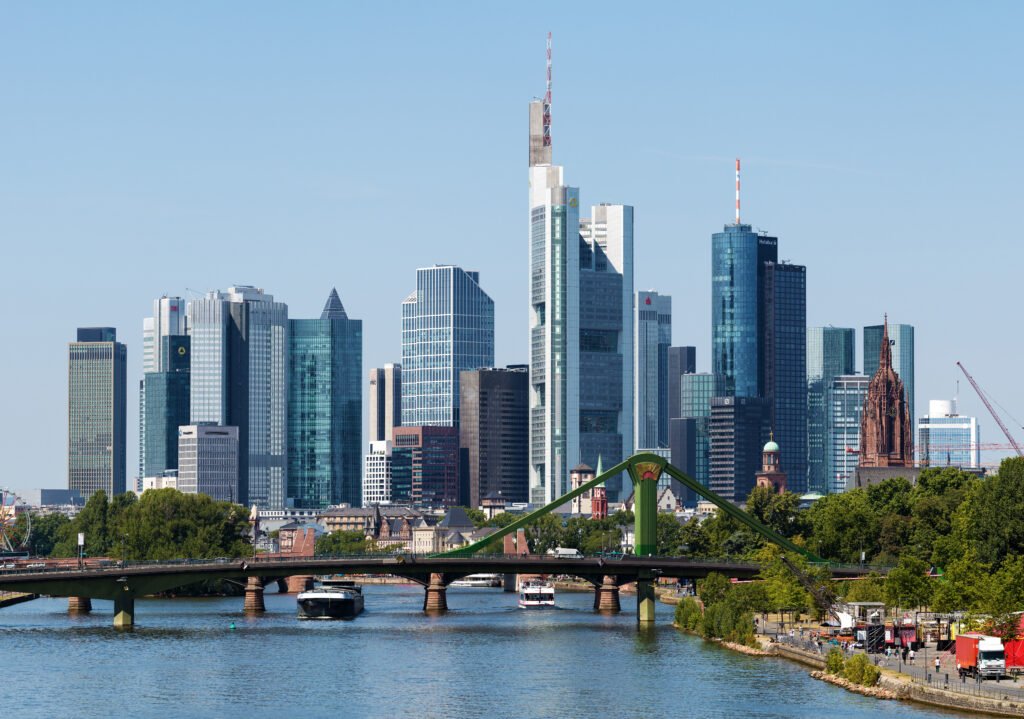
Frankfurt has a reputation problem, most international travelers know it only as the layover between them and somewhere else, a cluster of glass towers glimpsed from an airport shuttle. That’s a shame, because the city nicknamed “Mainhattan” for its unusually dense skyline (a rarity in a country that otherwise banned skyscrapers from most historic centers) holds a genuinely rewarding mix of rebuilt medieval streets, one of Europe’s best botanical gardens, and a fiercely local apple wine culture most visitors never encounter. This guide, checked against a real video tour, covers 20 of Frankfurt’s best hidden gems, organized by neighborhood.
The Römerberg & the Cathedral: Frankfurt’s rebuilt medieval square and its Gothic cathedral remain worth a first stop, this guide picks up from there, heading into the neighborhoods most first-time visitors skip entirely.
What makes Frankfurt’s old town genuinely interesting, once you know the backstory, is that almost none of it is actually old. Allied bombing during the Second World War destroyed roughly 90 percent of the historic city center, and the half-timbered buildings clustered around the Römerberg today are largely careful, painstaking reconstructions completed decades later, some as recently as the 2010s. That layered honesty, a city that rebuilt its own memory of itself rather than simply modernizing over the ruins, runs through a lot of what makes Frankfurt worth slowing down for.
Sachsenhausen
The Altstadt & River
The Westend & Beyond
Frankfurt’s Apple Wine Culture
Day Trips from Frankfurt
Comparing Frankfurt’s Day Trip Options
Best Time to Visit Frankfurt
FAQ
Sachsenhausen
South of the river, this neighborhood holds Frankfurt’s most traditional taverns and some of its quietest green space.
Sachsenhausen’s Hidden Cider Taverns
Frankfurt’s apple wine tradition is most concentrated here, in small, family-run taverns (Apfelweinwirtschaften) that have served the same tart, cloudy Ebbelwoi for generations, often at long communal wooden tables that push strangers into conversation whether they intended to or not.
Sachsenhausen, south bank of the Main. Prices vary by tavern. Best in the early evening, when the taverns fill with regulars rather than tourists.
Museum für Kommunikation’s Basement
Beneath Frankfurt’s communication museum, a genuinely underappreciated basement level holds rotating exhibits exploring the history of media and connection, from postal systems to early telecommunications, a quieter counterpart to the museum’s more heavily trafficked ground floor.
Sachsenhausen, along the Museumsufer. Entry fee. Best combined with a walk along the Museumsufer, Frankfurt’s riverside museum row.
Kuhhirtenturm
A surviving medieval tower, once part of Sachsenhausen’s old city walls, now most notable for its later use as a practice space by German composer Paul Hindemith, whose brief residence there gave the tower a genuinely unexpected musical footnote in Frankfurt’s history.
Sachsenhausen. Free to view exterior; interior access limited to occasional events. Best combined with a walk through the surrounding old Sachsenhausen streets.
The Altstadt & River
Frankfurt’s rebuilt old town and the Main River running through it hold the city’s most photographed corners, plus a few genuinely overlooked ones.
Kleinmarkthalle
Frankfurt’s beloved indoor food market, genuinely the best place in the city to eat lunch like a local, its stalls selling everything from fresh produce and cured meats to Frankfurt’s own regional specialties, with a devoted following among residents who’ve shopped here for decades.
Altstadt, near the Hauptwache. Free to browse; food priced individually. Best around midday, when the market’s food stalls are at their liveliest.
Iron Footbridge (Eiserner Steg) Love Locks
Built in 1868 and rebuilt after wartime destruction, this pedestrian-only bridge connects the Altstadt to Sachsenhausen, its railings genuinely covered in thousands of padlocks left by couples over the years, with some of the best skyline views in the entire city visible from its center span.
Spanning the Main River, connecting Altstadt and Sachsenhausen. Free. Best at dusk, when the skyline’s lights begin to show against the darkening sky.
,%20Frankfurt,%20Germany%20(Ank%20Kumar)%2002.jpg)
Old Jewish Cemetery
A genuinely significant and quiet historical site, this cemetery preserves centuries of Frankfurt’s Jewish history, its weathered headstones offering a somber, reflective counterpoint to the busier Altstadt streets just a short walk away.
Battonnstraße, Altstadt. Free. Best approached with the quiet respect the site genuinely calls for.
Ebbelwei Express
A genuinely charming vintage tram, running a scenic loop past several of Frankfurt’s major sights on weekends, its fare including a small bottle of apple wine or apple juice, a quirky, low-key way to see the city that doubles as an introduction to its signature drink.
Runs on weekends and holidays from Frankfurt Zoo. Ticket fee, includes a drink. Best on a Saturday afternoon, the tram’s most reliable operating window.
Römerberg’s Lesser-Known Statues
Beyond the famous half-timbered facades ringing the square, several smaller statues and architectural details throughout the Römerberg reward a slower look, genuinely easy to miss amid the square’s more obvious landmarks.
Römerberg, Altstadt. Free. Best combined with a guided walking tour for context on the square’s smaller details.
Mainkai Promenade
Frankfurt’s riverside promenade, a genuinely relaxed stretch for a walk or a bike ride along the Main, with the skyline visible across the water for much of its length, particularly striking after dark.
Along the north bank of the Main, Altstadt. Free. Best in the early evening for the skyline’s reflected lights on the water.
The Westend & Beyond
West of the Altstadt, Frankfurt’s more residential neighborhoods hold its best green space and a genuinely underrated art scene.
Palmengarten’s Secret Greenhouses
Opened in 1871 after Duke Adolph of Nassau’s extensive exotic plant collection needed a new home, Palmengarten remains one of Germany’s finest botanical gardens, its historic Palmenhaus and more contemporary Tropicarium together housing thousands of species across simulated climate zones ranging from rainforest to desert.
Westend, near Bockenheimer Warte. Entry fee. Best in winter, when the warm greenhouse interiors offer a genuinely welcome escape from the cold outside.

Holzhausenpark
A genuinely tranquil urban park built around a small moated manor house, offering a quiet escape from the city center that most visitors never think to seek out, popular with local families and joggers rather than tour groups.
Westend/Nordend border. Free. Best in the early morning for the most peaceful version of the park.
Berger Strasse
Genuinely one of the longest continuous shopping streets in Germany, Berger Strasse runs through Bornheim with an indie, unpretentious energy, its small cafés and independent shops offering a distinctly different Frankfurt than the glass towers downtown.
Bornheim/Nordend. Free to explore. Best on a weekday afternoon, when the street’s cafés are genuinely local rather than crowded with visitors.
Goetheturm
A striking wooden observation tower standing at over 43 meters, genuinely one of the tallest wooden towers in Germany, its viewing platform offering panoramic views over the surrounding Stadtwald forest and, on a clear day, back toward the city skyline.
Sachsenhausen-Süd, Stadtwald. Free. Best on a clear weekend, when the tower’s small café at the base is also open.
Schirn Kunsthalle Rooftop
A genuinely underused rooftop terrace above this contemporary art museum, offering surprising views back over the Römerberg and cathedral, easy to miss unless you specifically know to look for it.
Altstadt, near the Römerberg. Free to access the terrace; museum entry fee for exhibitions. Best combined with an exhibition visit, since the rooftop isn’t always separately signposted.
Städel Museum’s Underground Extension
A genuinely striking modern addition to one of Germany’s most significant art museums, this underground gallery space, lit by a garden of circular skylights visible from the lawn above, holds the museum’s contemporary collection in a setting as architecturally interesting as the art itself.
Sachsenhausen, along the Museumsufer. Entry fee. Best allotting extra time to also see the museum’s more traditional collection upstairs.
Bornheim’s Secret Courtyards
Tucked behind Bornheim’s main streets, a scattering of genuinely hidden courtyards hold small gardens and quiet residential pockets, the kind of detail a slow, aimless walk turns up far better than any fixed itinerary.
Bornheim. Free. Best exploring on foot without a rigid plan, since the appeal is genuinely in the wandering.
Niddapark
A genuinely sprawling green space along the Nidda River, popular with local families and cyclists, offering a scale of open space that most visitors don’t associate with a dense financial city like Frankfurt.
Northwest Frankfurt. Free. Best on a weekend for the park’s fullest, most local atmosphere.
Lohrberg Vineyard
Frankfurt’s only vineyard, a genuinely small but real winegrowing operation on a hillside overlooking the city, its wine tavern offering sweeping views back toward the skyline while sampling wine grown within the city limits itself.
Northeast Frankfurt. Free to visit; wine priced individually. Best at sunset, when the view back over the city is at its most striking.
Bockenheimer Warte
A genuinely surreal subway station entrance, its structure deliberately designed to look like a train that’s crashed at an angle into the ground, a piece of playful public art that catches first-time visitors completely off guard.
Bockenheim, near Palmengarten. Free to view. Best combined with a Palmengarten visit given the shared location.
DialogMuseum
A genuinely unusual museum experience, guiding visitors through a series of everyday environments in complete darkness, led by blind or visually impaired guides, designed to foster real empathy and understanding of life without sight.
Altstadt. Entry fee, guided tours only. Best booking ahead, since tour group sizes are genuinely limited.
Brentanopark
A genuinely peaceful riverside park named for the prominent Brentano family, its quiet paths along the water offering a calmer alternative to the busier Mainkai promenade closer to the city center.
Frankfurt-Nied, western Frankfurt. Free. Best for a quiet riverside walk away from the central city crowds.
Frankfurt’s Apple Wine Culture
Ebbelwoi, sometimes spelled Ebbelwei in the local dialect, is genuinely as central to Frankfurt’s identity as beer is to Munich’s, a tart, still fermented apple wine that’s been produced in this region since at least the medieval period, when grape vines struggled in the area’s cooler climate and apples became the more reliable local crop. It’s traditionally served in a distinctive gray stoneware jug called a Bembel, its blue accents a genuine visual shorthand recognized across the city, and poured into a diamond-cut glass called a Gerippte, whose faceted surface was originally designed to make a greasy hand less likely to drop the glass. Sachsenhausen’s apple wine taverns remain the genuine center of this tradition, and ordering a “Sauergespritzt” (apple wine mixed with sparkling water) or a “Süßgespritzt” (mixed with regular water) is the standard, expected way to adjust the drink’s tartness to taste.
Day Trips from Frankfurt
Frankfurt’s central location makes it a genuinely convenient base for exploring two of Germany’s most storied river valleys. The Rhine Gorge, with its dense concentration of riverside castles and the legendary Lorelei rock, sits within easy day-trip range by train, offering a scenic river route past fortresses that inspired centuries of Romantic-era poetry and art. The Mosel Valley, home to Eltz Castle and the region’s steep, terraced Riesling vineyards, takes a bit longer to reach but rewards the extra travel time with a genuinely quieter, less crowded version of Germany’s castle-and-vineyard scenery.
Comparing Frankfurt’s Day Trip Options
| Destination | Distance from Frankfurt | Highlight | Best For |
|---|---|---|---|
| Rhine Gorge | ~1 hour by train | Riverside castles, the Lorelei rock | A scenic half-day or full-day train trip |
| Mosel Valley | ~1.5-2 hours by car | Eltz Castle, Riesling vineyards | A full day with a rental car, or an overnight stay |
| Heidelberg | ~1 hour by train | Hilltop castle ruins, a well-preserved old town | A relaxed, low-effort day trip requiring no car |
Best Time to Visit Frankfurt
May through September offers the most comfortable temperatures for exploring the city on foot and for any day trips along the Rhine or Mosel, with outdoor spots like the Lohrberg Vineyard and Goetheturm at their most rewarding during these months. Spring brings Palmengarten’s outdoor gardens into full bloom, a genuinely good season for combining the greenhouse visit with the surrounding grounds. Late November through December transforms the Römerberg with Frankfurt’s well-regarded Christmas market, one of Germany’s oldest, dating back to the 14th century, worth planning a trip around if the timing allows. Winter outside the market season brings a quieter, colder city, though the Palmengarten’s heated greenhouses remain a genuinely appealing indoor escape regardless of the weather outside.
I cover all of these hidden gems in the video above. If this guide helped you plan your Frankfurt trip, subscribe to Worldly Traveler on YouTube for more travel guides from around the world.
Frequently Asked Questions
What are the best hidden gems in Frankfurt?
Some of the best hidden gems in Frankfurt include the Kleinmarkthalle food market, the Goetheturm wooden observation tower, Palmengarten’s greenhouses, the love-lock-covered Eiserner Steg bridge, and Sachsenhausen’s traditional apple wine taverns.
What is Ebbelwoi (Frankfurt apple wine)?
Ebbelwoi, or Ebbelwei, is a tart, fermented apple wine that’s genuinely central to Frankfurt’s identity, traditionally served in a distinctive gray stoneware jug called a Bembel and poured into a diamond-patterned glass called a Gerippte.
How many days do you need in Frankfurt?
2-3 days gives you enough time to explore the Altstadt, Sachsenhausen, and Westend at a relaxed pace, with room for a day trip along the Rhine or Mosel.
Is Frankfurt worth visiting beyond its airport?
Yes, genuinely, even though most travelers only know Frankfurt as a layover hub. The city holds a rebuilt medieval old town, one of Germany’s best botanical gardens, and a distinctive apple wine culture found nowhere else in the country.
What is the best time of year to visit Frankfurt?
May through September offers the most comfortable temperatures for exploring the city and nearby river valleys, while late November and December bring Frankfurt’s well-regarded Christmas market to the Römerberg square.