
Seattle’s Space Needle and Pike Place Market anchor most first-time Washington State itineraries, and the city genuinely rewards a visit — but the Evergreen State holds a remarkably wide range of temperate rainforest, volcanic peaks, and high desert wine country for travelers willing to look beyond the metro area. This guide covers more than 25 Washington State hidden gems, verified against a real video guide, organized by region so you can build a route through whichever part of the state genuinely calls to you.
Seattle: The Space Needle, Pike Place Market, and the city’s neighborhoods remain genuinely essential for any first Washington trip — this guide picks up where that standard itinerary leaves off.
Few states demonstrate the dramatic effect of mountain geography on climate quite as clearly as Washington. The Cascade Range splits the state roughly in half, and the mountains’ rain shadow effect means Western Washington — Seattle, the Olympic Peninsula, the San Juan Islands — stays famously wet, mild, and lushly forested, while Eastern Washington, just a few hours’ drive away, turns arid, sun-baked, and dotted with vineyards more reminiscent of Southern California than the Pacific Northwest most people picture. That split personality is exactly why this guide organizes hidden gems by region: “Washington State” genuinely contains at least two very different climates and cultures within a single set of borders.
That climatic divide traces back to a genuinely dramatic geological history as well. The Cascades themselves are a chain of active volcanoes, part of the Pacific Ring of Fire, and several — Mount Rainier, Mount Baker, Mount St. Helens — remain genuinely monitored today for future eruption activity. Eastern Washington’s landscape, meanwhile, was violently reshaped by the Ice Age Missoula Floods, a series of catastrophic glacial outburst floods that repeatedly scoured the region roughly 13,000 to 15,000 years ago, carving the dramatic canyon landscapes, including Palouse Falls, that define so much of the state’s arid interior today. Understanding this shared volcanic and flood-carved history genuinely deepens a visit to nearly every natural hidden gem in this guide.
The Olympic Peninsula
The North Cascades
The San Juan Islands
Central & Eastern Washington
The Columbia River Gorge
San Juan Islands Ferry Basics
Washington Wine Country
Washington Food Worth Seeking Out
Best Time to Visit Washington State
FAQ
The Olympic Peninsula
West of Seattle across Puget Sound, the Olympic Peninsula holds genuinely otherworldly temperate rainforest and the westernmost point in the contiguous United States.
Hoh Rain Forest
One of the largest temperate rainforests in the United States, receiving an average of 142 inches of rainfall annually — enough to support moss-draped “big-leaf” maples and towering conifers that create a genuinely otherworldly atmosphere, one that drew filmmakers here to shoot scenes for “Star Wars: Return of the Jedi.” The Hall of Mosses Trail, an easy loop through some of the forest’s most dramatic moss-covered canopy, remains the single most popular introduction to the rainforest’s genuinely primeval character, and Roosevelt elk are regularly spotted grazing within the forest itself.
Olympic National Park, western Olympic Peninsula. Park entry fee. Best in summer for the driest trail conditions, though the forest is genuinely atmospheric in any season, rain included.

Olympic National Park
A genuinely unique national park containing three distinct ecosystems within a single boundary — glaciated alpine peaks, old-growth temperate rainforest, and rugged Pacific coastline — a diversity rare enough among national parks that UNESCO designated the entire park a World Heritage Site and International Biosphere Reserve, recognizing its genuinely exceptional ecological range within one contiguous protected area.
Olympic Peninsula. Park entry fee. Best allotting several days given the park’s genuinely varied terrain and considerable driving distances between sections.
Cape Flattery
The northwesternmost point in the contiguous United States, its dramatic sea cliffs and rock formations offering sweeping Pacific views from a short, well-maintained boardwalk trail through Makah tribal land, with the trail’s endpoint marking a genuinely significant geographic milestone few visitors realize exists this far into the Olympic Peninsula’s remote northwest corner.
Neah Bay, northwestern Olympic Peninsula (Makah Reservation, recreation permit required). Free with permit. Best on a clear day, since fog frequently obscures the dramatic coastal views.
Port Townsend
A remarkably well-preserved Victorian seaport town, its downtown holding one of the largest collections of Victorian commercial architecture in the country, a legacy of the town’s failed 19th-century ambition to become the primary port city of Puget Sound before the railroad bypassed it in favor of Seattle and Tacoma.
Northeastern Olympic Peninsula. Free to explore. Best combined with a Whidbey Island ferry connection given the shared regional geography.
Whidbey Island
One of the longest islands in the contiguous United States, offering a genuinely relaxed mix of small towns, state parks, and dramatic bluff-top coastal views, connected to the mainland by both bridge and ferry, making it a genuinely easy add-on to a broader Puget Sound itinerary.
Puget Sound, north of Seattle. Free to explore; ferry fare if arriving by boat. Best combined with a Deception Pass State Park visit given the shared connecting bridge.
Deception Pass State Park
Washington’s most-visited state park, its dramatic bridge spanning a narrow, swift-moving tidal channel between Whidbey and Fidalgo Islands, offering genuinely striking views down into the churning water below from the bridge’s pedestrian walkway, a view that draws well over two million visitors to this single park each year.
Between Whidbey and Fidalgo Islands. Park entry fee (Discover Pass required). Best at slack tide for calmer water views, or during active tidal flow for the channel’s most dramatic churning.
The North Cascades
Washington’s dramatic mountain spine holds the state’s most rugged wilderness alongside a genuinely surprising Bavarian-themed town.
North Cascades National Park
Sometimes called the “American Alps,” this genuinely rugged, glacier-carved wilderness holds more glaciers than any national park outside Alaska, its jagged peaks and turquoise glacial lakes offering some of the most dramatic, least-visited mountain scenery in the entire national park system — despite its dramatic scenery, the park remains genuinely one of the least-visited national parks in the country, given its remote location and lack of major roads through its core wilderness.
North-central Washington. Free. Best July-September, when the North Cascades Highway is reliably open and snow-free.
Mount Baker
A genuinely massive glaciated volcano in the North Cascades, holding the world record for the most snowfall ever recorded in a single season (1,140 inches, set at the nearby Mt. Baker Ski Area during the 1998-99 winter), offering genuinely serious skiing and mountaineering within a relatively accessible distance of the Seattle metro area.
North Cascades, near the Canadian border. Free to view; ski resort fees vary. Best in winter for the mountain’s legendary snowfall, or summer for hiking and climbing.
Leavenworth
A genuinely committed Bavarian-themed village, its transformation from a struggling former logging town into an alpine-styled tourist destination beginning in the 1960s as a deliberate economic revitalization strategy — the gamble paid off spectacularly, and the town now draws visitors year-round for its genuinely convincing half-timbered architecture, German food, and seasonal festivals, a case study in small-town reinvention that’s since been studied and imitated by other struggling communities nationwide.
Central Cascades. Free to explore town. Best in December for the town’s genuinely elaborate Christmas lighting festival.
%205837.jpg)
Winthrop
A genuinely charming Old West-themed town in the Methow Valley, its wooden boardwalk storefronts reflecting a deliberate architectural theme adopted in the 1970s, offering access to some of the best outdoor recreation in North-Central Washington, from cross-country skiing to mountain biking.
Methow Valley, North Cascades. Free to explore town. Best in winter for the region’s genuinely excellent cross-country ski trail network.
Lake Chelan
A genuinely stunning glacially carved lake stretching 50.5 miles, one of the deepest lakes in the United States at over 1,400 feet, its narrow, fjord-like upper reaches accessible only by boat, floatplane, or a demanding hiking trail through remote wilderness terrain.
North-central Washington. Free lake access; boat tour fees vary. Best in summer for full lake recreation and boat access to the remote upper lake.
Stehekin
A genuinely remote community at the head of Lake Chelan, accessible only by boat, floatplane, or trail, with no road connection to the outside world whatsoever — a rare, genuine example of an American community that has remained deliberately isolated from the highway system.
Head of Lake Chelan, North Cascades. Boat or floatplane fare required. Best allotting at least an overnight stay given the remote access logistics involved.
The Enchantments
A genuinely spectacular alpine wilderness area of turquoise lakes and granite peaks within the Alpine Lakes Wilderness, considered among the most beautiful — and most difficult to access — hiking destinations in the state, with permits for overnight camping distributed through an extremely competitive annual lottery that draws thousands of applicants for a small number of available spots each season.
Near Leavenworth, Central Cascades. Free; overnight permits required via lottery. Best in September-October for the area’s celebrated larch tree color, when the needles of this deciduous conifer turn gold before dropping.
The San Juan Islands
An archipelago of over 170 islands in northern Puget Sound holds Washington’s most relaxed island culture alongside genuinely excellent wildlife viewing.
San Juan Islands
A genuinely beloved archipelago known for orca whale watching, artisan farms, and a slower island pace of life distinct from mainland Washington, with San Juan, Orcas, and Lopez islands each offering a genuinely different character despite their close geographic proximity.
Northern Puget Sound, ferry access from Anacortes. Ferry fare. Best in summer for peak orca whale watching season and reliable ferry service.
.jpg)
Central & Eastern Washington
East of the Cascades, Washington transforms into an arid, sun-drenched landscape genuinely unlike the rainy stereotype most people associate with the state.
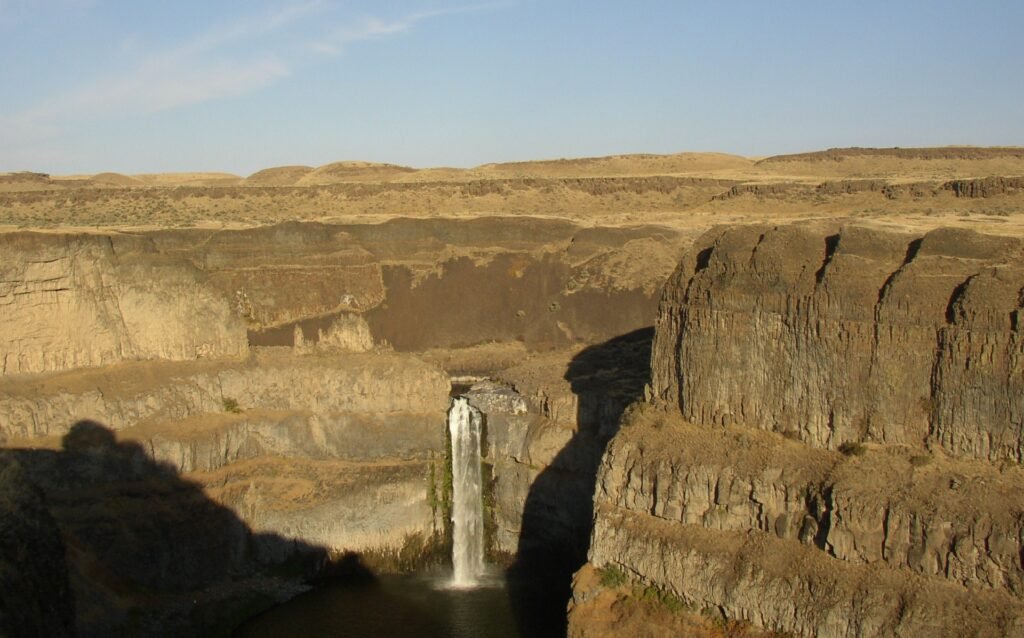
Palouse Falls
Washington’s official state waterfall, dropping 198 feet into a dramatic basalt canyon carved not gradually over millions of years but catastrophically, during a series of massive Ice Age floods roughly 13,000-15,000 years ago, when glacial Lake Missoula repeatedly burst through an ice dam and sent walls of water racing across the region at speeds comparable to a tsunami — geologists estimate the floodwaters here may have moved at speeds exceeding 65 miles per hour, carving the canyon in a geological instant compared to typical erosional timescales.
Franklin/Whitman County line, southeastern Washington. Park entry fee (Discover Pass required). Best in spring for maximum water flow, since the falls can slow considerably by late summer.
Spokane
Washington’s second-largest city, its Riverfront Park built around a genuinely dramatic set of waterfalls directly in the urban core, a legacy of the site hosting the 1974 World’s Fair, one of the smallest cities ever to host a World Expo.
Eastern Washington. Free to explore park. Best combined with a broader downtown Spokane visit given the waterfall’s central location.
Yakima Valley
The heart of Washington’s hop-growing industry, producing roughly 75% of all hops grown in the United States, a genuinely significant contribution to American beer that most drinkers never realize traces back to this specific Eastern Washington valley.
Central-Eastern Washington. Free to drive through; individual farm and winery tours vary. Best in late summer for hop harvest season.
Long Beach Peninsula
Home to the longest continuous beach in the United States at 28 miles, this genuinely uncrowded stretch of Pacific coastline offers a quieter alternative to Oregon’s more heavily touristed coast just across the Columbia River mouth.
Southwestern Washington coast. Free. Best in summer for the most comfortable beach weather, though the Pacific water itself stays cold year-round.
The Columbia River Gorge
The dramatic river canyon forming much of the Washington-Oregon border holds significant volcanic history and industrial-era engineering.
Mount St. Helens
The site of the most destructive volcanic eruption in US history, the 1980 blast that killed 57 people and dramatically reshaped the mountain’s summit, today offering a genuinely rare opportunity to observe an active volcanic recovery landscape decades into its ongoing ecological regeneration, with scientists still actively studying how life has gradually returned to the blast zone.
Southwestern Washington, near the Columbia River Gorge. Park/monument entry fee. Best in summer for full visitor center and viewpoint access.
Mount Rainier National Park
Home to the most heavily glaciated peak in the contiguous United States, its 14,411-foot summit visible from Seattle on clear days, the mountain remains an active volcano genuinely monitored for potential future eruption given its history and proximity to populated areas, making it one of the most closely watched volcanoes in the entire Cascade Range.
South-central Washington, near the Columbia River Gorge region. Park entry fee. Best in July-August for peak wildflower bloom in the Paradise area meadows.

Snoqualmie Falls
A genuinely dramatic 268-foot waterfall — taller than Niagara Falls — located remarkably close to the Seattle metro area, making it one of the most accessible major waterfalls in the entire state, with a well-developed observation deck requiring no hiking whatsoever, drawing well over a million visitors annually as a result of that convenient proximity.
Near North Bend, Cascade foothills. Free. Best after rainfall for maximum water flow, though the falls run genuinely impressively year-round.
Tacoma’s Museum District
A genuinely dense concentration of significant museums within walking distance of each other, including the Museum of Glass (celebrating Tacoma’s status as the hometown of renowned glass artist Dale Chihuly) and the Washington State History Museum, offering a compact, walkable cultural district within a city often overshadowed by nearby Seattle.
Tacoma. Individual museum entry fees vary. Best allotting a full day given the district’s genuine density of significant museums.
Gig Harbor
A genuinely picturesque fishing village on a protected harbor, its working waterfront and Mount Rainier views offering a quieter alternative to more heavily touristed Puget Sound towns, still home to an active commercial fishing fleet.
South Puget Sound, near Tacoma. Free to explore. Best at sunset for the harbor’s classic Mount Rainier backdrop photograph.
Bellingham
A genuinely lively college and waterfront town near the Canadian border, its combination of Western Washington University’s cultural offerings and easy access to both the San Juan Islands and North Cascades making it a genuinely well-positioned base for exploring northern Washington.
Northwestern Washington, near the Canadian border. Free to explore. Best combined with a broader San Juan Islands or North Cascades trip given the central location.
San Juan Islands Ferry Basics
Washington State Ferries operates the primary route to the San Juan Islands from Anacortes, and the system genuinely functions as an extension of the state highway network rather than a purely tourist-oriented service — locals rely on it daily, meaning summer weekend crossings can involve genuinely significant wait times, particularly for vehicles rather than walk-on passengers. Reservations are available and strongly recommended during peak summer season, since arriving without one can mean waiting through several ferry sailings before securing a vehicle spot, sometimes stretching a wait into several hours during the busiest holiday weekends.
Walking or biking onto the ferry, when feasible, avoids vehicle wait times entirely and remains a genuinely popular strategy among experienced San Juan Islands visitors, particularly for day trips that don’t require a car once on the islands themselves — many of the islands’ small towns are genuinely walkable, and bike rentals are widely available for visitors wanting to explore further without their own vehicle. The ferry route itself also functions as a scenic experience in its own right, weaving between smaller islands with genuine wildlife-viewing potential, including occasional orca sightings directly from the ferry deck.
Washington Wine Country
Washington State holds the second-largest wine industry in the United States by production, a fact that genuinely surprises many visitors given the state’s rainy Pacific Northwest reputation — the wine industry is concentrated almost entirely in the arid Eastern Washington region, particularly the Yakima Valley, Walla Walla Valley, and Columbia Valley, where the same rain shadow effect that keeps the region dry also creates genuinely ideal grape-growing conditions with intense summer sun and cool nights. Washington’s climate favors Bordeaux-style red varieties, particularly Cabernet Sauvignon and Merlot, alongside genuinely excellent Riesling and Syrah, giving the state’s wine industry a distinct character from both California’s warmer-climate wines and the cooler-climate wines of nearby Oregon.
The Walla Walla Valley in particular has developed a genuinely serious reputation among wine critics over the past few decades, its small-town main street now home to dozens of tasting rooms within easy walking distance of each other, a genuinely rare concentration for a wine region this far from a major metro area. Given how far Eastern Washington’s wine country sits from Seattle — Walla Walla alone is roughly a four-and-a-half-hour drive — most visitors find it more rewarding to treat wine country as its own dedicated leg of a trip rather than a quick day trip tacked onto a Western Washington itinerary.
Washington Food Worth Seeking Out
Pacific Northwest seafood, particularly wild-caught salmon and Dungeness crab, remains genuinely central to Washington’s food identity, with Seattle’s Pike Place Market functioning as the most famous but far from only place to experience the region’s seafood tradition directly — smaller coastal towns along the Olympic Peninsula and Puget Sound often offer more authentic, less touristed versions of the same fresh-caught experience. Washington coffee culture, having genuinely originated the modern American espresso-focused coffeehouse movement through Seattle-based companies, extends well beyond the city itself into a statewide culture of independent coffee shops and drive-through espresso stands found even in small Eastern Washington towns, a genuinely ubiquitous feature of daily life across the state regardless of region.
Washington apples, the state’s most significant agricultural export and a genuine point of statewide identity, are worth seeking out fresh from Yakima Valley or Wenatchee orchards during fall harvest season, when varieties rarely found in supermarkets outside the region become briefly available — Washington produces roughly two-thirds of all apples grown in the United States, a scale that genuinely surprises visitors unfamiliar with the state’s agricultural side. Yakima Valley hops, contributing to roughly 75% of all US hop production, give Washington-brewed craft beer a genuinely distinctive, often more aggressively hoppy character that’s shaped broader American craft beer trends over the past several decades, making the state’s craft brewing scene worth exploring well beyond Seattle’s own breweries.
Best Time to Visit Washington State
July through September offers the most reliable dry weather statewide and the best access to North Cascades mountain passes, several of which close entirely each winter and don’t reopen until late spring or early summer depending on snowpack — the North Cascades Highway in particular is a genuinely seasonal road, closed roughly November through April in a typical year. Western Washington stays mild and famously wet most of the year, with a genuinely persistent gray, drizzly period from roughly November through March that shapes much of the region’s cultural identity, while Eastern Washington sees considerably hotter, drier summers and colder winters given its more continental climate pattern east of the Cascade rain shadow.
Fall brings genuinely spectacular larch tree color to the North Cascades’ high alpine areas, particularly around the Enchantments, typically peaking in early-to-mid October — a narrow, popular window worth planning around given the larch’s status as one of the only deciduous conifers, turning brilliant gold before dropping its needles entirely each winter. Winter suits Mount Baker’s legendary snowfall for serious skiing, while spring remains genuinely unpredictable across the mountainous regions, with snow lingering at higher elevations well into June in a typical year.
I cover all 25 hidden gems from this guide in the video above. If this guide helped you plan your Washington State trip, subscribe to Worldly Traveler on YouTube for more travel guides from around the world.
Frequently Asked Questions
What are the best hidden gems in Washington State?
Some of the best hidden gems in Washington State include Palouse Falls, the Hoh Rain Forest, the San Juan Islands, Leavenworth’s Bavarian village, and the North Cascades National Park, all offering a side of the state beyond Seattle.
Is Washington State’s climate really that different from east to west?
Yes, genuinely dramatically — the Cascade Mountains create a rain shadow effect, meaning western Washington is famously wet and lush while Eastern Washington, just a few hours away, is arid and sunny, with some areas resembling a desert.
How many days do you need to explore Washington State’s hidden gems?
10-14 days allows a well-paced trip covering the Olympic Peninsula, the North Cascades, and either the San Juan Islands or Eastern Washington’s wine country. A shorter 5-7 day trip can focus on just one region.
What is the best time of year to visit Washington State?
July-September offers the most reliable dry weather statewide and the best access to North Cascades mountain passes, which close each winter. Western Washington stays mild and wet most of the year, while Eastern Washington sees hotter, drier summers and colder winters.
Do you need a ferry to reach the San Juan Islands?
Yes — the San Juan Islands are accessible by Washington State Ferries from Anacortes, or by seaplane, since none of the main islands have a bridge connection to the mainland.