
Portugal is small enough that you genuinely can see its best-known regions in ten days without feeling rushed, which is part of why it’s become such a popular first-time European destination. This itinerary, built alongside this site’s own in-depth guides to Lisbon, Porto, and the Algarve, moves from the capital through Sintra’s palaces, north to Porto’s wine cellars, and down to the Algarve’s cliffs and beaches, with enough breathing room at each stop to actually settle in.
The route below is deliberately linear rather than a loop, starting in Lisbon, heading north to Porto, and then working south to the Algarve before flying home. If your flights make more sense the other way around, the itinerary works just as well in reverse. Either way, the goal here is depth over speed: four real destinations, each given enough time to feel like more than a checklist stop.
Portugal’s small size is genuinely part of what makes an itinerary like this work so well, but it’s easy to underestimate just how different Lisbon, Porto, and the Algarve actually feel from each other. Lisbon has a cosmopolitan, hilly energy shaped by centuries as a maritime capital. Porto feels grittier and more working-class, still defined by its wine trade and its river. And the Algarve is a different country altogether, a sun-drenched coastline that spent over five centuries under Moorish rule before it ever became a beach destination. Moving through all three in one trip gives you a genuinely fuller sense of the country than sticking to just one region ever could.
Days 1-2: Lisbon
Day 3: Sintra
Days 4-6: Porto
Days 7-10: The Algarve
Getting Around: Trains, Cars, and Flights
Budget Basics
Best Time for This Itinerary
FAQ
Days 1-2: Lisbon
Arrive in Lisbon and ease into the trip with an afternoon in Belém, where the Belém Tower and Jerónimos Monastery show off Portugal’s Age of Discovery in genuinely spectacular Manueline architecture. Grab a pastel de nata from the original Pastéis de Belém bakery while you’re there, since it’s a five-minute walk from both sites.
Spend the morning getting lost in the Alfama, Lisbon’s oldest neighborhood, working your way up to Castelo de São Jorge for the best views in the city. In the afternoon, head down into the Baixa for the Santa Justa Lift and Praça do Comércio, then close out the evening with a fado performance in the Alfama, ideally at a small tavern rather than a large tourist venue.
Day 3: Sintra
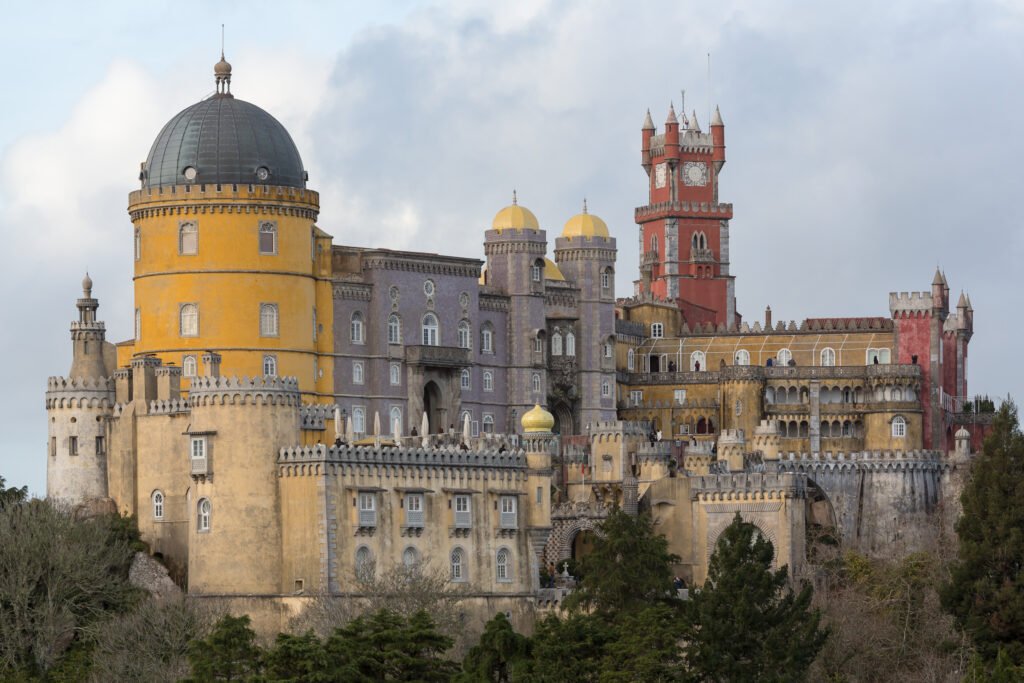
Take the train from Lisbon’s Rossio Station (about 40 minutes) to Sintra, a hill town so packed with royal palaces and eccentric estates that it earned its own UNESCO World Heritage listing. Pena Palace, a wildly colorful 19th-century Romanticist castle, is the headline stop, but Quinta da Regaleira, with its symbolic underground initiation well, is genuinely just as strange and memorable. Sintra gets crowded fast, so an early start, ideally on the first train out of Lisbon, makes a real difference. Head back to Lisbon in the evening for one more night before moving north.
Days 4-6: Porto

Take the train north to Porto (roughly 2.5 to 3 hours). Spend the afternoon wandering the Ribeira district along the river, and cross the Dom Luís I Bridge for sunset views back over the city from Vila Nova de Gaia.
Spend the morning touring a port wine cellar in Vila Nova de Gaia, then head back across the river for the afternoon to see Livraria Lello, Clérigos Tower, and São Bento Station’s tiled entrance hall. Book your Livraria Lello ticket online in advance, since walk-up lines here can eat up an hour or more.
Take a train, guided tour, or river cruise into the Douro Valley, where port wine’s grapes are actually grown across some of the oldest terraced vineyards in the world. A single day gives you time for a scenic train ride and a tasting or two at a working quinta. Return to Porto in the evening.

Days 7-10: The Algarve
Fly from Porto to Faro (there’s no direct high-speed rail for this leg, so flying is genuinely the more practical option), then pick up a rental car and drive to Lagos, roughly 1.5 hours west. Spend the evening in the old town, which still holds a genuine sense of history behind its beach-town surface.
Take a morning boat or kayak tour through the sea caves and grottoes of Ponta da Piedade, then drive out to Cabo de São Vicente near Sagres in the afternoon, once believed to be the edge of the known world. It remains one of the most dramatic, least developed stretches of coastline in the entire country.

Drive east to the central Algarve for a boat tour to the Benagil Cave, the sea cave with a natural skylight that’s become one of the most photographed spots in Portugal. If you have energy left, Praia da Marinha, just down the coast, is genuinely worth a stop for its own dramatic cliffs and clear water.
Spend the morning in Silves, once the capital of the Moorish kingdom that gave the Algarve its name, with a red sandstone castle overlooking the town and river. Head to Faro Airport for your departure, or extend the trip with additional Algarve days if your schedule allows.
Getting Around: Trains, Cars, and Flights
Lisbon and Porto are both genuinely walkable cities, and neither one needs a car, which is exactly why this itinerary has you pick up a rental only once you reach the Algarve, where the best beaches and villages sit well outside the train network. The Lisbon-Porto leg runs smoothly by train, taking roughly 2.5 to 3 hours and dropping you directly into each city’s center, a genuinely more comfortable option than flying once you factor in airport transfer time on both ends.
Getting from Porto down to the Algarve is the one leg where flying genuinely makes more sense than the train, since there’s no direct high-speed rail connection and the drive would eat an entire day. A short flight from Porto to Faro, followed by a rental car pickup, is the more practical route for that transition. Within Sintra, the local bus network connects the train station to the hilltop palaces, though many visitors find a taxi or rideshare genuinely worth the extra cost given how steep and spread out the palace grounds are.
Budget Basics
Portugal remains one of the more affordable countries in Western Europe, and this itinerary is genuinely achievable on a mid-range budget without sacrificing much in the way of comfort. Restaurant meals, hotels, and train travel typically cost noticeably less here than in France, Italy, or Spain, and even the Algarve, Portugal’s most internationally popular region, stays reasonable outside the most resort-heavy stretches of coast. Lisbon and Porto in particular offer genuinely excellent value for the quality of food and accommodation on offer, especially compared to similarly sized cities elsewhere in Western Europe.
A few costs are worth booking ahead specifically: Livraria Lello’s entry ticket, Benagil boat tours during peak season, and any Douro Valley cruise or tasting experience, since same-day availability for all three can be genuinely unreliable in summer. Renting a car for the Algarve leg of the trip is usually more cost-effective than relying on taxis once you’re there, given how spread out the coastline’s best beaches and villages actually are, and booking that rental in advance rather than at the airport counter typically saves a meaningful amount as well.
Best Time for This Itinerary
April through June and September offer the most comfortable temperatures across this entire route, avoiding both the sharp summer heat that settles over the Algarve in July and August and the wetter, grayer stretches of Porto’s winter. Spring brings Sintra’s gardens into bloom and keeps Lisbon and Porto pleasantly mild, though the Algarve’s water can still feel a little cool for swimming before June, worth keeping in mind if beach time is a priority for the final stretch of the trip.
Summer works fine for Lisbon and Porto despite the crowds, but the Algarve gets genuinely busy and expensive during July and August, so booking accommodation well ahead matters if you’re traveling in that window, particularly for the central coast around Benagil and Lagos. September is arguably the sweet spot for this whole itinerary: the Algarve’s water is at its warmest, the summer crowds have thinned, and the Douro Valley’s grape harvest adds a little extra to the Porto leg of the trip, with working quintas often opening up more of their harvest activity to visitors during this specific window.
This itinerary draws on this site’s dedicated guides to Lisbon, Porto, and the Algarve, check those out for a deeper dive into any single stop. If this guide helped you plan your Portugal trip, subscribe to Worldly Traveler on YouTube for more travel guides from around the world.
Frequently Asked Questions
Is 10 days enough for Portugal?
Yes, 10 days is genuinely enough to see Lisbon, Sintra, Porto, and a stretch of the Algarve at a comfortable pace, without the rushed, one-night-per-stop feeling that makes shorter trips exhausting.
Should I rent a car in Portugal?
It depends on the leg. Lisbon and Porto are best explored without a car, but a car genuinely helps for Sintra’s palaces and especially for the Algarve, where the best beaches and villages sit outside the train network.
How do you get from Lisbon to Porto?
The train is genuinely the best option, taking roughly 2.5 to 3 hours depending on the service, and it drops you directly into each city’s center rather than an airport requiring a further transfer.
How much does 10 days in Portugal cost?
Portugal remains one of the more affordable countries in Western Europe, with restaurant meals, hotels, and train travel typically costing noticeably less than comparable trips in France, Italy, or Spain.
What is the best time of year for this itinerary?
April through June and September offer the most comfortable temperatures across the whole route, avoiding both the intense Algarve summer heat and any winter rain in the north.