
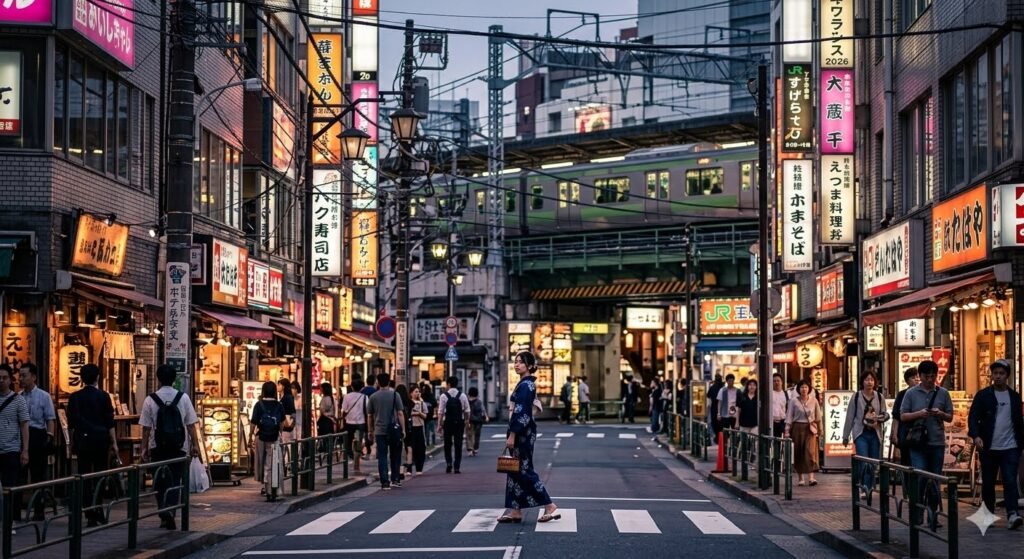
Japan rewards preparation more than most destinations — a country where etiquette genuinely matters, transportation runs on a logic worth understanding in advance, and the best experiences often sit well outside Tokyo and Kyoto’s tourist core. This Japan travel guide combines hidden gems, the mistakes to avoid, and the practical basics for planning a trip, all pulled from three real guides. I cover this across three videos, embedded below.
Hidden Gems in Japan
Beyond Tokyo’s neon districts and Kyoto’s temples, Japan holds a wide range of destinations that rarely make a first-time itinerary.
Tottori Sand Dunes
Japan’s largest sand dune system, stretching along the Sea of Japan coast in Tottori Prefecture, offering a surreal desert-like landscape that surprises most visitors expecting only forests and cities from Japan.
Tottori Prefecture. Free to explore. Best in the early morning or evening to avoid midday heat.
Ouchi-juku
A remarkably preserved Edo-period post town, its thatched-roof houses lining a single main street that looks essentially unchanged for centuries, now lined with local shops and restaurants.
Fukushima Prefecture. Free to explore. Best in winter when the thatched roofs are covered in snow.
Okunoshima (Rabbit Island)
A small island in the Seto Inland Sea home to hundreds of free-roaming rabbits, with a genuinely dark WWII-era history as a secret chemical weapons production site now largely forgotten by most visitors who come only for the animals.
Hiroshima Prefecture, ferry from Tadanoumi. Ferry fare. Best in the morning before rabbits retreat from midday heat.

Hashima Island (Battleship Island)
An abandoned coal-mining island off Nagasaki, its dense concrete apartment ruins earning it the nickname “Battleship Island” for its silhouette, now a UNESCO World Heritage Site accessible by limited boat tour.
Nagasaki Prefecture, boat tour required. Tour fee; landing access weather-dependent. Best on a calm-sea day.
Iya Valley
One of Japan’s most remote and dramatic mountain valleys, on Shikoku island, known for its vine bridges and steep, terraced countryside that feels far removed from urban Japan.
Tokushima Prefecture, Shikoku. Free to explore; vine bridge crossing has a small fee. Best in autumn for foliage.
Nakasendo Trail
A historic Edo-period trade route connecting Kyoto and Tokyo, with a well-preserved stretch between the post towns of Magome and Tsumago offering one of the best short historical hikes in the country.
Nagano/Gifu Prefectures. Free. Best in spring or autumn for comfortable hiking weather.
Shirakawa-go
A UNESCO World Heritage mountain village famous for its steep thatched “gassho-zukuri” farmhouse roofs, designed to shed heavy snowfall, especially striking when illuminated during winter.
Gifu Prefecture. Free to explore village; some houses charge entry. Best in winter for the snow-covered roofs, though also the most crowded season.
Mistakes Tourists Make in Japan
Japan’s cultural norms differ enough from many Western countries that a handful of unintentional missteps can genuinely affect how locals perceive and treat visitors.
Talking Loudly in Public
Public spaces, especially trains, run notably quieter in Japan than in much of the West — phone calls on trains are considered particularly rude, and conversations are generally kept at a low volume.
Not Removing Shoes
Many traditional restaurants, ryokan (inns), and some homes require shoes to be removed at the entrance — watch for a raised floor or a designated shoe area (genkan) as the cue.
Not Respecting Queue Etiquette
Japan has strong, consistently followed norms around orderly queuing, particularly for trains — cutting in line or failing to queue properly stands out immediately.
Eating While Walking
Eating on the go is generally considered poor etiquette in Japan, especially in busy pedestrian areas — food from street vendors is typically meant to be eaten standing near the stall rather than carried while walking.
Not Learning Basic Japanese Phrases
While major cities have decent English signage, a few basic Japanese phrases (hello, thank you, excuse me) go a long way, especially outside Tokyo, Kyoto, and Osaka.
Ignoring No-Photography Signs
Certain temples, shrines, and cultural sites explicitly prohibit photography in specific areas — these signs are meant to be respected, not treated as optional.
Chopstick Etiquette Mistakes
Sticking chopsticks upright in a bowl of rice or passing food directly from chopsticks to chopsticks both carry funeral associations in Japanese culture and should be avoided.
Sorting Trash Incorrectly
Japan has detailed waste-sorting systems that can be confusing for visitors, and public trash cans are notably rare — carrying trash until you find an appropriate bin is standard practice.
Trying to Tip
Tipping isn’t customary in Japan and can even cause confusion or be quietly declined — excellent service is simply the standard, not something requiring an extra payment.
Japan Travel Basics
JR Pass: The Japan Rail Pass offers unlimited travel on JR trains (including most bullet trains) for a fixed period, and is worth it primarily for itineraries involving multiple long-distance city-to-city trips. Travelers staying mostly within one region may find individual tickets more economical — calculate your planned routes before purchasing.
Etiquette basics: Beyond the mistakes above, general politeness, quiet public behavior, and following posted rules closely will serve any traveler well throughout the country.
Cash vs. card: Japan has become more card-friendly in recent years, especially in cities, but many smaller restaurants, shops, and rural areas remain cash-preferred or cash-only — carrying yen is still recommended.
Best time to visit: Late March to early April brings cherry blossom season, and October to November brings fall foliage — both beautiful but crowded and pricier. Summer is hot and humid; winter is cold but less crowded, with excellent skiing in northern regions.
I cover hidden gems and travel mistakes across the videos above. If this guide helped you plan your Japan trip, subscribe to Worldly Traveler on YouTube for more travel guides from around the world.
Frequently Asked Questions
What is the best time to visit Japan?
Late March to early April (cherry blossom season) and October to November (fall foliage) are the most popular and scenic times to visit, though also the busiest and most expensive. Winter and early summer offer smaller crowds.
Is the JR Pass worth buying for a Japan trip?
It depends on your itinerary. The JR Pass is worth it for trips involving multiple long-distance bullet train journeys between cities, but travelers staying primarily in one region may find individual tickets cheaper.
What are common mistakes tourists make in Japan?
Common mistakes include talking loudly in public, not removing shoes where required, eating while walking, not learning basic etiquette around queuing, and trying to tip, which isn’t customary in Japan.
Do you need to speak Japanese to visit Japan?
Not strictly, especially in Tokyo, Kyoto, and Osaka where English signage and some English-speaking staff are common. Learning a few basic Japanese phrases is appreciated and makes rural travel considerably easier.
Is Japan expensive to visit?
Japan can be visited on a range of budgets. Accommodation and dining offer options from very affordable (convenience store meals, business hotels) to luxury, and transportation costs depend heavily on how much long-distance travel your itinerary includes.
How many days do you need in Japan?
10-14 days allows a well-paced trip covering Tokyo, Kyoto/Osaka, and at least one off-the-beaten-path region. A shorter 7-day trip can comfortably cover Tokyo and Kyoto alone.