
Greece counts well over 200 inhabited islands, and choosing among them is genuinely one of the hardest parts of planning a Greek vacation. This guide covers the best Greek islands to visit — the famous names that anchor most first-time itineraries, plus 20 genuinely lesser-known islands and destinations that rarely make a standard travel list, along with Athens as the gateway most trips start from. I cover this across three videos, all embedded below.
Greece’s islands are conventionally grouped into clusters — the Cyclades (Santorini, Mykonos, Naxos, and their neighbors), the Dodecanese (Rhodes, Kos, and the islands closest to Turkey), the Ionian islands (Corfu, Paxos, and the islands off Greece’s west coast), and the Sporades and northern Aegean islands, plus Crete standing alone as the largest island in the country. Each cluster has a genuinely distinct character shaped by different historical influences — Venetian rule in the Ionian islands, centuries of Ottoman and Crusader-era history in the Dodecanese, and the stark, whitewashed Cycladic style most people picture when they imagine “Greek islands” at all. Understanding which cluster you’re drawn to is often a faster way to narrow down a first trip than trying to compare dozens of individual islands directly.
The Famous Islands
Hidden Gem Islands
Athens: Your Gateway City
How to Island Hop in Greece
Which Greek Island Is Right for You
FAQ
The Famous Islands
These five islands anchor most Greece itineraries, and each earns its reputation for a genuinely different reason.
Santorini
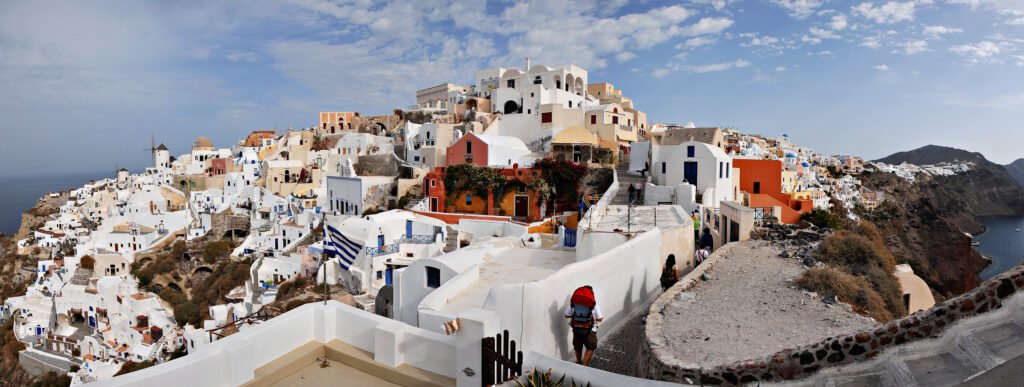
Formed by a massive volcanic eruption thousands of years ago, Santorini’s dramatic caldera cliffs are lined with whitewashed, blue-domed villages that deliver arguably the most photographed sunset view in the Mediterranean. Oia, on the island’s northern tip, draws crowds specifically for that sunset, while Fira, the main town, offers a livelier base with cable car access down to the old port.
Cyclades. Best April-June or September for fewer crowds. Reachable by ferry from Piraeus or by direct flight.
Mykonos
Known internationally for its beach clubs and nightlife, Mykonos also holds a genuinely beautiful old town (Chora), with its whitewashed alleyways and the iconic row of windmills overlooking Little Venice, a waterfront district where buildings rise directly from the sea.
Cyclades. Best June-September for full beach club season; May and October offer a quieter alternative. Reachable by ferry or direct flight.

Crete
Greece’s largest island holds enough variety to function almost as its own country — the Minoan ruins at Knossos, the dramatic Samaria Gorge hike, mountain villages, and beach towns along both its north and south coasts. Crete rewards a longer stay better than any other Greek island simply due to its size.
Southernmost major Greek island. Best April-October; size means it rarely feels overcrowded even in summer. Reachable by ferry or direct flight.
Rhodes
Home to one of the best-preserved medieval old towns in Europe, a UNESCO World Heritage Site built by the Knights Hospitaller, Rhodes combines genuine history with a scenic coastline and a reputation as the site of the ancient (long-vanished) Colossus of Rhodes.
Dodecanese. Best May-October. Reachable by ferry or direct flight.
Corfu
Shaped by centuries of Venetian rule, Corfu’s old town holds a distinctly Italian architectural character rare among Greek islands, set against some of the lushest, greenest landscape in the country.
Ionian Sea. Best May-September. Reachable by ferry from mainland Greece or Italy, or by direct flight.
Hidden Gem Islands & Destinations
Beyond the five household names, mainland Greece and dozens of smaller islands hold destinations most first-time visitors never discover.
Kastellorizo
Greece’s easternmost inhabited island, closer to the Turkish coast than to the rest of Greece, with a colorful harbor and a genuinely remote, low-key atmosphere.
Dodecanese, near Turkey. Ferry from Rhodes. Best in summer given limited off-season transport.
Voidokilia Beach
A perfectly crescent-shaped bay on the mainland Peloponnese coast, often cited as one of the most beautiful beaches in Greece, backed by dunes and a Byzantine castle on the headland above.
Peloponnese (mainland). Free. Best in the morning before beach crowds build.
Meteora Monasteries
A cluster of Eastern Orthodox monasteries built atop dramatic sandstone pillars in central mainland Greece, among the most visually striking religious sites in the world and a UNESCO World Heritage Site.
Thessaly (mainland), near Kalambaka. Entry fee per monastery; modest dress code enforced. Best at sunrise or sunset for the pillar lighting.

Syros Island
The administrative capital of the Cyclades, Syros holds a genuinely elegant neoclassical architecture rare among the islands, reflecting its history as a major 19th-century shipping and trade hub.
Cyclades. Ferry from Piraeus. Best for travelers wanting Cycladic scenery without Santorini’s crowds.
Samothrace Waterfalls
A mountainous, densely forested island in the northern Aegean, known for freshwater waterfalls and natural pools rather than beaches, offering scenery genuinely unlike the drier Cycladic islands further south.
Northern Aegean. Ferry from Alexandroupoli. Best in spring for fuller waterfalls.
Prespa Lakes
A remote twin-lake region in mainland Greece’s far north, shared with Albania and North Macedonia, offering pristine wetland scenery and some of the best birdwatching in the Balkans.
Western Macedonia (mainland). Free to explore. Best in spring for migratory birds.
Zagori Villages
A cluster of stone-built mountain villages in the Pindus range, connected by centuries-old arched stone bridges and hiking trails through the dramatic Vikos Gorge.
Epirus (mainland). Free to explore. Best in autumn for hiking weather and foliage.
Polilimnio Waterfalls
A series of small waterfalls and natural swimming pools connected by an easy forest trail in the Peloponnese, offering a genuinely refreshing stop rarely visited by island-focused travelers.
Peloponnese (mainland). Free. Best in late spring for fuller water flow.
Anafi Island
A tiny, sparsely developed island near Santorini, offering the dramatic Cycladic scenery of its famous neighbor with almost none of the crowds or infrastructure.
Cyclades, near Santorini. Ferry from Santorini or Piraeus. Best for travelers wanting genuine solitude.
Nisyros Volcano
A small volcanic island in the Dodecanese, home to a still-active caldera that visitors can walk directly into, offering a genuinely unusual geological experience.
Dodecanese. Ferry from Kos. Best combined with a Kos-based trip.
Monemvasia
A fortified medieval town built on a rocky peninsula connected to the Peloponnese mainland by a causeway, sometimes called the “Gibraltar of Greece” for its dramatic profile.
Peloponnese (mainland). Free to explore. Best at sunset for the fortress silhouette.
Lake Plastira
A man-made alpine lake in mainland Greece, ringed by mountains and traditional villages, offering scenery closer to the Alps than to typical Aegean island imagery.
Thessaly (mainland). Free. Best in autumn for foliage around the lake.
Tzoumerka
A rugged mountain range in the Pindus system, home to some of mainland Greece’s best hiking and least-developed rural villages.
Epirus (mainland). Free. Best in summer and early autumn.
Kythira Island
Positioned between the Peloponnese and Crete, Kythira has historical ties to both the Ionian and Aegean island groups, offering a genuinely quiet, under-visited alternative to its more famous neighbors.
Between Peloponnese and Crete. Ferry or flight from Athens. Best for travelers seeking an off-the-radar island.
Alonissos Marine Park
Part of the largest marine protected area in Europe, this island and its surrounding waters protect the endangered Mediterranean monk seal, with boat tours offering a chance at sightings.
Sporades. Ferry from Volos or Skiathos. Best for wildlife-focused travelers.
Loutro, Crete
A tiny, car-free fishing village on Crete’s south coast, accessible only by boat or a long coastal hike, offering genuine isolation within Greece’s most-visited island.
South coast Crete. Boat access from Chora Sfakion. Best for a slower, quieter Crete experience.
Mount Athos
A self-governing monastic community on a remote peninsula, home to 20 Eastern Orthodox monasteries, with access restricted to male visitors who obtain advance permits, making it one of the most unusual and exclusive destinations in Greece.
Chalkidiki (mainland). Advance permit required (men only). Best for travelers with a specific interest in Orthodox monastic history.
Paxos and Antipaxos
Small, forested islands near Corfu known for turquoise waters and sea caves rather than the sandy beaches typical elsewhere in Greece, popular as a boat-trip day destination from Corfu.
Ionian Sea, near Corfu. Ferry or boat tour from Corfu. Best for a day trip combined with a Corfu stay.
Dimitsana
A stone-built mountain village in the Peloponnese, historically significant for its role in the Greek War of Independence, with a museum dedicated to traditional water-powered industry.
Peloponnese (mainland). Free to explore town; museum entry fee. Best in autumn for mountain scenery.
Amorgos Island
A dramatic, cliff-lined Cycladic island made internationally famous by the film “The Big Blue,” home to the striking Hozoviotissa Monastery built directly into a cliff face.
Cyclades. Ferry from Naxos or Piraeus. Best for hikers and travelers seeking authentic Cycladic character.
Elafonisos
A small island off the Peloponnese coast known for pink-tinted sand beaches and shallow, lagoon-like turquoise water, often compared favorably to Caribbean beaches.
Near the Peloponnese. Short ferry from Neapoli. Best in summer for swimming.
Karpenisi
A mountain town in central Greece known as a winter sports and outdoor adventure hub, offering rafting, hiking, and skiing depending on season — genuinely unusual activities for a “Greece” trip.
Central Greece (mainland). Free to explore town; activities priced separately. Best in winter for skiing, summer for rafting.
Serifos Island
A rugged, still relatively undeveloped Cycladic island with a dramatic hilltop main town (Chora) and quiet beaches, popular with Greek travelers more than international tourists.
Cyclades. Ferry from Piraeus. Best for travelers wanting an authentic, less touristy Cyclades experience.
Agios Nikolaos, Crete
A picturesque harbor town on Crete’s north coast, built around a small, deep lake connected to the sea, offering a smaller-scale alternative base to Crete’s larger cities.
North coast Crete. Free to explore. Best for a Crete base with easy access to eastern Crete’s beaches.
Lefkada — Egremni Beach
One of the most striking beaches in the Ionian Sea, backed by dramatic white cliffs, reachable via a long staircase or by boat, on an island connected to the mainland by a causeway (unusual for a Greek island).
Ionian Sea. Connected to mainland by causeway/bridge. Best in early morning before beach crowds arrive.
Athens: Your Gateway City
Nearly every Greek island trip begins or ends in Athens, and the city deserves more than a rushed layover. As one of the oldest continuously inhabited cities in the world, Athens offers a genuinely different kind of experience than the island-hopping portion of a Greek trip — dense urban history, world-class museums, and a food and nightlife scene shaped by millions of residents rather than seasonal tourism. Even travelers eager to reach the islands are well served by budgeting at least a day or two here before or after, both to see the Acropolis properly and to break up the transition between a big city and island time.
The Acropolis & Parthenon
The defining symbol of ancient Athens, this hilltop temple complex remains one of the most significant surviving structures from classical antiquity, best paired with the modern Acropolis Museum at its base.
Central Athens. Entry fee, combined ticket available for multiple ancient sites. Best early morning to avoid both heat and crowds.

The Plaka Neighborhood
Athens’ oldest neighborhood, with narrow lanes climbing toward the Acropolis, mixing tavernas, small shops, and genuine Neoclassical architecture in the shadow of the ancient citadel.
Central Athens. Free to explore. Best for an evening meal after Acropolis sightseeing.
Day Trip: Cape Sounion
A dramatic clifftop Temple of Poseidon at the southern tip of Attica, offering one of the best sunset views near Athens and a genuinely worthwhile half-day trip from the city.
About 70km from Athens. Small entry fee. Best at sunset.
Day Trip: Delphi
The ancient sanctuary considered the “center of the world” in Greek mythology, home to the Oracle of Delphi, set dramatically on the slopes of Mount Parnassus.
About 180km from Athens. Entry fee. Best as a full-day trip, given the drive.
Day Trip: Aegina Island
A short ferry ride from Athens, Aegina offers a genuine island experience — including the well-preserved Temple of Aphaia — without needing to commit to a longer island-hopping itinerary.
Short ferry from Piraeus. Best as a day trip for travelers with limited time before or after island hopping.
How to Island Hop in Greece
Ferries connect the vast majority of inhabited Greek islands, typically departing from Piraeus (Athens’ main port) for the Cyclades and Saronic islands, or from regional hubs like Rhodes and Kos for the Dodecanese, and Volos or Kavala for the Sporades and northern Aegean. Both slower conventional ferries and faster (pricier) catamarans run most popular routes, with catamarans cutting travel time significantly on longer hops. Booking ahead matters most for July and August, when the busiest routes between islands like Santorini, Mykonos, and Naxos can sell out days in advance.
A well-paced multi-island itinerary typically pairs one or two of the famous islands with a quieter, less-visited stop — Santorini and Naxos, or Mykonos and Syros, for example — rather than attempting to hit five islands in one trip. Ferry schedules also shrink considerably outside peak season, so shoulder-season travelers should confirm current timetables before building a tight island-hopping itinerary.
Domestic flights offer a faster (if pricier) alternative for longer hops, particularly useful for reaching Crete or Rhodes directly from Athens without a multi-hour ferry crossing, or for connecting distant island groups that don’t have direct ferry links to each other. Many travelers combine flying into one island and ferrying between the rest, using air travel to save time on the longest single leg of a trip while keeping the more scenic, shorter hops on the water.
Which Greek Island Is Right for You
| Priority | Best Island |
|---|---|
| Iconic views & sunsets | Santorini |
| Nightlife & beach clubs | Mykonos |
| History & size to explore | Crete |
| Medieval architecture | Rhodes |
| Lush scenery, calmer pace | Corfu |
| Authentic, uncrowded Cyclades | Serifos or Syros |
| Hiking & dramatic cliffs | Amorgos |
| Genuine solitude | Anafi or Kythira |
Greek Food Worth Seeking Out
Fresh seafood forms the backbone of island dining — grilled octopus, fresh fish sold by weight, and dishes built around whatever the day’s catch brought in. Away from the coast, Greek cuisine leans on olive oil, tomatoes, and feta in dishes like horiatiki (Greek salad, which locals never call a “Greek salad”) and gemista (stuffed vegetables). Each island tends to have its own local specialty worth seeking out — Santorini’s cherry tomatoes and fava (yellow split pea puree) grown in the island’s volcanic soil, or Crete’s dakos (a barley rusk topped with tomato and cheese) and raki, a strong grape-based spirit often offered as a gesture of hospitality after a meal. Meals in Greece also tend to run later than many visitors expect, with dinner rarely starting before 8pm and often stretching well past 10pm during summer, especially on islands where the evening heat only breaks after sunset.
Practical Tips for a Greek Islands Trip
Pack for uneven terrain: Cobblestone streets, steep hillside towns, and boat boarding all favor sturdy sandals or walking shoes over anything with a thin sole.
Book accommodations early for peak season: Santorini and Mykonos in particular sell out popular caldera-view and beachfront properties many months in advance for July-August.
Carry cash for smaller islands: While cards are widely accepted in major towns, smaller villages and some ferry ticket offices still favor cash.
Confirm ferry schedules directly before travel: Weather, especially strong summer winds (the meltemi), can cause ferry delays or cancellations, particularly on Cyclades routes — build a buffer day into your itinerary if you have a flight to catch after island hopping.
I cover the famous islands, hidden gems across mainland and island Greece, and Athens across the three videos above. If this guide helped you plan your Greece trip, subscribe to Worldly Traveler on YouTube for more travel guides from around the world.
Frequently Asked Questions
What are the best Greek islands to visit?
Santorini, Mykonos, Crete, Rhodes, and Corfu are the most popular Greek islands, each offering a different experience — Santorini for dramatic caldera views, Mykonos for nightlife, Crete for size and history, Rhodes for medieval architecture, and Corfu for lush Venetian-influenced scenery. Lesser-known islands like Amorgos, Kastellorizo, and Kythira offer a quieter alternative.
How do you island hop in Greece?
Ferries connect most Greek islands, typically departing from the mainland ports of Piraeus (near Athens) or regional hubs, with faster catamarans and slower conventional ferries both available. Booking ahead during peak summer season is strongly recommended, especially for routes between popular islands.
Which Greek island is best for a honeymoon?
Santorini is the classic choice for its dramatic sunset views and caldera-view accommodations, though quieter islands like Amorgos or Folegandros offer a more private, less crowded romantic alternative.
Which Greek island is best for families?
Crete offers the most family-friendly mix of beaches, history, and infrastructure given its size, while Corfu’s calmer beaches and greenery also suit families well.
How many days do you need to visit the Greek islands?
10-14 days allows a meaningful multi-island trip combining 2-3 islands with a stop in Athens. A shorter 5-7 day trip works well focused on just one or two islands.
What is the best time of year to visit the Greek islands?
Late May through June and September offer warm weather with fewer crowds than the peak July-August season, when temperatures and prices both run highest and popular islands can feel overwhelmed.