
The Caribbean isn’t one destination, it’s a region of more than 7,000 islands, islets, and cays, each with its own personality, history, and reason to visit. This guide, checked against a real video tour, walks through ten of the best Caribbean islands, from dramatic volcanic peaks to some of the calmest, clearest water in the world, so you can figure out which one actually fits the trip you’re trying to take.
What trips people up when planning a Caribbean vacation is assuming the islands are more or less interchangeable, just pick whichever has the cheapest flight. They’re really not. Some islands were shaped by British colonial history, others by Spanish or Dutch rule, and that history still shows up in the language, the food, and the architecture today. Some are volcanic and mountainous, others are flat coral atolls with barely a hill in sight. Matching the island to what you actually want out of the trip makes a genuinely bigger difference here than in most other regions.
Saint Lucia
Barbados
Antigua
Aruba
Jamaica
The Bahamas
Turks and Caicos
Puerto Rico
The Cayman Islands
Dominican Republic
Choosing the Right Island for You
Caribbean Food Worth Seeking Out
Hurricane Season Basics
FAQ
Saint Lucia
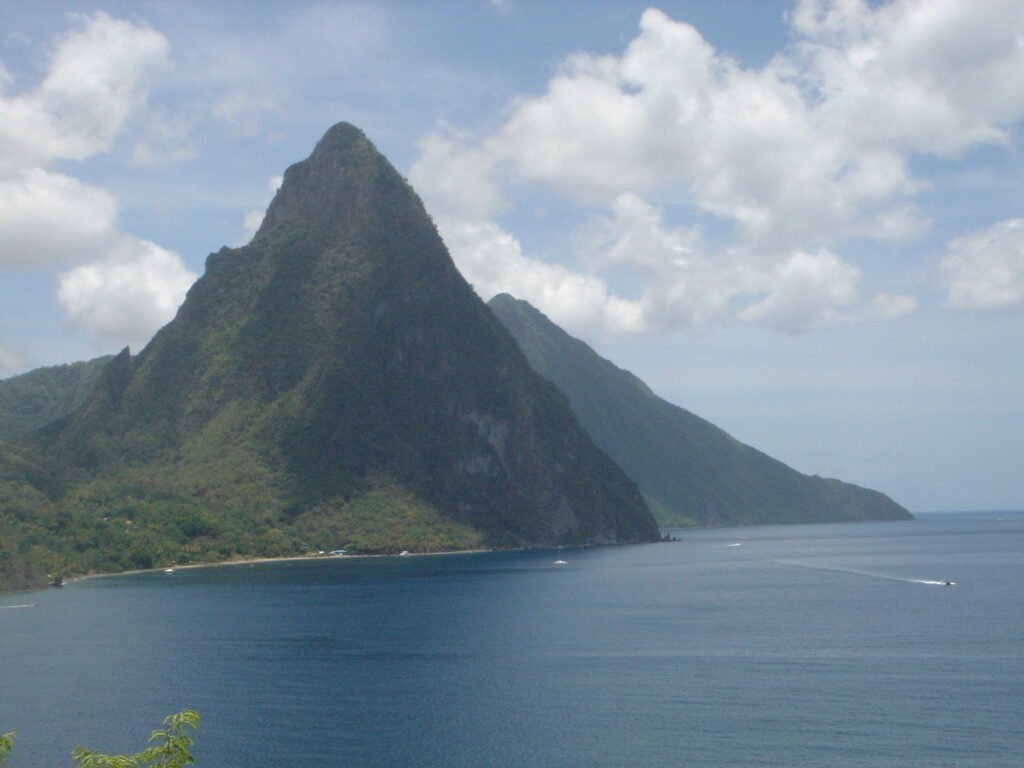
Saint Lucia is the Caribbean island people picture when they close their eyes and imagine dramatic scenery. The Pitons, twin volcanic peaks rising almost straight out of the sea near Soufrière, are the island’s defining image, and they’re genuinely as striking in person as in photos. Beyond the peaks, the island holds volcanic hot springs, lush rainforest hikes, and waterfalls tucked into the interior, making it a genuinely good fit for travelers who want more than a beach chair.
Best for: dramatic scenery, honeymoons, hiking. Best time to visit: December-April for the driest weather.

Barbados
Barbados brings a genuinely different energy than the more mountainous islands nearby, its history and culture feel front and center here, not just a backdrop to the beaches. The island’s British colonial heritage shows up in everything from its cricket obsession to its rum tradition (Barbados claims to be the birthplace of rum itself), and its golden-sand beaches on the west coast are calmer and more swimmable than the rougher Atlantic side to the east.
Best for: culture, history, rum tasting. Best time to visit: December-April, avoiding the wetter summer months.
Antigua
Antigua’s whole pitch is right there in the local saying: a beach for every day of the year, 365 of them, all told. That number is genuinely close to accurate, and it makes Antigua a great choice for travelers who want to island-hop between different coves and bays without ever leaving a single island.
Best for: beach variety, sailing. Best time to visit: December-April, and late April/early May for Antigua Sailing Week if that’s a draw.
Aruba
Aruba sits outside the main Caribbean hurricane belt, and its climate reflects that, genuinely dry and desert-like, with cacti and wind-sculpted rock formations on the island’s rugged eastern side that look almost nothing like the lush greenery found elsewhere in the region. That dry climate also means more reliable sunny days, paired with some of the calmest, clearest turquoise water in the Caribbean along the western coast.
Best for: reliable sunshine, calm water. Best time to visit: year-round, thanks to its position outside the hurricane belt.

Jamaica
Jamaica’s cultural footprint is enormous relative to its size, reggae music, Bob Marley, and a genuinely distinct culinary tradition (jerk chicken, ackee and saltfish) all trace back to this one island. Beyond the beach resorts along the north coast, Jamaica’s Blue Mountains offer serious hiking and some of the world’s most prized coffee, grown at high elevation in the island’s cooler interior.
Best for: music and culture, food, mountain scenery. Best time to visit: December-April for the driest, most comfortable weather.
The Bahamas
Technically not in the Caribbean Sea at all (the Bahamas sit in the Atlantic Ocean), but they’re grouped with the region so consistently that leaving them out would be a genuine oversight. Made up of over 700 islands, the Bahamas are known for some of the clearest, most vividly turquoise water anywhere in the world, particularly around the Exumas, a chain of small islands famous for swimming pigs and secluded sandbars.
Best for: water clarity, island hopping, boating. Best time to visit: December-April, though the islands stay warm nearly year-round.

Turks and Caicos
Grace Bay Beach, on the main island of Providenciales, is regularly ranked among the best beaches in the world, and the surrounding barrier reef, the third largest in the world, makes this a genuinely serious snorkeling and diving destination as well as a beach one. It’s a smaller, quieter, and generally more upscale alternative to some of the bigger, more built-up Caribbean destinations.
Best for: luxury, snorkeling, calm beaches. Best time to visit: December-April.
Puerto Rico
As a U.S. territory, Puerto Rico is genuinely easy for American travelers, no passport required, just a standard ID. Beyond that convenience, Old San Juan’s colorful, cobblestoned colonial streets hold centuries of Spanish colonial history, and the island’s interior includes El Yunque, the only tropical rainforest in the U.S. National Forest System, along with a bioluminescent bay that glows at night thanks to microorganisms in the water.
Best for: culture, history, easy travel for U.S. citizens. Best time to visit: December-April, avoiding peak hurricane season.

The Cayman Islands
Grand Cayman’s Seven Mile Beach (actually closer to six miles, despite the name) has been named the Caribbean’s best beach by multiple travel publications, and it’s entirely public, so you can walk its full length regardless of where you’re staying. Beyond the beach, the Cayman Islands are genuinely one of the top diving destinations in the entire Caribbean, known for dramatic wall dives where the seafloor drops away into deep blue in an instant.
Best for: diving, luxury resorts, calm beaches. Best time to visit: December-April, and outside peak hurricane months for calmer diving conditions.

Dominican Republic
The Dominican Republic offers genuinely the widest range of any island on this list within a single destination, all-inclusive beach resorts in Punta Cana, colonial history in Santo Domingo (home to the oldest European-founded city still standing in the Americas), and mountain adventure around Jarabacoa, where rafting and canyoning draw a different kind of traveler entirely than the resort crowd.
Best for: variety, all-inclusive resorts, adventure travel. Best time to visit: December-April, avoiding peak hurricane season.
Choosing the Right Island for You
If dramatic scenery and hiking matter most, Saint Lucia and Jamaica are genuinely the strongest picks, both offer real mountains and interior landscapes well beyond the coastline. If calm, reliably clear water for swimming and diving is the priority, Aruba, the Cayman Islands, and Turks and Caicos consistently deliver the most predictable conditions. For culture and history layered into the trip, Puerto Rico and Barbados both offer genuine depth beyond the beach. And if you want the widest possible range within a single destination, resorts, cities, and mountains all in one place, the Dominican Republic is genuinely hard to beat. Budget matters too: the Bahamas and Cayman Islands tend to run more expensive, while the Dominican Republic and Jamaica generally offer more value, especially through all-inclusive resort packages.
Caribbean Food Worth Seeking Out
Jamaican jerk chicken, marinated in a fiery blend of scotch bonnet peppers and allspice before slow-cooking over pimento wood, is worth seeking out from a roadside jerk stand rather than a resort buffet version. Barbadian flying fish, often served alongside cou-cou (a cornmeal and okra dish), is considered close to the island’s unofficial national dish. Puerto Rico’s mofongo, mashed fried plantains typically served with garlic and pork, reflects the island’s blend of African, Spanish, and Taíno culinary influences. And rum, in one form or another, runs through nearly every island on this list, Barbados, Jamaica, and Puerto Rico in particular all hold genuinely serious, centuries-old rum production traditions worth exploring at a proper distillery tour rather than just a poolside cocktail.
Hurricane Season Basics
Atlantic hurricane season officially runs from June 1 through November 30, with the highest risk genuinely concentrated in August, September, and into early October. December through April is widely considered the safest and most reliable window for Caribbean travel, avoiding both the storm risk and the higher humidity of the wetter summer months. That said, not every island carries equal hurricane exposure, Aruba and the southern Caribbean islands (including Trinidad and Tobago) sit outside the main hurricane belt and see storms far less often than islands further north like the Bahamas or Turks and Caicos. Travel insurance that specifically covers hurricane-related cancellations is genuinely worth considering for any Caribbean trip booked during peak season.
I cover all of these islands in the video above. If this guide helped you plan your Caribbean trip, subscribe to Worldly Traveler on YouTube for more travel guides from around the world.
Frequently Asked Questions
What is the best Caribbean island to visit?
It genuinely depends on what you want. Saint Lucia and Jamaica suit travelers after dramatic scenery, Aruba and the Cayman Islands are known for reliably calm water and diving, and Puerto Rico and the Dominican Republic offer the most to see beyond the beach itself.
What is the driest Caribbean island?
Aruba sits outside the main Caribbean hurricane belt and has a genuinely dry, desert-like climate, with cacti and rock formations on its eastern side that look more like Arizona than a typical tropical island.
Do I need a passport to visit Puerto Rico?
No, if you’re a U.S. citizen. Puerto Rico is a U.S. territory, so domestic travelers can visit with just a standard government-issued ID, the same as flying between U.S. states.
What is the best time of year to visit the Caribbean?
December through April offers the driest, most reliable weather and falls outside hurricane season, which runs roughly June through November with peak risk in August and September.
Which Caribbean islands are best for diving and snorkeling?
The Cayman Islands are genuinely among the best in the Caribbean for diving, thanks to their clear water and famous wall dives, and Turks and Caicos and Bonaire (part of the broader Dutch Caribbean) are also consistently ranked among the top spots.