
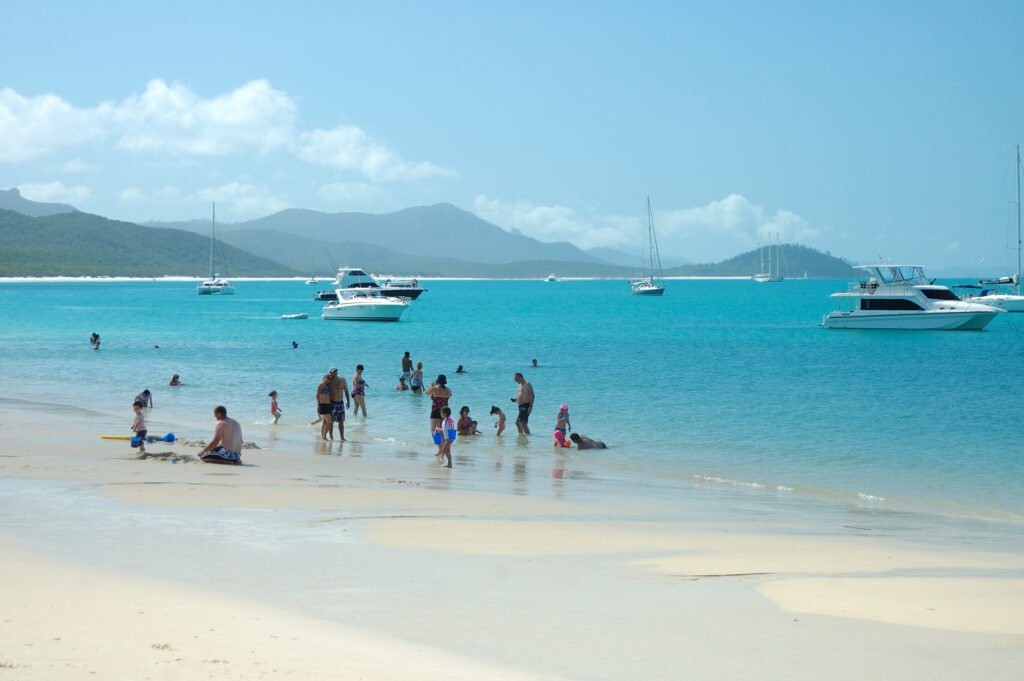
Ranking the world’s best beaches is a genuinely subjective exercise, what makes a beach great depends entirely on what you’re after, calm water for swimming, powerful waves for surfing, or just the most striking scenery for a few days of doing absolutely nothing. This guide, built from independent research, walks through some of the most consistently celebrated beaches on Earth, organized by region, so you can find the one that actually matches your trip.
What separates a genuinely great beach from just a nice one usually comes down to a combination of factors that don’t always show up in photos, water clarity, sand composition, how protected or exposed the coastline is, and how much development has crept in around it. Some of the world’s most photographed beaches have gotten so popular that the crowds themselves have become part of the experience, for better or worse, while others remain genuinely remote enough that reaching them is half the adventure.
The Caribbean
Southeast Asia
The Mediterranean
The Pacific & Oceania
Underrated Picks
Choosing a Beach for Your Trip
Best Time for Beach Travel by Region
FAQ
The Caribbean
Covered in more depth in this site’s dedicated Caribbean islands guide, a few specific beaches within the region stand out even among strong company.
Grace Bay, Turks and Caicos
Regularly ranked the single best beach in the Caribbean, and often in the world, Grace Bay’s calm, powder-soft sand and shallow, impossibly clear water make it genuinely ideal for swimming and relaxing rather than serious wave action.
Providenciales, Turks and Caicos. Free, public access. Best December-April for the driest, calmest conditions.
Seven Mile Beach, Grand Cayman
Entirely public despite the exclusive resorts lining it, this genuinely long, walkable beach pairs calm swimming with some of the best diving and snorkeling access in the entire Caribbean, thanks to the island’s famous wall dives just offshore.
Grand Cayman. Free, public access. Best December-April for calm seas and reliable diving conditions.
Southeast Asia
This region’s beaches pair dramatic limestone scenery with some of the most reliably warm water in the world.
Railay Beach, Thailand
Accessible only by boat, since sheer limestone cliffs cut it off from the mainland entirely, Railay draws rock climbers as much as beachgoers, its dramatic karst towers rising directly from the sand making it one of the most visually striking beach settings anywhere in Asia.
Krabi Province, Thailand. Free, public access; boat transport required. Best November-March, Thailand’s dry season.

El Nido, Palawan, Philippines
A cluster of limestone islands and hidden lagoons rather than a single beach, El Nido has become genuinely famous for its island-hopping tours, which weave between towering karst cliffs to reach beaches and swimming holes otherwise completely inaccessible.
Palawan, Philippines. Free, public access; island-hopping tour fees vary. Best November-May, avoiding the region’s wetter typhoon season.
Bali, Indonesia
Covered in more depth in this site’s dedicated Bali guide, the island’s southern beaches, from Uluwatu’s surf breaks to Seminyak’s beach clubs, offer a genuinely wide range of beach experiences within a relatively compact stretch of coastline.
Southern Bali. Free beach access; beach club prices vary. Best April-October, Bali’s dry season.
The Mediterranean
Europe’s beach scene trades tropical turquoise for a genuinely different kind of beauty, dramatic coastlines and centuries of history layered right up to the water’s edge.
Navagio Beach, Greece
Also known as Shipwreck Beach for the rusted cargo ship still resting on its sand, this cove on the island of Zakynthos is accessible only by boat, its sheer white cliffs and turquoise water making it one of the most photographed beaches in all of Greece.
Zakynthos, Greece. Boat tour fee required. Best May-September for calm boat access and warm water.
Cala Macarelleta, Menorca, Spain
A small, secluded cove on the quieter Balearic island of Menorca, its pine-backed cliffs and clear water offering a genuinely calmer, less crowded alternative to Mallorca and Ibiza’s busier beach scenes nearby.
Menorca, Balearic Islands, Spain. Free, public access (a walk in from the nearest parking area is required). Best June-September for the warmest water.
The Pacific & Oceania
The world’s largest ocean holds some of its most remote and consistently ranked beaches.
Whitehaven Beach, Australia
Made up of roughly 98% pure silica sand, so fine and reflective it stays genuinely cool underfoot even under direct tropical sun, Whitehaven has been officially named the cleanest beach in Queensland and regularly ranks among the most beautiful in the world. The neighboring Hill Inlet, where swirling patterns of sand and turquoise water shift with the tide, adds an entirely different, equally striking view just a short walk away.
Whitsunday Island, Queensland, Australia. Boat, seaplane, or helicopter access required. Best April-September for Queensland’s dry season and calmer seas.
Bora Bora, French Polynesia
An extinct volcanic island ringed by a coral reef and a lagoon so clear and vividly blue-green that it’s become genuinely shorthand for tropical paradise, home to some of the world’s most iconic overwater bungalow resorts.
Society Islands, French Polynesia. Resort and excursion prices vary widely. Best May-October, the dry season, for the calmest lagoon conditions.
Waikiki & the North Shore, Hawaii
Oahu genuinely offers two different beach experiences on the same island, Waikiki’s calm, resort-lined shore in the south, and the North Shore’s powerful winter surf, home to some of the most famous big-wave breaks in the world.
Oahu, Hawaii. Free, public beach access throughout. Best in summer for calm swimming at Waikiki, or winter for North Shore surf watching.
Underrated Picks
A handful of beaches genuinely deserve more attention than they typically get. Manuel Antonio’s beaches in Costa Rica, covered in more depth in this site’s Costa Rica guide, pair pristine sand with rainforest wildlife just steps away, a combination genuinely rare anywhere else in the world. Lucky Bay in Western Australia consistently ranks among the whitest sand beaches on Earth, and it’s famous for kangaroos that wander directly onto the sand, a sight that still surprises most first-time visitors. And Playa Norte on Isla Mujeres, just off Cancún, offers genuinely calm, shallow water and a far more relaxed pace than the busier mainland resort strip just a short ferry ride away.
Choosing a Beach for Your Trip
If calm, swimmable water is the priority, Grace Bay, Seven Mile Beach, and Bora Bora’s lagoon are all genuinely reliable choices, protected by reefs or geography that keep wave action minimal. For snorkeling and diving, the Cayman Islands, Bora Bora, and the Philippines’ El Nido all offer exceptional underwater visibility and healthy marine life close to shore. Surfers are better served by Hawaii’s North Shore, Bali’s Uluwatu, or Costa Rica’s Pacific coast, each with genuinely serious wave culture and a range of breaks for different skill levels. And for beaches where the scenery itself is really the point, dramatic cliffs, striking colors, genuinely unique geography, Whitehaven, Railay, and Navagio Beach all deliver on pure visual impact in a way that goes beyond just good swimming conditions.
Best Time for Beach Travel by Region
The Caribbean is best visited December through April, outside the June-November hurricane season, when both storm risk and humidity climb noticeably. Southeast Asia’s dry season generally runs November through April, though exact timing shifts by country and coast, Thailand’s Andaman coast and the Gulf coast actually run on slightly different rainy season patterns, worth checking specifically before booking. The Mediterranean peaks June through September, when water and air temperatures are both at their warmest, though late spring and early fall offer a genuinely good compromise of decent weather and thinner crowds. The Pacific and Oceania region varies considerably by hemisphere and specific island group, Hawaii and French Polynesia stay warm nearly year-round, while Australia’s dry season (April-September) is generally the more comfortable window for the country’s northern and eastern coastlines.
If this guide helped you plan your next beach trip, subscribe to Worldly Traveler on YouTube for more travel guides from around the world.
Frequently Asked Questions
What is the best beach in the world?
It genuinely depends on what you’re looking for. Whitehaven Beach in Australia is regularly ranked among the most beautiful for its pure silica sand, Railay in Thailand is famous for its limestone cliffs, and Grace Bay in Turks and Caicos consistently tops lists for calm, clear swimming water.
Why is the sand at Whitehaven Beach so white?
Whitehaven’s sand is made of roughly 98% pure silica, which reflects heat rather than absorbing it, keeping the sand cool underfoot even in direct tropical sun, and giving it a genuinely brilliant white color rarely found elsewhere.
What is the best beach for snorkeling?
The Great Barrier Reef in Australia, Bora Bora in French Polynesia, and the Cayman Islands are all genuinely excellent choices, each offering exceptionally clear water and healthy coral or marine life close to shore.
What is the best time of year for beach travel?
It depends heavily on the region and its specific rainy or storm season, but broadly, the Caribbean and Southeast Asia are best visited outside their respective hurricane and monsoon seasons, while the Mediterranean peaks from June through September.
What is the best beach for surfing?
Bali’s Uluwatu, Hawaii’s North Shore, and various beaches along Costa Rica’s Pacific coast are all genuinely world-renowned surf destinations, each with its own distinct wave style and skill level.