
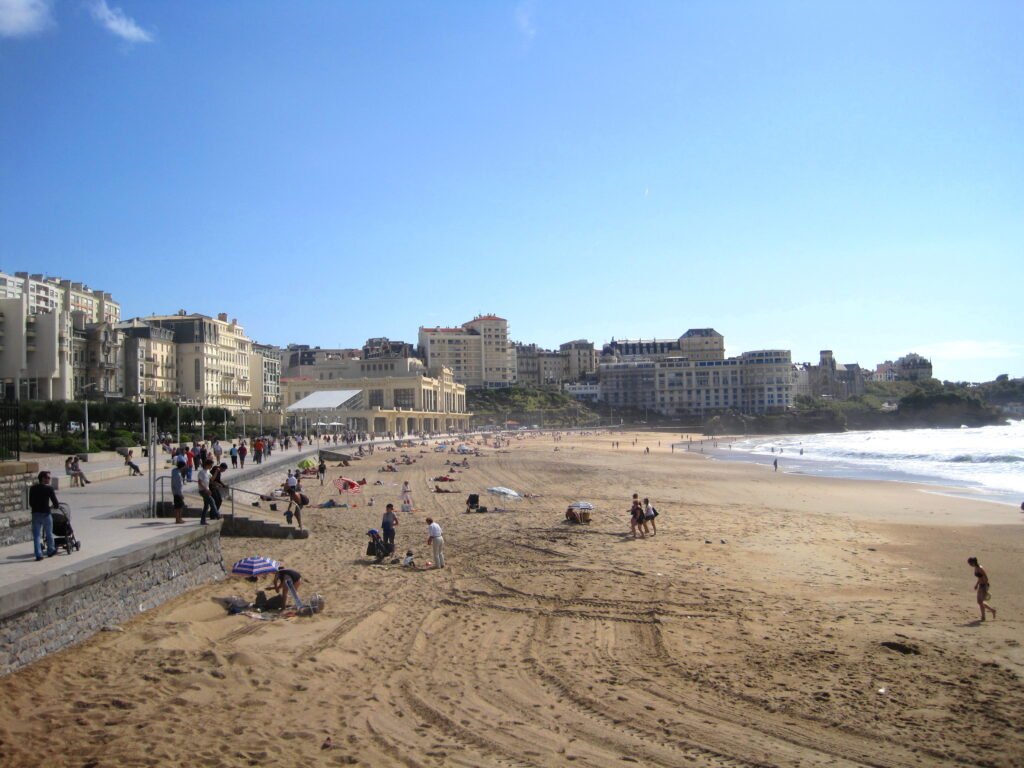
The best beaches in the Basque Country span two coastlines and two countries, from Biarritz’s surf-town Atlantic sweep to San Sebastián’s perfectly curved bay and the wilder, less developed coves further along the Spanish coast. This guide covers the standout beaches on both sides of the border, organized by country, with a note on the region’s serious surf credentials. For the full regional picture beyond the coast, see our Ultimate Guide to the Basque Country.
What sets the Basque coast apart from most of the Mediterranean beach destinations further south in Spain is the Atlantic itself — cooler water, real swell, and a coastline shaped more by cliffs and river mouths than long uninterrupted sand. That’s exactly why this stretch of coast became internationally significant for surfing rather than just sunbathing, and why even the calmer, family-friendly beaches here have a slightly wilder character than what you’d find on the Costa del Sol or the French Riviera. Whether you’re here to swim, surf, or just walk the promenade with a coffee, the two coastlines below offer genuinely different flavors of the same Atlantic energy.
It’s also worth noting how compact this stretch of coastline is. From Biarritz on the French side to Mundaka on the Spanish side is roughly a two-hour drive, and within that span sits an unusually dense concentration of internationally significant beaches — a genuine surf-culture birthplace, one of Europe’s most photographed urban bays, and a river-mouth wave regarded as one of the best in the world. Few coastlines this short pack in that much variety, which is part of why a dedicated beach-focused trip through the region works so well even without venturing far inland.
French Basque Coast Beaches
Spanish Basque Coast Beaches
Surfing in the Basque Country
FAQ
French Basque Coast Beaches
The French Basque coast is where European surf culture effectively began, and the beaches here reflect that — long sandy stretches built for both swimming and serious waves.
Grande Plage, Biarritz
Biarritz’s main beach, framed by grand Belle Époque hotels and the historic casino, offers a wide sandy stretch with consistent surf and a genuinely elegant resort backdrop. It hosts major surf competitions throughout the year and remains the visual heart of the town.
Biarritz. Free. Best in summer for swimming, year-round for watching surfers.
Côte des Basques, Biarritz
Biarritz’s other major beach, slightly south of Grande Plage, is the preferred spot for surfers and has a more laid-back, local atmosphere than the main tourist beach. Cliffside paths above the beach offer some of the best photo viewpoints in town.
Biarritz. Free. Best for surf lessons and a quieter scene.
Bidart & Guéthary Beaches
The small coves and beaches between Biarritz and Saint-Jean-de-Luz trade grandeur for a quieter, more local surf-town feel, with clifftop views and fewer crowds. Guéthary in particular is known among serious surfers for a powerful reef break.
Between Biarritz and Saint-Jean-de-Luz. Free. Best for travelers wanting Biarritz’s surf culture without the crowds.
Saint-Jean-de-Luz Beach
A sheltered bay beach in a working fishing port turned resort town, offering calmer water than the open-ocean beaches further north — one of the best options for families. Breakwaters at the bay’s mouth keep the water noticeably gentler than most of the coast.
Saint-Jean-de-Luz. Free. Best for families given the sheltered, gentle water.
Spanish Basque Coast Beaches
The Spanish Basque coast mixes San Sebastián’s famous urban beach with a wilder, more dramatic coastline further along toward Bilbao and the Urdaibai reserve.
La Concha, San Sebastián
Widely considered one of the most beautiful urban beaches in Europe, La Concha’s gentle crescent bay is framed by two mountains and a small island — calm, sandy, and easily the region’s most iconic beach. Its shape and sheltered position keep the water noticeably calmer than most Atlantic beaches nearby.
San Sebastián. Free. Best at sunrise before crowds arrive, or sunset for the light.

Zurriola Beach, San Sebastián
San Sebastián’s surf beach, in the Gros neighborhood, offers rougher Atlantic waves than the sheltered La Concha bay and draws a younger, more local crowd. It’s the city’s designated surf zone, with several schools offering lessons right off the sand.
Gros district, San Sebastián. Free. Best for surfing and a more local scene than La Concha.

Mundaka
A small fishing village within the Urdaibai Biosphere Reserve, world-famous among surfers for its long, perfectly formed left-hand wave — one of the best river-mouth breaks anywhere in Europe. The wave forms from sand deposited by the Oka River meeting the open Atlantic, a combination that’s genuinely rare.
Urdaibai Biosphere Reserve. Free. Best for experienced surfers; the wave breaks best at certain tides.

Hondarribia Coastline
The beaches near Hondarribia, close to the French border, offer a quieter alternative to San Sebastián’s busier stretches, with views across to Hendaye on the French side. The Hondartza beach here is smaller and calmer than the city beaches, making it a good pick for a slower, less crowded day.
Near Hondarribia. Free. Best for a quieter, less crowded beach day.
Ondarreta Beach, San Sebastián
La Concha’s quieter western neighbor, separated by the Peine del Viento sculptures, Ondarreta offers the same calm bay water with noticeably fewer crowds and a more residential, less touristy backdrop.
San Sebastián. Free. Best in the late afternoon.
Zarautz Beach
One of the longest beaches on the Spanish Basque coast, Zarautz is a genuine surf town in its own right, less internationally known than Mundaka but offering more consistent, beginner-friendly waves across a much longer stretch of sand.
Zarautz, between San Sebastián and Getaria. Free. Best for beginner surf lessons given the longer, gentler break.
Best Time of Year for Basque Beaches
July and August bring the warmest air and water temperatures, along with the heaviest crowds at the marquee beaches like La Concha and Biarritz’s Grande Plage. Late May through June and September offer a strong middle ground — noticeably thinner crowds, water still swimmable, and surf conditions that many locals actually prefer for consistency. Winter brings the Basque coast’s biggest, most serious swell, popular with experienced surfers but generally too cold and rough for casual beach days.
Surfing in the Basque Country
Several of the beaches above are internationally significant surf spots, not just scenic coastline. Biarritz is historically credited as the birthplace of European surfing, after American screenwriter Peter Viertel introduced the sport there in the 1950s. Mundaka, meanwhile, is regarded by many surfers as one of the best left-hand waves in the world, drawing professional competitions when conditions align. Zurriola in San Sebastián and Côte des Basques in Biarritz both offer reliable lessons and rentals for beginners wanting to try the sport where it took root in Europe.
Beyond the marquee spots, the wider coastline holds enough variety to keep intermediate and advanced surfers busy for weeks — reef breaks near Guéthary, beach breaks scattered along the French coast, and a scattering of lesser-known Spanish-side breaks near Zarautz and Getaria that see far fewer crowds than Mundaka on a good swell. Wetsuit rental is standard practically everywhere given the Atlantic’s cool water temperatures, and most surf schools supply one as part of a lesson package.
Practical Tips for Basque Beaches
Flag systems: Both French and Spanish beaches use a color-coded flag system (green, yellow, red) to indicate swimming conditions — check the flag before entering the water, especially on open-Atlantic beaches with real swell.
Parking: Beachfront parking fills quickly in summer at Biarritz and San Sebastián — arriving before 10am or using a park-and-walk approach from a few blocks back saves real time.
Tides: Several beaches, including Mundaka’s wave and some Hondarribia coves, are meaningfully tide-dependent — check local tide tables rather than assuming any time of day works equally well.
Sun exposure: Despite the Atlantic’s cooler water, UV exposure on clear summer days is strong — sunscreen matters even when the water feels cold enough to discourage a long swim.
Wind: Afternoon onshore winds are common along this coast in spring and early summer, which can make beach days breezier than the forecast temperature suggests — a light windbreaker is worth packing even for a beach trip.
Combining beach days with towns: Most of the beaches above sit within or right next to a walkable town center, so pairing a morning beach session with an afternoon wandering Biarritz, San Sebastián, or Hondarribia’s old quarter is easy to build into a single day without much extra driving.
I cover the coastal towns behind these beaches across both videos above. If this guide helped you plan your Basque Country beach trip, subscribe to Worldly Traveler on YouTube for more travel guides from around the world.
Frequently Asked Questions
What is the best beach in the Basque Country?
La Concha in San Sebastián is widely considered one of the most beautiful urban beaches in Europe, while Biarritz’s Grande Plage is the top pick for surf culture and resort atmosphere.
Is the Basque Country good for surfing?
Yes, the Basque coast is one of Europe’s premier surf destinations, with Biarritz historically considered the birthplace of European surfing and Mundaka hosting one of the best left-hand waves in the world.
What is the water temperature like on the Basque coast?
The Atlantic water along the Basque coast stays relatively cool year-round, typically ranging from the mid-50s Fahrenheit in winter to the upper 60s in summer, so many surfers wear wetsuits even in warmer months.
Are Basque Country beaches crowded in summer?
Yes, July and August bring significant crowds to the main beaches like La Concha and Biarritz’s Grande Plage. Smaller coves and beaches further from the main cities stay noticeably quieter.
Which Basque beaches are best for families?
La Concha in San Sebastián and Saint-Jean-de-Luz’s sheltered bay beach are both considered excellent for families thanks to their calm water and gentle slopes into the sea.