
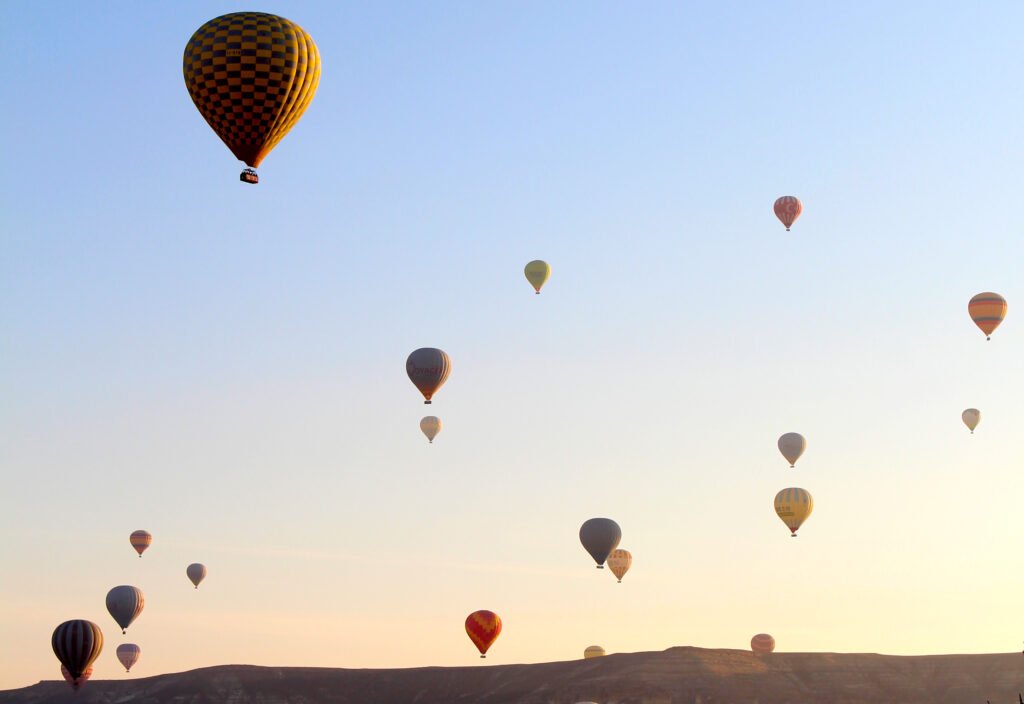
No image represents Turkey quite like a sunrise sky over Cappadocia filled with dozens of hot air balloons drifting above a surreal landscape of volcanic rock formations. This Cappadocia hot air balloon and travel guide covers the flight experience itself, the hidden valleys and underground cities that make the region worth exploring beyond the balloons, and the practical details — timing, cost, cave hotels — that turn a bucket-list photo into an actual trip. I cover this in the video below.
Cappadocia’s landscape exists because of a genuinely unusual geological history: volcanic eruptions millions of years ago blanketed the region in soft ash-derived rock called tuff, which wind and water have spent millennia eroding into the cone-shaped “fairy chimney” formations the region is now famous for. That same soft rock proved remarkably easy to carve, which is why Cappadocia’s human history is inseparable from its geology — early Christians fleeing persecution during the Roman era discovered they could dig homes, churches, and eventually entire underground cities directly into the hillsides, creating a layered landscape where natural wonder and human ingenuity are genuinely difficult to separate.
The Hot Air Balloon Experience
Hidden Gems Beyond the Balloons
Best Time to Visit Cappadocia
Where to Stay: Cave Hotels
FAQ
The Hot Air Balloon Experience
Cappadocia has become the single most famous hot air balloon destination in the world, and the appeal isn’t just marketing — the region’s genuinely otherworldly volcanic landscape, combined with reliably calm early-morning air currents, created ideal conditions for ballooning that most other landscapes simply can’t match.
What to Expect
Pickup from your hotel typically happens shockingly early — around 4:30 to 5:30am, depending on the season’s sunrise time — since the goal is to have the balloon airborne just as the sun comes up. After a short drive to the launch field, you’ll watch the balloon inflate (a genuinely impressive process in its own right, with massive fans and open-flame burners bringing a deflated envelope of fabric to full size in a matter of minutes) before boarding the basket. Flights typically last around an hour, drifting over fairy chimney valleys, cave dwellings, and vineyards as the sun rises. Most flights end with a traditional champagne toast upon landing, a custom that’s become as much a part of the experience as the flight itself. Pilots generally aim to fly low enough at points during the journey to pass close by rock formations and treetops, giving a genuine sense of scale that photos alone don’t capture, before climbing higher for the broader panoramic views the region is famous for.
Cost & Booking
Standard shared-basket flights (with other passengers, typically holding 16-24 people per basket) usually run in the 150-250 euro range per person, while smaller, more exclusive baskets carrying fewer passengers cost more, sometimes significantly. Prices vary by operator, season, and exact flight duration, and it’s worth booking a well-reviewed, licensed operator rather than the cheapest option available, given genuine safety considerations involved in the sport — Cappadocia’s ballooning industry is regulated, and reputable companies maintain their fleets and follow conservative weather protocols. Booking a few days ahead is usually sufficient outside peak season, but summer and shoulder-season weekends can sell out reputable operators’ best time slots, particularly smaller premium baskets.
Weather & Cancellations
Flights are entirely weather-dependent, and Turkish aviation authorities are genuinely conservative about grounding flights when wind conditions aren’t safe — cancellations happen regularly, even during good-weather seasons. Reputable operators will automatically rebook a cancelled flight for a later morning within your stay at no additional cost. Given this, building at least one buffer day into your Cappadocia itinerary is a smart hedge against a single weather cancellation eating into your only planned flight window.
Alternative Views
If you’d rather watch the spectacle from the ground than pay for a flight yourself, several viewpoints around Göreme and Uçhisar offer excellent vantage points for watching dozens of balloons rise at once — a genuinely spectacular sight even without being airborne, and a free alternative or complement to flying.
Hidden Gems Beyond the Balloons
Cappadocia’s ground-level attractions — carved valleys, abandoned cave villages, and vast underground cities — are just as remarkable as the aerial views, and most visitors spend at least as much time exploring them as they do in the air.
Love Valley
Named for its distinctively shaped rock formations, this valley near Göreme offers one of the best short hikes in the region, with panoramic views over the surrounding fairy chimney landscape. The trail is relatively gentle compared to some of Cappadocia’s steeper canyons, making it a good option for travelers who want dramatic scenery without a full day’s commitment.
Near Göreme. Free. Best in the morning or late afternoon for softer light.
Zelve Open Air Museum
A former cave village inhabited until the 1950s, when the Turkish government relocated residents due to erosion risk, now preserved as an atmospheric, genuinely abandoned settlement you can walk through, including former homes, a mosque, and a church carved directly into the rock.
Near Göreme. Entry fee. Best combined with a Paşabağ (Monks Valley) visit nearby.
Ihlara Valley
A dramatic river canyon lined with Byzantine-era rock-cut churches, some still holding faded frescoes, with a walking trail following the Melendiz River through the gorge floor. The canyon walls rise steeply on both sides, creating a cooler, greener microclimate than much of the surrounding high desert plateau, and the walk between the main entrance points takes roughly 3-4 hours at a relaxed pace.
Southern Cappadocia. Entry fee. Best as a half-day hike, allowing time to explore several of the rock churches.

Çavuşin
A largely abandoned village of cave houses carved into a cliff face, left empty after a rockfall decades ago, now a striking, photogenic ruin overlooking the newer village built below it. The cliff face also holds one of Cappadocia’s oldest rock-cut churches, the Church of St. John the Baptist, dating back roughly a thousand years.
Near Göreme. Free to view from outside; some structures unsafe to enter. Best for photography at golden hour.
Soğanlı Valley
A quieter valley south of the main tourist corridor, holding numerous Byzantine rock-cut churches and dovecotes (pigeon houses historically used to collect fertilizer and, in some periods, as a form of postal communication), with far fewer visitors than Göreme’s more famous sites. The valley’s relative remoteness has helped preserve both its churches and its rural character, with local farmers still working the surrounding land much as they have for generations.
Southern Cappadocia. Small entry fee. Best for travelers wanting to escape the main tourist crowds.
Gomeda Valley
A dramatic, less-visited canyon offering some of the region’s most rugged hiking, with steep rock walls and a genuinely remote feel compared to the more accessible valleys near Göreme. The lack of clear signage and infrastructure here is part of the appeal for experienced hikers, though it also means less-experienced travelers should consider a local guide.
Central Cappadocia. Free. Best for experienced hikers seeking solitude.
Mustafapaşa
A village historically known as Sinasos, once home to a significant Greek Orthodox population before the 1923 population exchange between Greece and Turkey, retaining distinctive Greek-influenced stone architecture rarely found elsewhere in the region. Ornate carved doorways and facades throughout the village hint at the wealth of its former Greek merchant community, and several historic mansions have been converted into boutique hotels.
Near Ürgüp. Free to explore. Best combined with a Soğanlı Valley visit nearby.
Pançarlık Valley
A colorful valley with rock-cut churches and striking mineral-streaked rock formations, offering a quieter alternative to the more heavily visited Rose and Red Valleys near Göreme. The valley’s name references its historically important beet-growing agriculture, though most visitors come now for the color-streaked rock rather than the farmland.
Near Ürgüp. Free. Best for photography given the valley’s color variation.
Keşlik Monastery
A lesser-known monastic complex with underground tunnel systems and rock-cut chapels, offering a smaller-scale but genuinely atmospheric alternative to the region’s more famous underground cities, including a chapel decorated with some of the simplest and oldest surviving fresco styles in Cappadocia.
Near Ürgüp/Mustafapaşa. Small entry fee. Best combined with a Mustafapaşa visit.
Derinkuyu Underground City
The largest excavated underground city in Turkey, descending eight levels and roughly 85 meters (280 feet) below the surface, once capable of sheltering up to 20,000 people along with livestock and supplies during times of conflict. Carved from soft volcanic tuff over centuries, the city included wine and oil presses, stables, chapels, and a sophisticated ventilation system, and could be sealed from the inside using massive rolling stone doors on each level, with individual floors capable of being closed off separately from one another as an additional defensive measure. The site connects via a long tunnel to the nearby underground city of Kaymaklı, suggesting the region’s underground network was once far more extensive and interconnected than what’s visible or excavated today.
Derinkuyu, about 40km south of Göreme. Entry fee. Best with a guide, since narrow passages and low ceilings are easier to navigate and understand with context; note the site is not wheelchair accessible and may be difficult for those with claustrophobia.

Best Time to Visit Cappadocia
Spring (April-May): Mild temperatures and generally reliable balloon flight conditions, plus wildflowers in the valleys — one of the best all-around windows to visit, and the season many repeat visitors specifically recommend.
Summer (June-August): The highest flight success rate of the year given consistently calm morning air, but also the hottest daytime temperatures for valley hiking (often exceeding 30°C/86°F by midday) and the busiest tourist season, with correspondingly higher accommodation prices.
Autumn (September-October): Similar mild conditions to spring, with the added bonus of harvest season in the region’s vineyards and generally softer light for photography — widely considered one of the best times to visit, and often slightly less crowded than spring.
Winter (November-March): The fewest crowds and lowest prices, occasionally with a genuinely striking snow-dusted landscape that photographers specifically travel for, but the highest chance of balloon flight cancellations due to weather, and some valley trails may be harder to navigate given ice or mud.
Where to Stay: Cave Hotels
Cappadocia’s signature accommodation style — rooms carved directly into the same soft volcanic tuff rock that shaped the region’s fairy chimneys and ancient cave dwellings — ranges from simple, budget-friendly guesthouses to genuinely luxurious boutique properties with modern plumbing, temperature control, and elegant furnishings layered into centuries-old rock. Cave rooms offer a natural, fairly consistent interior temperature year-round, staying cooler in summer and warmer in winter than a standard above-ground building, a passive climate benefit that made the design practical for the region’s original inhabitants long before it became a tourism draw. Göreme and Ürgüp are the two most popular bases, both offering a wide range of cave hotel options and easy access to balloon launch sites, valley trailheads, and the region’s restaurants, while Üçhisar’s hilltop position offers some of the most dramatic terrace views for properties willing to pay a premium for them.
Booking ahead matters more here than in a typical destination, since the most distinctive and well-reviewed cave properties — particularly those with balloon-view terraces — sell out well in advance during peak balloon season (April-May and September-October especially). Many cave hotels also offer rooftop or terrace breakfast service timed specifically for balloon-watching, letting guests who didn’t book a flight themselves still enjoy the sunrise spectacle from a comfortable vantage point.
Getting to Cappadocia
Most travelers fly into Nevşehir Kapadokya Airport or the slightly larger Kayseri Erkilet Airport, both of which have connections to Istanbul and other major Turkish cities, with the drive from either airport to Göreme or Ürgüp taking roughly 45-75 minutes. Overnight buses also connect Cappadocia to Istanbul and other major cities, a genuinely popular option among budget travelers given Turkey’s extensive and comfortable long-distance bus network, though the journey takes 10-12 hours from Istanbul. Once in the region, Göreme functions as the most convenient base for balloon flights and valley access, with Ürgüp offering a slightly larger town feel and Üçhisar providing dramatic hilltop views over the surrounding landscape.
Local Food Worth Trying
Testi kebab, a slow-cooked meat and vegetable stew sealed inside a clay pot and dramatically cracked open tableside, is one of the region’s signature dishes and worth seeking out at a dedicated restaurant rather than a quick tourist stop. Cappadocia’s volcanic soil also supports a genuine, lesser-known wine industry, with local varieties like Öküzgözü and Boğazkere grown in vineyards scattered throughout the valleys — several wineries near Ürgüp and Uçhisar offer tastings paired with valley views. Dried fruits, particularly apricots, and local honey are also worth picking up from a village market rather than an airport gift shop. Manti, small Turkish dumplings typically served with garlic yogurt and a spiced butter, is another regional staple worth trying at a family-run restaurant away from the main tourist strip in Göreme.
A Brief History of Cappadocia
Cappadocia sat along the historic Silk Road, and its strategic, easily-defended cave dwellings drew a long succession of inhabitants and invaders over the centuries — Hittites, Persians, the armies of Alexander the Great, Romans, and Byzantines all controlled the region at various points. Its most significant chapter began when persecuted early Christians fled here during the Roman era and discovered the soft tuff rock could be carved into homes, chapels, and eventually vast underground cities like Derinkuyu, capable of sheltering entire communities during periods of danger. When Byzantine control stabilized the region between the 7th and 11th centuries, this troglodyte population resurfaced, carving elaborate churches into the cliff faces and valleys around Göreme, many of which still preserve frescoes among the oldest surviving examples of Byzantine religious art anywhere in the world.
What to Pack for Cappadocia
Layers for balloon flights: Even in summer, pre-dawn temperatures during balloon pickup and launch can be genuinely chilly — a light jacket or fleece is worth having even if you won’t need it later in the day.
Sturdy walking shoes: Valley trails involve loose rock, uneven terrain, and occasional scrambling — trail shoes or hiking boots serve you far better than sandals.
A headlamp or phone flashlight: Genuinely useful for the underground cities, where lighting can be dim in the deeper passages.
Sun protection: Cappadocia’s high desert plateau offers little natural shade across much of the valley network, and the light-colored rock reflects sun intensely — sunscreen and a hat matter even on cooler days.
Combining Cappadocia With the Rest of Turkey
Most travelers pair Cappadocia with Istanbul, given the region’s convenient flight and bus connections to the city — a common itinerary structure runs 3-4 days in Istanbul followed by 3-4 days in Cappadocia, or the reverse. Travelers with more time sometimes extend further to the Turkish Riviera (Antalya and the surrounding Turquoise Coast) or to Ephesus and the Aegean coast near Izmir, both reachable by domestic flight from Cappadocia’s regional airports. Because Cappadocia’s balloon flights are so weather-dependent, it’s worth scheduling the region in the middle of a longer Turkey itinerary rather than at the very end, so a weather-related delay doesn’t risk missing a flight home.
I cover the region’s hidden valleys and underground cities in the video above. If this guide helped you plan your Cappadocia trip, subscribe to Worldly Traveler on YouTube for more travel guides from around the world.
Frequently Asked Questions
How much does a Cappadocia hot air balloon ride cost?
Standard shared balloon flights typically run in the range of 150-250 euros per person, while smaller, more exclusive baskets with fewer passengers cost more. Prices vary by operator, season, and flight duration.
What is the best time of year for Cappadocia hot air balloon flights?
April-May and September-October offer the most reliable flying weather with mild temperatures. Summer offers the highest flight success rate overall, while winter has the fewest crowds but a higher chance of weather cancellations.
How early do you have to wake up for a Cappadocia balloon flight?
Pickup typically happens around 4:30-5:30am, timed so the balloon launches just before sunrise. The flight itself usually lasts about an hour, followed by a traditional champagne toast on landing.
What if my Cappadocia balloon flight gets cancelled due to weather?
Reputable operators will rebook you for a later date within your stay at no extra cost if a flight is cancelled for weather or safety reasons. Building at least one extra day into your itinerary is a good safeguard against a single cancellation ruining your only chance to fly.
Is it worth staying in a cave hotel in Cappadocia?
Yes, for most travelers — cave hotels are a genuinely unique part of the Cappadocia experience, carved into the same soft volcanic tuff rock as the region’s ancient cave dwellings, and many balance historic character with modern comfort.
How many days do you need in Cappadocia?
3-4 days allows time for a balloon flight (with a buffer day for weather), one or two valley hikes, and at least one underground city visit. A shorter 2-day trip can cover the essentials but leaves little room for weather delays.