
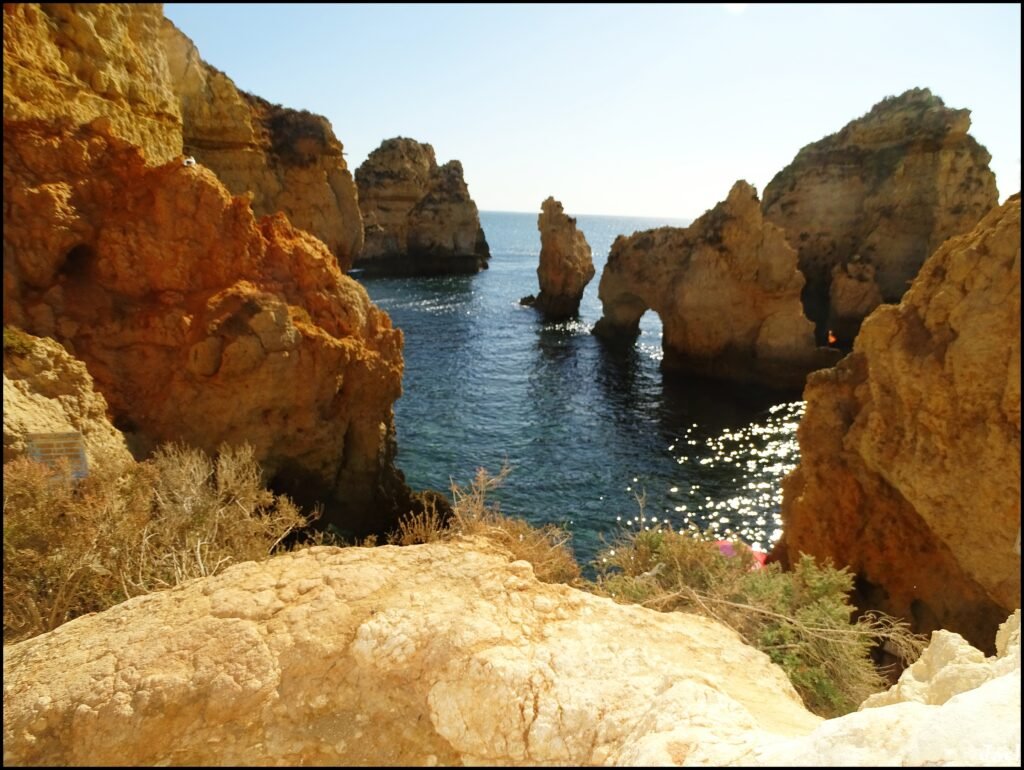
The Algarve is Portugal’s southern coast, and it’s built almost entirely around one thing: light. Golden limestone cliffs, some of the sunniest weather in Europe, and water that shifts from deep blue to turquoise depending on how the sun hits it. This guide walks through the region’s best-known landmarks and its quieter corners, so you can decide how much beach resort and how much back road you actually want in your trip.
It’s worth saying upfront that the Algarve genuinely holds two different identities at once. There’s the resort coast, built up over decades of tourism and package holidays, all golf courses, marinas, and beachfront hotels. And there’s the older Algarve underneath it, a region shaped by Moorish rule for over five centuries before the Reconquista, and by centuries of fishing before that. You can still find that older Algarve if you’re willing to drive a little further inland or arrive outside the peak summer crush.
The name itself is a leftover from that Moorish period. Algarve comes from the Arabic al-Gharb, meaning “the west,” since this region marked the western edge of Islamic territory on the Iberian Peninsula for centuries. That history shows up in small ways throughout the region today, in the almond and citrus orchards the Moors introduced, in place names that still carry Arabic roots, and in the whitewashed, flat-roofed architecture found in older inland towns. It’s easy to miss all of that if you never leave the beach, which is exactly why this guide spends as much time inland as it does on the coast.
The Algarve isn’t the only part of the country worth this kind of attention. For a wider look at hidden gems in Portugal beyond the south coast, from boulder-built villages to Portugal’s own Stonehenge, Worldly Traveler’s video guide covers ten spots most visitors never see.
The Western Algarve: Lagos & Sagres
The Central Coast: Benagil & Beyond
The Eastern Algarve
Inland Villages
Algarve Food Worth Seeking Out
Best Time to Visit the Algarve
FAQ
The Western Algarve: Lagos & Sagres
This stretch of coast holds the region’s most dramatic cliffs and a genuine sense of standing at the edge of the known world.
Ponta da Piedade
A headland just outside Lagos, lined with golden-orange limestone stacks, grottoes, and natural arches carved by centuries of Atlantic wave action. A short boat tour or kayak trip lets you paddle directly through some of the sea caves, and the cliffside path above offers views that rival the water-level ones.
Near Lagos, western Algarve. Free to view from the cliffside path; boat and kayak tours priced separately. Best in the early morning, when the light hits the cliffs at their most vivid and before the boat tours get crowded.
Lagos Old Town
Behind the beaches, Lagos holds a genuinely well-preserved old town, still partly enclosed by its original city walls. It’s also where Portugal’s Age of Discovery quietly began, since this was one of the ports Prince Henry the Navigator used to launch expeditions down the African coast in the 15th century.
Lagos, western Algarve. Free to explore. Best in the evening, once the beach crowds have thinned and the old town’s restaurants come alive.
Cabo de São Vicente
For centuries, this windswept cape was believed to be the westernmost point of the known world, and standing at its lighthouse, looking out at nothing but open Atlantic, it’s easy to understand why. It’s still one of the most dramatic, least developed stretches of coastline in the entire Algarve.
Near Sagres, western Algarve. Free. Best at sunset, when it becomes one of the last places in mainland Europe to see the sun go down.

The Central Coast: Benagil & Beyond
This is the Algarve most people picture when they imagine Portugal’s south coast, and the region’s single most famous landmark sits right here.
Benagil Cave
A sea cave with a natural skylight in its domed ceiling, letting sunlight pour down onto a small sandy beach inside. It’s become one of the most photographed spots in Portugal, and getting there means a boat, kayak, or paddleboard tour, since swimming in directly is discouraged given the strong currents and heavy boat traffic during peak season.
Near Benagil village, central Algarve. Boat, kayak, and paddleboard tour prices vary. Best in the late morning, when sunlight through the skylight hits the sand most directly.

Praia da Marinha
Regularly ranked among the most beautiful beaches in Europe, this small cove near Benagil is framed by the same dramatic limestone cliffs and stacks that define this stretch of coast. It’s smaller than it looks in photos, so arriving early genuinely matters if you want space on the sand.
Near Benagil, central Algarve. Free. Best early in the morning, since the small beach fills up fast once the day-trip crowds arrive.
.jpg)
Silves
Once the capital of the Moorish kingdom of al-Gharb, the region that gave the Algarve its very name, Silves still holds a red sandstone castle overlooking the town and the Arade River below. It’s a genuinely different pace than the coastal resorts just a short drive away, and a good reminder of how much older the region’s history is than its tourism industry.
Inland from Portimão, central Algarve. Free to explore town; castle entry fee. Best combined with a walk along the riverside promenade below the castle.
The Eastern Algarve
Quieter, flatter, and less developed than the central coast, the eastern Algarve rewards travelers who want fewer crowds.
Ria Formosa Natural Park
A genuinely unique lagoon system of barrier islands, salt marshes, and channels stretching along much of the eastern Algarve coast, home to significant bird populations and a noticeably slower pace of life than the resort towns further west. Boat tours through the lagoon offer a completely different side of the Algarve than the cliffside beaches.
Eastern Algarve, from Faro to Tavira. Free to view; boat tour prices vary. Best in spring or fall for peak bird migration season.
Tavira
Often called the most elegant town in the Algarve, Tavira sits along the Gilão River, its Roman-era bridge and whitewashed, tile-roofed houses giving it a genuinely different character from the concrete resort development found further west. A short ferry ride connects the town to Ilha de Tavira, a barrier island beach that stays noticeably quieter than the mainland coast.
Eastern Algarve. Free to explore town; ferry fare to the island. Best combined with an Ilha de Tavira beach day, given the short ferry crossing.
.jpg)
Inland Villages
A short drive from the coast, the Algarve’s hills hold a genuinely different, much quieter version of the region.
Alte
Frequently cited as one of the most picturesque villages in the Algarve, Alte sits in the hills north of Albufeira, its whitewashed houses and small waterfalls feeling worlds away from the beach resorts just a short drive south. It’s a genuinely good stop for travelers wanting to see the Algarve’s older, more rural character.
Inland from Albufeira, central Algarve. Free to explore. Best in spring, when the surrounding countryside is at its greenest.
Monchique
The highest point in the Algarve, this mountain town sits well above the coastal heat, its cooler climate supporting lush forest that feels almost nothing like the beaches below. Natural hot springs at nearby Caldas de Monchique have drawn visitors since Roman times.
Serra de Monchique, western Algarve. Free to explore town; spa entry fees vary. Best in summer, when the mountain’s cooler temperatures offer genuine relief from the coastal heat.
Algarve Food Worth Seeking Out
Seafood is genuinely the backbone of Algarve cuisine, and cataplana, a copper-domed pot dish combining fish, shellfish, and sausage in a rich tomato-based broth, is the region’s signature meal, worth seeking out at a family-run restaurant rather than a resort buffet. Grilled sardines, simple but done well, remain a genuine coastal staple, especially during the summer sardine season. The Algarve’s citrus orchards, particularly around Silves, produce some of Portugal’s best oranges, and the region is also known for its almonds, which show up in local sweets alongside a Moorish-influenced marzipan tradition that traces directly back to the region’s centuries under Islamic rule. Medronho, a strong fruit brandy distilled from the fruit of the strawberry tree, is a genuinely traditional Algarve spirit worth trying in moderation, particularly in the inland hill towns where it’s still made using small, traditional stills.
Best Time to Visit the Algarve
May, June, and September offer warm, sunny weather with noticeably thinner crowds than the peak of summer, when July and August bring both the highest temperatures and the biggest crowds to the coast. Spring brings wildflowers to the inland hills and comfortable hiking weather around villages like Alte and Monchique, while the water stays a little too cool for swimming until closer to June. Summer remains genuinely popular despite the crowds, given the Algarve’s status as one of Europe’s most reliable sunny beach destinations, though booking accommodation well in advance becomes genuinely necessary during this window. Winter stays mild by northern European standards and draws a small but steady stream of golfers and retirees, though many beach-focused businesses reduce their hours or close entirely during the quieter months.
If this guide helped you plan your Algarve trip, subscribe to Worldly Traveler on YouTube for more travel guides from around the world.
Frequently Asked Questions
What is the Algarve known for?
The Algarve is known for its dramatic golden limestone cliffs, sea caves like the one at Benagil, and some of the most consistently sunny weather in Europe, making it one of the continent’s most popular beach destinations.
Can you swim inside the Benagil Cave?
Swimming into the cave is genuinely discouraged and, in many cases, restricted, due to strong currents and heavy boat traffic. Most visitors see it by boat tour, kayak, or paddleboard rather than swimming in directly.
How many days do you need in the Algarve?
7-10 days allows a well-paced trip covering the western, central, and eastern coast, plus a couple of inland villages. A shorter 4-5 day trip works well focused on just the central coast around Lagoa and Lagos.
Is the Algarve expensive?
It’s generally more affordable than comparable beach destinations in Spain, France, or Italy, though prices climb noticeably during the peak summer months and in the most internationally popular resort towns.
What is the best time of year to visit the Algarve?
May, June, and September offer warm, sunny weather with noticeably thinner crowds than July and August, which are the busiest and most expensive months along the coast.