
Brussels and Bruges anchor most Belgium itineraries, and both are worth the visit — but the country’s real surprise is the Ardennes, a forested, hilly southern region most travelers skip entirely in favor of the flatter, more famous north. This guide covers more than 25 hidden gems in Belgium, verified against independent sources, organized by region. I cover the core list in the video below, with additional verified spots included here to round things out.
Belgium’s linguistic and cultural split between Dutch-speaking Flanders in the north and French-speaking Wallonia in the south shapes more than just which language you’ll hear — it’s produced two genuinely different regional characters within one small country. Flanders leans into its medieval trading-city wealth, visible in Bruges’s canals and Ghent’s guild houses. Wallonia, shaped by its Ardennes forest and river valleys, leans into castles, caves, and outdoor scenery that feels closer to rural France than to the polished museum cities up north. Most visitors only see one half.
Belgian Food Worth Seeking Out
Belgian fries (frites), traditionally twice-fried and served in a paper cone with a wide range of sauce options, are considered a genuine national dish, not a side — seek out a dedicated friture rather than a tourist café. Belgian chocolate, produced by centuries-old chocolatiers, is worth buying directly from a small producer rather than an airport gift shop. Trappist and abbey beers, several still brewed by monks at working monasteries like Maredsous and Orval, remain some of the most distinctive beers in the world, each abbey producing its own recipe.
Flanders
Beyond Bruges and Ghent’s famous canals, Flanders holds quieter museums and memorials worth the detour.
1. The Beguinage of Bruges
A tranquil walled courtyard of whitewashed houses built for the Beguines, a lay religious community of women, now home to Benedictine nuns, offering a genuinely peaceful escape from Bruges’s busy canal-side streets.
Bruges. Free to enter the courtyard; small fee for the house museum. Best in early morning for the quietest visit.
2. Bokrijk Open-Air Museum
A large open-air museum reconstructing historic Flemish village life across relocated original buildings, offering a genuinely immersive alternative to a standard museum visit.
Genk, Limburg. Entry fee. Best in summer for special event days.
3. St. Peter’s Abbey, Ghent
A former Benedictine abbey in Ghent with a striking Baroque church and extensive underground wine cellars, considerably less crowded than Ghent’s more famous medieval castle and cathedral.
Ghent. Entry fee for parts of the complex. Best combined with a Ghent old town walk.
4. The Peace Tower, Ypres
Part of Ypres’s broader WWI memorial landscape, this tower and surrounding sites commemorate the devastating battles fought across the Flanders Fields region, offering a somber, important stop for understanding Belgium’s 20th-century history.
Ypres, West Flanders. Free to view. Best combined with the In Flanders Fields Museum.
5. The Lommelse Sahara
A surprising expanse of genuine sand dunes in Limburg province, formed from centuries of overgrazing and mismanaged land, now a protected nature reserve with a landscape that looks nothing like the rest of Belgium.
Lommel, Limburg. Free. Best on a clear day for the full dune-field effect.
6. The Gallo-Roman Museum, Tongeren
Located in Belgium’s oldest town, this well-regarded archaeology museum traces Roman-era life in the region with a genuinely strong collection, largely overlooked by visitors focused on Bruges and Ghent.
Tongeren, Limburg. Entry fee. Best combined with a walk through Tongeren’s old town.
Wallonia & the Ardennes
Southern Belgium’s hilly, forested Ardennes region holds the country’s most dramatic scenery and its least-visited historic towns.
7. Dinant’s Cliffside Citadel
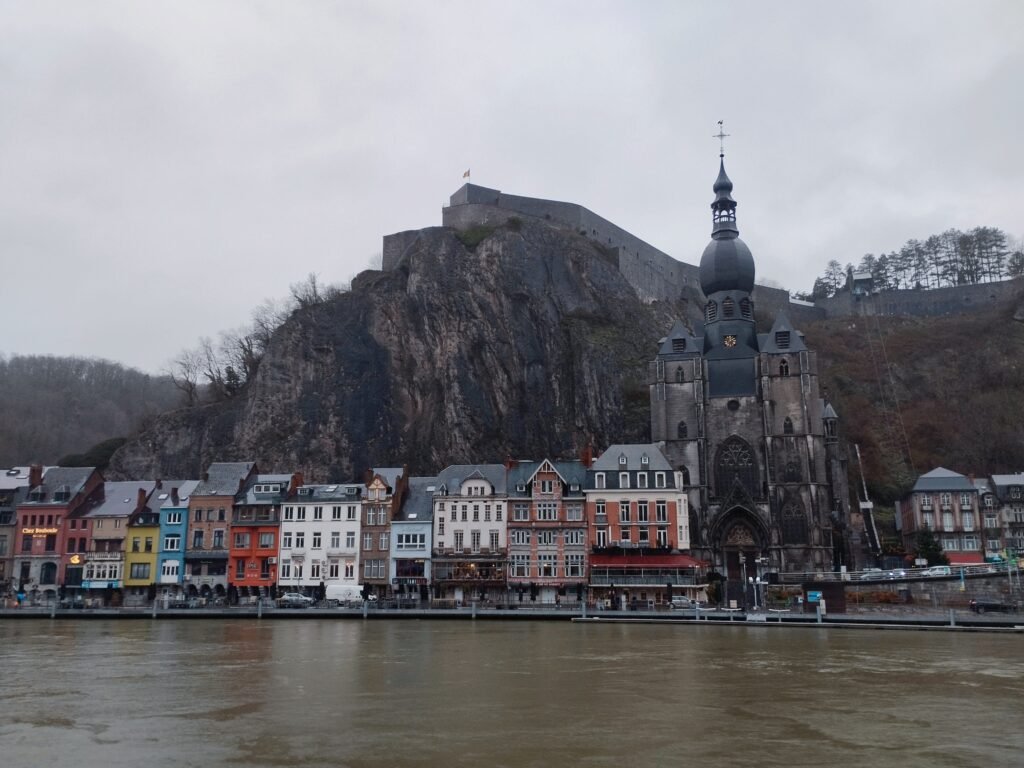
A fortress perched dramatically above the Meuse River, with a history stretching back to 1051, offering sweeping views over Dinant’s distinctive collegiate church and riverside old town.
Dinant. Entry fee (cable car or stairs to reach the top). Best at golden hour for the river views.
8. Durbuy, the World’s Smallest City
Officially granted city status in the Middle Ages despite its tiny size, Durbuy retains a genuinely fairy-tale character with narrow cobbled streets, a historic château, and a topiary garden.
Durbuy, Luxembourg province. Free to explore town. Best on a weekday to avoid weekend day-trip crowds.
.JPG)
9. The Caves of Han
A vast limestone cave system carved by the Lesse River, explored partly by underground boat ride, among the most impressive show caves in Europe and paired with a wildlife park at the entrance.
Han-sur-Lesse, Namur province. Entry fee. Best booked in advance during peak summer season.
10. The Giant’s Tomb (Tombeau du Géant)
A striking rock formation in the Ardennes tied to local legend about a buried giant, offering a distinctive hiking destination in a region full of more conventional castle-and-village stops.
Ardennes region. Free. Best combined with a broader Ardennes hiking day.
11. The Abbey of Villers-la-Ville
Extensive ruins of a 12th-century Cistercian abbey, its roofless Gothic nave and cloisters left dramatically intact after centuries of decline, considered one of the most evocative monastic ruins in Belgium.
Villers-la-Ville, Walloon Brabant. Entry fee. Best in the golden light of late afternoon.
12. The Castle of Vêves
A picture-perfect medieval castle with distinctive conical-roofed towers, still furnished and open to visitors, offering one of the most photogenic fairy-tale castle exteriors in the Ardennes.
Celles, Namur province. Entry fee. Best on a clear day for exterior photos.
13. The Semois Valley
A winding river valley in the southern Ardennes known for dramatic hairpin bends, tobacco-growing tradition, and some of the best scenic viewpoints in the region, including the famous Tombeau du Géant lookout.
Southern Ardennes, near Bouillon. Free. Best at the Rochehaut viewpoint for the classic valley panorama.
14. The Ghost Town of Doel
A largely abandoned village near Antwerp, slated for demolition to expand port infrastructure for decades, now a haunting canvas for street artists and a genuinely strange, atmospheric stop.
Near Antwerp, Beveren municipality. Free to walk (respect any posted restrictions). Best for travelers interested in urban decay and street art.
15. The Waterfalls of Coo
Belgium’s largest waterfall, created artificially by 18th-century monks diverting the Amblève River, now a popular stop combined with a cable car and small amusement park at its base.
Coo, Stavelot. Free to view; cable car and attractions priced separately. Best after rainfall for fuller flow.
16. The Meuse River Cruises
Scenic boat cruises along the Meuse River through the Ardennes, passing beneath castles and cliffside towns like Dinant, offering a different vantage point on the region’s dramatic river scenery.
Departing from Dinant or Namur. Cruise fare. Best in late spring or early autumn.
17. The Grotto of Remouchamps
Home to what’s billed as the longest navigable underground river in Europe, explored partly by boat through narrow limestone passages.
Remouchamps, Liège province. Entry fee. Best booked ahead in peak season.
18. The Folon Foundation
A museum in La Hulpe dedicated to Belgian artist Jean-Michel Folon, set within a historic château and park, offering whimsical watercolor and sculpture work in a genuinely peaceful setting.
La Hulpe, Walloon Brabant. Entry fee. Best combined with a walk through the surrounding Solvay Park.
19. The Castle of Modave
A striking cliff-top château above the Hoyoux River valley, with opulent 17th-century interiors and a history tied to the origins of the water supply system that once served the palace of Versailles.
Modave, Liège province. Entry fee. Best combined with a Hoyoux valley drive.
20. Montagne de Bueren, Liège
A famously steep staircase of 374 steps climbing a hillside in Liège, built as a military supply route and now a genuine physical challenge rewarding climbers with panoramic city views.
Liège. Free. Best in the morning before the day heats up.
21. The Abbey of Maredsous
A still-active Benedictine abbey in the Ardennes, known for its own beer and cheese production, with a genuinely striking neo-Gothic church open to visitors.
Denée, Namur province. Free to visit the church; shop sells the abbey’s beer and cheese. Best combined with a Dinant-area day.
22. The Castle of Freÿr
A Renaissance-era château on the banks of the Meuse, with some of the finest formal French-style gardens in Belgium, set against a backdrop of dramatic limestone cliffs.
Near Dinant, Namur province. Entry fee. Best in late spring for the gardens in bloom.
Brussels & Surroundings
23. The Blue Forest (Hallerbos)
A protected forest south of Brussels that transforms into a sea of violet-blue for roughly two weeks each spring, when millions of bluebells carpet the forest floor beneath ancient beech trees.
Halle, Flemish Brabant. Free. Best mid-April through early May, timing varies with weather each year.

24. The Japanese Tower, Brussels
An ornate Japanese pagoda originally built for the 1900 Paris World’s Fair before King Leopold II relocated it to Brussels, now a striking and genuinely unexpected landmark in the city’s Laeken district.
Laeken, Brussels. Exterior viewable free; interior visits limited. Best combined with a visit to the nearby Chinese Pavilion.
25. The Horta Museum, Brussels
The former home and studio of Victor Horta, a pioneering Art Nouveau architect, preserving his flowing, organic interior design in the exact space where he lived and worked.
Saint-Gilles, Brussels. Entry fee, advance booking recommended. Best for architecture and design enthusiasts.
Getting Around Belgium
Rail network: Belgium has one of the densest rail networks in Europe, connecting Brussels, Bruges, Ghent, Antwerp, and Liège efficiently, making much of Flanders reachable without a car.
The Ardennes needs a car: Most of the Wallonia and Ardennes hidden gems in this guide — Durbuy, the Castle of Vêves, the Semois Valley — sit in rural areas with limited rail coverage, making a rental car the practical choice for that half of the country.
Belgium’s small size: The entire country can be crossed in about three hours by car, meaning even a Brussels-based trip can reach most of the Ardennes hidden gems as manageable day trips.
I cover the core hidden gems from Flanders to the Ardennes in the video above. If this guide helped you plan your Belgium trip, subscribe to Worldly Traveler on YouTube for more hidden gems guides from around the world.
Frequently Asked Questions
What are the best hidden gems in Belgium?
Some of the best hidden gems in Belgium include the Citadel of Dinant, the bluebell-carpeted Hallerbos forest, the fairy-tale village of Durbuy, the Caves of Han, and the Abbey of Villers-la-Ville, all offering dramatic scenery and history beyond Brussels and Bruges.
How do you get around Belgium to see hidden gems?
Belgium’s rail network is one of the densest in Europe and connects most major towns well, but rural Ardennes villages, castles, and forests often require a car or a combination of train plus local bus or taxi.
What is the best time of year to visit Belgium’s hidden gems?
Mid-April through early May is the only window to see Hallerbos in bloom. Beyond that, May-June and September offer the most reliable weather for the rest of the country.
How many days do you need to see hidden gems across Belgium?
5-7 days allows a loop covering the Ardennes, a few Flemish towns, and Brussels itself. Belgium’s small size means even a shorter 3-4 day trip can cover a meaningful cross-section.
Are Belgium’s hidden gems free to visit?
Many natural sites, including Hallerbos and the Semois Valley, are free. Historic sites like the Citadel of Dinant, the Caves of Han, and several castles charge entry fees.